Someone asked me in a job interview once what era of tech I would most want to have worked in. I said 1995 without hesitating. They asked why, and I realized I could not fully explain it. I have been writing about the founders who shaped the modern internet – Elon Musk’s Zip2, Jeff Bezos’s garage in Bellevue, the Netscape IPO that started it all. But I realized I had never stopped to describe what the world they were building in actually felt like. Not the mythology. Not the retrospective analysis. The physical, tangible, slightly absurd reality of Silicon Valley in 1995.
What was it actually like to be there?
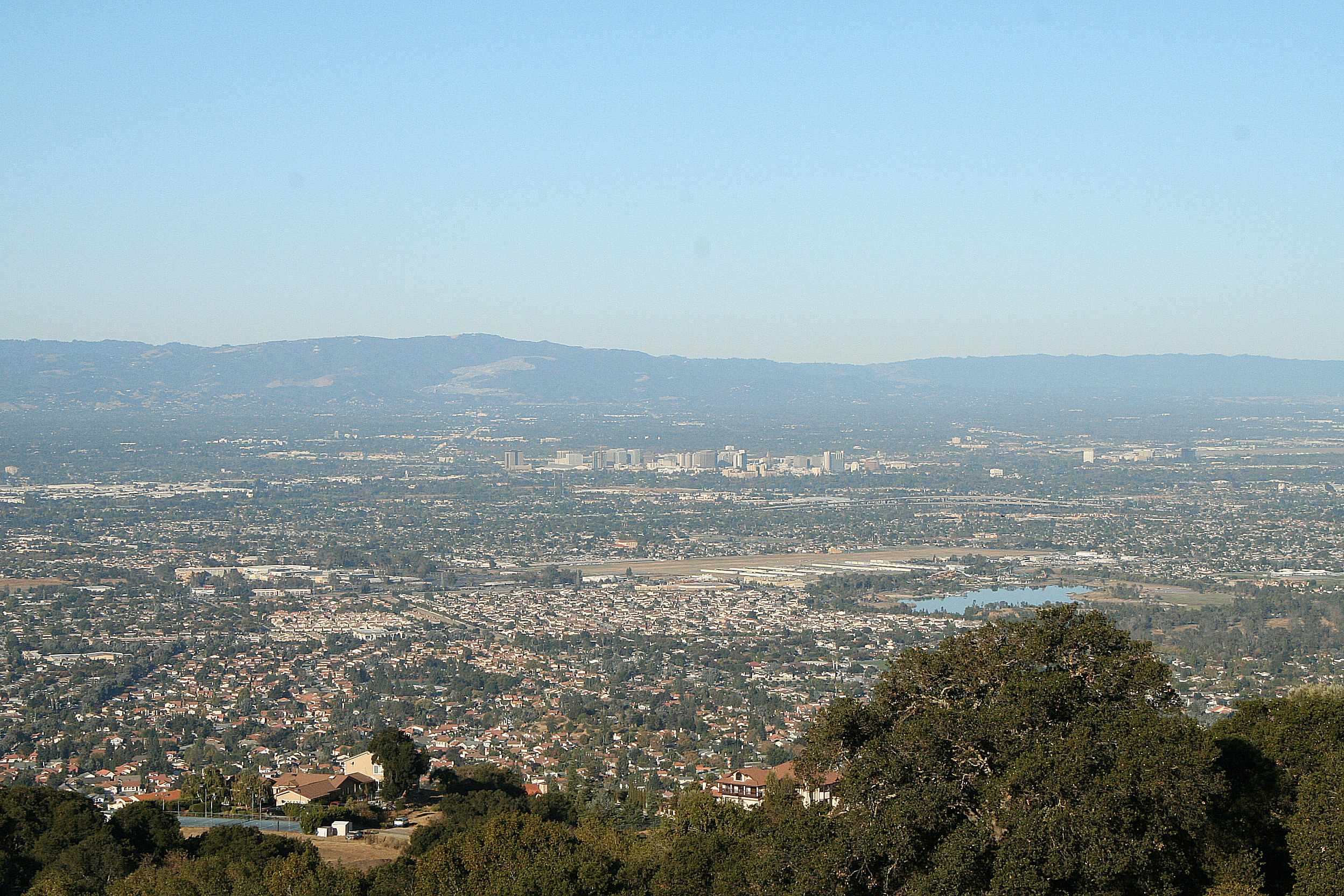 Photo: Wikimedia Commons. CC BY 2.0.
Did you know? Amazon, Yahoo, eBay, Zip2, and the Netscape IPO all happened in 1995 — the internet’s entire founding class arrived in a single year.
The Geography of Ambition
In 1995, Silicon Valley was not a metaphor. It was a specific place. A strip of suburbs and office parks stretching roughly forty miles along the southwestern shore of San Francisco Bay, from San Jose in the south to Palo Alto in the north. The name came from the silicon semiconductor companies – Fairchild, Intel, AMD – that had planted themselves there in the 1960s and 1970s. By 1995, the silicon was still there, but the excitement had moved to software and, increasingly, to the internet.
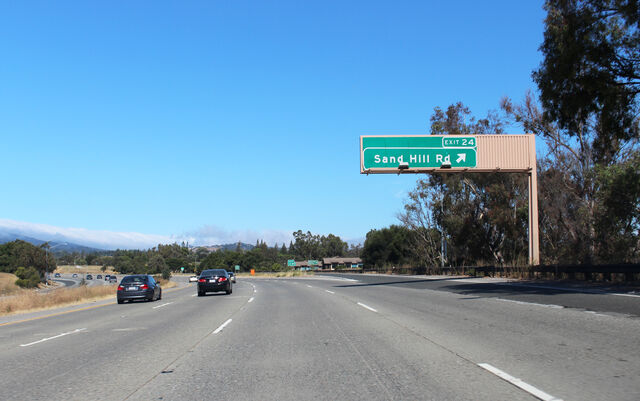
The epicenter of venture capital was Sand Hill Road, a two-lane road in Menlo Park that runs along the edge of the Stanford University campus. In 1995, the most important firms in tech investing were clustered along this road: Kleiner Perkins Caufield & Byers, Sequoia Capital, Benchmark. The partners at these firms drove past Stanford on their way to work every morning and funded companies started by Stanford graduates nearly every week.
The garage mythology was already in full effect. Hewlett-Packard had started in a Palo Alto garage in 1939. Apple had started in the Jobs family garage in 1976. By 1995, the garage had become Silicon Valley’s creation myth, its version of a manger in Bethlehem. Every founder wanted one.
In 1995, the Valley felt like a place where anyone with a modem and an idea could become a millionaire by Thursday; the air genuinely seemed to smell of money and eucalyptus.
August 9, 1995: The Day Everything Changed
The single most important event of 1995 in Silicon Valley – and arguably in the history of the commercial internet – happened on August 9th. That was the day Netscape Communications went public.
Netscape made the Navigator web browser. The company was barely sixteen months old. It had revenue but no profits. Its co-founder, Marc Andreessen, was twenty-four years old. The IPO was priced at $28 per share. On the first day of trading, the stock surged to an intraday high of $75 before closing at $58.25. At the closing price, the company’s market capitalization hit $2.9 billion.
A sixteen-month-old company with no profits was suddenly worth nearly three billion dollars.
The Netscape IPO did something that no amount of technical innovation alone could have done: it proved to Wall Street, to venture capitalists, and to every ambitious person in America that the internet was not a curiosity. It was a gold rush. And like every gold rush before it, the real fortunes would go to the people who arrived first.
Jim Clark, Netscape’s co-founder, later said the IPO lit a fire under the entire industry, and the numbers back him up. Within months, venture capital investment in internet companies began its exponential climb – from roughly $7 billion in total venture funding in 1995 to a staggering $100 billion-plus by 2000.
What Was Already There
To understand the energy of 1995, you have to understand what Silicon Valley had already built by the time the internet arrived. This was not empty farmland being colonized by startups. This was an ecosystem with decades of institutional knowledge.
My hosting company had a great reputation among its customers, and they would recommend me to friends. But recommendations grow a business linearly, while the startups of 1995 were built to compound. That exponential engine was the thing I never found.
Hewlett-Packard, founded 1939, was a $31 billion company by 1995. Intel, founded 1968, was manufacturing the Pentium processor and powering nearly every personal computer in the world. Sun Microsystems, founded 1982, was building the workstations and servers that ran the early internet. Oracle, founded 1977, dominated enterprise databases.
These companies had created a talent pool, a supply chain, a legal infrastructure, and a cultural norm around starting companies. When the internet hit, the Valley did not need to build that infrastructure from scratch. It was already there, waiting to be repurposed.
The Startups of 1995
The class of 1995 reads like a list of companies that would define the next two decades:
Amazon launched its website on July 16, 1995, selling books from Jeff Bezos’s garage in Bellevue, Washington. Bezos had quit his job at D.E. Shaw on Wall Street, driven cross-country, and started building. By the end of 1995, Amazon was shipping books to all fifty states and forty-five countries.
eBay was founded in September 1995 by Pierre Omidyar. The first item sold on what was then called AuctionWeb was reportedly a broken laser pointer, which sold for $14.83. When Omidyar contacted the buyer to make sure they understood it was broken, the buyer replied, “I’m a collector of broken laser pointers.” The marketplace had found its market.
Yahoo was incorporated in March 1995. Jerry Yang and David Filo had started it as “Jerry and David’s Guide to the World Wide Web” – a hand-curated directory of websites. By the end of 1995, Yahoo was the starting point for millions of people’s internet experience.
And in a small office in Palo Alto, a young South African immigrant named Elon Musk was coding through the night on a startup called Zip2. The Musk family had arrived in North America just a few years earlier. Musk was sleeping on the office floor, showering at a local YMCA, and writing code for a product that would eventually sell for $307 million.
Dial-Up and the Mosaic Browser
Here is what is easy to forget about 1995: the internet was slow. Painfully, absurdly slow by any modern standard. Most people connected through dial-up modems that ran at 14.4 or 28.8 kilobits per second. Loading a single image could take thirty seconds. Loading a page with multiple images could take minutes. Video was essentially impossible.
The dominant web browser before Netscape was Mosaic, developed at the University of Illinois’s National Center for Supercomputing Applications. Mosaic was the first browser that could display images inline with text rather than in a separate window. That single feature – seeing a picture on the same page as the words – was revolutionary. It was the moment the web stopped feeling like a text terminal and started feeling like a medium.
People found their way around by bookmarks and web directories like Yahoo. There was no Google. If you wanted to find something, you either knew the URL, found it in a directory, or asked someone. The idea that you could type a question into a search box and get a useful answer was still years away.
Everyone felt the internet would change everything, even if most people did not know exactly how; they just knew they needed to be part of it.
The Money
Venture capital in 1995 was a fraction of what it would become. Total VC investment in the United States was approximately $1.3 billion – a number that seems quaint compared to the tens of billions that would flow in by the end of the decade. But the trajectory was already clear. Every month, more money was pouring into internet companies. Every month, the valuations climbed.
The economics of a 1995 startup were different from today in ways that are hard to appreciate. Server hosting was expensive. Bandwidth was expensive. Software development tools were primitive by modern standards. There was no AWS, no cloud computing, no open-source frameworks to build on. Every startup had to build its own infrastructure, often physically installing servers in co-location facilities.
But the flip side was that the opportunity was enormous and the competition was thin. In 1995, most businesses did not have websites. Most consumers had never made a purchase online. The entire commercial internet was a blank canvas, and the people with the skill and the courage to paint on it had an advantage that would never be replicated.
The Feeling
What I keep coming back to, in every interview and memoir from this era, is the feeling. The people who were in Silicon Valley in 1995 describe a specific emotional quality – a mixture of excitement, urgency, and disbelief. They knew something big was happening. They could feel the ground shifting. But nobody knew exactly what shape the future would take.
Some of them – Bezos, Musk, Omidyar, the Netscape team – would ride that wave to staggering outcomes. Many more would build companies that disappeared without a trace when the dot-com bubble burst in 2000. But in 1995, before the crash, before the disillusionment, there was a year when the internet felt like the most exciting thing in the world.
And in a very real sense, it was. The companies founded in 1995 – Amazon, eBay, Yahoo, and dozens of others – are still shaping how we shop, communicate, work, and live. The infrastructure they built, the business models they pioneered, the talent they attracted – all of it traces back to a specific moment in a specific place.
If you ever wonder whether the moment you are living in matters, think about 1995. The people who showed up, who built things when the tools were primitive and the outcomes were uncertain, ended up building the world we live in now. That is not nostalgia. That is a reminder. The next 1995 is always happening somewhere, and the only way to be part of it is to start building.
Sources
- Jim Clark, Netscape Time, St. Martin’s Press, 1999
- Michael Lewis, The New New Thing, W.W. Norton, 1999
- Po Bronson, The Nudist on the Late Shift, Random House, 1999
- Ashlee Vance, Elon Musk: Tesla, SpaceX, and the Quest for a Fantastic Future, Ecco, 2015
- Brad Stone, The Everything Store: Jeff Bezos and the Age of Amazon, Little, Brown, 2013
- National Venture Capital Association, Historical Data, 1995-2000
- Netscape Communications Corporation, IPO Prospectus, August 1995
- Yahoo Inc., Corporate History