I was deep in research about the PayPal Mafia when I came across a detail that sent me down a completely different rabbit hole. In the summer of 2004, Peter Thiel wrote a check for $500,000 to a six-month-old company run by a nineteen-year-old Harvard sophomore. The company was called TheFacebook. Thiel took a 10.2% stake. It was, by any measure, one of the most consequential bets in the history of technology.
I wanted to understand what Thiel saw. And to do that, I had to go back further — back to a dorm room in Cambridge, Massachusetts, and to a kid from a New York suburb who had been building software since he was twelve.
Did you know? Three single-digit stakes made fortunes: Musk’s 7% of Zip2, Thiel’s 10.2% of Facebook, and Levchin’s 2.3% of PayPal.
The Boy Who Coded Before He Had a Reason To
Mark Elliot Zuckerberg grew up in Dobbs Ferry, New York, a quiet village on the Hudson River about 25 miles north of Manhattan. His father, Edward Zuckerberg, was a dentist who ran his practice out of the family home. His mother, Karen, was a psychiatrist. It was a comfortable, intellectually ambitious household, and Mark took to computers before most of his friends knew what a modem was.
By the time he was in middle school, he was teaching himself Atari BASIC from a book. His father recognized the obsession early and hired a software developer named David Newman to tutor his son. Newman later told The New Yorker that Zuckerberg was a “prodigy” who was hard to keep up with. By high school at Phillips Exeter Academy, Zuckerberg had built a music recommendation program he called Synapse — a tool that used machine learning to study a user’s listening habits and build personalized playlists. It was, for its time, a genuinely sophisticated piece of software.
Microsoft and AOL both expressed interest in acquiring Synapse and hiring its teenage author. Zuckerberg turned them down. He was not ready to sell. He enrolled at Harvard in the fall of 2002 as a psychology and computer science double major, and he arrived with a reputation that preceded him. On campus, he was already known among the CS crowd as someone unusually good.
Facemash and the Incident That Foreshadowed Everything
In October 2003, during his sophomore year, Zuckerberg built a site called Facemash in a single night. The concept was simple and, by his own later acknowledgment, ethically sloppy: he pulled photos from Harvard’s various dormitory “face books” — the printed directories that every house published — and arranged them side by side so visitors could vote on who was more attractive. The site spread virally across campus within hours, crashed Harvard’s servers, and was shut down within days.
The Harvard Administrative Board charged Zuckerberg with breach of security, violating copyrights, and violating individual privacy. He faced expulsion. The charges were eventually dropped, but the episode revealed something important about how his mind worked: he thought in terms of networks, comparative data, and social dynamics. He was less interested in the prank than in the mechanics of why it spread so fast.
In a Harvard Crimson interview at the time, Zuckerberg seemed more curious about his own creation than contrite. “I’m not going to such a Catholic school next time,” he told the paper, deflecting with humor. But the underlying observation stuck with him: people were intensely interested in information about other people. That insight would become the foundation of everything that followed.
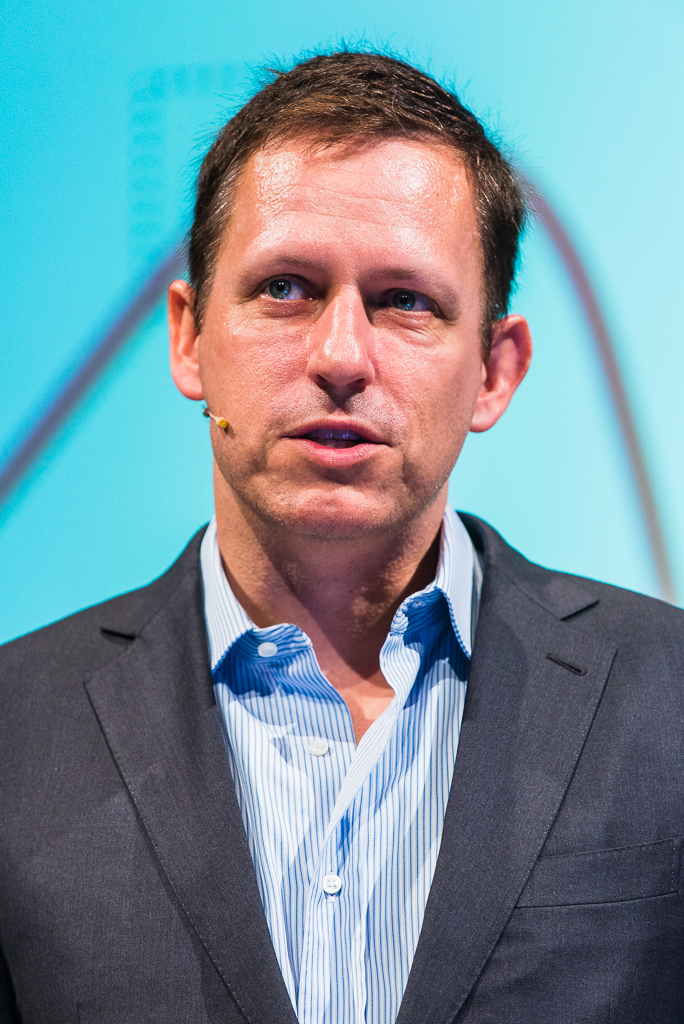 Photo: Wikimedia Commons. CC BY-SA 2.0. Peter Thiel’s early Facebook investment came directly from his PayPal experience. He recognized in Zuckerberg the same conviction he had seen in the best PayPal founders.
Room H33, Kirkland House
On February 4, 2004, Zuckerberg launched TheFacebook from his dorm room at Kirkland House, room H33. The site was clean and intentionally limited: it was a directory of Harvard students, each with a profile, connected through a network of declared relationships. You could see who someone’s friends were. You could “poke” them. You could message them. That was essentially it.
Within 24 hours, 1,200 Harvard students had signed up. Within the first month, more than half the undergraduate population had joined. Zuckerberg’s college roommate and co-founder Dustin Moskovitz helped him manage the servers. His friend Chris Hughes handled communications. Eduardo Saverin, a fellow Harvard student from a wealthy Brazilian family, agreed with Zuckerberg that each would invest $1,000, and became the company’s first CFO.
David Kirkpatrick, in his authoritative account The Facebook Effect (Simon & Schuster, 2010), describes the atmosphere in those early weeks as electric. Students would check TheFacebook the way they now check their phones — compulsively, constantly, every hour. The site did not just let you look up classmates. It made the social graph of the university visible for the first time. You could see exactly who knew whom, which had never been possible before.
Zuckerberg made a decision in those first weeks that shaped everything that followed: he would expand campus by campus, methodically, controlling the rollout. Harvard first. Then Columbia, Stanford, and Yale — added within the first month. Then every Ivy League school. Then universities across the country. The exclusivity was part of the appeal. You could only join if you had a university email address. That limitation made membership feel like something worth wanting.
Sean Parker Arrives, and a $500,000 Check Changes Everything
By the summer of 2004, Zuckerberg had moved the operation to Palo Alto, renting a house on La Jennifer Way with Moskovitz and a small team. They did not move back to Harvard in the fall. The company was growing too fast.
Sean Parker found them that summer. Parker, who had co-founded Napster at nineteen and Plaxo after that, was by then a recognized figure in Silicon Valley, someone who had felt both the immense power of viral growth and the pain of watching a company destroyed by legal challenges. He showed up at the house, charmed Zuckerberg, and became the company’s founding president. His contribution was less technical than strategic: he knew the Valley, he knew investors, and he had learned hard lessons about protecting equity and structure that Zuckerberg had not yet had reason to learn.
Parker made the introduction to Peter Thiel, whose instinct for backing contrarian founders was already well-established from his PayPal days. Thiel met Zuckerberg over dinner in July 2004. According to Kirkpatrick, Zuckerberg showed up in pajamas. Thiel invested anyway — $500,000 for 10.2% of the company. It was the first outside capital Facebook ever raised, and it bought the company the runway it needed to reach one million users by December 2004.
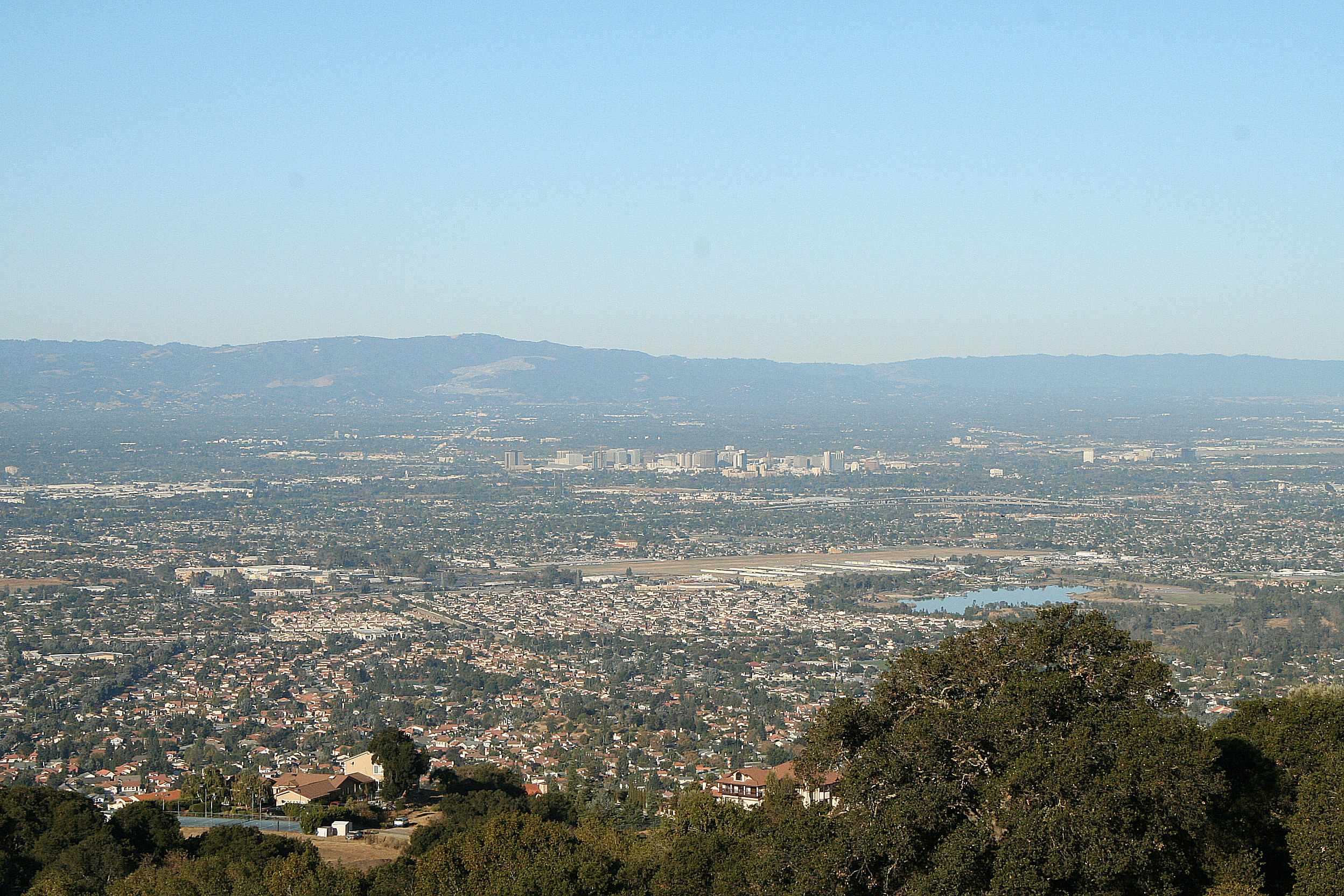 Photo: Wikimedia Commons. CC BY-SA 3.0. Facebook moved from Harvard to Palo Alto in the summer of 2004, joining the ecosystem of engineers, investors, and entrepreneurs that had already produced Google, Apple, and the PayPal network.
The Winklevoss Lawsuit and the Saverin Dilution
No account of Facebook’s founding is complete without the legal tangles that shadowed its early years, and which Ben Mezrich dramatized in The Accidental Billionaires (Doubleday, 2009), later adapted into the film The Social Network.
Cameron and Tyler Winklevoss, along with their business partner Divya Narendra, claimed that Zuckerberg had stolen their idea for a Harvard social network called ConnectU, which they had hired him to help build in the fall of 2003. Their lawsuit, filed in 2004, alleged breach of contract and misappropriation. After years of litigation, Facebook settled with the Winklevoss twins in 2008 for a combination of cash and stock reported to be worth approximately $65 million at the time. The twins attempted to reopen the settlement multiple times, arguing they had been deceived about Facebook’s valuation. Those attempts failed.
The Saverin situation was more complex and more painful. As Facebook grew, Saverin’s equity stake was diluted through a series of funding rounds. He eventually sued the company for breach of fiduciary duty. The case settled out of court in 2009, with Saverin retaining a stake estimated at between 3% and 5% of Facebook. When the company went public in 2012, that stake was worth several billion dollars. Saverin, who had renounced his U.S. citizenship in 2011 and moved to Singapore, became a billionaire from the company he had nearly been squeezed out of entirely.
These stories matter because they reveal the ruthlessness that accompanied the creativity. Zuckerberg was not just a gifted programmer. He was a tactically sophisticated competitor who made decisions — about equity, about control, about who stayed and who did not — that many of his contemporaries found unsettling. The growth was real. So was the cost.
One Billion People
The numbers are hard to make feel real, so I will try to anchor them.
By September 2006, Facebook had opened registration to anyone over thirteen with an email address — no university affiliation required. The decision tripled the potential addressable market overnight. By August 2008, the platform had 100 million active users. By July 2010, it had 500 million. On October 4, 2012, Facebook announced it had crossed one billion monthly active users — the first social network in history to reach that number.
Reid Hoffman, who had built LinkedIn and understood social networks as well as anyone in Silicon Valley, described Facebook’s growth in an interview with Wired as “the fastest adoption of a communication technology in human history.” That claim held up. Facebook reached one billion users faster than the telephone, television, radio, and the internet itself.
The IPO came on May 18, 2012, on the NASDAQ. Facebook priced at $38 per share, valuing the company at $104 billion — the largest valuation ever assigned to a newly public American company at the time. The stock dropped in the first days of trading, and the IPO was widely criticized as overpriced. Those critics were wrong about the long term. By 2021, the stock had multiplied roughly ten times from its IPO price.
 continues to shape Silicon Valley](/assets/images/wikimedia/stanford-aerial.jpg) Photo: Wikimedia Commons. CC BY-SA 3.0. Stanford was among the first universities Facebook expanded to after Harvard, and the university’s culture of entrepreneurship made it fertile ground for early adoption.
Photo: Wikimedia Commons. CC BY-SA 3.0. Stanford was among the first universities Facebook expanded to after Harvard, and the university’s culture of entrepreneurship made it fertile ground for early adoption.
The Acquisitions That Defined a Strategy
By 2012, Zuckerberg had made his strategic philosophy explicit: if a competitor threatened to build the social graph outside of Facebook, it was better to acquire than to compete.
Instagram was the clearest expression of this thinking. In April 2012, Facebook acquired the photo-sharing app for approximately $1 billion in cash and stock. Instagram had thirteen employees at the time of the deal. It now has more than two billion monthly active users and is, by most estimates, worth more than ten times what Facebook paid for it. The acquisition was a masterclass in recognizing a threat before it became existential.
WhatsApp followed in February 2014, acquired for approximately $19 billion — the largest acquisition of a venture-backed company in history at the time. WhatsApp had fifty-five employees. It had 450 million monthly active users and was adding roughly a million new users every day. The price shocked the industry. It also turned out to be a bargain: WhatsApp now has more than two billion users and dominates messaging in most of the world outside North America.
These two acquisitions, combined with Facebook’s core platform, gave Zuckerberg control of a communications infrastructure used by a meaningful fraction of the human species.
The Controversies That Cannot Be Glossed Over
I want to be honest about this part of the story, because a profile of Facebook that skips the hard years would be incomplete.
The 2016 U.S. presidential election surfaced evidence that Cambridge Analytica, a political consultancy, had harvested the personal data of up to 87 million Facebook users without their knowledge, using a third-party app that exploited Facebook’s looser data-sharing policies of that era. The scandal dominated headlines through 2018, when Zuckerberg testified before Congress over two days. In 2019, the FTC fined Facebook $5 billion — the largest penalty ever imposed on a technology company at that point.
Academic researchers and internal whistleblowers — most notably Frances Haugen, who testified before Congress in 2021 after leaking internal documents to the Wall Street Journal — presented evidence that Facebook’s own researchers had studied the platform’s effects on teenage mental health and found troubling results, particularly among teenage girls. The company’s response to those internal findings, Haugen argued, was to downplay and compartmentalize them rather than act.
The January 6, 2021 assault on the U.S. Capitol led to renewed scrutiny of how political misinformation spreads on social platforms, and Facebook was at the center of that debate. The company’s decisions about content moderation — what to take down, what to leave up, how to rank and amplify — became subjects of intense public and congressional scrutiny.
These are not peripheral stories. They are central to understanding what it means to build a platform used by three billion people. Scale creates leverage. It also creates responsibility. The honest accounting of Facebook’s history has to hold both the remarkable thing it built and the genuine harms it either caused or failed to prevent.
The Pivot to Meta
In October 2021, Zuckerberg rebranded the parent company as Meta Platforms, announcing a strategic shift toward building the metaverse — immersive, interconnected virtual environments where people would live, work, and socialize. The bet was enormous and early: Meta invested tens of billions of dollars in its Reality Labs division, which hemorrhaged money for years as the consumer metaverse failed to materialize at the speed Zuckerberg had projected.
The company course-corrected. In 2023, Zuckerberg declared a “year of efficiency,” cutting more than 21,000 jobs and reorganizing the company’s structure. The financial results followed: Meta’s stock, which had fallen nearly 65% from its peak in late 2021, recovered dramatically. By early 2024, it had hit new all-time highs.
Zuckerberg also moved aggressively into artificial intelligence, releasing the Llama family of open-source large language models and integrating AI assistants across Facebook, Instagram, WhatsApp, and Messenger. The AI pivot signaled that whatever the metaverse bet had cost, Meta still had the resources, the talent, and the strategic flexibility to compete in the next technological wave.
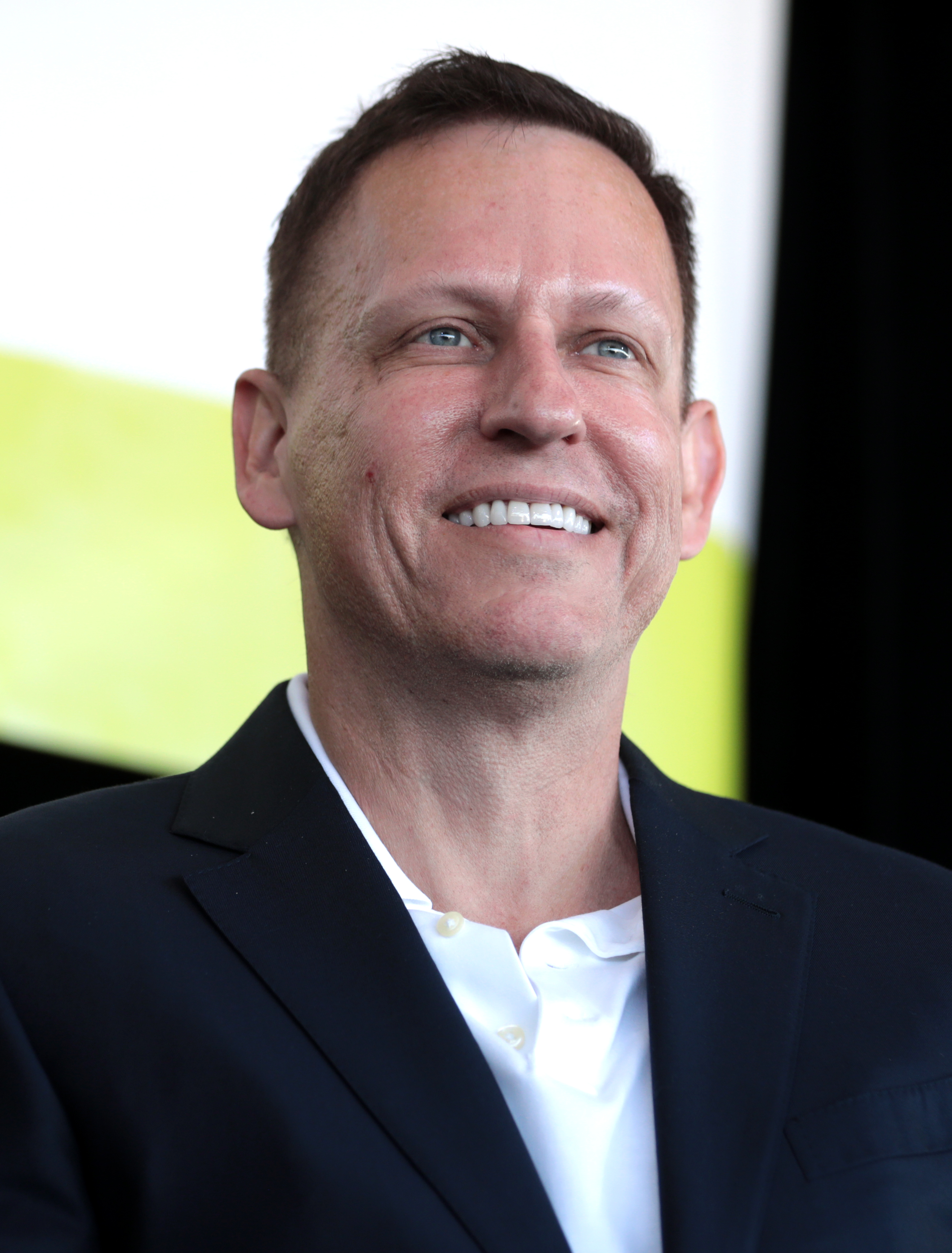 Photo: Wikimedia Commons. CC BY-SA 3.0. Gage Skidmore. Thiel’s $500,000 angel check in 2004 bought him a stake that was worth billions by the time of Facebook’s 2012 IPO.
What the Facebook Story Actually Reveals
When I go back to the question I started with — what did Thiel see in that nineteen-year-old at dinner in July 2004? — I think the answer is something specific and not obvious.
Thiel had learned from PayPal that the most dangerous thing a startup could do was grow so slowly that a competitor could copy it before it achieved escape velocity. He had also learned that the founders who built enduring companies tended to have an almost unreasonable certainty about what they were building and why. Zuckerberg, by every account, had that quality from the beginning. He was not building a class directory. He was building the social graph of the internet — a map of every human relationship, made searchable and persistent. He knew it from room H33.
The word Zuckerberg has used most consistently over two decades to describe what he is trying to build is connection. Facebook’s original mission statement was to give people the power to share and make the world more open and connected. The word “connect” runs through every major announcement, every earnings call, every congressional testimony. It is either the most sincere articulation of purpose in corporate history or the most effective cover story. Probably it is both.
What is indisputably true is the scale of what was actually built. Over three billion people use at least one Meta platform every month. For hundreds of millions of them — in Indonesia, India, Brazil, Nigeria, the Philippines — Facebook is not one of many ways to communicate online. It is the internet as they experience it. The platform that a nineteen-year-old built in a dorm room as a side project has become part of the infrastructure of human civilization.
That is worth sitting with, separate from the controversies. The controversies are real. The scale is also real. Both things are part of the story.
The Dorm Room Logic
I think often about the peculiar logic of great dorm room projects. Google started as a research question about how web pages link to each other. Amazon started as a list of twenty product categories, with books at the top. Facebook started as a directory for a single campus. None of these products, in their original form, looked like the thing they would become.
What they shared was a founder who could see the generalized version of the specific thing they had built. Zuckerberg did not see a Harvard directory. He saw a structure that could work at any university, then any organization, then for any human being on earth. That ability to see the general in the specific — and then to execute, relentlessly, on the path from one to the other — is the rarest quality in technology, and perhaps in any creative field.
Twenty-two years after TheFacebook launched in room H33, the platform he built connects more humans to one another than any invention in history. Whatever comes next — AI, the metaverse, something we cannot yet name — it will be built on the proof of concept that a college sophomore established in two weeks in February 2004: that people, given a clean and simple way to connect with one another online, will take it with a hunger that has no obvious ceiling.
That strikes me as genuinely encouraging. The appetite for human connection does not go away. It just waits for someone to build the right door.
Sources
- Kirkpatrick, David. The Facebook Effect: The Inside Story of the Company That Is Connecting the World. Simon & Schuster, 2010.
- Mezrich, Ben. The Accidental Billionaires: The Founding of Facebook, a Tale of Sex, Money, Genius, and Betrayal. Doubleday, 2009.
- Zuckerberg, Mark. Interview with The Harvard Crimson, November 2003.
- Zuckerberg, Mark. Testimony before the U.S. Senate Commerce and Judiciary Committees, April 10, 2018.
- Haugen, Frances. Testimony before the U.S. Senate Commerce Subcommittee on Consumer Protection, October 5, 2021.
- Federal Trade Commission. “FTC Imposes $5 Billion Penalty and Sweeping New Privacy Restrictions on Facebook.” July 24, 2019. ftc.gov.
- Meta Platforms, Inc. Annual Report (Form 10-K), filed with the U.S. Securities and Exchange Commission, 2023.
- Hoffman, Reid. Interview with Wired, “How Facebook Beat MySpace,” January 2009.
- Constine, Josh. “Facebook Passes 2 Billion Monthly Active Users.” TechCrunch, June 27, 2017.
- Seetharaman, Deepa, and Jeff Horwitz. “Facebook Says Its Rules Apply to All. Company Documents Reveal a Secret Elite That’s Exempt.” The Wall Street Journal, September 13, 2021.