I was deep into researching Arthur Rock when I noticed something that kept nagging at me. Eugene Kleiner’s name appeared everywhere in those early chapters of Silicon Valley history, as one of the Traitorous Eight who escaped William Shockley, as the engineer whose letter to a broker in New York accidentally summoned Arthur Rock to California. I had written about him as a supporting character, a member of the ensemble. But the more I read, the more I realized that Kleiner’s story does not end at Fairchild. It begins there. What he went on to build, the venture capital firm that would fund Genentech, Tandem Computers, Amazon, and Google, shaped the modern technology industry just as decisively as the semiconductor work he did in his engineering years.
Eugene Kleiner turned out to be that rare figure who reinvented himself twice: first as a refugee who became an engineer, and then as an engineer who became one of the most influential investors in the history of American business.
A Refugee Who Became an Engineer
Kleiner was born in 1923 in Vienna, Austria, the son of a shoe manufacturer. His early years were comfortable, rooted in the cultivated Jewish professional class of interwar Vienna. That world came apart with terrifying speed. When the Nazis annexed Austria in 1938, Kleiner was fifteen years old. His family fled, first to Italy and then, with the help of relatives, to the United States. They arrived with little money and no professional footing in a new country. What they had was the determination to start over.
Kleiner threw himself into his education in America. He earned a degree in mechanical engineering from the Brooklyn Polytechnic Institute and later a graduate degree from New York University. By the early 1950s, he had built a solid career as an engineer, eventually landing a position at Western Electric in New Jersey. His trajectory looked conventional — a skilled immigrant engineer making his way up the ranks of American manufacturing.
Then he saw an advertisement that changed everything. William Shockley, fresh from his Nobel Prize in 1956, was recruiting for his new semiconductor laboratory in Mountain View, California. Kleiner applied and was hired. It was a fateful decision, not because Shockley turned out to be a great boss — he did not — but because the job placed Kleiner in the same room as seven other brilliant engineers, and that proximity would prove more valuable than anything Shockley himself could teach them.
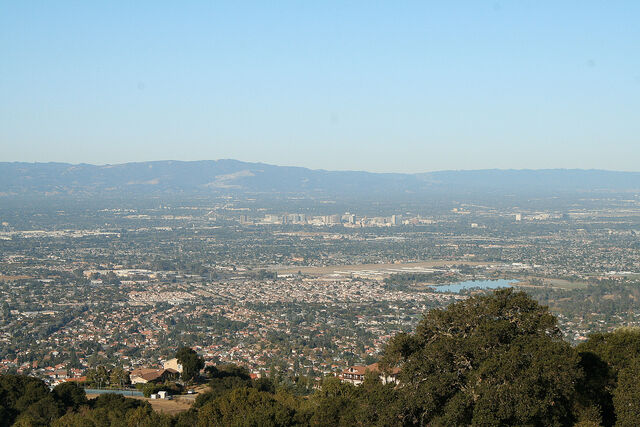
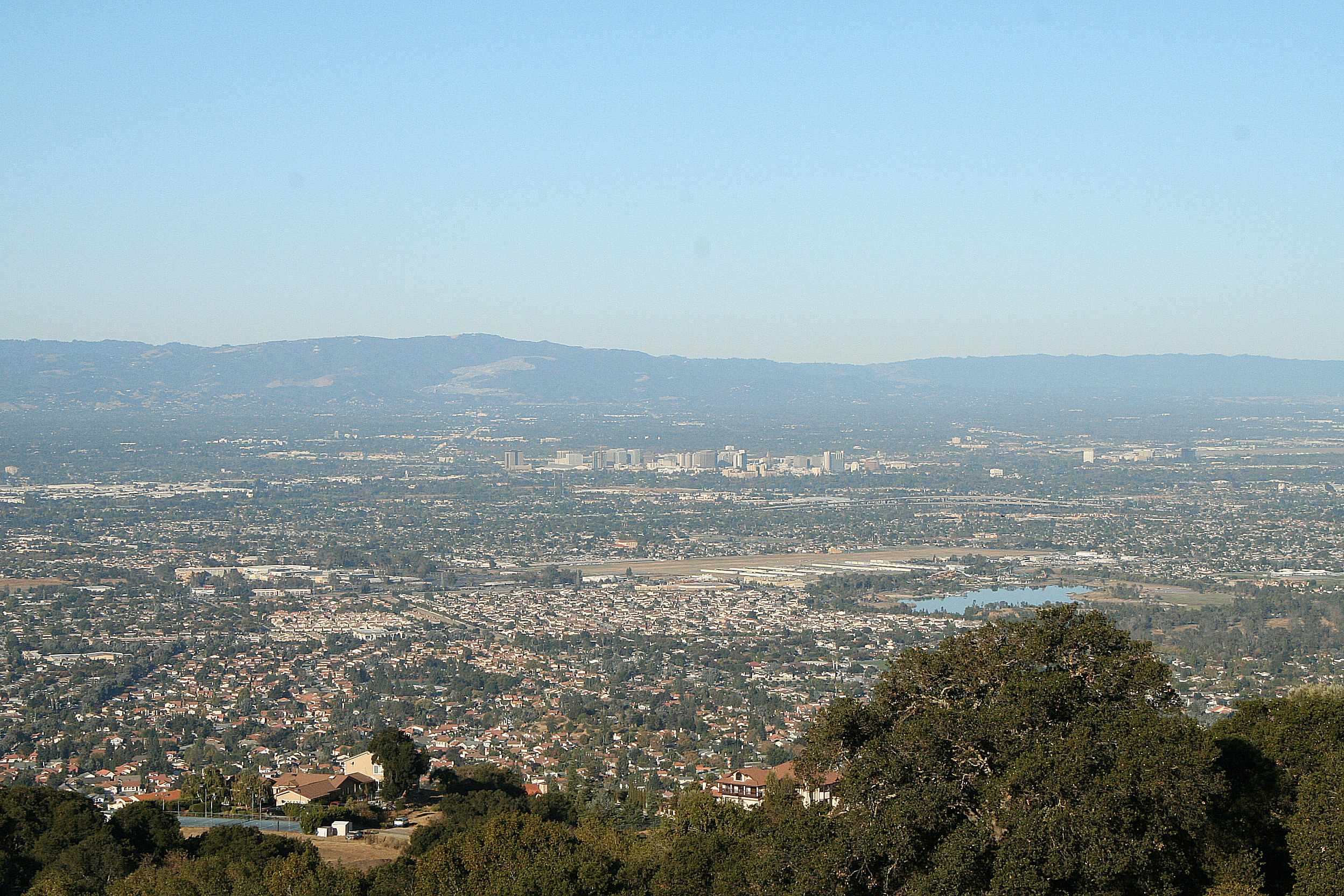 Photo: Wikimedia Commons. CC BY-SA 3.0. The valley that Kleiner helped build, photographed from above. What began as apricot orchards and aerospace facilities became the global center of technology in a single generation.
The Letter That Launched an Industry
By 1957, the eight engineers at Shockley Semiconductor — Kleiner among them — had reached their limit. Shockley’s management was erratic and demoralizing. His fixation on the wrong technology was frustrating. And his paranoid suspicion of his own employees was unbearable. They wanted out. The problem was that in 1957, there was no established path for employees to leave and start something on their own. The concept barely existed.
Kleiner took an unconventional step. He wrote a letter to his father’s broker at Hayden, Stone and Company in New York, asking whether anyone at the firm might know of a corporation looking to acquire a team of semiconductor engineers. It was a modest ask, really. He was not pitching a startup. He was asking for an introduction.
The letter made its way to Arthur Rock, a young analyst with an instinct for technology investments. Rock flew to California, met the group, and recognized immediately that this was something different from a normal deal. He did not try to find them a corporate acquirer. Instead, he spent months searching for someone willing to back them as founders of an independent company. After thirty-five rejections, he found Sherman Fairchild, who provided $1.38 million to launch Fairchild Semiconductor on September 18, 1957.
The eight engineers — Julius Blank, Victor Grinich, Jean Hoerni, Eugene Kleiner, Jay Last, Gordon Moore, Robert Noyce, and Sheldon Roberts — had done something that would echo through the entire subsequent history of Silicon Valley. They had demonstrated that talented engineers did not have to wait for permission. They could leave, form their own company, find a backer, and build. That model would be repeated hundreds of times in the decades that followed.
Kleiner worked at Fairchild through most of the 1960s, contributing to the technical work of a company that was fast becoming the most important semiconductor firm in the world. But by the late 1960s, Fairchild itself was beginning to fracture. Key figures were spinning out. Noyce and Moore left in 1968 to found Intel. Others departed to start their own ventures. Kleiner, now in his mid-forties, began to think about what came next.
From Engineer to Investor
What happened in Kleiner’s thinking during this period is documented, at least in part, by the oral history he gave to the Computer History Museum before his death in 2003. He described watching the spin-off companies emerge from Fairchild and noticing something. The engineers who left had tremendous talent. What they often lacked was the business and financial judgment to match. Having lived through the founding of Fairchild — and having watched Arthur Rock’s role in making that founding possible — Kleiner understood the value of what a sophisticated investor could provide. Not just money. Guidance, connections, discipline, and the ability to ask the hard questions that an obsessed founder sometimes cannot see.
He began making informal investments, backing engineers he knew, learning how the process worked from the other side. By 1972, he was ready to make it formal. What he needed was a partner with a different set of skills: a business operator who understood companies from the inside, someone who had built things rather than just funded them.
He found that person in Tom Perkins.
 Photo: Wikimedia Commons. CC BY-SA 3.0. The HP Garage, where Hewlett and Packard built the company that shaped the Valley’s culture. Tom Perkins cut his teeth at HP before teaming with Kleiner to create a new kind of investment firm.
Tom Perkins: The Operator
If Kleiner was the careful, methodical engineer turned thoughtful investor, Tom Perkins was something else entirely. Perkins was brash, competitive, and enormously ambitious. He had studied electrical engineering at MIT and earned his MBA from Harvard, then joined Hewlett-Packard, where he rose to become a senior executive. He had also co-founded a laser company called University Laboratories while still at HP, running it on nights and weekends until HP’s management forced him to choose between the two. He chose HP, but the entrepreneurial instinct never left him.
In his memoir Valley Boy (2007), Perkins described himself as someone who needed to be at the center of the action, who thrived on the competition and the confrontation of building something in a contested market. He was an adventurer — he would later own a series of increasingly large sailing yachts and circumnavigate the world — and he approached venture capital the way he approached everything else: with an appetite for risk and an absolute confidence in his own judgment.
Perkins saw the two of them as perfect complements — Kleiner was the scientist, the careful one, while Perkins was more reckless, and together they balanced out. When Kleiner and Perkins sat down to structure their partnership in 1972, they did not disagree about much. They agreed that the firm should be small, selective, and deeply involved with the companies it backed. They agreed that they would never invest in a company they were not prepared to help run if circumstances required it. And they agreed on one principle above all others: they were backing people, not business plans.
Kleiner Perkins and the Sand Hill Road Model
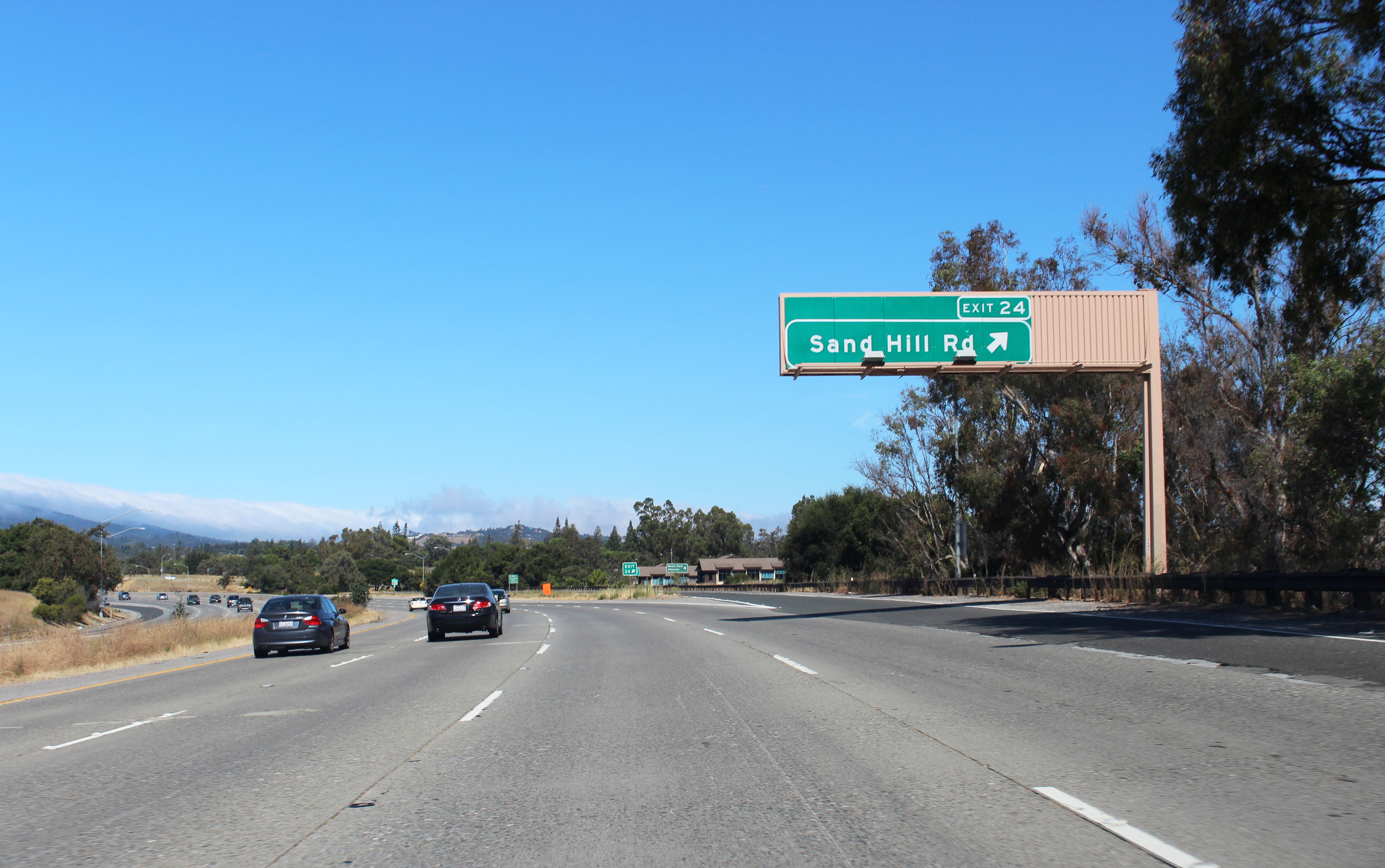
Kleiner Perkins opened its offices on Sand Hill Road in Menlo Park, at a time when that street was not yet the legendary address it would become. The road itself ran through what had recently been farmland and research parks, and a handful of other venture firms had recently set up along it. What Kleiner and Perkins built there was a new kind of investment institution.
Their first fund was relatively modest by later standards, but their approach was not. They did not sit behind desks waiting for founders to come to them with polished pitch decks. They went looking for problems worth solving and engineers capable of solving them. Sebastian Mallaby, in The Power Law: Venture Capital and the Making of the New Future (2022), describes the Kleiner Perkins model as distinguished by its willingness to be operationally involved — not just as board members, but as active participants in company building. Perkins, in particular, was known for working alongside founding teams on everything from hiring to product strategy.
Their early investments reflected both men’s backgrounds. They backed companies led by engineers. They focused on technology businesses where the competitive moat was a genuine scientific or engineering advantage, not just a clever marketing position. And they were willing to wait.
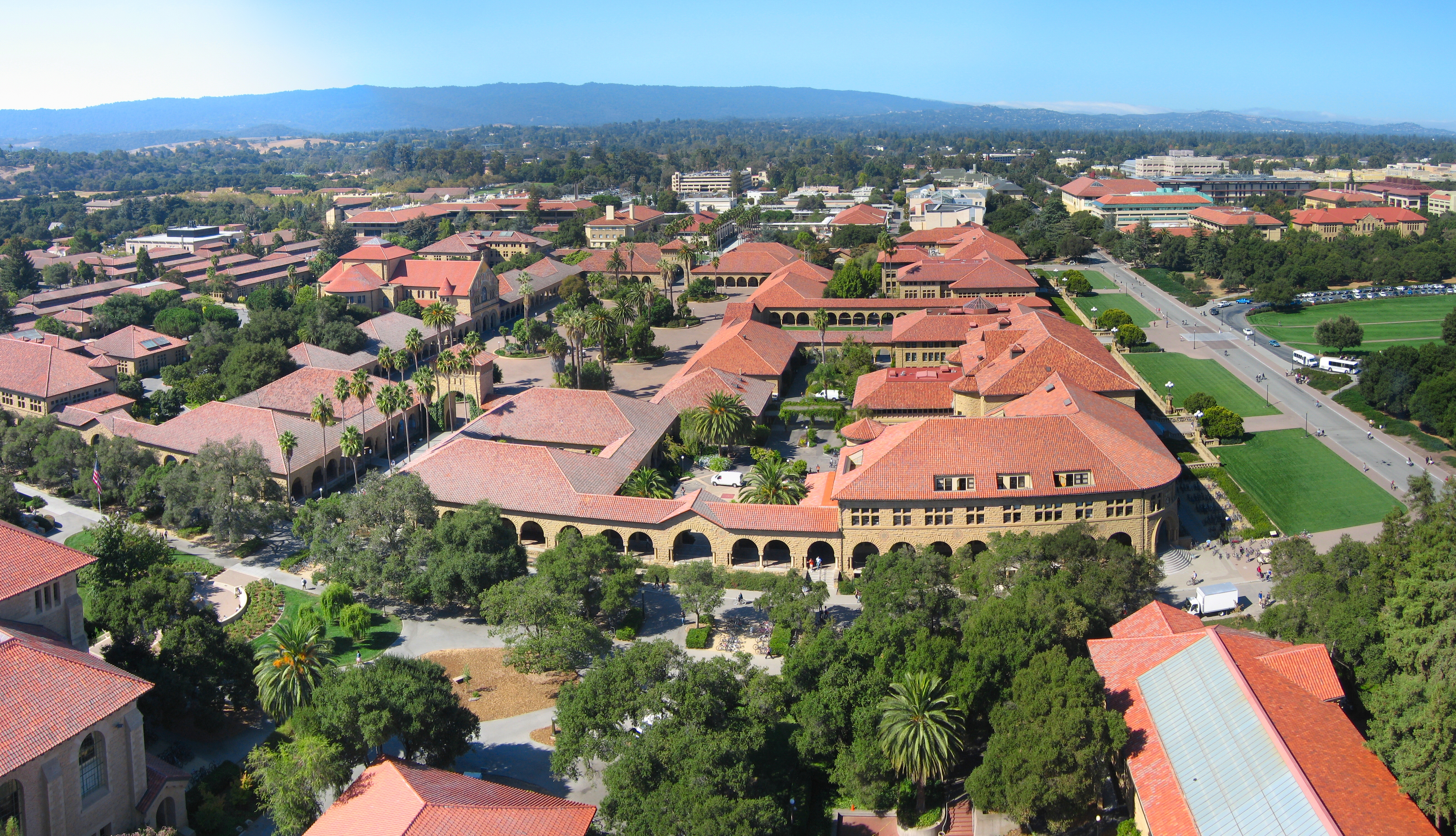 Photo: Wikimedia Commons. CC BY-SA 3.0. Stanford University from above. Kleiner Perkins drew heavily from the Stanford ecosystem, funding companies founded by faculty and graduates who combined academic rigor with commercial ambition.
Tandem Computers and a Different Kind of Bet
One of the firm’s first major successes was Tandem Computers, founded in 1974 by Jimmy Treybig, a former HP engineer. Treybig’s idea was elegant and commercially compelling: computers for applications where failure was simply not an option — banking, telecommunications, healthcare. Tandem’s machines were designed with redundant processors so that if one component failed, the system kept running without interruption. Kleiner and Perkins funded the company from its earliest stages.
Michael Malone, in The Big Score (1985), his chronicle of Silicon Valley’s first generation, describes the Tandem investment as an example of what distinguished Kleiner Perkins from more conservative backers. Most investors would have waited until a prototype existed. Kleiner and Perkins committed capital to the concept because they trusted Treybig’s engineering instincts and understood the market he was targeting. Tandem went public in 1977 and became a major commercial success, vindicating the early conviction.
But if Tandem was a strong debut, the investment that would define Kleiner Perkins as a firm willing to think across industry boundaries came next.
Genentech: The Bet That Changed Medicine
In 1976, Robert Swanson, a venture capitalist at Kleiner Perkins, made an audacious proposition. He wanted to co-found a company, with biochemist Herbert Boyer of UCSF, to commercialize recombinant DNA technology — the ability to engineer living cells to produce proteins on demand. The potential application he had in mind was synthesizing human insulin, which at the time was extracted from pigs and cattle at significant cost and with meaningful impurities.
The idea was audacious, and not everyone at Kleiner Perkins thought it was a venture capital investment. Biotechnology was not a technology sector in any recognized sense. The science was new, the regulatory path was uncertain, and the timelines to product revenue were measured in years, not months. Tom Perkins, to his great credit, saw it differently.
Kleiner Perkins led the founding investment in Genentech. The bet paid off in a way that exceeded almost anyone’s expectations. Genentech went public in 1980, and its IPO was one of the most dramatic in the history of the American stock market — the stock rose from $35 to $88 in the first twenty minutes of trading. More importantly, it proved that venture capital could fund not just the next generation of computers, but the next generation of medicine. The biotech industry as we know it today traces its origins directly to that investment.
What strikes me about the Genentech deal is how it illustrates the difference between Kleiner Perkins and Arthur Rock’s earlier model. Rock was a classic, disciplined investor who backed proven engineers in established technology categories. Kleiner and Perkins were willing to move across domain boundaries entirely. They did not have deep expertise in biochemistry. What they had was a framework for evaluating founders, and they applied that framework to an entirely new science. That willingness to cross sectors would eventually define the firm’s character across three decades.
John Doerr and the Next Chapter
By the early 1980s, Kleiner himself was stepping back from day-to-day investment activity, though he remained a partner and a guiding presence. The firm brought in new blood, and the hire that would prove most consequential was John Doerr, a former Intel sales engineer who joined in 1980. Kleiner and Perkins had built a firm with a culture, a reputation, and a way of working. Doerr absorbed all of it and then extended the firm’s reach into the internet age.
John Doerr made the investments that turned Kleiner Perkins from a respected venture firm into a legendary one: Netscape in 1994, Amazon in 1995, Google in 1999. Each of those bets reflected the philosophy Kleiner and Perkins had established — back exceptional founders in large markets and stay involved long enough to help them win. In Measure What Matters (2018), Doerr credits the firm’s culture of deep engagement, its insistence on sitting on boards and helping build teams, as central to those outcomes. That culture was not something Doerr invented. He inherited it from the two men who had set up shop on Sand Hill Road in 1972.
The Legacy of a Quiet Founder
Eugene Kleiner died in November 2003, at the age of eighty. He did not leave behind the kind of media presence that some of his contemporaries accumulated. He gave relatively few interviews. He did not write a memoir. Tom Perkins, his more flamboyant partner, generated far more column inches. But the institutional legacy Kleiner left is impossible to overstate.
The firm he co-founded would go on to manage billions of dollars and back companies whose combined market capitalization dwarfs most countries’ GDP. More importantly, the model he helped design — the deep-involvement, founder-focused, operationally hands-on approach to venture investing — became the template that the entire Sand Hill Road ecosystem was built on. When you read about Sequoia Capital or Andreessen Horowitz or any other major venture firm today, you are reading about organizations whose working assumptions were largely established by the practices that Kleiner and Perkins developed in those early years.
There is something fitting, I think, about the arc of Kleiner’s life. He arrived in America as a teenager, a refugee with no certainty about what his future held. He rebuilt himself as an engineer, then rebuilt himself again as an investor. The letter he wrote to his father’s broker in 1957, a modest request for help finding a corporate acquirer, ended up creating a chain reaction that ran through Fairchild, through Intel, through Genentech, through Amazon and Google and beyond. He did not do any of that alone — the Traitorous Eight, Arthur Rock, Tom Perkins, John Doerr, and hundreds of founders all played essential roles. But Kleiner was the connective tissue. He was the man who appeared at every pivot point, early enough to matter.
Photo: Wikimedia Commons. CC BY-SA 3.0. The modest structures of Silicon Valley’s early years gave way to some of the largest companies in history — a transformation that Kleiner Perkins helped make financially possible.
What I find most encouraging about Kleiner’s story is that his greatest contribution was not a single invention or a single investment. It was a belief: that exceptional people, given capital and support and the freedom to pursue a hard problem, will find a way to build something remarkable. He held that belief through his own reinvention from refugee to engineer, through the founding of Fairchild, and through twenty years of investing in the firms that defined their eras. He never stopped acting on it.
The venture capital industry has its critics, and many of those criticisms are legitimate. But at its best — at the level that Kleiner and Perkins were operating when they backed Genentech, when they committed to Tandem before a product existed, when they built the culture that Doerr carried into the internet age — it does something genuinely valuable. It takes a bet on a person with a difficult idea and gives them the resources to find out whether they are right. Kleiner understood that the bet is not really about the idea. It is about the person. And in his experience, across two continents and eight decades, exceptional people had a way of proving the skeptics wrong.
I find that a compelling thing to carry forward, and I suspect you do too, fellow techies.
Sources
- Perkins, Tom. Valley Boy: The Education of Tom Perkins. Gotham Books, 2007.
- Mallaby, Sebastian. The Power Law: Venture Capital and the Making of the New Future. Penguin Press, 2022.
- Malone, Michael S. The Big Score: The Billion-Dollar Story of Silicon Valley. Doubleday, 1985.
- Doerr, John. Measure What Matters: How Google, Bono, and the Gates Foundation Rock the World with OKRs. Portfolio/Penguin, 2018.
- “Eugene Kleiner Oral History.” Computer History Museum, computerhistory.org.
- Lécuyer, Christophe. Making Silicon Valley: Innovation and the Growth of High Tech, 1930–1970. MIT Press, 2006.
- “Genentech IPO: A Historic Day on Wall Street.” The Wall Street Journal, October 14, 1980.
- Kleiner Perkins firm history, kleinerperkins.com.
- “Tom Perkins, Kleiner Perkins Co-Founder, Dies at 84.” The New York Times, June 7, 2016.