I was at a conference last month and during a hallway chat someone said, completely casually, “well of course Musk founded Tesla.” I almost let it go, but I could not. I had been covering his time at Zip2, his near-death experience with malaria, and his founding of X.com, and I kept bumping into this misconception so widespread that even serious journalists repeat it without thinking: that Elon Musk founded Tesla.
He did not.
Tesla Motors was incorporated on July 1, 2003, by Martin Eberhard and Marc Tarpenning, two engineers who had already built and sold a company together. Musk did not arrive until a year later, and he arrived with a check, not a vision. The vision belonged to someone else entirely. What makes this story fascinating — and messy — is that the person who provided the vision eventually lost the company he built, while the person who provided the money became synonymous with it in the eyes of the world.
This is a story about who gets credit, who deserves it, and what those two things are rarely the same.
Did you know? In February 2004, Musk became Tesla’s chairman — the same month Zuckerberg launched TheFacebook. Two of the era’s defining companies took shape in the same month.
Who Founded Tesla?
Martin Eberhard was a reader. Before Tesla, he had co-founded NuvoMedia with Tarpenning in 1996, the company that built the Rocket eBook — one of the earliest commercial e-readers, predating the Kindle by nearly a decade. They sold NuvoMedia to Gemstar in 2000 for $187 million.
By 2003, Eberhard was looking for his next project. He was interested in energy and transportation, and he was thinking in a particular way: what could he do that would make a meaningful environmental difference while still making a product people actually wanted? He had grown frustrated with the prevailing narrative that going green meant accepting something inferior. He wanted to prove the opposite.
The answer revealed itself at an auto show, where he encountered AC Propulsion, a small California company that had built an electric sports car called the tzero. It was not a polished production vehicle. It was a prototype, raw and impractical in various ways. But it was fast. Shockingly fast. The tzero could accelerate from zero to sixty miles per hour in under four seconds — performance that put it in the same company as serious combustion-engine sports cars.
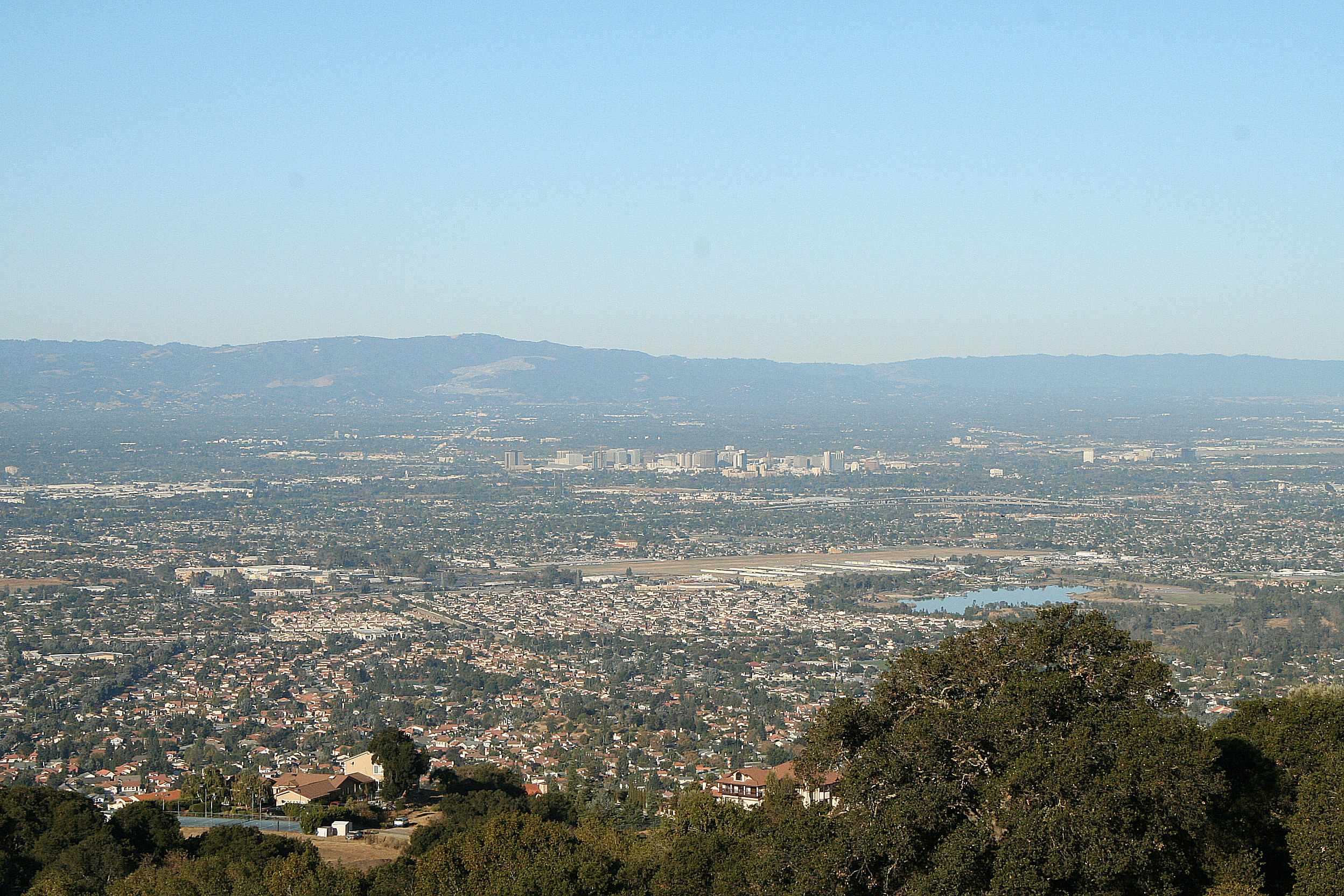 Photo: Doc Searls, Wikimedia Commons. CC BY 2.0.
Eberhard was electrified (the pun is appropriate). He approached AC Propulsion about licensing their technology to build a production version. They declined. So Eberhard and Tarpenning did the next logical thing: they decided to build one themselves.
They named the company after Nikola Tesla, the Serbian-American inventor who had done so much to advance alternating current technology in the late nineteenth century. It was a tribute that carried both technical meaning and a certain Silicon Valley romanticism about disruption and forgotten genius.
The Man Who Read About the tzero Too
Eberhard was not the only person who had been mesmerized by the tzero. Around the same time, Elon Musk had test-driven the car and came away with nearly identical conclusions about what it proved.
According to Ashlee Vance’s biography Elon Musk (2015), Musk had already been thinking about electric vehicles as part of his broader preoccupation with sustainable energy and the long-term survival of human civilization. The tzero showed him that the performance problem — the assumption that electric cars had to be slow, boring, and compromised — was already solved. The problem that remained was bringing it to market at scale.
When Eberhard and Tarpenning approached Musk in early 2004 seeking funding for their Series A round, they found someone unusually primed to say yes. In February 2004, Musk led the $6.5 million Series A round, contributing the majority of the capital himself. He joined the company’s board as chairman. He was not a founder. He was an investor who believed in what the founders were building.
But Musk was not a passive chairman. As Tim Higgins documents in Power Play: Tesla, Elon Musk, and the Bet of the Century (2021), Musk immediately inserted himself into product decisions, engineering priorities, and strategic direction. He had opinions about everything, and he was not shy about sharing them. From the earliest days, the relationship between Eberhard and Musk was collaborative and productive — and also a preview of the tension that would eventually tear them apart.
Building the Roadster
The plan was straightforward in concept and brutally difficult in execution. Musk later codified it in a now-famous 2006 blog post that laid out Tesla’s master plan:
“So, in short, the master plan is: Build sports car; Use that money to build an affordable car; Use that money to build an even more affordable car; While doing above, also provide zero emission electric power generation options. Don’t tell anyone.” — Elon Musk, “The Secret Tesla Motors Master Plan,” 2006, as cited in Renz & Vogel, JCRI
Tesla would build a high-performance electric sports car, sell it at a premium price to early adopters and wealthy enthusiasts, and use those revenues to fund the development of cheaper, higher-volume vehicles that would eventually reach mass markets. The mission, as Musk described it, was to prove that “electric vehicles can be better, quicker and more fun to drive than gasoline cars” (Tesla, Inc., 2019).
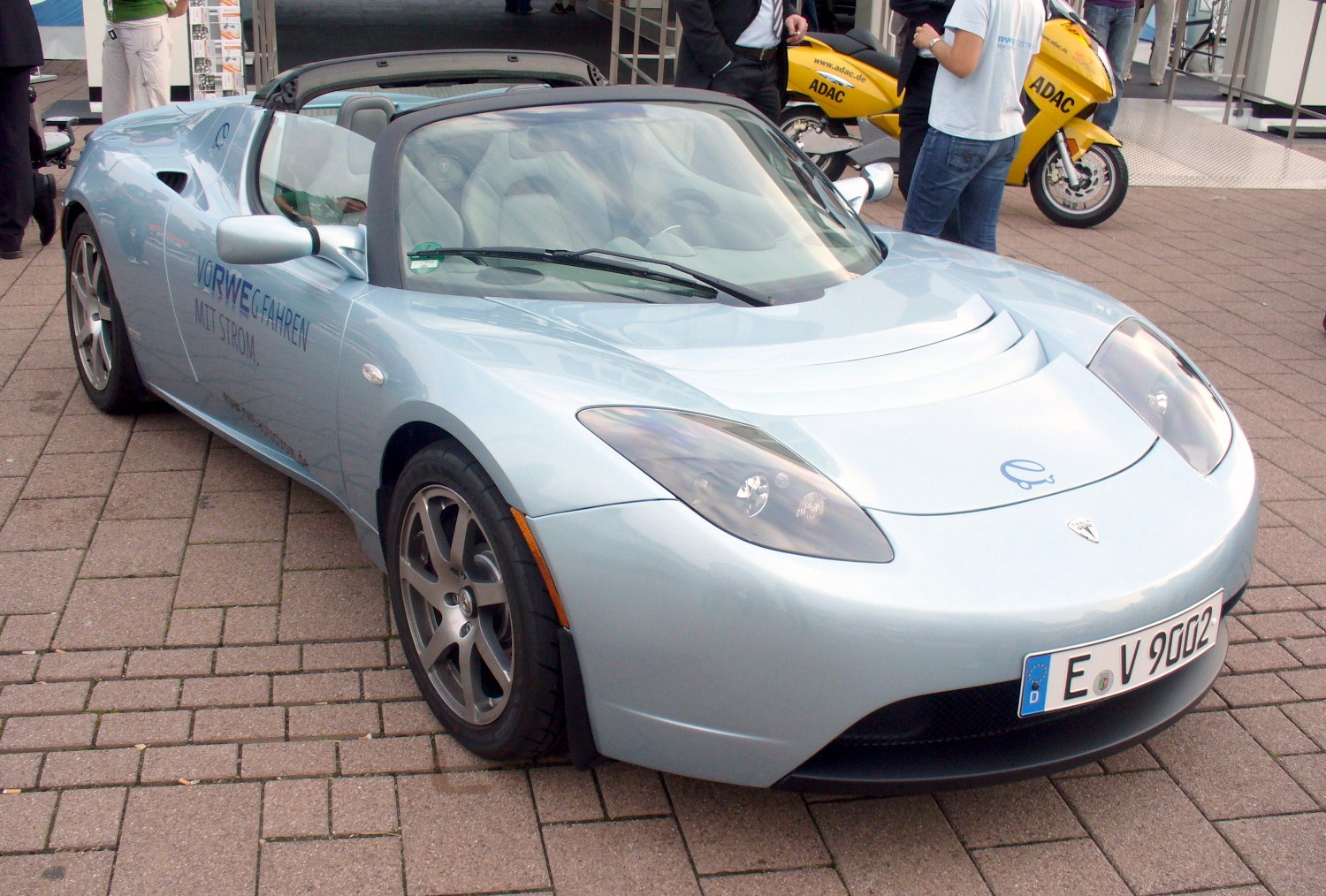
The car they designed became the Tesla Roadster — a two-seat convertible built on a modified Lotus Elise chassis, powered by thousands of lithium-ion battery cells. It was a clever engineering shortcut. Rather than designing an entirely new vehicle from scratch, Tesla licensed the Elise body and adapted it, which saved time and reduced cost while allowing the team to focus on the electric drivetrain that was their real innovation.
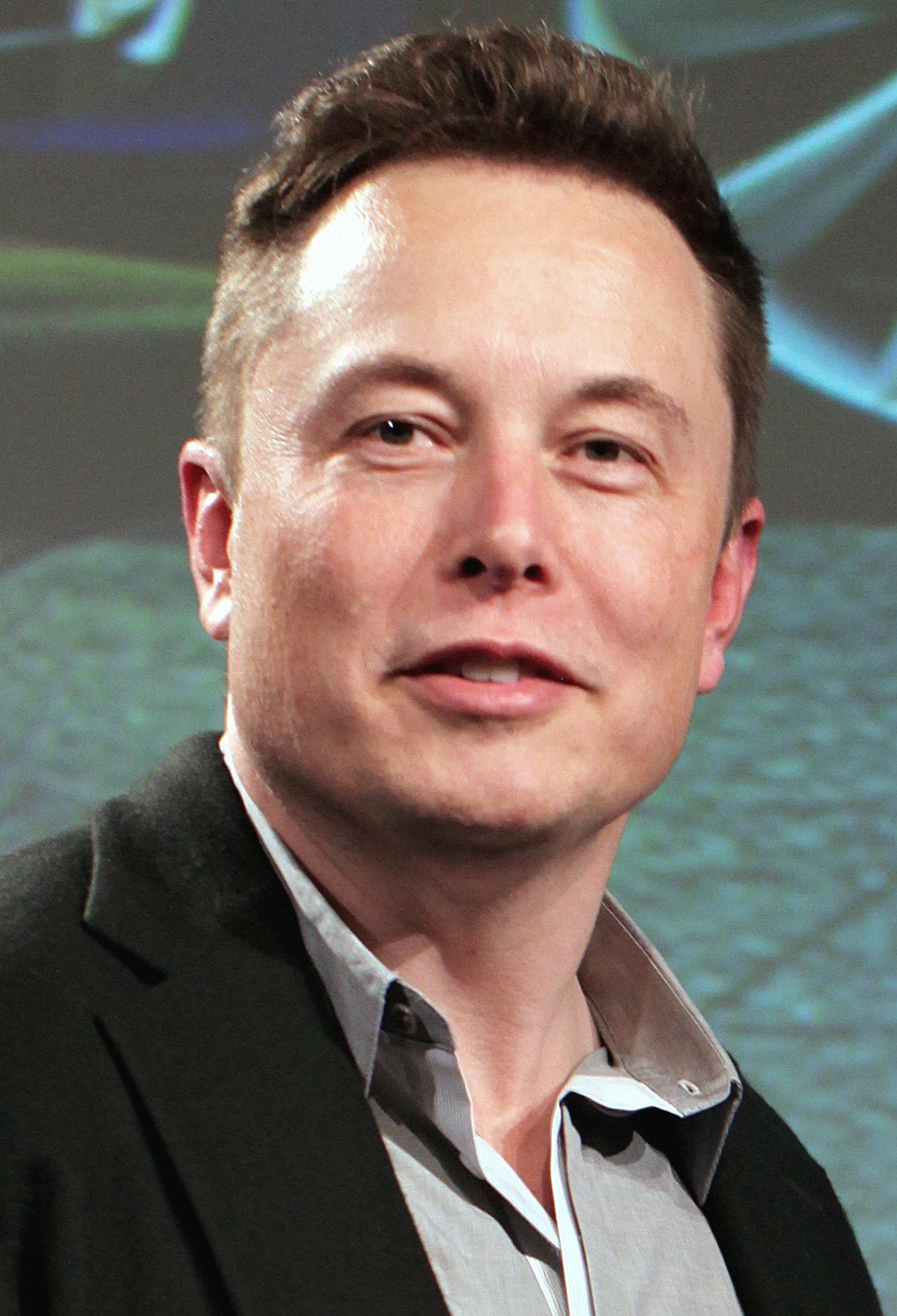 Photo: Steve Jurvetson, Wikimedia Commons. CC BY 2.0.
A critical figure in this work was JB Straubel, who joined Tesla in May 2004 as Chief Technical Officer. Straubel had already been working on electric vehicle technology independently and had his own connection to AC Propulsion. His addition to the team gave Tesla the deep battery and electronics expertise it needed to turn the Roadster concept into a real vehicle. Straubel would go on to become one of the most important engineers in Tesla’s history, staying with the company through its most difficult years and eventually founding Redwood Materials, a battery recycling company.
Eberhard led the Roadster’s development with characteristic intensity. He was technically obsessive and deeply involved in the details. But the Roadster proved far harder and more expensive to build than anyone had anticipated. Costs overran. Schedules slipped. Weight estimates were exceeded. What had seemed like a $65,000 car was evolving into something that would need to cost considerably more.
The Ousting
The cracks between Eberhard and Musk became visible as the Roadster’s development stretched on and the bills mounted. By 2007, the relationship had fractured. The board lost confidence in Eberhard’s ability to manage the company through its production challenges. According to reporting by Drake Baer in Business Insider, Musk and other board members concluded that Eberhard’s management style was contributing to the cost overruns and delays rather than solving them.
In November 2007, Eberhard was removed as CEO of the company he had founded four years earlier. Michael Marks, former CEO of the electronics manufacturer Flextronics, was brought in as an interim replacement. Eberhard was offered a reduced role — president of technology — but the demotion was clear. He left the company entirely by the end of the year.
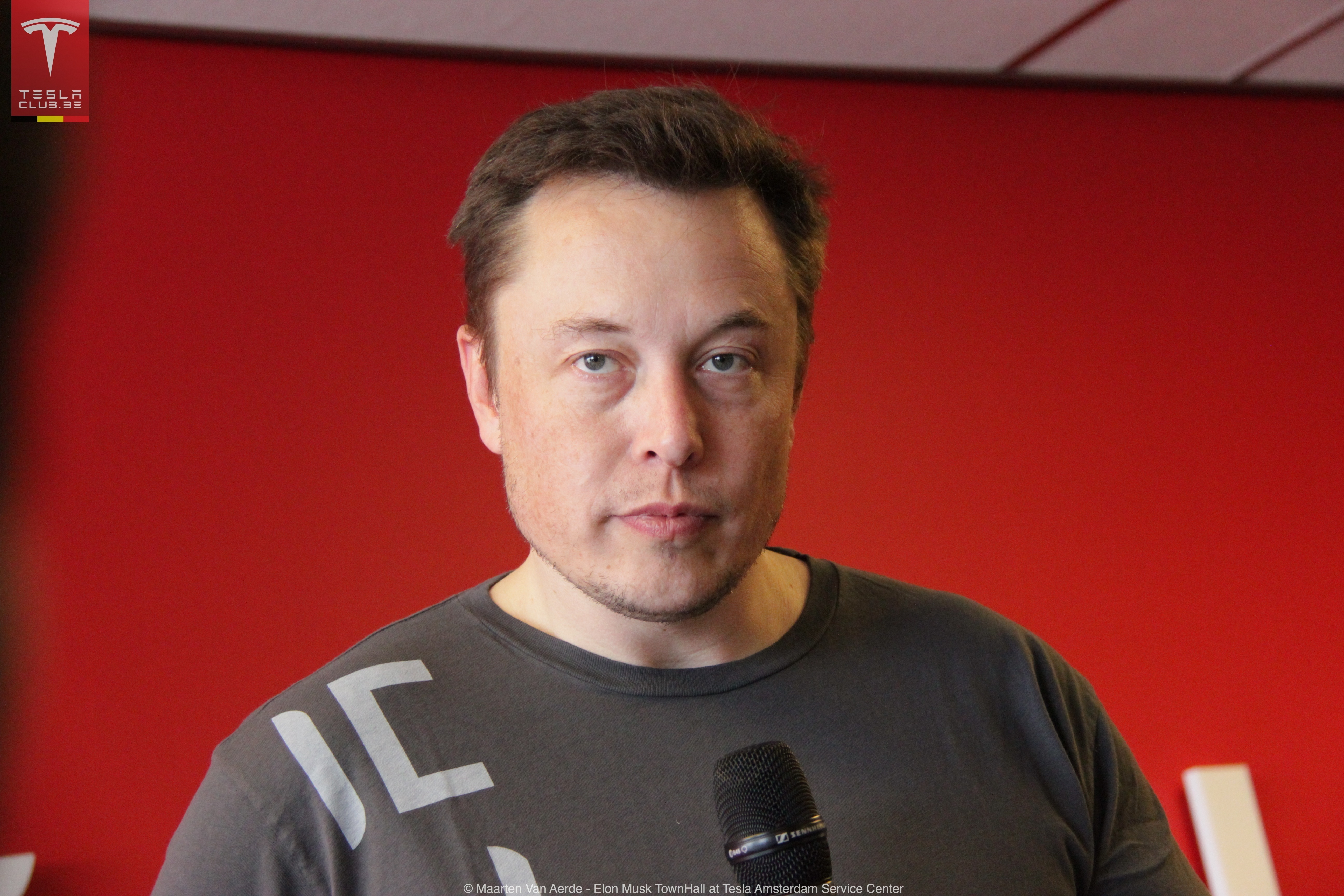 Photo: Heisenberg Media, Wikimedia Commons. CC BY 2.0.
Musk himself became CEO in October 2008, as Tesla was weathering what he later described as a simultaneous near-death experience with SpaceX. He would describe that period to Ashlee Vance as the worst of his life — both companies were weeks from collapse, and he was using the last of his personal liquidity to keep them alive. Tesla closed a critical funding round on Christmas Eve 2008, hours before it would have run out of money.
That dramatic survival story became central to the Tesla mythology, with Musk as the hero who bet everything. What often gets compressed out of that narrative is that the company Musk saved was built by someone who was no longer there to see it succeed.
The Lawsuit and the Five Co-Founders
Eberhard did not go quietly. In 2009, he filed suit against Tesla and Musk, alleging that he had been defamed and wrongfully terminated. The lawsuit was messy and personal, with Eberhard claiming that Musk had systematically rewritten the company’s founding narrative to diminish his role and elevate Musk’s own.
The suit was settled out of court in 2009. As part of the settlement, Tesla and Musk agreed to recognize five people as co-founders: Eberhard, Tarpenning, Musk, Straubel, and Ian Wright, another early employee and engineer who had joined in 2004. The designation was, in some ways, a compromise. Musk’s camp insisted that his early contributions — the funding, the strategic direction, the engineering input — qualified him as a genuine co-founder. Eberhard’s camp maintained, with legal standing, that the company existed before Musk arrived.
Both things can be true simultaneously, and that ambiguity is precisely what makes the Tesla founding story so instructive.
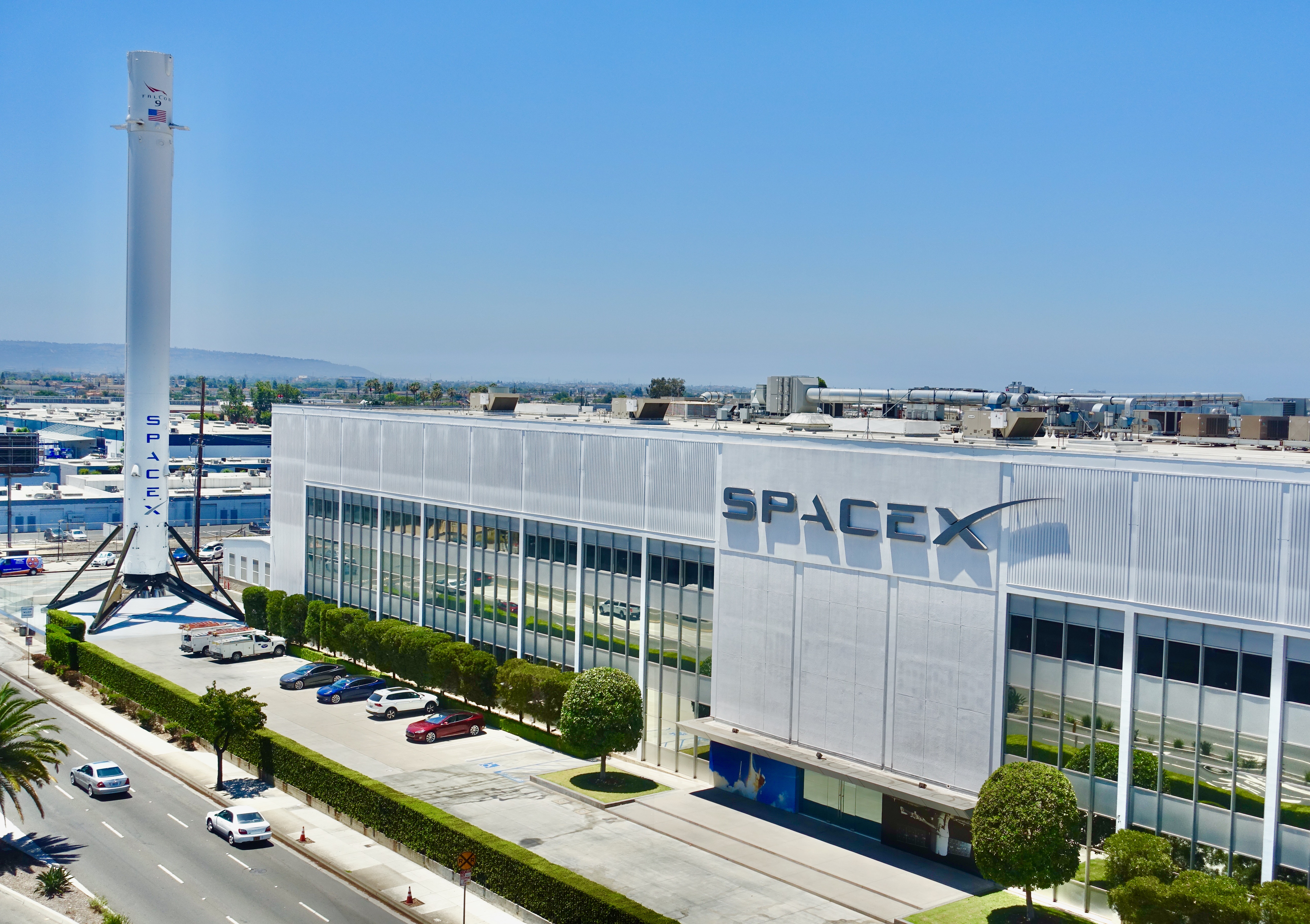 Photo: SpaceX, Wikimedia Commons. CC BY-NC 2.0 / Public Domain.
What This Story Is Really About
I have spent a lot of time with the PayPal Mafia and with the broader ecology of Silicon Valley founding stories, and I find the Tesla case uniquely illuminating because it surfaces a question that almost every startup eventually forces into the open: what does it mean to found a company?
Is it the person who has the idea? The person who incorporates the legal entity? The person who writes the first line of code or engineers the first prototype? Or is it the person who provides the capital without which none of the above happens — who takes the financial risk that transforms an interesting engineering project into a real company?
The answer depends on when you ask and who is telling the story.
Eberhard has spent years correcting the record: the press always asks why he founded Tesla, and he always has to point out that he didn’t — even though the question itself tells you something about how the mythology works. What I find remarkable about Eberhard’s trajectory is not the bitterness, which is entirely understandable, but the clarity with which he understood what he had accomplished. He identified a real opportunity when almost no one in the auto industry was paying attention to it. He recruited talented people and convinced a skeptical market that an electric sports car was worth taking seriously. He built enough of a foundation that when Musk took over, there was something worth saving.
The Roadster shipped. It was expensive, limited in range, and complicated to own. But it proved the concept. And the concept — that electric vehicles could be genuinely desirable rather than merely virtuous — was the one idea that made everything Tesla became possible. That idea came from Martin Eberhard.
What This Teaches Us About Credit
Silicon Valley has always been better at producing legends than at producing accurate history. The lone genius in the garage, the single visionary founder who sees what no one else can — these are useful stories that inspire future founders and attract venture capital. They are rarely the whole truth.
Tesla’s real story is more complex and more interesting than the simplified version. It involves a small company making a prototype that two different people saw at almost the same moment and understood in almost the same way. It involves a collaboration that was fruitful and a relationship that was eventually destructive. It involves engineers like Straubel who did the technical work that made the vision real. It involves board decisions and lawsuits and a settlement that tried, imperfectly, to distribute credit more fairly.
What it does not involve is a single founder genius who conceived and built everything alone. And in a way, that is the more hopeful version of the story — because it means that transformative companies are not built only by rare, singular individuals who arrive once a generation. They are built by clusters of people, each contributing something essential at the right moment. Eberhard saw the opportunity. Tarpenning co-built the company. Musk funded and eventually led it. Straubel solved the engineering. Wright helped build the team.
Every one of those contributions was necessary. None of them was sufficient alone.
The Tesla Roadster sat in the Wikimedia photo archives for years as “Photo by Thomas doerfer” — a single photographer capturing a car built by at least five people and launched by a company that, for a while, was almost certain to fail. Every time I look at that image I think of what Eberhard and Musk both saw in the tzero: the performance is right there in the shape of it. Someone proved it could be done.
That proof was Martin Eberhard’s contribution to history, and no founding dispute can take that away.
Editor’s note (July 2026): An earlier version stated Eberhard was fired in November 2007. The standard record is that he was asked to step down as CEO in August 2007, with Michael Marks serving as interim CEO and Ze’ev Drori taking over in December 2007; November 30, 2007 was the announcement.
Sources
- Franziska M. Renz and Julian U. N. Vogel, “Elon Musk: Leader or Liability?”, Journal of Case Research and Inquiry, Vol. 6, 2020. Academic case study covering Tesla’s founding, Eberhard lawsuit, SEC settlement, and Musk’s master plan.
- Eric Jorgenson, The Book of Elon, 2021.
- Ashlee Vance, Elon Musk: Tesla, SpaceX, and the Quest for a Fantastic Future (Ecco/HarperCollins, 2015). Vance conducted extensive interviews with Musk and early Tesla employees and provides the most thorough account of the Roadster development period.
- Tim Higgins, Power Play: Tesla, Elon Musk, and the Bet of the Century (Doubleday, 2021). Higgins, a Wall Street Journal reporter, interviewed more than 200 current and former Tesla employees and provides detailed coverage of the Eberhard–Musk conflict.
- Drake Baer, “The Making of Tesla: Invention, Betrayal, and the Birth of the Roadster,” Business Insider, November 11, 2014. One of the most comprehensive journalistic accounts of the founding dispute.
- Martin Eberhard and Marc Tarpenning, “Tesla Motors: The ‘True Zero-Emission Car’” (original white paper, 2006). Eberhard’s own articulation of Tesla’s founding vision.
- Eberhard v. Tesla Motors, Inc., et al., Santa Clara County Superior Court (2009). The lawsuit and its settlement established the five-founder designation.
- AC Propulsion, tzero documentation and company history, acpropulsion.com.
- Tesla Motors, “About Tesla,” tesla.com/about (company’s own co-founder listing, updated post-settlement).