I have been writing about Sun Microsystems for a while now — the company that gave the world Java, coined the phrase “the network is the computer,” and left a fingerprint on nearly every layer of the modern internet. I have written about Vinod Khosla, the teenager who read about Intel in an Indian newspaper and willed himself across the world to build something comparable. I have written about Bill Joy, the Berkeley genius who rewrote Unix and then warned us about artificial intelligence twenty-five years before anyone was ready to listen.
But the more I read, the more I noticed that one co-founder kept appearing in every story, steering every decision, picking every fight, and staying in the chair long after his peers had moved on. Scott McNealy was Sun’s CEO for twenty-two years. He was not the engineer in the group. He was not the visionary who coined the company’s famous slogan. But he was the one who ran the company, who took the shots, and who made sure everyone else knew that Sun was not backing down — not from IBM, not from Microsoft, not from anyone.
That kind of staying power deserves its own story.
Detroit Roots and Ivy League Credentials
Scott McNealy was born on November 13, 1954, in Columbus, Indiana, into a family that understood the American industrial economy from the inside. His father, Raymond William McNealy Jr., was a vice chairman at American Motors Corporation, one of the smaller players in Detroit’s automotive world. Growing up with that background gave McNealy something that many Silicon Valley founders lacked: a visceral understanding of how large organizations competed, how manufacturing worked, and what it felt like to be an underdog trying to beat companies with deeper pockets and longer histories.
He attended Harvard University, graduating with a degree in economics in 1976. Then, like several of the people who would become his co-founders, he made his way to Stanford University for his MBA. Stanford in the late 1970s was not just a business school. It was a proving ground where engineers, business thinkers, and risk-takers cross-pollinated and conspired. McNealy arrived just as that energy was reaching critical mass.
At Stanford he met Vinod Khosla, the Indian engineer with an almost terrifying drive to build something significant. Through Khosla he would soon meet Andy Bechtolsheim, the German-born hardware prodigy who had already designed a networked workstation as part of his graduate research, and Bill Joy, the Berkeley programmer who had already changed computing once and was ready to do it again.
 Photo: Wikimedia Commons. CC BY-SA 2.0. Stanford University from above. McNealy arrived for his MBA in the late 1970s and found a network of engineers and entrepreneurs that would change the trajectory of his life.
The Fourth Co-Founder Who Ran the Company
Sun Microsystems was incorporated on February 24, 1982. McNealy was twenty-seven years old. In most accounts of Sun’s founding, he is listed fourth — after Bechtolsheim, Khosla, and Joy. The hardware was Bechtolsheim’s. The operating system thinking was Joy’s. The entrepreneurial drive and initial fundraising were Khosla’s. What did McNealy bring?
He brought operations. He brought sales instinct. He brought the conviction that Sun was going to win, and the willingness to say so loudly, repeatedly, and in the most combative terms possible.
Khosla served as the company’s first CEO but stepped back from day-to-day management within a few years. McNealy stepped in and, unlike most CEOs handed a founder’s company to steward, he treated it as if it were his own creation. He took the role in 1984 and held it until 2006 — twenty-two years at the helm of a company that went from startup to $18 billion in annual revenue and back again.
“The Network Is the Computer”
The phrase “the network is the computer” is often attributed to Sun as an institution, or to John Gage, Sun’s director of science who formalized it as a slogan. But it was McNealy who deployed it as a competitive weapon. Every time he walked into a customer briefing, every time he testified in a courtroom, every time he took the stage at a conference, that phrase was the spine of the argument.
The thesis was genuinely prescient. In the early 1980s, the dominant model of computing was isolated: you bought a powerful machine, you loaded software onto it from physical media, and it sat on your desk doing work independent of any network. Sun’s architectural philosophy said that this was backwards. The real power of computing would come from connecting machines together. The workstation on your desk derived its value not from what was inside it but from what it could reach.
Sun was always about the network — every decision about hardware, software, and protocols came from that core belief, and the machine on your desk was just an interface to something much larger. This was not just a vision for how computers should work. It was a direct challenge to Microsoft’s model of the world, where software was tied to individual machines running a proprietary operating system. McNealy understood that if the network became the center of computing, Microsoft’s grip on the desktop became less relevant. And he spent the better part of two decades trying to make that future arrive faster.
 Photo: Wikimedia Commons. CC BY-SA 4.0. Silicon Valley, where Sun Microsystems competed fiercely through the 1980s and 1990s, challenging IBM, Microsoft, and the entire prevailing model of computing.
The Microsoft Wars
No relationship defined McNealy’s tenure at Sun more than his war with Microsoft and Bill Gates. It was personal, it was strategic, and it produced some of the most memorable one-liners in corporate history.
McNealy’s most famous quote, delivered at a 1999 developers conference and reported by CNET, distilled his worldview into eleven words: “We’re the dot in dot-com. Microsoft is the dot in dot-gone.” Crude, combative, and entirely intentional. McNealy believed that Microsoft’s desktop-centric model was a dead end, and he said so every chance he got.
The conflict was not purely rhetorical. When Sun released Java in 1995, Microsoft licensed the technology and then — Sun alleged — deliberately modified its implementation in ways that broke Java’s “write once, run anywhere” portability. The whole point of Java, the thing that made it a threat to Microsoft’s platform dominance, was that a Java application could run on any machine regardless of operating system. If Microsoft could splinter Java into a Windows-only variant, it would neutralize the threat.
Sun sued. In 2001, Microsoft settled the case for $20 million. Then, in the context of the broader United States v. Microsoft antitrust proceedings, McNealy became one of the most visible corporate voices calling for consequences. He testified before Congress, gave interviews to any outlet that would have him, and framed Microsoft’s behavior not just as a competitive threat to Sun but as a structural danger to the technology industry.
“Bill Gates is the most dangerous and powerful industrialist of our age.”
— Scott McNealy, quoted in John Markoff’s coverage for The New York Times, 1997
In 2004, Sun and Microsoft settled all outstanding litigation for $1.6 billion — one of the largest technology legal settlements of its era. McNealy declared it a victory. Whether it was one depends on what you were measuring.
The Dot-Com Peak and the Long Fall
At the height of the dot-com boom in 2000, Sun Microsystems was worth approximately $200 billion. Every internet company that was spending recklessly on infrastructure needed Sun’s high-end servers. Sun’s hardware was the backbone of the early commercial internet. Revenue hit $18.3 billion in the fiscal year ending June 2001. The stock price touched $64 per share.
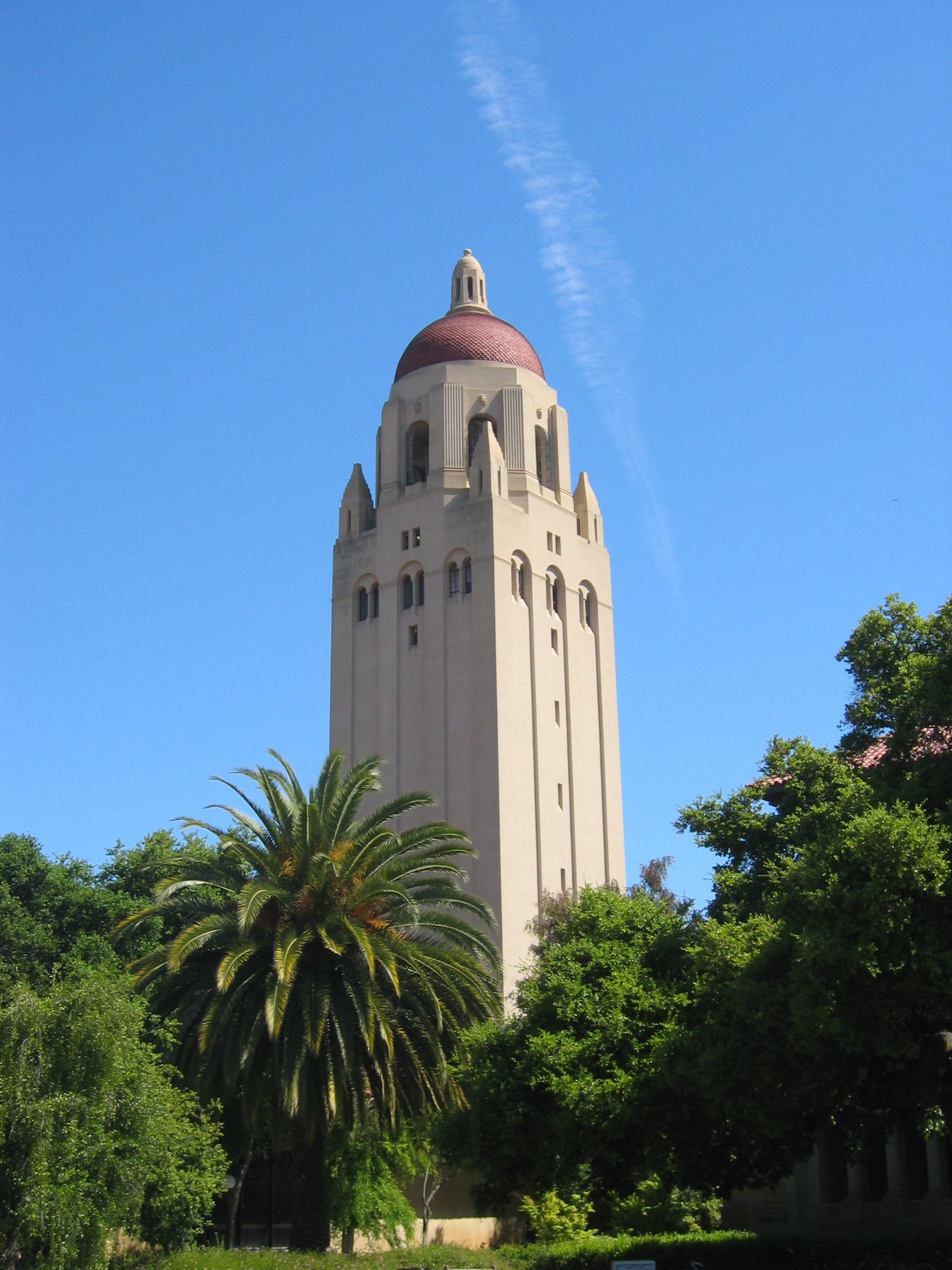 Photo: Wikimedia Commons. CC BY-SA 3.0. Stanford University’s Hoover Tower. The university that shaped McNealy, Khosla, and Bechtolsheim was also, indirectly, the reason Sun’s name contained the word “network” from the very beginning.
Then the dot-com crash arrived. Sun’s biggest customers — the internet startups burning through venture capital — collapsed overnight. Orders dried up. The company that had been worth $200 billion saw its share price fall below $10 per share within two years. In the words of McNealy himself, speaking to investors in 2002, as quoted by CNET: “We’re in the server hardware business and our customers went away.”
What followed was a decade of restructuring, layoffs, and strategic pivots that never quite caught. Sun tried to compete with cheap Linux servers running on Intel hardware. It open-sourced Solaris, acquired MySQL, and gave away software that it had once sold. These were the right moves in retrospect, and they produced a genuine open-source legacy that Sun’s engineers are still proud of. But they came too late and at too high a cost to reverse the financial trajectory.
McNealy’s combative style, which had been an asset when Sun was the scrappy challenger taking on IBM and Microsoft, became a liability when the company needed to rebuild trust with a changing customer base. He remained CEO until April 2006, when he stepped down and was replaced by Jonathan Schwartz. He had spent twenty-two years in the chair.
What Combative Leadership Leaves Behind
It would be easy to read McNealy’s story as a cautionary tale — the fighter who stayed too long and watched his company diminish. But that framing misses what he actually built and what his style of leadership produced.
Under McNealy, Sun created Java, which runs on billions of devices today and remains one of the three most widely used programming languages in the world. Under McNealy, Sun pioneered the open-source movement in enterprise computing, contributing technologies that power the modern web. Under McNealy, Sun articulated a vision of networked computing that was twenty years ahead of cloud infrastructure as we now know it.
The Oracle acquisition that closed on January 27, 2010, for $7.4 billion was painful. A $200 billion company sold for $7.4 billion is, by any measure, a fall. But the technologies Sun built did not fall with it. Java outlived Sun. MySQL outlived Sun. The idea that the network is the computer outlived Sun — it became the organizing principle of Amazon Web Services, Google Cloud, and Microsoft Azure.
McNealy spent years after Sun advocating for education technology through his nonprofit Curriki, which he co-founded to provide free curriculum materials to students and teachers worldwide. It was a quieter mission than fighting Microsoft in federal court, but it reflected the same underlying conviction: that technology, applied correctly, levels the playing field.
What I find genuinely admirable about McNealy is not that he won every fight. He did not. It is that he fought them in public, on the record, in terms that forced the industry to engage. When he said that the desktop was dying and the network was the future, most of the industry dismissed it. The cloud proved him right. When he sued Microsoft over Java, most observers called it a desperate legal gambit. The eventual settlement and the subsequent antitrust rulings reshaped how the industry thought about platform power.
He was, in the end, more right than he was wrong. The technology he and his co-founders built outlasted the company that built it — and that is exactly what the best founders produce.
Sources
- Southwick, Karen. High Noon: The Inside Story of Scott McNealy and the Rise of Sun Microsystems. John Wiley & Sons, 1999.
- Hall, Mark, and John Barry. Sunburst: The Ascent of Sun Microsystems. Contemporary Books, 1990.
- Markoff, John. “Sun Microsystems’ Chief Warns of Microsoft’s Power.” The New York Times, 1997.
- “Sun vs. Microsoft: The Java Lawsuit.” CNET News, reporting from 1997–2001. cnet.com
- “Microsoft Settles Sun Suit for $1.6 Billion.” Wired, April 2, 2004. wired.com
- “Oracle Completes Acquisition of Sun Microsystems.” Oracle Press Release, January 27, 2010.
- McNealy, Scott. Remarks at Sun Developer Conference, quoted by CNET, 1999 and 2002.
- “United States v. Microsoft Corporation.” U.S. Department of Justice, 2001. justice.gov
- Curriki. curriki.org