I got into an argument with a friend last week about who actually built Silicon Valley. He kept naming founders — Bezos, Page, Andreessen. I kept saying he was missing the point, because the more I dig into these stories, the more I keep running into the same name standing quietly behind the curtain. Not a founder. Not an engineer. A venture capitalist. His name is John Doerr, and his track record is so improbable that it almost reads like fiction. He bet on Netscape, Amazon, and Google before any of them were household names — and he was right every single time.
What separates an investor who gets lucky once from someone who sees the future three times in a row?
Did you know? Doerr invested in Amazon two days after the pitch — and, five years earlier, Musk had dropped out of Stanford after two days. Two days seems to be the window for the biggest decisions in this valley.
From Rice to Intel to Kleiner Perkins
John Doerr grew up in St. Louis, earned an electrical engineering degree from Rice University, and then went to Harvard Business School for his MBA. But the most formative experience of his early career was neither of those institutions. It was Intel.
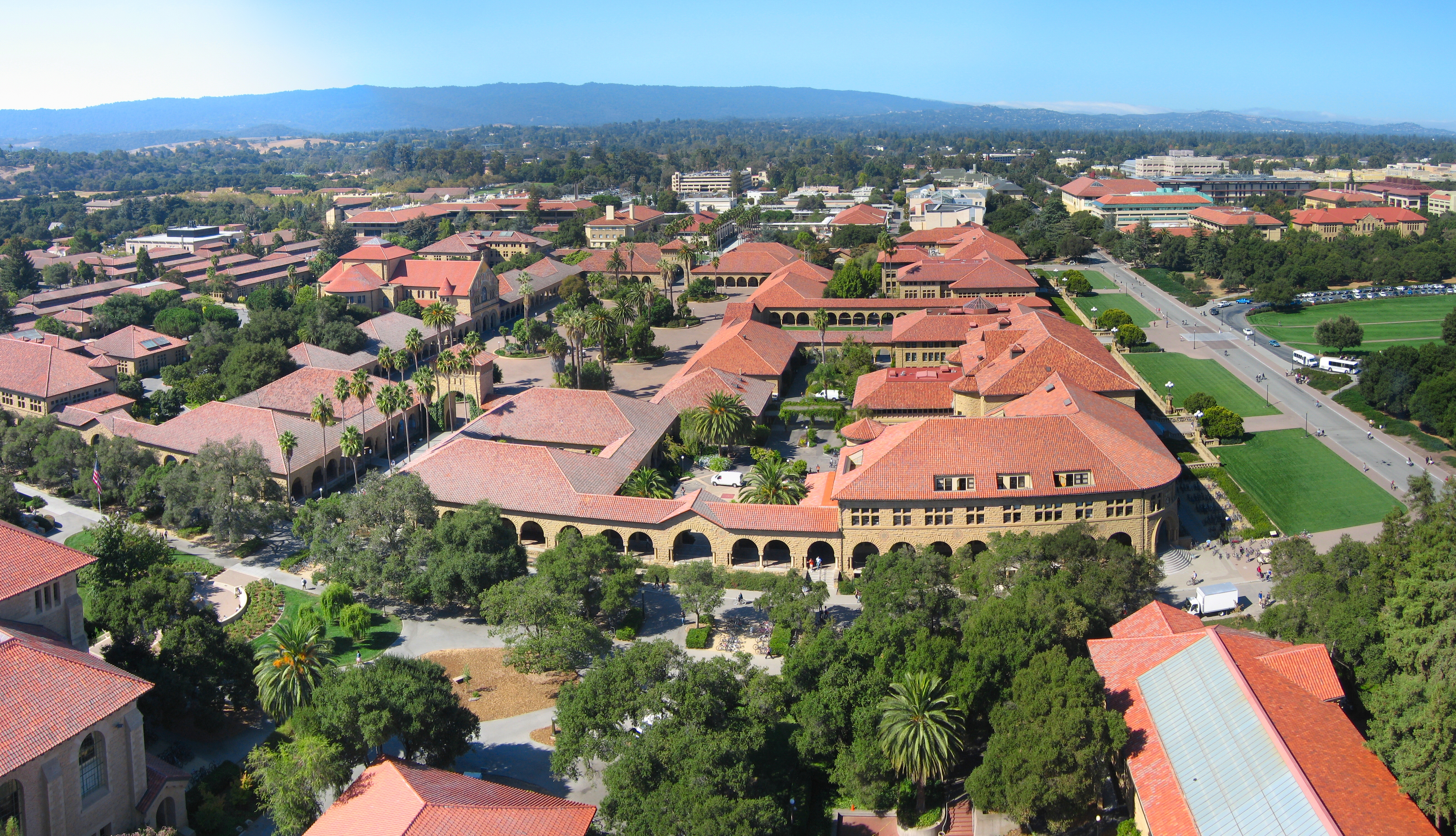 Photo: Wikimedia Commons. CC BY-SA 3.0. Stanford and the surrounding area became the epicenter of Doerr’s investments.
Doerr joined Intel as a sales engineer during the company’s formative years, working directly with the technology that was about to reshape every industry on the planet. He learned how semiconductor chips moved from labs to products, from products to markets, and from markets to entire ecosystems. That understanding — how a technology becomes a business — would become the foundation of everything he did next.
In 1980, Doerr joined Kleiner Perkins Caufield & Byers, the venture capital firm that had already established itself as one of Silicon Valley’s most respected names. The firm traced its roots back to the same network of innovation that produced Fairchild Semiconductor and the Traitorous Eight. Doerr fit right in. His engineering background gave him something that many VCs lacked: the ability to evaluate not just a business plan but the actual technology behind it.
His early investments included stakes in Intuit, Compaq, and Sun Microsystems — each of which became a defining company of its era. Sun, in particular, would go on to give the world Java and the idea that the network is the computer. But Doerr’s biggest bets were still ahead of him.
Netscape: The Match That Lit the Fuse
In 1995, Doerr backed a young company called Netscape Communications, co-founded by Marc Andreessen and Jim Clark. The company had built a web browser called Netscape Navigator that made the internet accessible to millions of ordinary people. Doerr saw what many others missed: the browser was not just software. It was a gateway to an entirely new economy.
On August 9, 1995, Netscape went public. The stock was priced at $28 per share, opened at $71, and closed at $58.25 — giving the company a market capitalization of over $2.9 billion on its first day of trading. It was the IPO that started the internet gold rush, and Doerr was already on the inside.
That single investment would have been enough to secure Doerr’s reputation for a lifetime. But he was just getting started.
Two Days, One Restaurant, and Amazon
The story of how Doerr found Amazon is one of my favorite anecdotes in Silicon Valley history. In 1996, Doerr met a young former Wall Street executive named Jeff Bezos at Il Fornaio, an Italian restaurant in Palo Alto. Bezos had recently quit his job at D.E. Shaw, driven across America, and launched an online bookstore from a garage in Bellevue, Washington.
At my company in Sarajevo, I never had access to the kind of networks these founders took for granted. But I also never tried to build those networks, the way Doerr spent a career turning relationships into investments. That was on me.
When I read about founders sleeping on office floors, I think about the nights I stayed up fixing servers alone. The work felt similar. The ambition was completely different — I was keeping one small company alive, while Bezos was building a platform for selling everything.
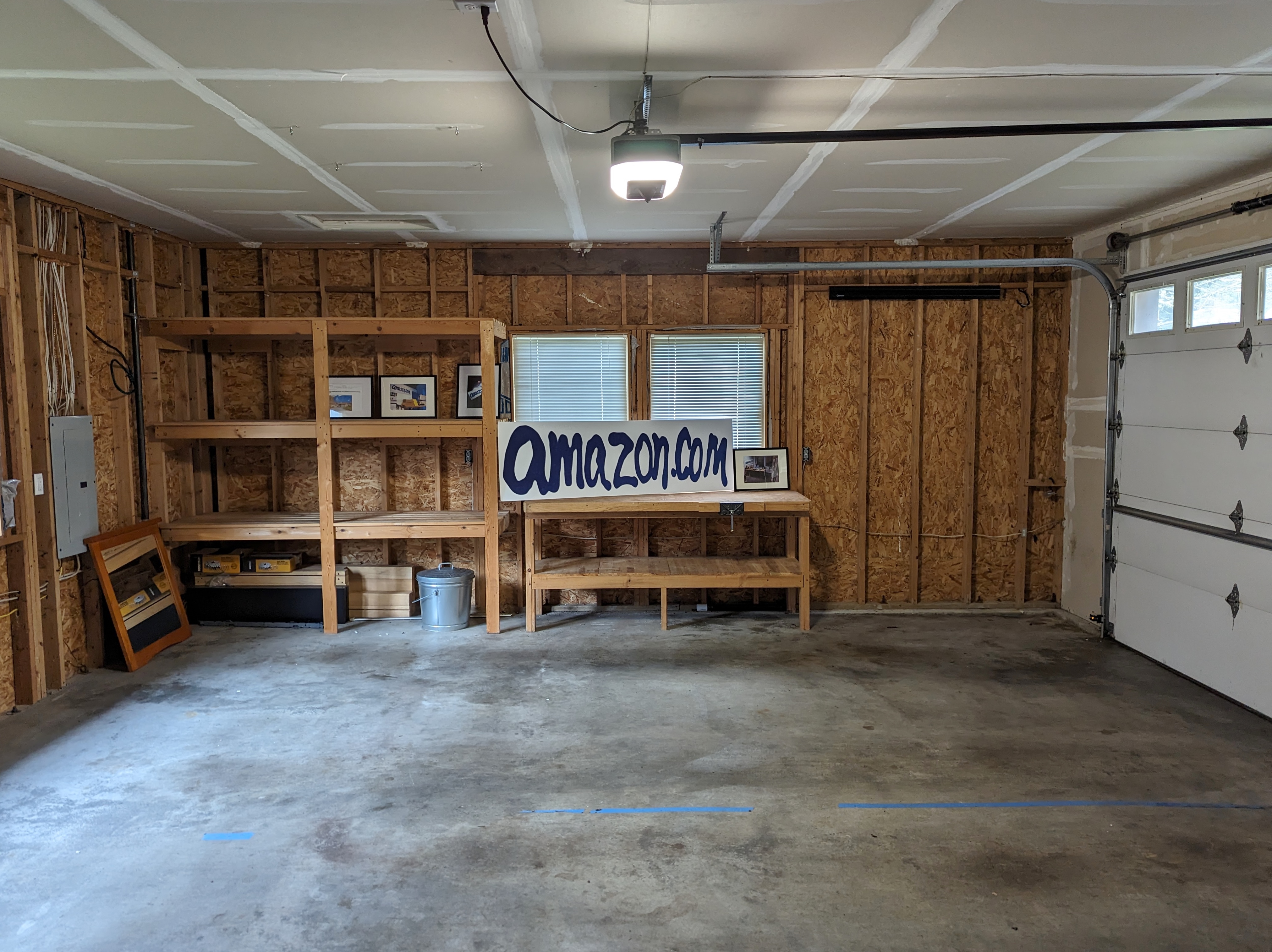 Photo: Wikimedia Commons. CC BY-SA 4.0. The garage where Bezos launched Amazon before Doerr’s investment accelerated everything.
Bezos laid out his vision for what Amazon could become — not just a bookstore, but a platform for selling everything. Doerr listened, asked his questions, and made his decision. Two days later, he invested in Amazon. But Doerr did something that most venture capitalists do not do. He did not just write a check. He rolled up his sleeves and helped build the team, working with Bezos on early executive hires. That kind of hands-on involvement is what separated Doerr from the check-writers. He understood that great companies are not just great ideas — they are great teams.
Google: Seventeen Pages, Three Cartoons, No Business Model
If the Amazon investment was bold, the Google investment was borderline reckless — at least on paper. In 1999, two Stanford PhD students named Larry Page and Sergey Brin walked into a meeting with Doerr carrying a seventeen-page pitch deck. The deck contained three cartoons and essentially no business model. When Doerr asked about revenue, Page reportedly said the company would generate “$10 billion in revenue.”
Most investors would have laughed. Doerr did not.
He and Sequoia Capital co-invested in Google, each writing what were at the time the largest checks either firm had ever written for a startup investment. Doerr saw what the pitch deck could not articulate: that Google had built a search engine so fundamentally superior to everything else on the market that the business model would eventually find itself.
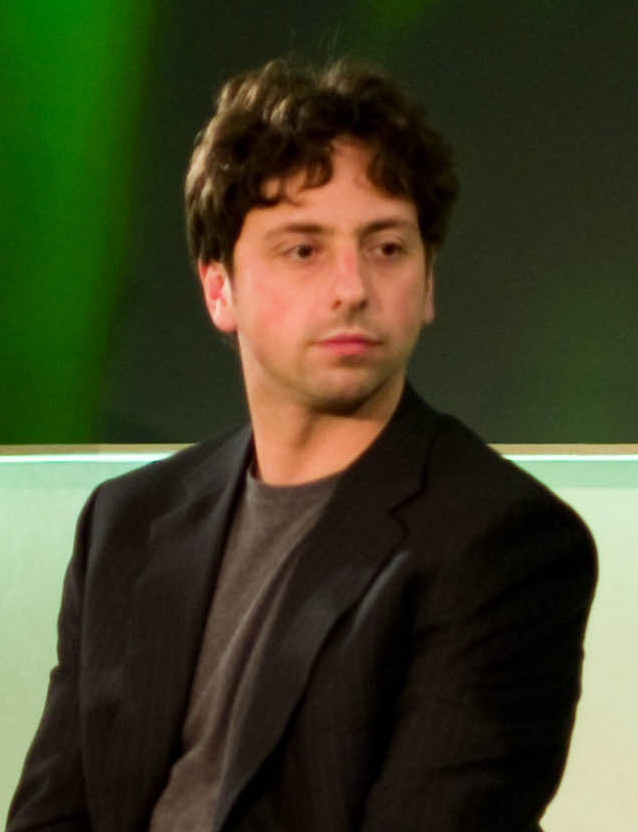 Photo: Wikimedia Commons. CC BY-SA 2.0. Brin and Page walked into Doerr’s office with a seventeen-page deck and a promise of $10 billion.
He was right. Google went public in 2004 with a valuation of $23 billion, and within two decades it would become one of the most valuable companies in history, eventually generating well over $300 billion in annual revenue. Page’s audacious claim of $10 billion turned out to be conservative.
Measure What Matters
Doerr’s influence extends beyond the companies he backed. In 2018, he published “Measure What Matters”, a book about the OKR framework — Objectives and Key Results — which he had learned at Intel under Andy Grove and then introduced to Google, Amazon, and dozens of other companies. The OKR system became one of the most widely adopted management frameworks in technology, used by organizations from startups to Fortune 500 corporations.
The book captures something essential about Doerr’s philosophy. He does not believe in vague ambitions. He believes in measurable outcomes. When he invested in a company, he did not just hope for the best — he helped define what “the best” actually meant and then tracked progress toward it relentlessly.
The Pattern Behind the Bets
When I look at Doerr’s track record — Netscape, Amazon, Google, Intuit, Compaq, Sun Microsystems — I see a pattern that goes deeper than luck. Every one of those investments shared certain characteristics. The founders were technically brilliant. The market was either nascent or underestimated. And the technology solved a genuine problem in a way that no incumbent could replicate without reinventing itself.
Doerr’s genius was not in predicting the future. It was in recognizing the present more clearly than anyone else. He saw the internet as a platform before Wall Street did. He saw online retail as a category before the retail industry did. He saw search as an infrastructure layer before the advertising industry did.
The lesson I take from John Doerr’s career is not about venture capital or investment returns. It is about the value of conviction when everyone else is still waiting for proof. Doerr did not wait. He saw, he decided, and he committed — and then he stuck around to help build what he believed in. That combination of vision and effort is rare, and the results speak for themselves.
Sources
- “Measure What Matters” by John Doerr (2018, Portfolio/Penguin)
- Kleiner Perkins firm history, KPCB.com
- “The Google Story” by David Vise (2005, Delacorte Press)
- “The Everything Store” by Brad Stone (2013, Little, Brown and Company)
- Netscape IPO data from SEC filings and contemporary reporting, The Wall Street Journal, August 1995
- Google IPO data from SEC S-1 filing, 2004
- John Doerr profile, Forbes