I have always been fascinated by origin stories, especially the ones where a single decision ripples forward through decades and reshapes entire industries. When I started digging into the history of Silicon Valley, I expected to find a gradual evolution, a slow accumulation of talent and capital over many years. Instead, I found something much more dramatic. I found one act of defiance in 1957 that essentially created the place we now call Silicon Valley. And the man who provoked it was a Nobel Prize winner who drove his employees so hard that eight of them walked out on the same day.
This is the story of the Traitorous Eight, and why their resignation might be the single most consequential career move in the history of technology.
The Genius Who Could Not Lead
William Shockley was, by any measure, a brilliant physicist. He had co-invented the transistor at Bell Labs, a feat that would earn him the Nobel Prize in Physics in 1956. After receiving that honor, Shockley decided to start his own company, Shockley Semiconductor Laboratory, in Mountain View, California in 1956. He recruited some of the brightest young scientists and engineers in the country to join him.
The problem was that Shockley, for all his genius, was a terrible manager. He was paranoid, secretive, and dismissive of his employees’ ideas. He insisted on pursuing his exotic four-layer Shockley diode when his team believed the real future lay in mainstream silicon bipolar transistors. He ordered the entire lab to take lie detector tests after a lab incident, though everyone refused. He publicly berated researchers in front of their colleagues.
 Photo: Wikimedia Commons. CC BY-SA 3.0. The HP Garage in Palo Alto, where Hewlett-Packard began in 1938, set the template for Silicon Valley’s garage startup culture that the Traitorous Eight would carry forward.
By mid-1957, eight of his best engineers had had enough. They were Julius Blank, Victor Grinich, Jean Hoerni, Eugene Kleiner, Jay Last, Gordon Moore, Robert Noyce, and Sheldon Roberts. These were not marginal employees looking for a better deal. They were the core of Shockley’s operation. And they had a radical idea for 1957: they would leave together and start their own company.
The Betrayal That Built an Industry
When the eight engineers announced their departure, Shockley viewed it as a betrayal. The group became known as the “traitorous eight” — who actually coined the term is murky, but the label stuck as an insult. In the corporate culture of the 1950s, leaving your employer to start a competing venture was considered deeply disloyal, almost unthinkable. Engineers were expected to stay with a single company for their entire career.
But Eugene Kleiner had written a letter to his father’s investment broker at Hayden, Stone and Company, asking for help finding a backer. That letter eventually reached Arthur Rock, a young investment banker who saw the potential immediately. Rock connected the group with Sherman Fairchild, the founder of Fairchild Camera and Instrument Corporation. Fairchild agreed to loan them $1.38 million to start a new semiconductor company.
On September 18, 1957, Fairchild Semiconductor was born.
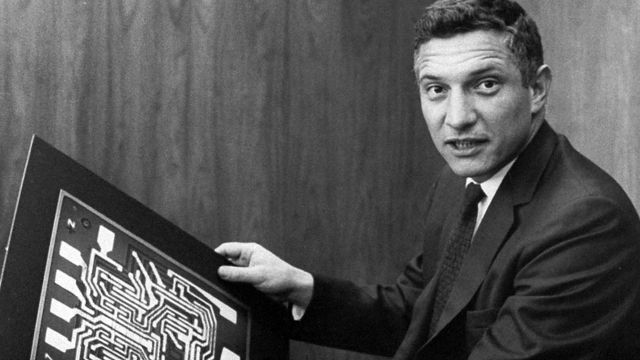
What happened next was remarkable. The eight engineers, freed from Shockley’s suffocating management style, began innovating at a pace that would have been impossible under his leadership. Jean Hoerni invented the planar process, a manufacturing technique that made it possible to mass-produce reliable transistors. Robert Noyce used Hoerni’s process to create the first practical integrated circuit, putting multiple transistors on a single chip of silicon. These inventions did not merely improve existing technology. They made the modern computer possible.
The Family Tree of Silicon Valley
I think the most remarkable aspect of the Traitorous Eight is not what they built at Fairchild, but what happened after they left Fairchild. Because the culture of defiance they had pioneered, the idea that talented engineers could and should start their own companies, became the defining characteristic of Silicon Valley.
I ran a hosting company for ten years, and I never once had the nerve to walk out the door and bet on my own idea the way those eight engineers did. It paid the bills and never became anything more than what one person could manage — a specific kind of failure that does not show up in any business textbook.
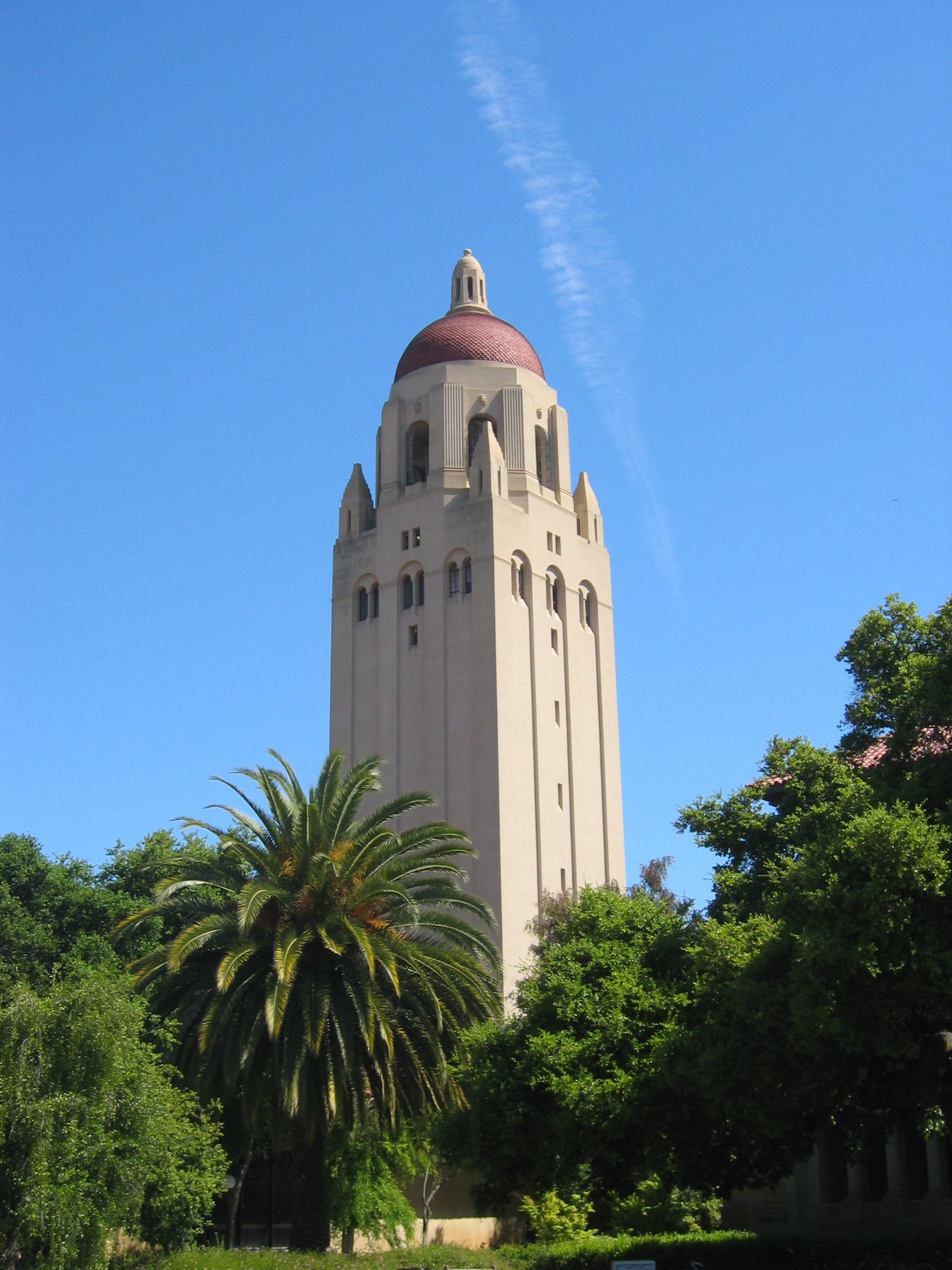 Photo: Wikimedia Commons. CC BY-SA 3.0. Stanford University’s Hoover Tower. The university’s proximity to Fairchild Semiconductor created a pipeline of talent that fueled the Valley’s growth.
In 1968, Robert Noyce and Gordon Moore left Fairchild to found Intel Corporation, the company that would create the microprocessor and become the engine of the personal computer revolution. Moore, of course, had already formulated what we now call Moore’s Law in 1965: his original observation that the number of transistors on a chip roughly doubles every year — a cadence he later revised to every two years in 1975.
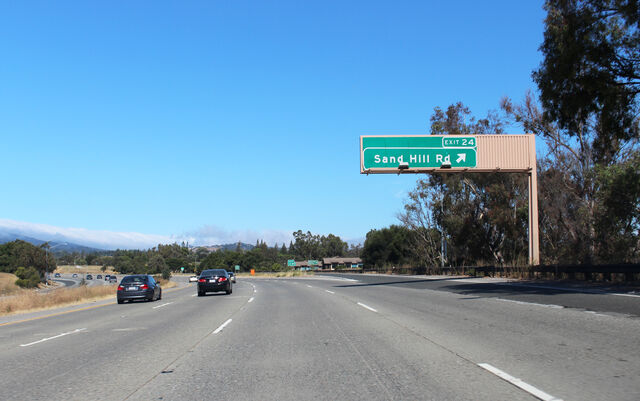
Eugene Kleiner went on to co-found Kleiner Perkins in 1972, a firm that would later make its home on Sand Hill Road in Menlo Park. Kleiner Perkins would go on to fund companies like Amazon, Google, and Netscape, the companies that built the internet economy.
But the ripple effects go far beyond Intel and Kleiner Perkins. Fairchild Semiconductor directly or indirectly spawned more than 65 companies, a phenomenon so widespread that industry historians have mapped it out in a diagram they call the “Fairchild Family Tree.” Among those 65-plus companies are AMD, LSI Logic, and National Semiconductor. The entire semiconductor industry, and by extension the entire technology industry, traces back to that single act of resignation in 1957.
Why the Culture Mattered More Than the Technology
I think there is a tendency to focus on the technical achievements of the Traitorous Eight, and those achievements were genuinely remarkable. But what I find most important is the cultural shift they triggered. Before Fairchild, the idea of leaving a stable job to start a competing company was seen as betrayal. After Fairchild, it became the highest aspiration of every ambitious engineer in the Valley.
This culture of entrepreneurial defiance is what distinguishes Silicon Valley from every other technology hub in the world. Other regions have universities, capital, and talent. What they often lack is the deeply embedded cultural norm that says it is not just acceptable but admirable to leave your employer and start something new. That norm began with eight engineers who refused to accept a toxic work environment, even when their boss had a Nobel Prize.
As we trace the lineage of companies like Google, PayPal, and YouTube, we can see the Traitorous Eight’s DNA in all of them. The PayPal Mafia, for instance, followed the same pattern decades later: a single company producing founders who went on to build an entire constellation of new ventures. And the garage startup myth that defines Silicon Valley’s self-image also traces back to this era, when small teams of engineers proved that they could outperform established corporations.
The Traitorous Eight showed that the most valuable thing in technology is not a patent or a product. It is a group of talented people who are free to pursue their best ideas. That lesson has shaped every generation of founders since, and I suspect it will continue to do so for generations to come.
Sources
- Lécuyer, Christophe. Making Silicon Valley: Innovation and the Growth of High Tech, 1930-1970. MIT Press, 2006.
- Berlin, Leslie. The Man Behind the Microchip: Robert Noyce and the Invention of Silicon Valley. Oxford University Press, 2005.
- Moore, Gordon. “Cramming More Components onto Integrated Circuits.” Electronics, April 19, 1965.
- Malone, Michael S. The Intel Trinity: How Robert Noyce, Gordon Moore, and Andy Grove Built the World’s Most Important Company. Harper Business, 2014.
- “The Traitorous Eight.” Computer History Museum, computerhistory.org.