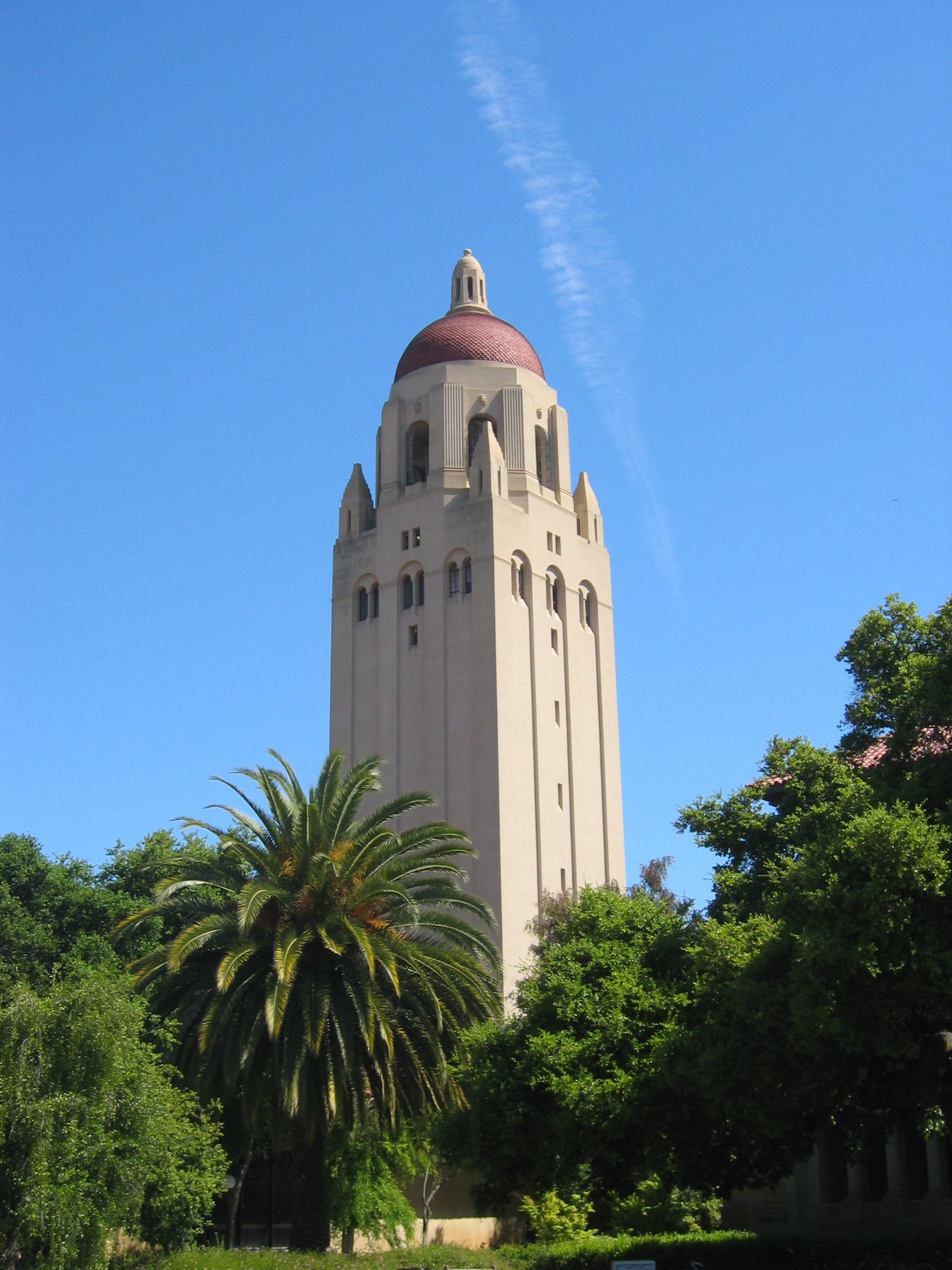
I was mapping out the origins of the companies I have written about – PayPal, Netflix, YouTube, LinkedIn – and I noticed a pattern that I could not ignore. An absurd number of them trace back to the same place: Stanford University. Not just “Silicon Valley” in the vague geographic sense, but specifically Stanford’s campus, Stanford’s labs, Stanford’s classrooms, and Stanford’s network.
The numbers are almost hard to believe. Companies founded by Stanford alumni have generated an estimated $2.7 trillion in annual revenue and created 5.4 million jobs, according to a Stanford study. If Stanford-affiliated companies formed their own nation, that nation would have one of the largest economies on Earth.
How does one university produce this much? I went looking for the answer.
Frederick Terman: The Man Who Started Everything
The story begins with Frederick Terman, Stanford’s dean of engineering from 1944 to 1958 and later provost. Terman did something that no major university administrator had done before: he actively encouraged his students to start companies rather than seek employment at established firms on the East Coast.
In 1938, Terman encouraged two of his graduate students, William Hewlett and David Packard, to start a company in Packard’s garage in Palo Alto. That company became Hewlett-Packard, and that garage is now recognized as the “Birthplace of Silicon Valley.” Terman did not just offer encouragement. He helped the pair secure their first contract and provided technical guidance in their early years.
In 1951, Terman created the Stanford Industrial Park (later renamed the Stanford Research Park), leasing university land to technology companies at favorable rates. Hewlett-Packard was one of the first tenants. Varian Associates, Eastman Kodak’s research division, and General Electric followed. The park created a physical bridge between academic research and commercial application. Professors could consult for nearby companies. Students could intern at firms within walking distance of their labs. Ideas moved from blackboard to prototype to product with minimal friction.
The 1990s Explosion
Terman’s seeds took decades to fully bloom, but by the 1990s Stanford had become the undisputed epicenter of startup creation. Consider just a few of the companies founded by Stanford students or faculty during this period:
Yahoo (1994): Jerry Yang and David Filo were electrical engineering PhD students when they created “Jerry and David’s Guide to the World Wide Web” in a Stanford trailer. Their categorized directory of websites became Yahoo, which went public in 1996 and reached a market capitalization of over $100 billion during the dot-com bubble.
Google (1998): Sergey Brin and Larry Page met at Stanford’s computer science PhD program. Their research project on web page ranking, initially called “BackRub,” became Google. They ran the first Google servers out of their Stanford dorm room before moving to the famous garage in Menlo Park. Stanford itself holds equity in Google through its licensing of the PageRank patent, a stake that has generated hundreds of millions of dollars for the university.
Cisco (1984): Len Bosack and Sandy Lerner, a married couple working in Stanford’s computer science and business school departments, built multi-protocol routers to connect the university’s disparate computer networks. Their solution became Cisco Systems, which grew into the backbone infrastructure company of the internet.

The Network Effect of a Campus
I think the physical layout of Stanford’s campus explains more than people typically credit. The university is organized around a quad system where departments are physically close to each other. Computer scientists eat lunch near business students. Electrical engineers share hallways with designers. This cross-pollination is not accidental – it is architectural.
Peter Thiel taught a class at Stanford called “CS 183: Startup” in 2012 that became the basis for his bestselling book Zero to One. The class attracted students from across disciplines, and several attendees went on to found or join notable startups. The PayPal Mafia itself had deep Stanford connections – Thiel earned both his BA and JD from Stanford, and Reid Hoffman earned his MA in philosophy from the university before co-founding LinkedIn.
Stanford’s StartX accelerator, its venture fund, and its entrepreneurship courses create a structured pipeline from idea to company. But I suspect the informal networks matter just as much. Chance conversations in the Tresidder Memorial Union food court, introductions at student organization events, and late-night brainstorming sessions in dorm rooms have launched more companies than any formal program.
Beyond Silicon Valley’s Inner Circle
What impresses me most about Stanford’s startup production is its breadth. It is not just search engines and social networks. Stanford alumni founded Nike (Phil Knight, MBA 1962), Netflix (Reed Hastings studied at Stanford before founding Netflix nearby), Instagram (Kevin Systrom and Mike Krieger, both Stanford alumni), Snapchat (Evan Spiegel, who left Stanford to pursue the company), and LinkedIn (Reid Hoffman).
The university’s influence extends to venture capital itself. Many of the partners at Sand Hill Road firms are Stanford alumni. This creates a feedback loop: Stanford produces founders who get funded by Stanford-connected VCs, who then hire Stanford graduates, who then start their own companies and get funded by the same networks.
Sandra Kurtzig, who founded ASK Computer Systems in 1972 and became the first woman to take a Silicon Valley company public in 1981, earned her master’s degree from Stanford. Her story is a reminder that Stanford’s influence on Silicon Valley’s startup culture is wider and deeper than the well-known names suggest.
What Other Universities Can Learn
I do not think Stanford’s dominance is purely about prestige or resources, though both help enormously. The critical ingredients appear to be:
Proximity to capital. Sand Hill Road is across the street. This is not a metaphor. Venture capital firms are literally within walking distance of campus.
A culture that celebrates risk. Terman set the tone in the 1940s and 1950s by treating entrepreneurship as a legitimate career path rather than a fallback for students who could not land “real” jobs. That cultural shift took decades to fully embed, but it is now deeply woven into Stanford’s identity.
Alumni network density. The sheer number of successful Stanford-founded companies means that every new Stanford entrepreneur has access to mentors, advisors, and potential investors who share a common background.
Technology transfer infrastructure. Stanford’s Office of Technology Licensing actively helps researchers commercialize their discoveries. The PageRank patent is the most famous example, but thousands of other technologies have moved from Stanford labs to the commercial world through this office.
I find myself thinking about what Frederick Terman would make of all this if he could see it. A single decision in the 1930s – encouraging two students to start a company in a garage rather than move east – set in motion a chain of events that reshaped the global economy. The lesson is that institutions can shape innovation, but only if they are willing to let their best people leave the classroom and build something.
Stanford bet on that idea before anyone else. The returns have been staggering.
Sources
- C. Stewart Gillmor, Fred Terman at Stanford: Building a Discipline, a University, and Silicon Valley (Stanford University Press, 2004).
- Stanford University, “Stanford Facts: Entrepreneurship,” stanford.edu, accessed 2026.
- Michael Malone, The Big Score: The Billion-Dollar Story of Silicon Valley (Doubleday, 1985).
- David Vise, The Google Story (Delacorte Press, 2005).
- Peter Thiel with Blake Masters, Zero to One: Notes on Startups, or How to Build the Future (Crown Business, 2014).
- “How Stanford Became Silicon Valley’s Startup Factory,” The Economist, August 2014.