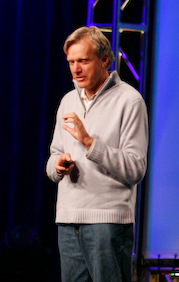
I was deep into the history of Sun Microsystems when I noticed something. One name kept surfacing in two completely separate stories. It appeared in the founding of one of the most important computer companies of the 1980s, and then again at the very origin of what became the most visited website on Earth. That name was Andy Bechtolsheim. I had read about him as a Sun co-founder. I had read about him in the Google origin story. And then I realized I had never actually sat down and read his story from the beginning.
When I did, I found something even more interesting than two cameos in famous stories. I found a pattern — a way of seeing technological potential before anyone else could see it, a willingness to act on that vision with speed and conviction, and a career that stretched across more than four decades of Silicon Valley history without losing any of its forward momentum.
Did you know? That same year, Peter Thiel wrote a nearly identical bet: $100,000 into Fieldlink, the company that became PayPal — a company that did not legally exist yet. Two $100K checks, two not-yet-real companies, two billion-dollar outcomes.
From Bavaria to Stanford
Andreas “Andy” Bechtolsheim was born in 1955 in Ammersee, Bavaria, in what was then West Germany. He grew up in a family that valued engineering and precision, and his aptitude for electronics became apparent early. He earned his undergraduate degree in electrical engineering in Germany before making the decision that would shape the rest of his life: he crossed the Atlantic to pursue graduate study at Stanford University.
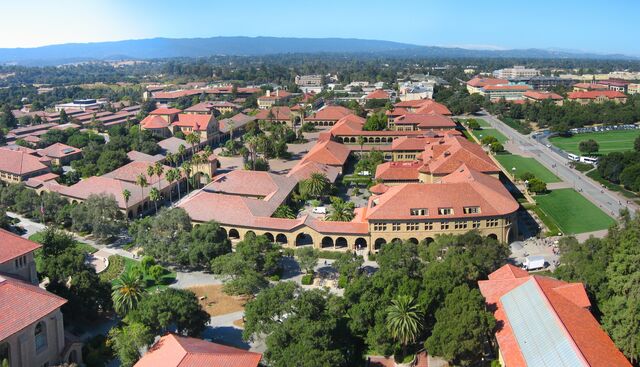
Stanford in the late 1970s was unlike any university environment Bechtolsheim had encountered. The engineering department sat at the center of a growing ecosystem of companies, venture capital firms, and researchers who were actively blurring the line between academic work and commercial product. The physics of proximity — Stanford’s campus was minutes from the Sand Hill Road venture capital offices — meant that a good idea developed in a lab could become a funded company before the semester ended. Bechtolsheim arrived with exceptional technical skills and walked into an environment that was engineered to reward them.
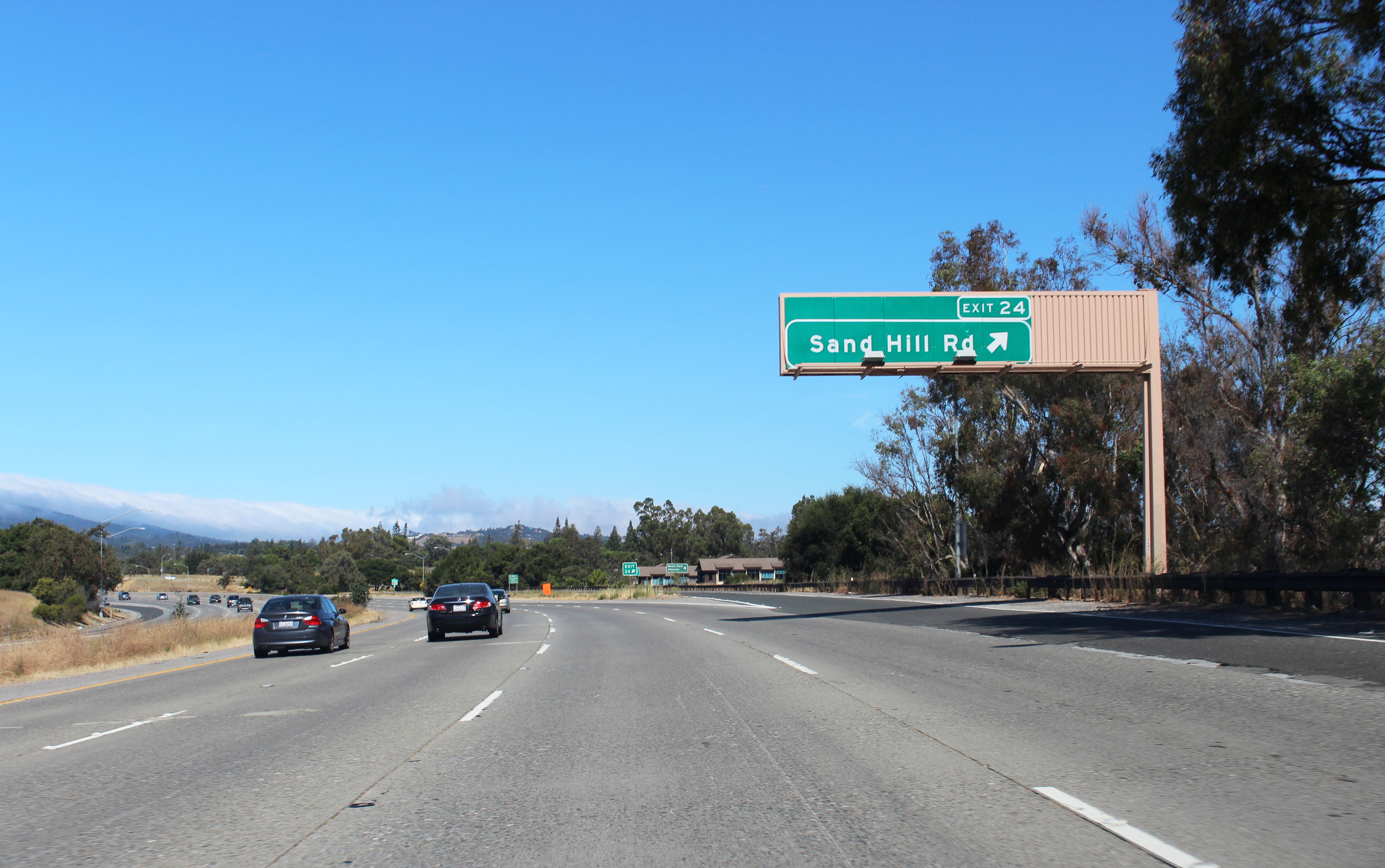 Photo: Wikimedia Commons. CC BY-SA 4.0. Sand Hill Road in Menlo Park. The proximity of Stanford’s engineering labs to this corridor of venture capital offices made it possible for graduate projects like Bechtolsheim’s SUN workstation to become funded companies within months.
Building the SUN Workstation
As a graduate student in Stanford’s electrical engineering department, Bechtolsheim identified a problem that the computing industry had not yet solved. The mainframes and minicomputers of the era were powerful but expensive, centralized, and isolated from each other. The personal computers emerging from companies like Apple were affordable but underpowered and not designed for serious technical work. There was a gap in the middle — a need for a professional workstation that was powerful enough for engineering and scientific applications, affordable enough for universities and smaller research institutions, and designed from the ground up to be connected to a network.
Bechtolsheim built one. He designed a networked computer workstation using off-the-shelf components, an approach that was unusual at the time because most serious computing hardware was proprietary. His machine, which he called the SUN workstation — SUN standing for Stanford University Network — was built around a Motorola 68000 processor and ran a version of Unix. It was intended to be shared over a network, not used in isolation.
The SUN workstation was not just a capable machine. It was a design philosophy made physical. It demonstrated that you did not need proprietary, expensive hardware to do serious computing. You needed smart architecture, open standards, and a network connection. That philosophy would drive an entire company for the next three decades.
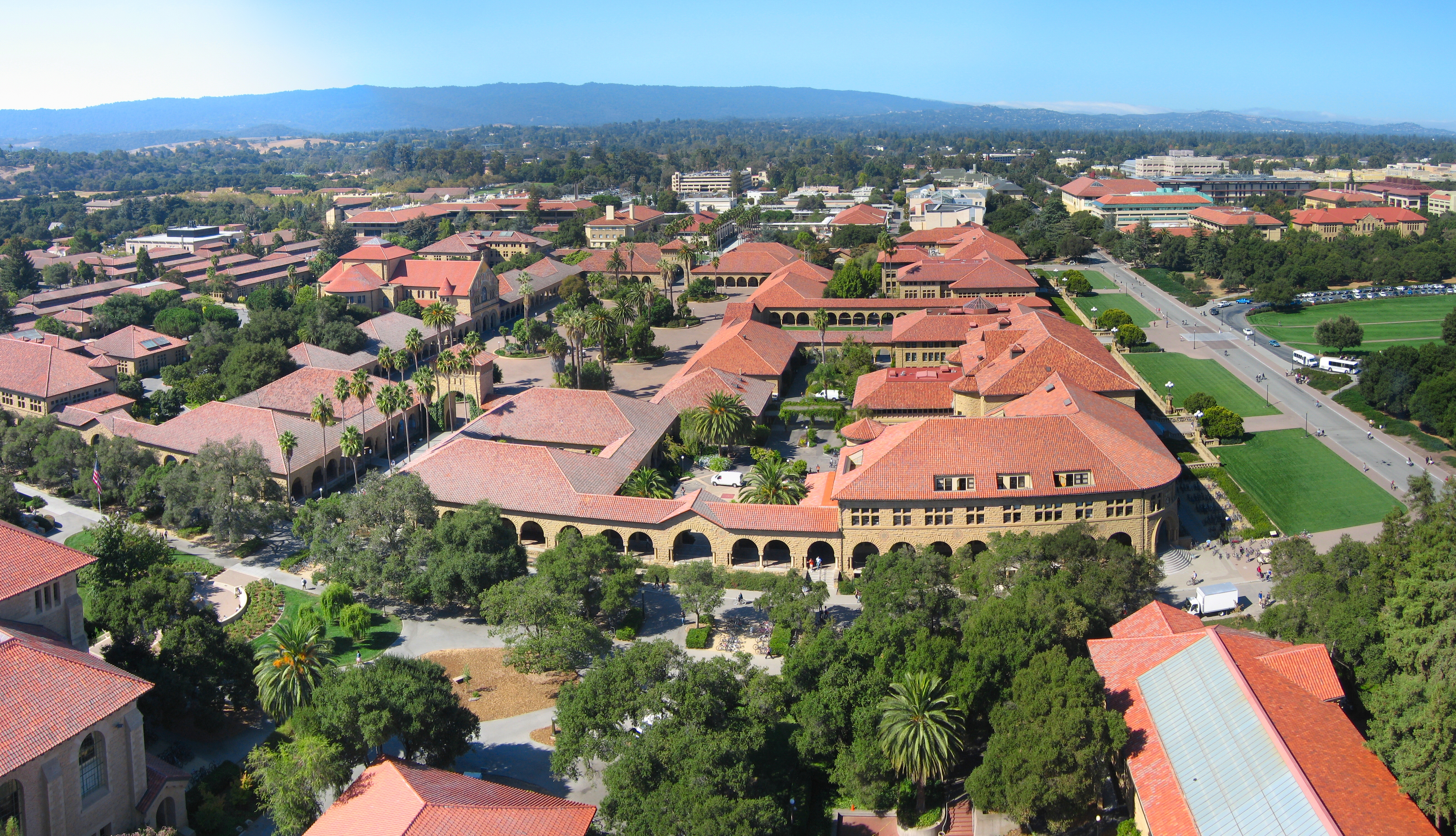 Photo: Wikimedia Commons. CC BY-SA 3.0. Stanford University. Bechtolsheim’s workstation project was born here in the Stanford engineering labs before it became the nucleus of Sun Microsystems.
Co-Founding Sun Microsystems
In 1982, Bechtolsheim joined forces with three other young engineers to turn the SUN workstation into a company. Vinod Khosla, a Stanford MBA graduate who brought the business instincts and the initial fundraising plan, became the company’s first CEO. Scott McNealy, another Stanford MBA graduate, became the operational leader who would eventually take Sun to its greatest heights. And Bill Joy, the legendary programmer from UC Berkeley who had led the BSD project that added TCP/IP networking to Unix, joined as the technical visionary who would shape the software side of the company.
Sun Microsystems was incorporated on February 24, 1982, with $300,000 in seed funding from Kleiner Perkins, the venture capital firm that had backed some of the most consequential companies in Silicon Valley history. Bechtolsheim contributed the hardware architecture. Joy contributed the software and operating system expertise. Khosla contributed the commercial strategy. McNealy contributed the management discipline. It was one of the most complementary founding teams the Valley had ever assembled.
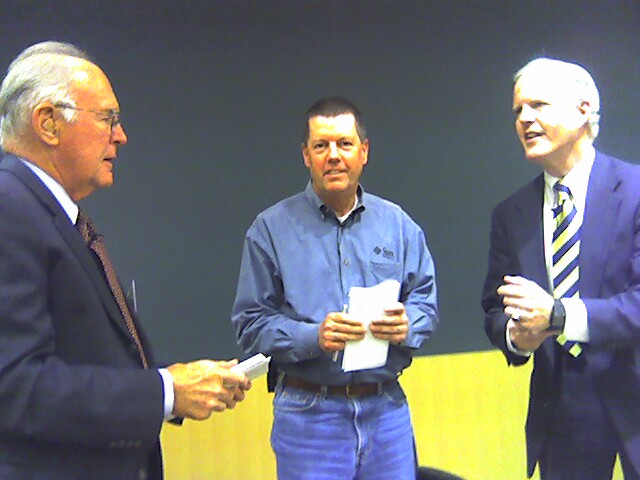 Photo: Wikimedia Commons. CC BY-SA 2.0. Scott McNealy, who served as Sun’s CEO for most of its independent life. Bechtolsheim’s hardware vision and McNealy’s operational leadership formed one of the most productive partnerships in Silicon Valley history.
Sun grew at a pace that stunned the industry. By 1988, six years after incorporation, it had crossed $1 billion in annual revenue. Its workstations powered university research labs, government agencies, Wall Street trading floors, and the early internet infrastructure. The company’s motto — “The Network Is the Computer,” coined by Sun executive John Gage — was a prediction that looked almost impossibly ambitious when they said it in the 1980s, and looks like plain description today.
Bechtolsheim remained at Sun as the company’s chief hardware architect, the person who designed the silicon and the systems that everything else ran on. He eventually left in 1995 to co-found Granite Systems, but the company he helped build was, by then, one of the pillars of the technology industry.
Granite Systems and the Cisco Acquisition
After leaving Sun, Bechtolsheim turned his attention to a technology that was becoming increasingly critical as the internet grew: the hardware that moved data between networks. In 1995, he co-founded Granite Systems, a company focused on building high-performance Gigabit Ethernet switching equipment. Ethernet was the dominant local area networking technology, but even the freshly standardized 100-megabit Fast Ethernet was nowhere near enough for the traffic the internet was about to generate. Bechtolsheim saw that Gigabit speeds — a hundred times faster than the 10-megabit Ethernet most networks still ran — needed to exist before the demand fully arrived.
Granite Systems delivered on that vision with remarkable speed. The company built hardware that could switch network traffic at one gigabit per second, a specification that the industry had been anticipating but that required serious engineering to achieve in practice. The product never reached the mass market. Instead, Cisco Systems acquired Granite Systems in 1996 for approximately $220 million, bringing both the technology and the engineering team — including Bechtolsheim — inside one of the most powerful networking companies in the world.
The Granite acquisition is worth pausing on, because it reveals something important about Bechtolsheim’s method. He did not identify a market and fill it. He identified a technical challenge that was about to become urgent, solved it with engineering precision, and built a company valuable enough that the dominant player in the space paid $220 million to absorb it. That is a specific and repeatable skill — the ability to see where the technical frontier is moving before the market price of admission has been established.
The $100,000 Check
In August 1998, two Stanford PhD students named Larry Page and Sergey Brin were trying to raise money for a search engine they had built in their dorm rooms. They had approached several established search and portal companies, including Yahoo and AltaVista, and been rejected — the conventional wisdom at the time was that search was a solved problem and that the real money was in portal-style destination sites. Unable to license their technology, Page and Brin reluctantly decided to start a company and went looking for investors.
Through a Stanford connection, they arranged a meeting with Bechtolsheim. The meeting took place early one morning on the porch of David Cheriton’s house in Palo Alto. Page and Brin showed Bechtolsheim a demo of their search engine, which they had been calling Google.
What happened next is one of the most told stories in Silicon Valley history. As John Battelle recounts in The Search (Portfolio, 2005), Bechtolsheim watched the demo briefly, was immediately convinced, and told the founders he needed to leave for another meeting. But before he left, he pulled out his checkbook and wrote a check for $100,000, made out to “Google Inc.”
The problem was that Google Inc. did not exist. The company had not yet been incorporated. It did not have a bank account. The check sat in Larry Page’s desk drawer — reportedly in a filing folder — for several weeks while Page and Brin scrambled to complete the incorporation paperwork. The company was formally incorporated on September 4, 1998, and only then could they deposit the check and begin spending the money that would fund their first months of operation.
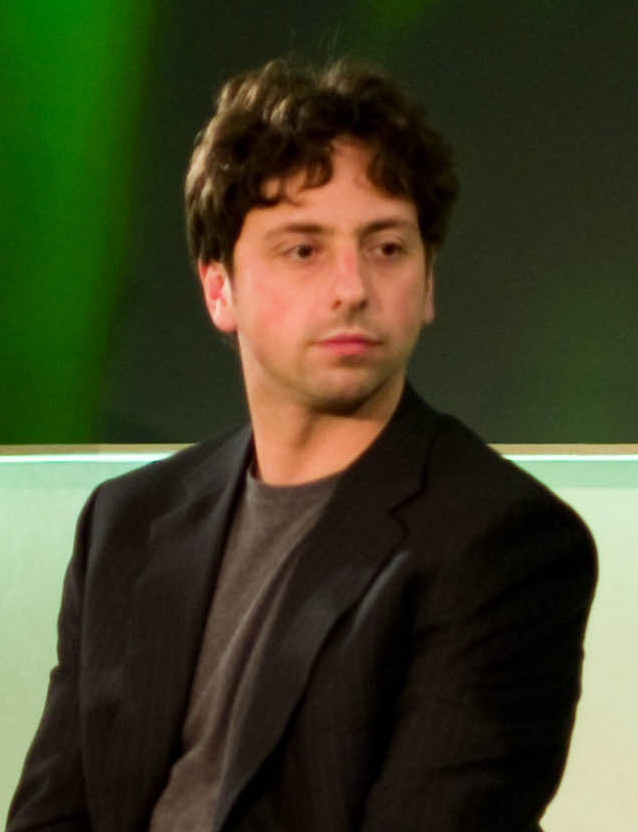 Photo: Wikimedia Commons. CC BY-SA 2.0. Sergey Brin, Google co-founder. Brin and Page met Bechtolsheim on a porch in Palo Alto in August 1998. Within an hour, they had the first major check that would launch what became the world’s most valuable internet company.
David Vise, in The Google Story (Delacorte Press, 2005), describes the moment from Bechtolsheim’s perspective: he had seen enough good engineering to know immediately when something was genuinely better than the alternatives. The demo was decisive. Rather than asking for more meetings, more data, more pitch decks, he acted. That instinct — to recognize quality quickly and commit without excessive deliberation — is one that Bechtolsheim had been developing since he built his first workstation at Stanford two decades earlier.
The $100,000 check catalyzed additional investment. Page and Brin raised roughly $1 million in initial funding from family, friends, and a handful of other angel investors, and used that capital to rent Susan Wojcicki’s garage in Menlo Park and hire their first employees. The rest of what followed — the PageRank algorithm, the AdWords business model, the IPO, the dominance — grew from that seed. Bechtolsheim’s stake, acquired for $100,000 in 1998, was worth hundreds of millions of dollars by the time Google went public in 2004.
Arista Networks
If the Google check had been Bechtolsheim’s last major move, his legacy would already be secure. But in 2004, the same year Google went public, he co-founded another company. Arista Networks was built on a thesis that had direct lineage to everything Bechtolsheim had done before: that the networking hardware powering data centers was architecturally outdated and that a new approach, built on modern software and commodity silicon rather than proprietary hardware, could deliver dramatically better performance and flexibility.
Arista’s product was a software-driven network switch running a Linux-based operating system called EOS (Extensible Operating System), designed from the beginning to be programmable and cloud-friendly in ways that legacy networking vendors like Cisco had not anticipated. The timing was deliberate: cloud computing was beginning its ascent, and the hyperscale data centers being built by Amazon, Google, Microsoft, and Facebook needed networking equipment that could scale with their ambitions.
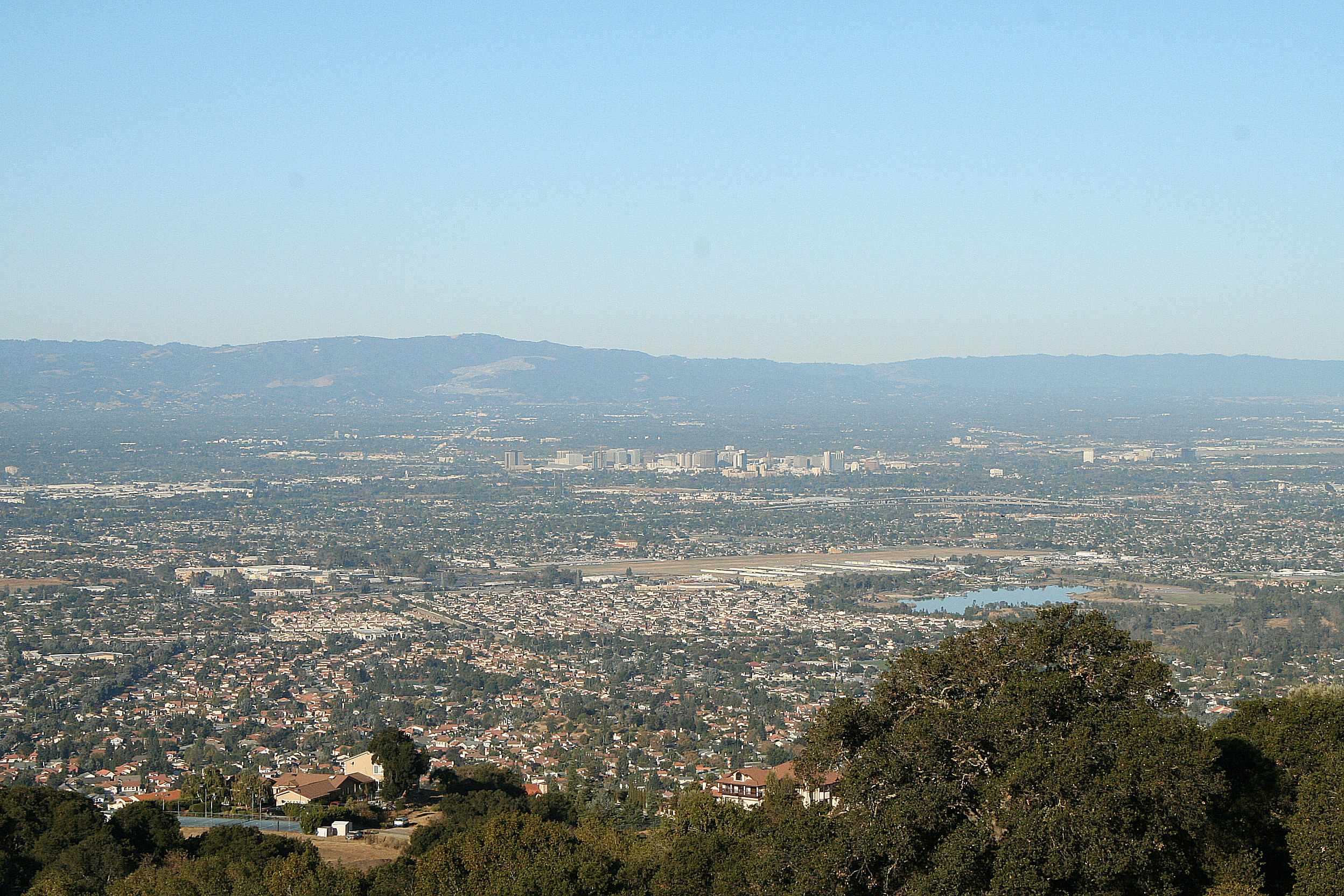 Photo: Wikimedia Commons. CC BY-SA 4.0. Silicon Valley from above. Bechtolsheim’s career has touched nearly every major inflection point in this geography, from the rise of the workstation to the cloud networking era.
Arista went public in 2014 and has grown into one of the most valuable companies in enterprise networking, with a market capitalization measured in the tens of billions of dollars. Bechtolsheim served as chairman and chief development officer, continuing to be involved in the technical direction of the product. According to Arista’s public filings, his equity stake made him a billionaire many times over. The company that Cisco had once acquired him into had now produced a serious competitor to Cisco itself — a symmetry that is almost too neat to be accidental.
What Bechtolsheim’s Pattern Reveals
Looking across the arc of Andy Bechtolsheim’s career — from the SUN workstation in a Stanford lab, to the founding of Sun Microsystems, to Granite Systems, to the Google check, to Arista Networks — a pattern emerges that I find both instructive and genuinely rare.
Most people in technology are either builders or investors. They are either deep in the engineering trenches, solving specific technical problems, or they are evaluating other people’s solutions from the outside, allocating capital based on pattern recognition. Bechtolsheim is one of the few people in Silicon Valley history who has been genuinely excellent at both, simultaneously, across multiple decades.
As Arthur Rock demonstrated when he backed Fairchild and Intel, the deepest investors are often the ones who understand what they are evaluating at a technical level — who can sit in a demo and know, within minutes, whether the engineering underneath is real. Bechtolsheim’s advantage in investing was the same as his advantage in building: he could assess hardware and systems at a level of depth that most investors could not match.
The Google check is the most famous expression of this. He did not need multiple meetings. He did not need a business plan. He needed five minutes with a search engine that worked significantly better than anything else, and he could see immediately that the engineering was real. That is not luck. That is a skill built across twenty years of building real systems and understanding where the technical frontier was located.
What strikes me most is that Bechtolsheim has never appeared to be chasing legacy or reputation. He has consistently returned to the same question: what technical problem is about to become urgent, and can I build something that solves it better than what currently exists? From networked workstations in 1981 to Gigabit Ethernet switches in 1995 to cloud networking in 2004, the question has stayed constant. Only the domain has changed.
Sources
- Battelle, John. The Search: How Google and Its Rivals Rewrote the Rules of Business and Transformed Our Culture. Portfolio, 2005.
- Vise, David A., and Mark Malseed. The Google Story. Delacorte Press, 2005.
- Southwick, Karen. High Noon: The Inside Story of Scott McNealy and the Rise of Sun Microsystems. John Wiley & Sons, 1999.
- Vance, Ashlee. “The Valley’s Hardware King.” Bloomberg Businessweek, various coverage, 2012–2014.
- “Arista Networks, Inc. — Form S-1 Registration Statement.” U.S. Securities and Exchange Commission, 2014. sec.gov.
- “Cisco Acquires Granite Systems.” Cisco Systems Press Release, 1996.
- “Our History in Depth.” Google Company, about.google/our-story.
- Stanford University Engineering Department historical materials. engineering.stanford.edu.