I was recently reading about the dot-com crash when I stumbled across a name that most people under 30 have never heard: AltaVista. Before Google, before Yahoo’s search, before Bing — there was AltaVista. It was the first search engine that could index the entire World Wide Web in full text. It handled 13 million queries per day by 1997. For a brief, brilliant period, AltaVista was the way people found things on the internet.
Then it vanished. What happened?
Built Inside a Computer Company
AltaVista was not built by Stanford dropouts in a garage. It was built inside Digital Equipment Corporation (DEC), one of the most respected computer companies of the 20th century, by two researchers named Louis Monier and Michael Burrows.
In 1995, DEC was looking for a way to demonstrate the power of its Alpha processor — a 64-bit chip that was significantly faster than anything Intel was selling. Monier and Burrows proposed building a search engine that could crawl and index the entire web, using DEC’s Alpha-powered servers to process the data. The project was as much a hardware demo as it was a software product.
AltaVista launched on December 15, 1995, and the response was immediate. On its first day, it received 300,000 queries. Within weeks, it was handling millions. The reason was simple: AltaVista was fast and comprehensive. While other search engines of the era — Lycos, Excite, WebCrawler — indexed only a fraction of the web, AltaVista aimed to index everything. Users could search for obscure topics and actually find results. It was, for its time, a revelation — the first time you could type a question into a computer and feel like it actually understood you.
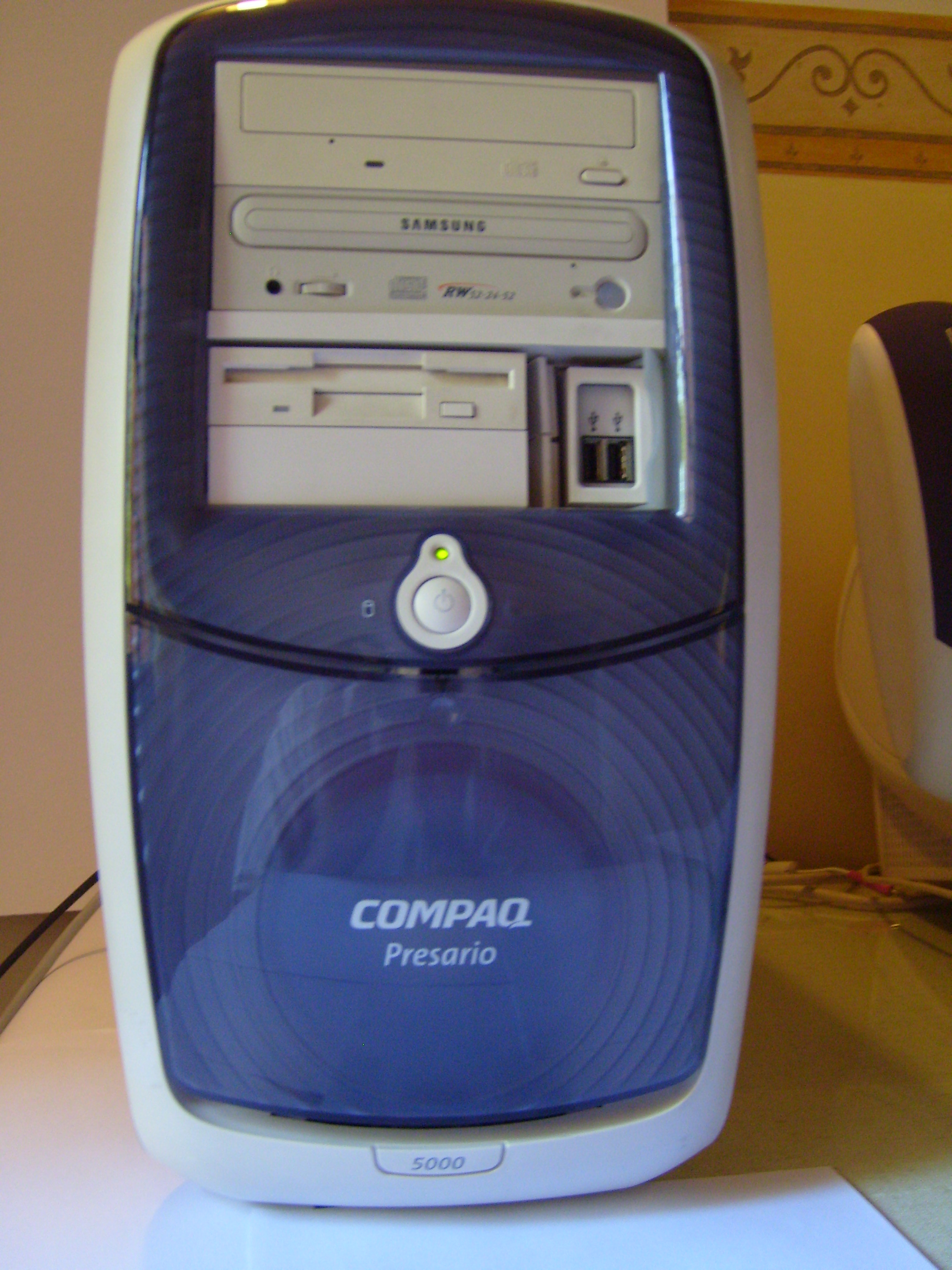 Photo: A Compaq computer — the company that acquired DEC and with it AltaVista, then failed to capitalize on the search engine’s potential. Wikimedia Commons. License: CC BY-SA 3.0.
13 Million Queries a Day
By 1997, AltaVista was processing 13 million queries per day and was one of the most visited websites in the world. It introduced features that were years ahead of their time: Babel Fish, an automatic translation tool (the ancestor of Google Translate), and advanced search operators that let power users filter results with Boolean logic.
AltaVista also pioneered the concept of the full-text web index. Previous search engines relied on metadata — page titles, descriptions, and manually submitted URLs. AltaVista’s crawler, called Scooter, visited every page it could find and indexed the actual content of each page. This meant that users could search for any word or phrase that appeared anywhere on the web, not just in titles or descriptions.
The technology was genuinely groundbreaking. The problem was not the technology. The problem was the business.
The Compaq Disaster
In 1998, Compaq Computer Corporation acquired DEC for $9.6 billion. The acquisition was primarily about DEC’s enterprise computing business and its Alpha processor technology. AltaVista came along as a bonus — a wildly popular search engine that Compaq had no idea what to do with.
Compaq’s management made a fateful decision: they would transform AltaVista from a search engine into a web portal. In the late 1990s, the hottest business model on the internet was the portal — a one-stop destination for news, email, shopping, and entertainment. Yahoo was a portal. Excite was a portal. Lycos was a portal. Compaq’s executives looked at the portal model and decided that AltaVista should become one too.
The transformation was catastrophic. AltaVista’s homepage, which had been a clean search box (much like what Google would later become famous for), was cluttered with news headlines, stock tickers, weather forecasts, shopping links, and banner advertisements. The search functionality — the very thing that made AltaVista great — was buried beneath layers of portal content.
Compaq also acquired Zip2 — the city guide startup co-founded by Elon Musk — as part of its strategy to build the AltaVista portal. Compaq paid $307 million for Zip2 in February 1999, intending to integrate its local search and mapping data into AltaVista’s portal. The synergy never materialized.
Google Arrives
While Compaq was busy turning AltaVista into a portal, two Stanford PhD students named Larry Page and Sergey Brin were building a new kind of search engine. Google’s innovation was not just crawling the web — AltaVista already did that. Google’s innovation was PageRank, an algorithm that ranked search results by analyzing the link structure of the web. Pages that were linked to by many other pages were considered more authoritative and ranked higher.
 Photo: Sergey Brin, co-founder of Google, whose PageRank algorithm made AltaVista’s approach to search obsolete. Wikimedia Commons. License: CC BY-SA 2.0.
The result was dramatically better search quality. Google’s results were more relevant, more useful, and less cluttered with spam. Google’s homepage was a single search box on a white page — the design simplicity that AltaVista had abandoned in its rush to become a portal.
By 2000, Google was growing exponentially while AltaVista was shrinking. The dot-com crash made everything worse. Compaq had planned an IPO for AltaVista in 1999, but the market collapse killed it. AltaVista was sold to Overture Services in 2003, which was then acquired by Yahoo. In July 2013, Yahoo officially shut down AltaVista. The search engine that once handled 13 million queries a day redirected its final visitors to Yahoo Search.
The Lesson of the Portal Trap
AltaVista’s story is a case study in how a dominant technology company can destroy itself by chasing the wrong business model. AltaVista had the technology. It had the users. It had the brand. What it lacked was focus. The decision to transform a search engine into a portal — to add features that users did not want, to clutter a clean interface, to prioritize advertising revenue over search quality — was the decision that killed it.
Google learned the lesson. When Page and Brin launched Google, they kept the homepage radically simple. One search box. One button. No distractions. That design was not just aesthetic — it was strategic. It told users: we do one thing, and we do it better than anyone else.
The pattern repeats throughout tech history. The companies that survive are the ones that know what they are. The companies that die are the ones that try to be everything. AltaVista tried to be everything, and in doing so, it stopped being the one thing that made it indispensable.
The Ghost of Search Past
AltaVista deserves to be remembered not as a failure but as a pioneer. It proved that full-text web search was possible, that millions of people wanted it, and that a search engine could be the most important tool on the internet. Every search engine that came after it — Google, Bing, DuckDuckGo — was built on the foundation that AltaVista laid.
The next time you type a query into a search engine and get a useful answer in half a second, remember that someone had to prove the concept first. AltaVista did that. It showed the world what search could be, even if it could not hold onto the crown it created.
Sources
- “AltaVista: The Rise and Fall of the First Great Search Engine,” Fast Company, 2013.
- Danny Sullivan, “AltaVista: A Remembrance,” Search Engine Land, July 8, 2013.
- Paul Ceruzzi, A History of Modern Computing, MIT Press, 2003.
- “Compaq Acquires Digital Equipment Corporation,” Compaq press release, June 11, 1998.
- “The AltaVista Story,” DEC Research Lab internal documentation, Computer History Museum archives.