I was on a long run the other day with a podcast about AI risk playing in my headphones, and the host mentioned a guy who warned about all of this back in the year 2000. That got me thinking about the origins of the internet — not the social media internet we know today, but the actual plumbing underneath it — and how one name keeps appearing at every critical junction. Not Tim Berners-Lee. Not Vint Cerf. A name that most people outside of engineering have never heard: Bill Joy. He rewrote the operating system that made the internet possible. He co-founded one of the most important computer companies in history. And then, at the peak of the dot-com boom, he published an essay warning that artificial intelligence and nanotechnology might one day make humanity obsolete.
Fortune magazine once called him the “Edison of the Net.” I wanted to understand why.
The Kid from Michigan
Bill Joy was born in 1954 in a suburb of Detroit, Michigan. He was the kind of kid who read the encyclopedia for fun — not because someone told him to, but because he was genuinely curious about how everything worked. He excelled in math and science, and after high school he enrolled at the University of Michigan, where he studied electrical engineering.
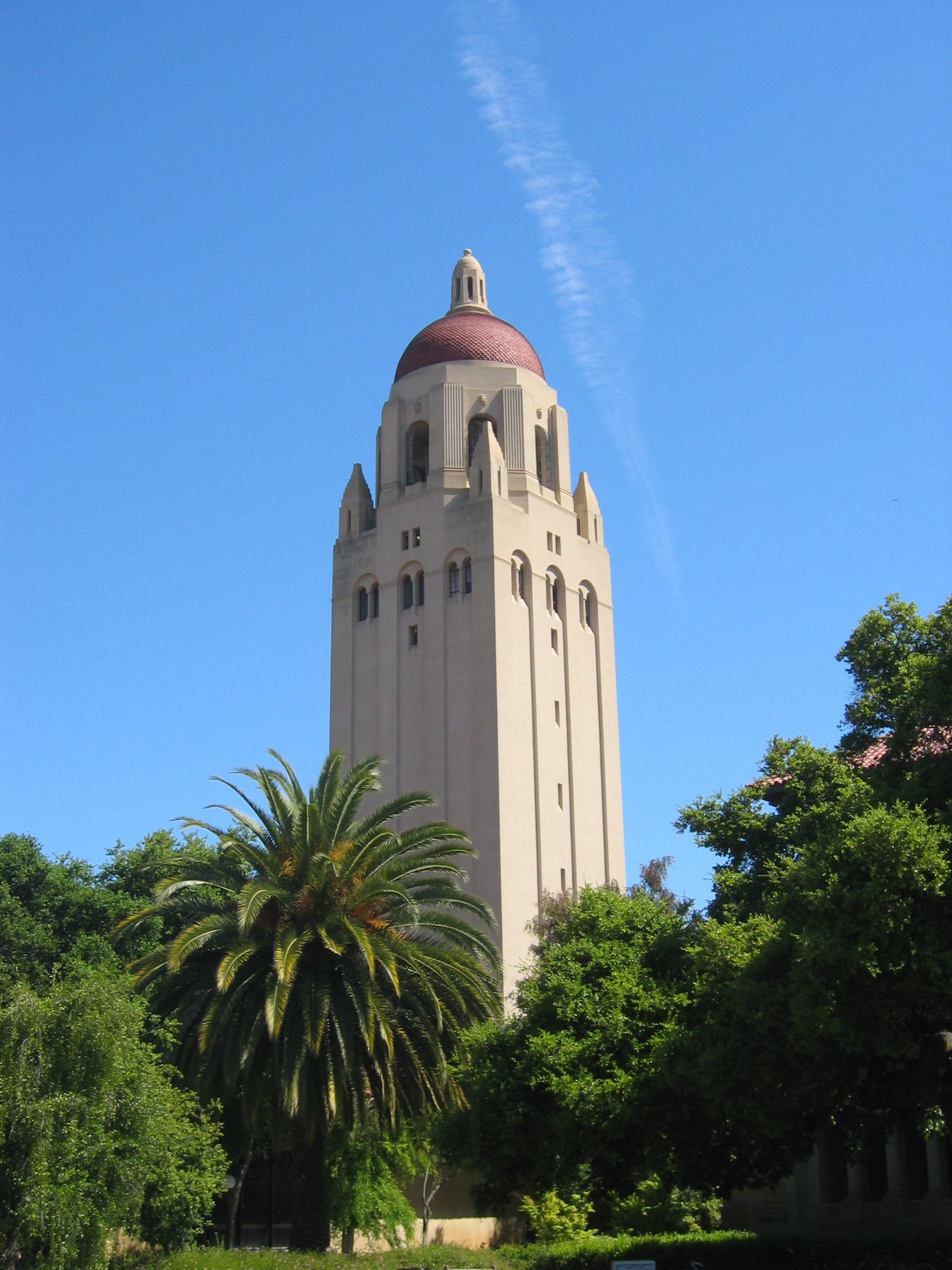 Photo: Wikimedia Commons. CC BY-SA 3.0. The Stanford and Berkeley corridor where Joy did his most consequential work on BSD Unix.
But the real transformation happened when Joy arrived at the University of California, Berkeley as a graduate student. Berkeley in the late 1970s was one of the most important centers of computer science research in the world, and Joy walked straight into the middle of something remarkable.
Rewriting Unix — and Making the Internet Possible
At Berkeley, Joy encountered Unix, the operating system that AT&T’s Bell Labs had created in the early 1970s. Unix was powerful and elegant, but it was also incomplete. Joy began modifying and extending it, eventually creating what became known as BSD Unix — the Berkeley Software Distribution.
What Joy did with BSD was not a minor tweak. He essentially rewrote large portions of the operating system, and the Berkeley distribution he led was one of the first to ship with built-in TCP/IP networking — the protocol suite that allows computers to communicate with each other over the internet. Before 4.2BSD, TCP/IP existed as a separate, experimental addition to Unix. After it, a machine running BSD could connect to the network natively.
This is not an exaggeration: BSD became one of the software foundations of the early internet. The early internet ran on BSD. University servers, government systems, and research networks — they all ran Joy’s code. When the internet eventually expanded from a research project into a global network, much of the software infrastructure was already there, waiting, because Bill Joy and his Berkeley team had put it there.
BSD also became one of the first major open source operating systems, freely distributed and openly modifiable. Its descendants — FreeBSD, OpenBSD, NetBSD — are still in active use today. Apple’s macOS and iOS are built on top of code that traces its lineage directly back to BSD.
Co-Founding Sun Microsystems
In 1982, Joy co-founded Sun Microsystems along with Scott McNealy, Vinod Khosla, and Andy Bechtolsheim. The company’s name stood for Stanford University Network, and its founding thesis was that the network is the computer — a phrase that would become Sun’s official slogan and one of the most prescient predictions in the history of the industry.
I never fired anyone at my hosting company. Not because everyone was great, but because I could not stand the confrontation. That cost me more than any bad hire — a tolerance for mediocrity that Joy, who rewrote entire operating systems until they were right, would never have accepted for a day.
 Photo: Wikimedia Commons. CC BY-SA 3.0. The valley where Joy helped build the computing infrastructure that connected the world.
Joy served as Sun’s Chief Scientist, a role that gave him the freedom to work on the most technically challenging problems the company faced. He was a key contributor to several of Sun’s most important technologies:
- Solaris — Sun’s commercial Unix operating system, which became the backbone of enterprise computing
- SPARC — Sun’s RISC processor architecture, which powered some of the fastest workstations of the 1990s
- Java — the programming language that would eventually run on billions of devices worldwide
Joy’s role in Java’s development is particularly significant. While James Gosling is rightly credited as Java’s creator, Joy was instrumental in shaping the language and championing its development within Sun. Java’s “write once, run anywhere” philosophy was a direct extension of Joy’s belief that computing should be networked, distributed, and platform-independent.
Joy remained at Sun until 2003, having spent over two decades building the technologies that powered enterprise computing and the early internet.
“Why the Future Doesn’t Need Us”
And then Bill Joy did something that no one expected. In April 2000, at the absolute peak of the dot-com boom — when Silicon Valley was drunk on its own success and the Nasdaq was touching the sky — Joy published an essay in Wired magazine titled “Why the Future Doesn’t Need Us.”
The essay was a thunderbolt. In it, Joy argued that three emerging technologies — artificial intelligence, nanotechnology, and genetic engineering — posed existential risks to humanity. He warned that these technologies, unlike nuclear weapons, did not require rare materials or massive industrial infrastructure. They could be developed by small teams, in small labs, with consequences that could be irreversible.
 Photo: Wikimedia Commons. CC BY-SA 3.0. In 2000, this was the cutting edge of personal computing. Joy was already thinking decades ahead about what AI would become.
In the essay, he warned that our most powerful twenty-first-century technologies — robotics, genetic engineering, and nanotech — were threatening to make humans an endangered species.
This was not a science fiction writer speculating for entertainment. This was one of the most accomplished technologists of his generation — a man who had literally built the software infrastructure of the internet — saying, publicly, that the trajectory of technology was dangerous.
The essay was published more than twenty years before ChatGPT. It anticipated debates about AI safety, autonomous weapons, and the alignment problem that are now front-page news. Joy did not just see the potential of technology. He saw its risks with the same clarity, and he had the courage to say so when the rest of the industry was celebrating.
The Courage to Question
Joy was inducted into the National Academy of Engineering in 1999, one of the highest honors an engineer can receive. His contributions to BSD, Sun, Solaris, SPARC, and Java would be enough to fill several careers. But what I find most remarkable about Bill Joy is the combination of building and questioning.
Most technologists are either builders or critics. Joy was both. He spent twenty years building the foundational infrastructure of the internet age, and then he stepped back and asked the hardest question of all: where is this heading, and should we be worried?
The early days of Silicon Valley were defined by optimism — the sense that technology could solve any problem and that more computing power was always better. Joy shared that optimism for most of his career. But he also had the intellectual honesty to recognize that the tools he helped build could be used in ways that their creators never intended.
Bill Joy did not just build the internet’s foundation. He had the courage to question where it was all heading — and the stature to make people listen. More than two decades later, the world is finally catching up to his concerns.
Sources
- “Why the Future Doesn’t Need Us” by Bill Joy, Wired, April 2000
- “The BSD Family Tree,” FreeBSD Documentation Project
- Sun Microsystems corporate history, Oracle.com
- “Fire in the Valley: The Making of the Personal Computer” by Paul Freiberger and Michael Swaine (2014, Pragmatic Bookshelf)
- National Academy of Engineering, member profile: Bill Joy
- Fortune magazine, “Bill Joy After Sun,” 2003
- “A Quarter Century of Unix” by Peter H. Salus (1994, Addison-Wesley)