I have been tracing the history of Silicon Valley through its founders, the engineers and scientists who designed chips and wrote software. But the more I dig, the more I realize that the story is incomplete without the people who funded those founders. And when you follow the money back far enough, you arrive at one person: Arthur Rock. He did not invent the transistor or write a line of code. What he invented was arguably just as important. He created the modern model of venture capital, the system by which a small group of investors bets on unproven people with unproven ideas and, when it works, changes the world.
Rock’s career touches nearly every pivotal moment in Silicon Valley’s first three decades, and his fingerprints are on the foundations of the entire industry.
Did you know? Arthur Rock is the only person in Silicon Valley history to fund both ends of its origin story: the Traitorous Eight ($1.38 million, 1957) and Intel ($2.5 million, one afternoon, 1968).
A Wall Street Analyst Looks West
Arthur Rock was born in 1926 in Rochester, New York. He earned his MBA from Harvard Business School in 1951 and took a position as a securities analyst at Hayden, Stone and Company on Wall Street. Rock was drawn to technology companies, to the idea that scientific breakthroughs could be turned into enormously valuable businesses.
 Photo: Wikimedia Commons. CC BY-SA 3.0. The HP Garage in Palo Alto. Rock arrived in California and found a region already steeped in the tradition of engineers building companies from scratch.
The event that changed Rock’s life, and Silicon Valley’s future, arrived in his mailbox in 1957. Eugene Kleiner, one of the disgruntled engineers at William Shockley’s semiconductor lab, had written a letter to his father’s broker at Hayden Stone, asking if anyone could help him and his colleagues find a backer. The letter made its way to Rock, who immediately recognized the opportunity. Here were eight brilliant scientists, trained by a Nobel laureate, who wanted to leave and build something on their own. The problem was that in 1957, the idea of funding a group of employees to compete with their former boss was almost unheard of.
Thirty-Five Rejections and One Yes
Rock flew to California to meet the group and was immediately convinced. But convincing investors was another matter. He approached thirty-five different companies, and every single one said no. In the 1950s, established corporations did not invest in breakaway employees.
Finally, Rock found Sherman Fairchild, the wealthy founder of Fairchild Camera and Instrument Corporation. Fairchild saw what Rock saw, that the Traitorous Eight had the talent to dominate the semiconductor industry. He agreed to invest $1.38 million to establish Fairchild Semiconductor. On September 18, 1957, the deal was done.
This transaction is often cited as the beginning of modern venture capital. Rock had demonstrated a new model: identify exceptional people, give them capital and freedom, and bet on their ability to create something new. That model became the engine of Silicon Valley.
Davis and Rock: The First True VC Fund
In 1961, Rock moved to California permanently and partnered with Tommy Davis to form Davis & Rock, one of the first venture capital firms structured as a limited partnership. This organizational innovation was crucial. Previous technology investments had been made by wealthy individuals or corporate arms. Davis & Rock created a formal structure where limited partners provided capital and general partners selected the investments.
I spent ten years in web hosting without once talking to a mentor, joining a founder group, or reading a book about scaling. I thought building a good product was enough. It is not even close to enough — and Rock’s entire career rested on the opposite assumption, that founders need outside capital and connections as much as they need a product.
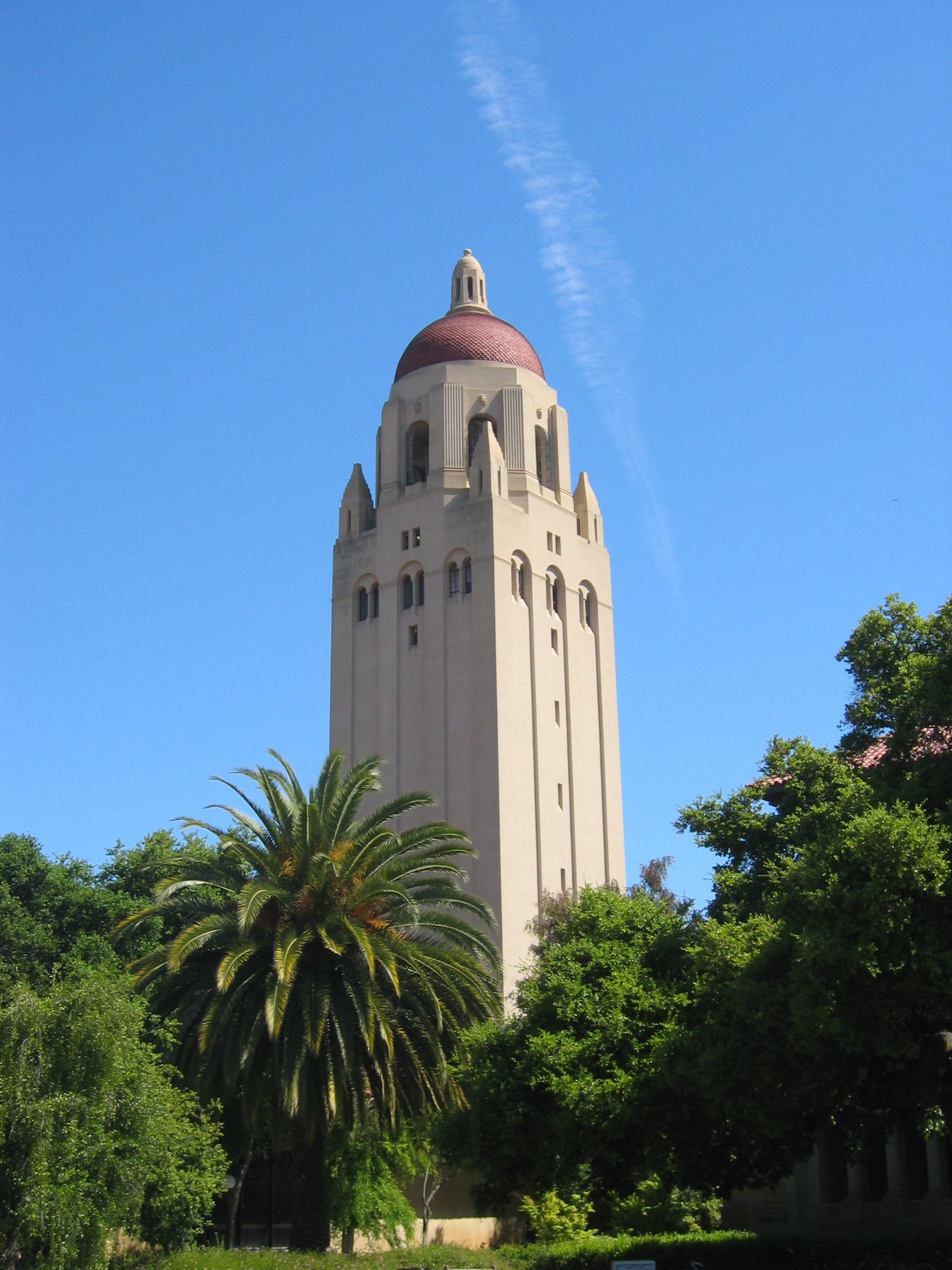 Photo: Wikimedia Commons. CC BY-SA 3.0. Stanford University’s Hoover Tower. Rock recognized early that proximity to Stanford’s engineering programs gave Silicon Valley a continuous supply of the kind of talent worth betting on.
The results were astonishing. Davis & Rock invested approximately $3 million over the life of the fund and returned approximately $100 million to its investors. That is a return of more than 30 times the original capital, a figure that would be remarkable even by today’s standards. It demonstrated, with real numbers, that venture capital could generate enormous returns for investors willing to accept the risk of backing early-stage technology companies.
Fifteen Phone Calls
Rock’s most famous deal came in 1968. Robert Noyce and Gordon Moore had decided to leave Fairchild Semiconductor, the very company Rock had helped create eleven years earlier, to start a new venture. They called Rock and told him they needed $2.5 million to get started. They did not have a formal business plan. They did not have a product. They had their names, their reputations, and a general intention to work on semiconductor memory.
Rock raised the entire $2.5 million in a single afternoon, making just fifteen phone calls. Each call followed the same pattern: Rock told investors that Noyce and Moore were starting a new company and that he was investing. That was enough.
The one-page memo Rock used to raise the money has been called “venture capital’s Magna Carta.” A few paragraphs describing the founders’ credentials. No financial model, no five-year projection. Rock was betting on people, not spreadsheets, and asking his investors to do the same.
The company they funded was Intel Corporation, which would go on to create the microprocessor and become the most important semiconductor company in the world. Rock served on Intel’s board for decades, providing the governance that allowed Noyce, Moore, and Andy Grove to build the company their way.
Backing Apple and Beyond
Rock’s instinct for exceptional founders led him to another bet that would reshape the technology industry. In the late 1970s, he invested in Apple Computer, joining the company’s board of directors. Steve Jobs, still in his twenties, was the kind of founder Rock had always backed: brilliant, obsessive, and convinced he could change the world. Rock provided both capital and credibility at a time when Apple was transitioning from a garage project into a real corporation.
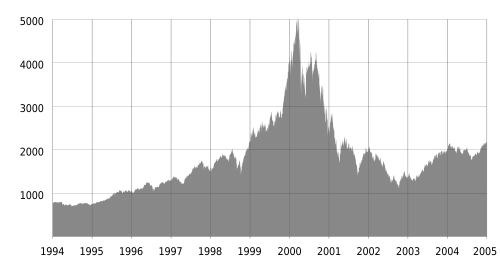 Image: Wikimedia Commons. Public domain. The NASDAQ exchange became the primary market for technology IPOs, a direct consequence of the venture capital model Rock pioneered that took startups from seed funding to public markets.
Rock also backed Teledyne and Scientific Data Systems, among other companies. His track record, spanning from the founding of Fairchild in 1957 to Apple’s rise in the 1980s, covers nearly every major chapter in Silicon Valley’s early history.
The Model That Still Dominates
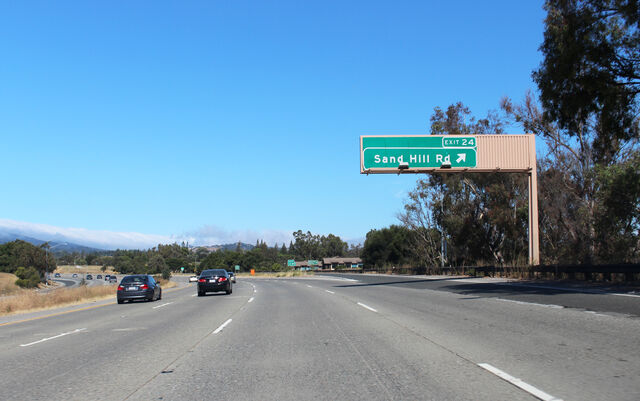
What I find most striking about Arthur Rock is that the model he created more than sixty years ago still governs how technology companies are built today. The firms on Sand Hill Road, from Sequoia to Andreessen Horowitz, are all descendants of the approach Rock pioneered: identify exceptional founders, provide capital in exchange for equity, and guide the company toward an eventual exit.
Rock believed in backing people, not products. He once said that a great team with a mediocre idea would find a way to succeed, but a mediocre team with a great idea would find a way to fail. That insight was radical in an era when investors focused on market size and product specifications. Rock understood that the quality of the founders is the only reliable predictor of success.
The garage myth tells us that Silicon Valley was built by scrappy engineers tinkering in their workshops. That is partly true. But behind nearly every one of those garages was someone like Arthur Rock, a quiet, analytical investor who looked at a group of talented people and said: “I believe in you. Here is the money. Go build something.”
That act of faith, repeated thousands of times over the decades, is what turned a stretch of California farmland into the innovation capital of the world. And it started with one securities analyst on Wall Street who flew to California, knocked on thirty-five doors, and refused to stop until someone said yes.
Sources
- Berlin, Leslie. The Man Behind the Microchip: Robert Noyce and the Invention of Silicon Valley. Oxford University Press, 2005.
- Malone, Michael S. The Intel Trinity: How Robert Noyce, Gordon Moore, and Andy Grove Built the World’s Most Important Company. Harper Business, 2014.
- Wilson, John W. The New Venturers: Inside the High-Stakes World of Venture Capital. Addison-Wesley, 1985.
- Lécuyer, Christophe. Making Silicon Valley: Innovation and the Growth of High Tech, 1930-1970. MIT Press, 2006.
- “Arthur Rock.” Computer History Museum, computerhistory.org.
- Kenney, Martin. Understanding Silicon Valley: The Anatomy of an Entrepreneurial Region. Stanford University Press, 2000.