I was mapping out timelines for my articles on Reed Hastings and the Musk brothers when I noticed something that stopped me cold. In 1997, all of the following things were happening simultaneously: Reed Hastings was co-founding Netflix. Elon and Kimbal Musk were growing Zip2. Two Stanford PhD students named Larry Page and Sergey Brin were registering a domain called google.com. Amazon had just gone public. And Steve Jobs had just returned to a nearly bankrupt Apple.
None of these people knew each other. None of them were coordinating. They were working in separate offices, solving separate problems, with no idea that they were collectively building the foundation of the modern world. The year 1997 didn’t feel historic at the time. It feels historic now.
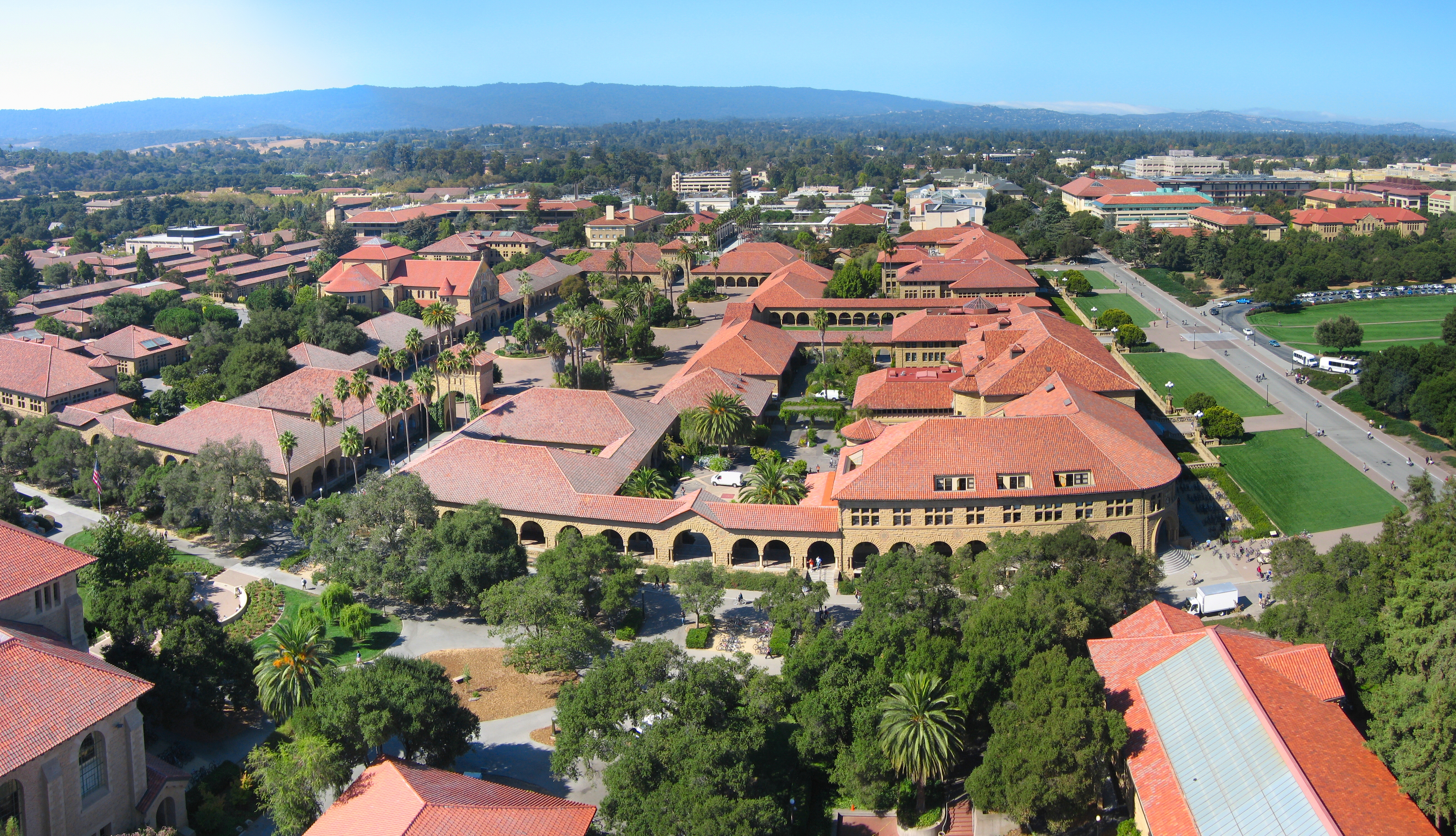
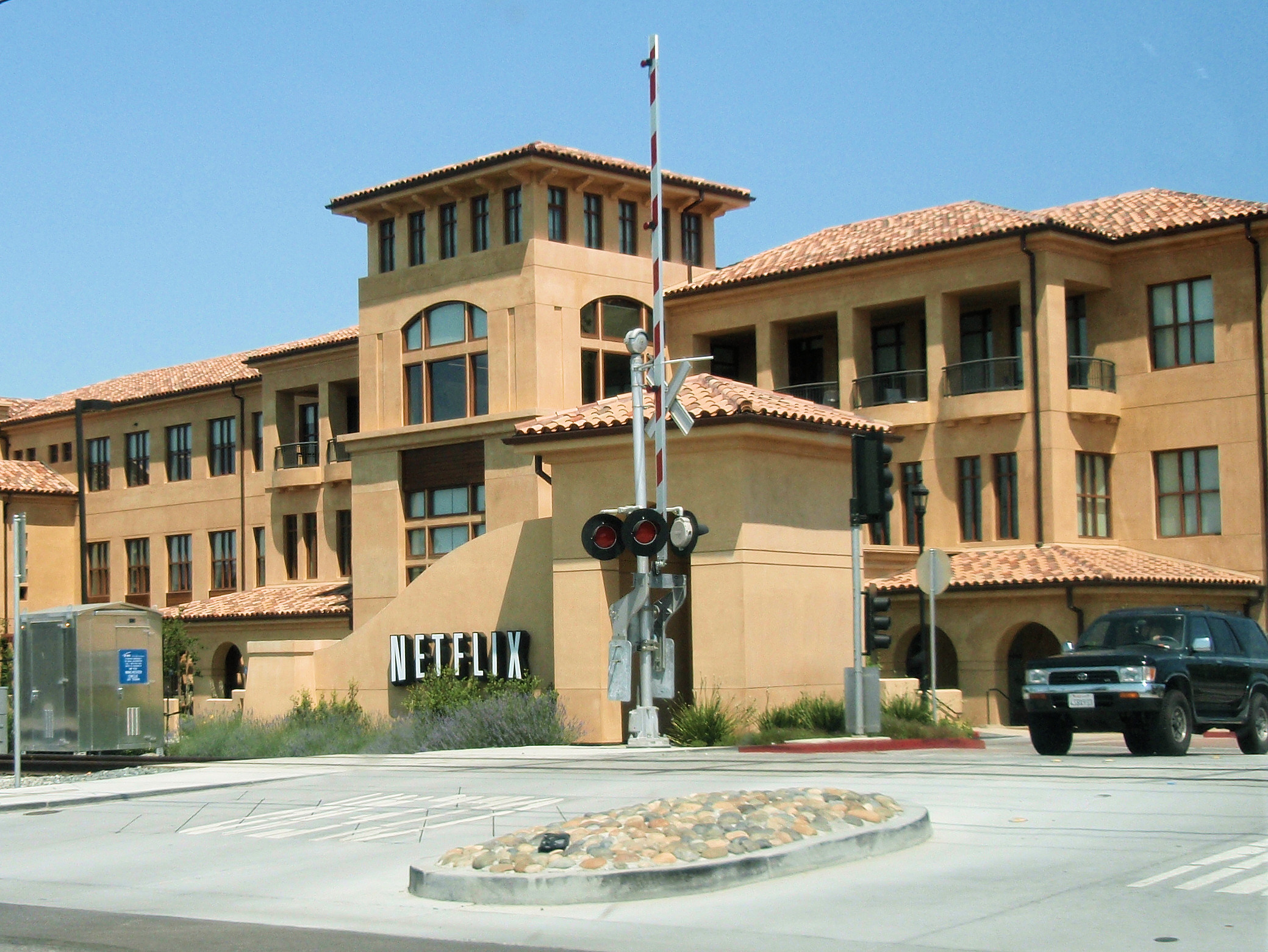 Photo: Coolcaesar, Wikimedia Commons. CC BY-SA 3.0.
Did you know? The site’s two biggest company stories both turn on 40: the $40 late fee behind Netflix’s founding myth (1997) and the $40 million SEC fine that humbled Musk (2018).
Netflix: A $40 Late Fee and a Billion-Dollar Idea
In August 1997, Reed Hastings and Marc Randolph co-founded Netflix in Scotts Valley, California. The origin story, as Hastings has told it, involves him incurring a $40 late fee on a VHS copy of Apollo 13 from Blockbuster. The entire video rental model was built on punishing customers for being human. That story has been questioned — Marc Randolph and Blockbuster records suggest the $40 late fee was embellished to explain Netflix’s subscription model.
Hastings had just watched Pure Software collapse under bureaucracy. He had money from the acquisition, time, and a frustration with an industry designed around inconvenience. He invested $2.5 million for approximately 70% equity. The first Netflix website launched in April 1998 with 925 DVD titles available for rent by mail.
What strikes me about this moment is how small it was. A debugging-tool entrepreneur and a marketing executive, renting DVDs through the mail. Just an envelope and a better idea.
Zip2: Two Brothers, One Office, No Furniture
While Hastings was filing Netflix’s incorporation papers, Elon and Kimbal Musk were grinding through the early stages of Zip2 in a small office in Palo Alto. The company, which provided online city guides and business directories to newspapers, had been founded in 1995. By 1997, it was two years old, gaining traction with customers like the New York Times and the Chicago Tribune, but still far from profitable.
I covered the road trip that started it all in an earlier article, the story of Elon arriving in North America with $2,000 and a suitcase of books, Kimbal joining him, and the two brothers building their first company from almost nothing. In 1997, that story was still unfolding. Elon was coding through the night. Kimbal was selling to clients. They were showering at the YMCA and sleeping in the office.
Nobody outside a small circle of newspaper executives had heard of them. They were two South African immigrants with no connections, no pedigree, and no safety net. Zip2 would eventually sell for $307 million in February 1999, but in 1997, that outcome was far from certain.
Google: A Domain Name and a Dissertation
On September 15, 1997, Larry Page and Sergey Brin registered the domain name google.com. They were PhD students at Stanford University, working on a research project called BackRub that analyzed the web’s link structure to determine which pages were most important.
Every time I read about a founder taking a risk that terrified them, I measure it against my own risk tolerance. Mine was almost zero. I am still figuring out whether that was wisdom or cowardice.
I think the biggest lie I told myself as a small company owner was that I was my own boss. I was not. My customers were my boss, my servers were my boss, and my fear of change was the biggest boss of all.
The insight was elegant: rank pages by how many other pages link to them, treating each link as a vote of confidence. The algorithm, PageRank, was categorically better than anything offered by AltaVista, Excite, or Yahoo.
But in September 1997, Google was not a company. It was a Stanford research project. The company would not be incorporated until September 1998, funded by a $100,000 check from Andy Bechtolsheim, co-founder of Sun Microsystems, written after a brief demo in a friend’s garage.
Amazon: The IPO That Nobody Noticed
On May 15, 1997, Amazon went public at $18 per share. The IPO did not generate the same frenzy as the Netscape IPO two years earlier. Netscape had opened the floodgates. Amazon walked through them. Bezos told shareholders in his first annual letter that Amazon would prioritize market leadership over short-term profitability.
“We believe that a fundamental measure of our success will be the shareholder value we create over the long term.” – Jeff Bezos, 1997 Letter to Shareholders
Most of Wall Street ignored that letter. They would eventually learn that Bezos meant every word.
Apple: The Return of the Exile
By 1997, Apple had posted a $1.04 billion loss. Its product line was a confusing mess. In February 1997, Apple acquired NeXT, bringing Jobs back. By September 1997, he was interim CEO. He called Bill Gates, secured a $150 million investment from Microsoft, and began killing products and simplifying the lineup. The iMac would launch in August 1998, beginning one of the most remarkable turnarounds in business history. But in 1997, Apple was a company on life support, being revived by the founder it had discarded twelve years earlier.
The Year Nobody Recognized
What I find most remarkable about 1997 is how unremarkable it seemed at the time. There was no magazine cover declaring it the year that changed technology. No conference panel titled “The Companies That Will Define the 21st Century.” The people building these companies were largely unknown. Hastings was a failed software entrepreneur renting DVDs. The Musks were two immigrants coding in a small office. Page and Brin were graduate students who hadn’t decided whether to drop out. Bezos was a bookseller. Jobs was an exile returning to a company that most analysts had written off.
And yet, the companies they were building or rebuilding in 1997, Netflix, Zip2 (which led to PayPal, SpaceX, and Tesla), Google, Amazon, and Apple, would collectively become worth more than $10 trillion within 25 years. They would change how we watch entertainment, search for information, buy products, communicate, travel, and think about technology itself.
The Quiet Construction of the Future
I keep thinking about the implications of this. The future is always being built, right now, by people nobody has heard of yet. In some small office, in some university lab, in some garage or co-working space, someone is working on the thing that will reshape an industry. They have no press coverage. They have no Twitter following. They might not even have funding. But they have an idea and the stubbornness to pursue it.
In 1997, Reed Hastings was renting DVDs by mail. Larry Page was writing a dissertation. Elon Musk was coding a city guide. Twenty-five years later, their companies stream entertainment to 260 million subscribers, process 8.5 billion searches per day, and launch rockets that land themselves on drone ships in the ocean.
The lesson is not that 1997 was special. The lesson is that every year is 1997. The future is always being assembled quietly, by people nobody is paying attention to, in ways nobody can predict. The only question is whether we are paying close enough attention to see it.
Sources
- Randolph, M. That Will Never Work: The Birth of Netflix and the Amazing Life of an Idea. Little, Brown and Company, 2019.
- Hastings, R. and Meyer, E. No Rules Rules: Netflix and the Culture of Reinvention. Penguin Press, 2020.
- Vance, A. Elon Musk: Tesla, SpaceX, and the Quest for a Fantastic Future. Ecco, 2015.
- Levy, S. In the Plex: How Google Thinks, Works, and Shapes Our Lives. Simon & Schuster, 2011.
- Stone, B. The Everything Store: Jeff Bezos and the Age of Amazon. Little, Brown and Company, 2013.
- Isaacson, W. Steve Jobs. Simon & Schuster, 2011.
- Bezos, J. “1997 Letter to Shareholders.” Amazon.com, 1997.
- Google Inc. Corporate History. about.google.