Someone at a meetup last week asked me which tech founder had the clearest vision from day one. I said none of them — and the best example is Google. The founders genuinely did not want to start a company. Larry Page and Sergey Brin were PhD students at Stanford University who were trying to solve an academic problem. The company that now processes over 8.5 billion searches per day began as a research project with a name that most people have never heard: BackRub.
How does a side project in a dorm room become the gateway to all human knowledge? I went looking for the answer.
Did you know? Google incorporated in September 1998 — within months of Confinity, the company that became PayPal. The two most influential companies of the next two decades were born the same year, both from ~$100K-scale bets.
Two PhD Students and a Big Idea
Larry Page arrived at Stanford’s computer science doctoral program in 1995. Sergey Brin, who was already a year into his PhD, was assigned to show Page around campus. By most accounts, they argued about nearly everything during that first meeting. But they shared a deep intellectual curiosity about the structure of the World Wide Web, and that shared interest would prove more powerful than any personality clash.
In 1996, Page began working on a research project that he initially called BackRub. The name came from the project’s core function: analyzing the web’s backlinks, the connections that pointed from one page to another. At the time, existing search engines like AltaVista and Yahoo ranked pages primarily by counting how many times a search term appeared on a page. Page had a different idea. What if you could rank pages not by their content alone, but by how many other pages linked to them, and how important those linking pages were?
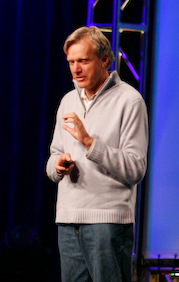
 Photo: Wikimedia Commons. CC BY-SA 2.0. Sergey Brin brought the mathematical framework to PageRank that made Google’s search results dramatically better than the competition.
This was the insight that became PageRank, named after Larry Page himself. Brin, whose background was in data mining and mathematics, joined the project and brought the mathematical framework that made the algorithm work. Together, they realized that the link structure of the web was essentially a massive graph, and that analyzing that graph could reveal which pages were genuinely authoritative on a given topic.
The Dorm Room That Became a Data Center
BackRub needed a lot of computing power, and Page and Brin did not have a budget. So they built their own servers from spare parts, cheap hard drives, and whatever components they could scrounge. Page’s dorm room at Stanford became the project’s first data center, filled with humming machines assembled from discount hardware. When they ran out of space, they converted Brin’s dorm room into a makeshift office.
The university’s bandwidth was another matter. BackRub was crawling the web so aggressively that it consumed nearly half of Stanford’s entire internet bandwidth at one point. The university, to its credit, tolerated this rather than shutting it down.
By 1997, Page and Brin realized that BackRub had outgrown its name and its dorm-room infrastructure. They decided to rename the search engine. The story goes that they wanted a name that conveyed the enormous scale of data they were organizing. A fellow graduate student, Sean Anderson, suggested “googolplex,” and Page shortened it to “googol,” the mathematical term for the number 1 followed by 100 zeros. When Anderson searched for the domain, he accidentally typed “google.com” instead. The domain was available. Page liked the misspelling, and it stuck. The domain google.com was registered on September 15, 1997.
The $100,000 Check That Had No Bank Account
Page and Brin initially tried to sell their technology. They approached several search engine companies, including AltaVista and Yahoo, offering to license PageRank. Nobody was interested. The dominant view in the industry at the time was that search was a solved problem and that the real money was in becoming a web portal, a curated destination like Yahoo’s homepage. The idea that search itself could be a billion-dollar business struck most executives as absurd.
When I closed my hosting company, the hardest part was not the finances. It was admitting to myself that I had been running in place for a decade, clinging to the same business while Page and Brin were willing to throw out their name, their plans, and their original business model the moment a better path appeared.
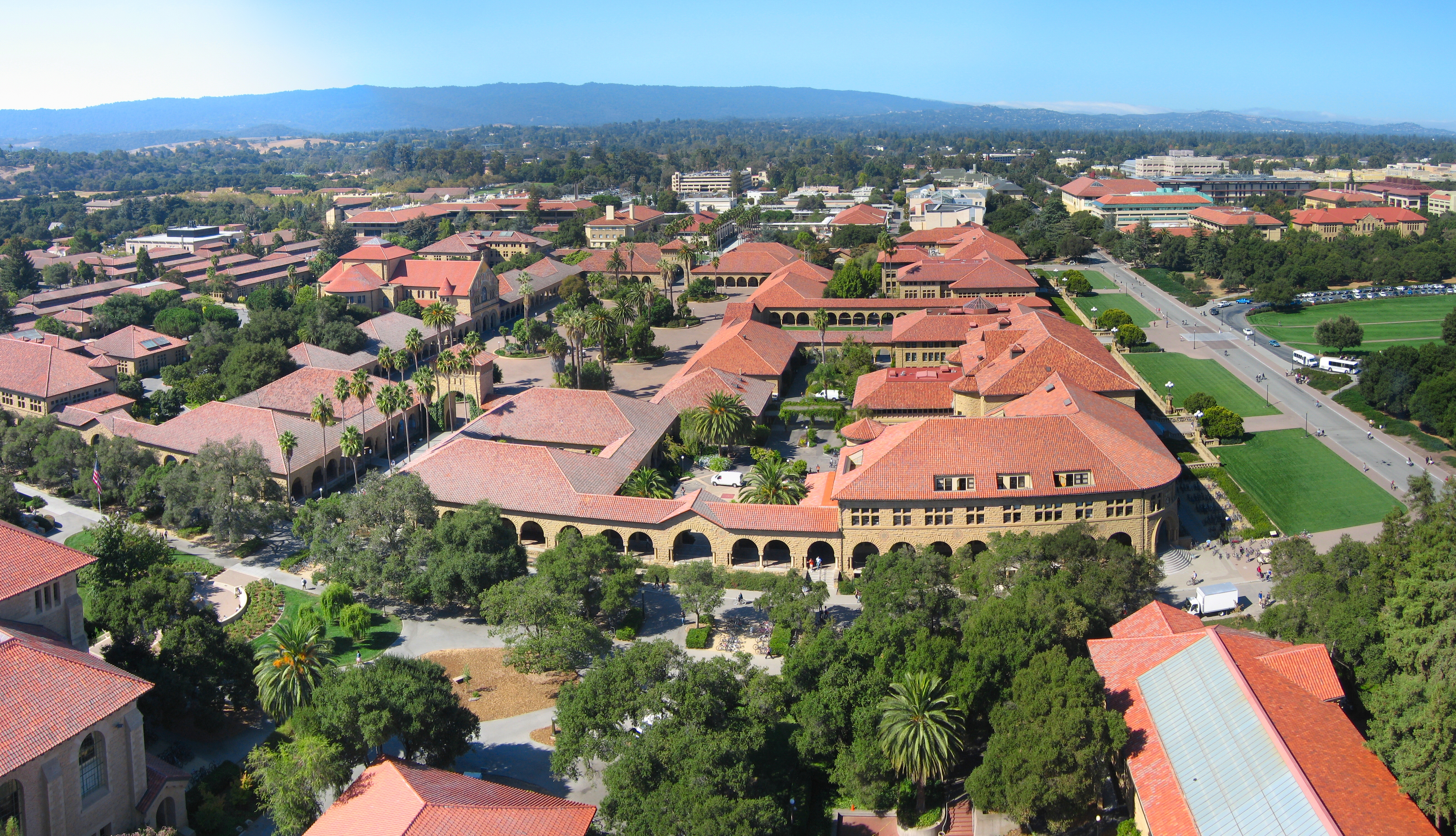 Photo: Wikimedia Commons. CC BY-SA 3.0. Stanford University’s campus, where BackRub was born and where Google’s founders pushed the boundaries of academic computing.
Unable to sell their technology, Page and Brin reluctantly decided to start a company. They needed money. Through a Stanford faculty connection, they arranged a meeting with Andy Bechtolsheim, the co-founder of Sun Microsystems and a legendary Silicon Valley investor. The meeting took place on the porch of a Stanford faculty member’s home early one morning in August 1998.
Bechtolsheim watched a brief demo of the search engine and was immediately impressed. Before Page and Brin had even finished their pitch, he pulled out his checkbook and wrote a check for $100,000, made out to “Google Inc.”
There was just one problem. Google Inc. did not exist yet. The company had not been incorporated, and it did not have a bank account. The check sat in Page’s desk drawer for weeks until they filed the incorporation papers on September 4, 1998 and opened a business account.
Susan Wojcicki’s Garage
With Bechtolsheim’s check and additional funds from family, friends, and another angel investor, Page and Brin raised about $1 million in seed funding. They needed office space, and they found it in the most Silicon Valley way possible: they rented the garage of Susan Wojcicki’s house in Menlo Park for $1,700 a month. Wojcicki, who was working at Intel at the time, would later become Google’s sixteenth employee and eventually the CEO of YouTube.
The garage startup origin story is a well-worn trope in Silicon Valley lore, from Hewlett-Packard to Apple to Amazon. But in Google’s case, it was quite literally true. The first version of the search engine that would come to dominate the internet was operated out of a suburban garage by two graduate students who had not bothered to finish their PhDs.
From Research Project to the World’s Front Page
What strikes me most about Google’s origin story is how close it came to never happening. Page and Brin tried to sell the technology. They were rejected. They did not particularly want to run a business. They were academics at heart, and their instinct was to publish papers, not pitch investors. If AltaVista or Yahoo had written a check for $1 million in 1997, Google as we know it would not exist.
But those companies could not see what Bechtolsheim saw in that early morning demo: that the quality of search results was not a minor feature. It was everything. Users did not want a portal. They wanted answers. And BackRub, awkward name and all, delivered answers that were dramatically better than anything else on the web.
The timing mattered too. Google arrived during the dot-com boom, when capital was flowing freely into internet companies. But unlike many of the companies that rode that wave, Google had a genuine technological advantage and a clear revenue model once it introduced AdWords in 2000. When the dot-com crash wiped out thousands of internet companies, Google survived and thrived precisely because its product was indispensable.
I find it encouraging that the company that arguably had the greatest impact on the internet age began as a research project by two students who were just trying to understand how the web was connected. They did not have a business plan. They did not have a revenue model. They had a question and the persistence to follow it wherever it led. That is the kind of origin story that makes me believe the next world-changing company might be taking shape right now in a dorm room or a garage, built by someone who does not yet realize what they are creating.
Sources
- Battelle, John. The Search: How Google and Its Rivals Rewrote the Rules of Business and Transformed Our Culture. Portfolio, 2005.
- Vise, David A. The Google Story. Delacorte Press, 2005.
- Brin, Sergey, and Lawrence Page. “The Anatomy of a Large-Scale Hypertextual Web Search Engine.” Computer Networks and ISDN Systems, 30(1-7): 107-117, 1998.
- “Our History in Depth.” Google Company, about.google/our-story.
- Auletta, Ken. Googled: The End of the World as We Know It. Penguin Press, 2009.