I am always drawn to the stories of people who decided what they wanted to do with their lives based on a single article, a single moment of clarity that set everything in motion. Vinod Khosla’s story is one of the most striking examples I have found. At the age of sixteen, growing up in an Indian Army household with no connections to the technology industry, he read an article about the founding of Intel. Right there, as a teenager in India, he decided he would start his own technology company. No backup plan. No safety net. Just the conviction that if Robert Noyce and Gordon Moore could do it, so could he.
What happened next is a story about persistence, failed first attempts, and the kind of relentless ambition that brought some of Silicon Valley’s most important companies into existence.
Did you know? Three of Silicon Valley’s biggest founders all hit their defining moment at 27: Musk (the Zip2 exit that bankrolled his next bets), Khosla (becoming Sun’s first CEO), and McNealy (co-founding Sun).
An Unlikely Beginning
Vinod Khosla was born in 1955 in India, into an Indian Army household. His father was a career military officer. There were no engineers in the family, no entrepreneurs, no one with any connection to the technology industry. The idea of starting a company, let alone a technology company in a foreign country, was not part of his world.
But at sixteen, Khosla read about how Robert Noyce and Gordon Moore had left Fairchild to start Intel. The story electrified him. Here were two scientists who had simply decided to build something new, raised the capital, and created one of the most important companies in the world. Khosla decided on the spot that he would do the same thing.
He threw himself into the path that would get him there. He earned a degree in electrical engineering from IIT Delhi, one of the most competitive engineering programs in the world. Then he did something unexpected: before heading to America, he tried to start a company in India, a soy milk business aimed at bringing affordable protein to Indian consumers. The venture failed. But Khosla learned something valuable from the experience. Failure, he would later say, is where the real education happens.
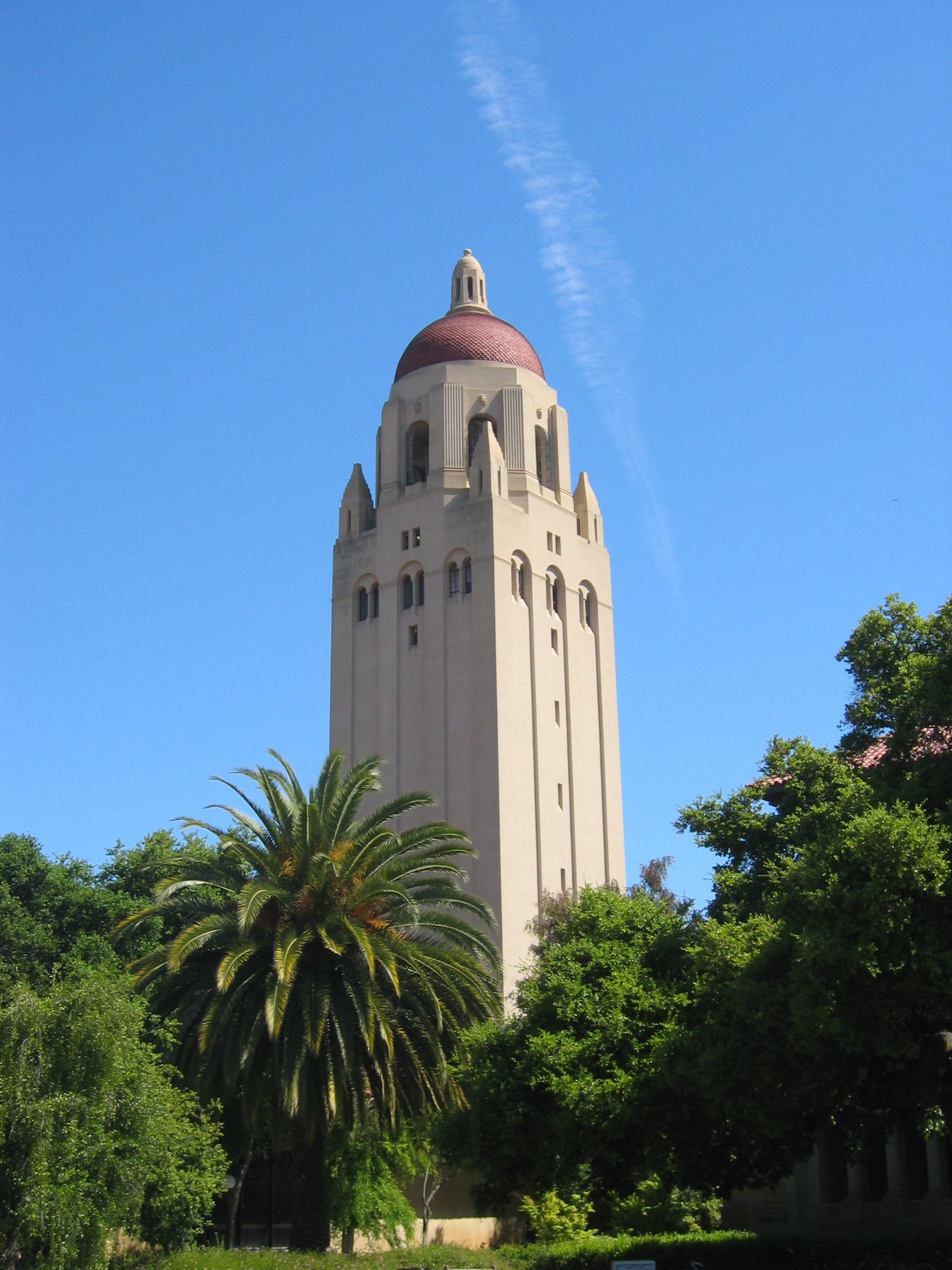 Photo: Wikimedia Commons. CC BY-SA 3.0. Stanford University’s Hoover Tower. Khosla earned his MBA at Stanford, where he met the co-founders of what would become Sun Microsystems.
After the soy milk company folded, Khosla went to the United States. He earned a master’s degree in biomedical engineering from Carnegie Mellon University and then enrolled in the MBA program at Stanford University. It was at Stanford that the pieces finally came together.
The Birth of Sun Microsystems
At Stanford, Khosla met Scott McNealy, a fellow MBA student. Through the university’s network, they connected with Andy Bechtolsheim, a graduate student in computer science who had designed a powerful Unix-based workstation, and Bill Joy, a brilliant programmer at UC Berkeley who had developed key components of the BSD Unix operating system.
In 1982, the four of them co-founded Sun Microsystems. The name stood for Stanford University Network, reflecting the academic origins of the technology. Khosla, at twenty-seven, became the company’s first CEO.
The early days were scrappy. Khosla raised the initial $300,000 in seed funding from Kleiner Perkins, the venture capital firm co-founded by Eugene Kleiner, one of the original Traitorous Eight. There is a beautiful symmetry in that chain: the Traitorous Eight inspired Khosla as a teenager, and then one of them, through his venture capital firm, funded Khosla’s first company. Silicon Valley’s history is full of these loops, where one generation of founders enables the next.
A Billion Dollars in Five Years
Sun Microsystems grew at a pace that stunned the industry. The company’s workstations, running Unix and connected by Ethernet, became the standard for engineering, scientific computing, and, eventually, the servers that powered the early internet. Sun hit $1 billion in annual revenue within five years of its founding, one of the fastest growth trajectories in technology history at that time.
At my hosting company, I avoided sales calls the way most people avoid the dentist. Khosla, by contrast, was pitching strangers for money almost as soon as he landed in America — he raised Sun’s first $300,000 before the product was finished. I now understand my avoidance was not shyness, it was a decision to stay small.
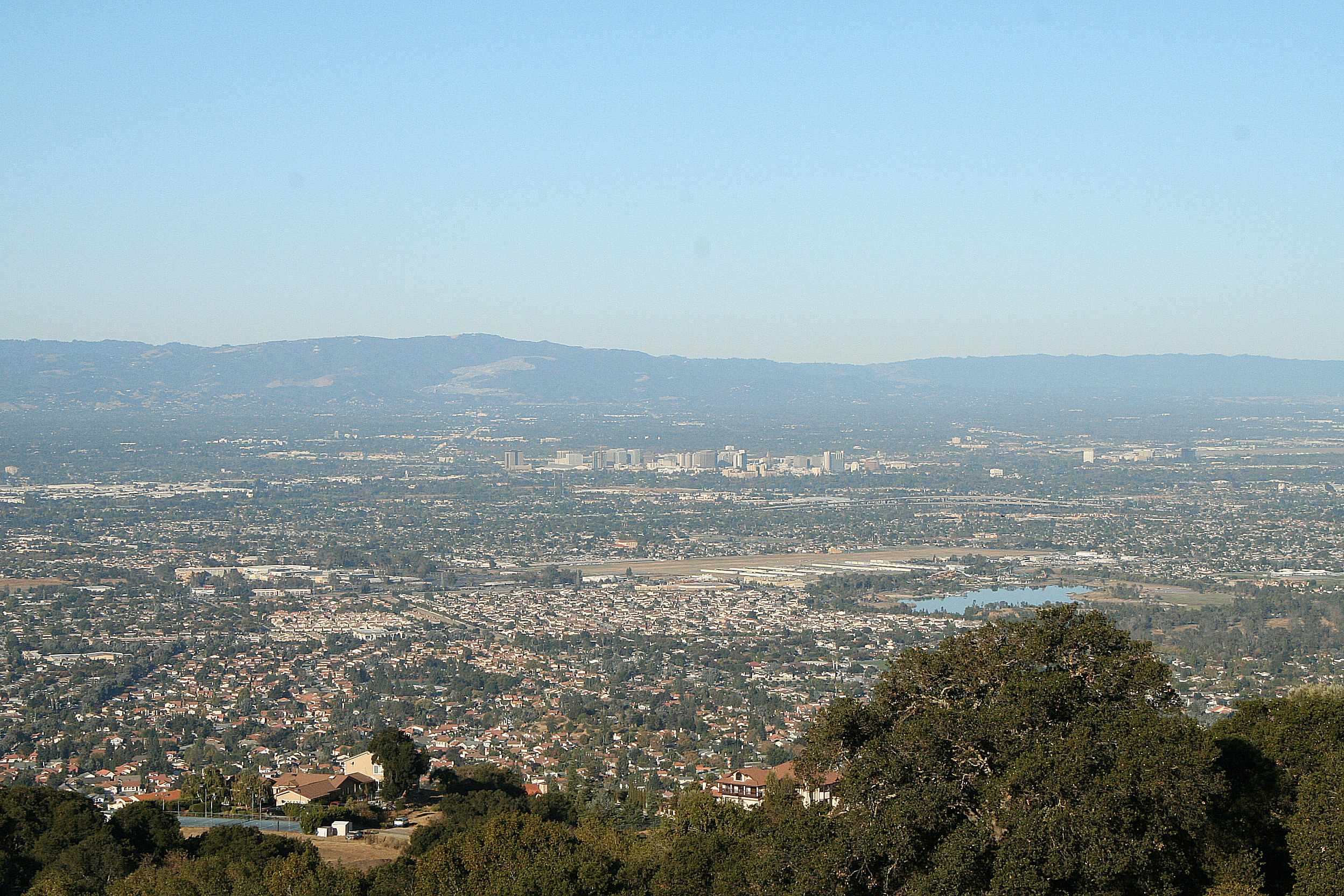 Photo: Wikimedia Commons. CC BY 2.0. Silicon Valley from Monument Peak. Sun Microsystems, headquartered here, became one of the defining companies of the networked computing era.
Sun’s motto, “The Network Is the Computer,” was visionary. In the 1980s, most computing happened on standalone machines. Sun bet that the future lay in connecting computers together, sharing resources across networks. That bet turned out to be the conceptual foundation of the internet as we know it. Sun also created Java, the programming language that would become one of the most widely used in the world, and NFS (Network File System), which became an industry standard.
Khosla stepped down as CEO in 1984, handing the role to Scott McNealy, who would lead the company for the next two decades. But Khosla’s founding vision, that networked workstations would replace mainframes and minicomputers, had already been validated.
From Founder to Investor
In 1986, Khosla joined Kleiner Perkins Caufield and Byers as a general partner, beginning an eighteen-year career as one of Silicon Valley’s most influential venture capitalists. At Kleiner Perkins, he helped fund and advise companies across multiple technology waves, from networking and software to the early internet.
In 2004, Khosla founded his own firm, Khosla Ventures, with a focus that set him apart from most of his peers. While other VCs chased the next social network or mobile app, Khosla invested heavily in clean technology, sustainable energy, and breakthrough science. He funded companies working on biofuels, solar energy, battery storage, and advanced materials. Not all of these bets paid off. Some of his clean tech investments failed spectacularly. But Khosla’s willingness to fund high-risk, high-impact ventures reflected the same audacity that had driven him to start Sun Microsystems in his twenties.
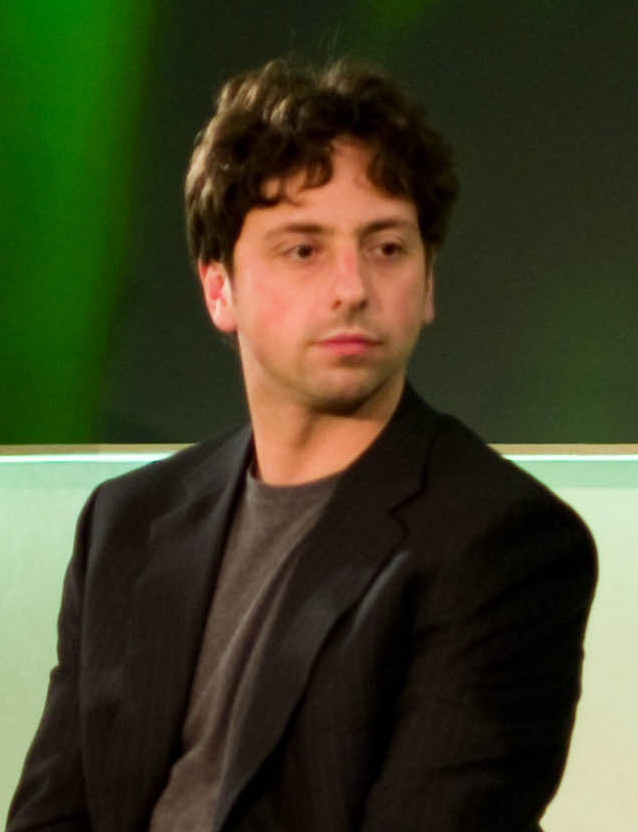 Photo: Wikimedia Commons. CC BY 2.0. Sergey Brin, co-founder of Google. Andy Bechtolsheim, Khosla’s co-founder at Sun Microsystems, wrote Google’s famous first $100,000 investment check, continuing the chain of founders funding founders.
There is a wonderful detail in the Sun Microsystems story that connects it to an even bigger one. Andy Bechtolsheim, Khosla’s co-founder at Sun, later became one of the earliest investors in Google, writing the company’s famous first check for $100,000 in 1998. That check, made out to “Google Inc.” before the company was even incorporated, helped two Stanford students turn a research project called BackRub into the most important company on the internet. Once again, one generation of Silicon Valley founders enabled the next.
The Circle Continues
Forbes has recognized Khosla’s journey, including him among America’s most successful living immigrant founders. It is a long way from an Army household in India to the top of the American technology industry, and Khosla has been characteristically blunt about what made the journey possible: relentless work, a willingness to fail, and the belief that ambitious ideas are worth pursuing even when the odds are against you.
What I find most compelling about Vinod Khosla’s story is how it illustrates the chain reaction at the heart of Silicon Valley. A sixteen-year-old in India reads about Intel and decides to start a company. He fails at his first attempt, crosses an ocean, earns the right degrees, and co-founds a company that hits a billion dollars in five years. His co-founder then writes the first check to Google. And Khosla himself goes on to fund the next generation of founders with the same conviction that someone once showed him.
That chain, from the Traitorous Eight to Fairchild to Intel to Sun to Google and beyond, is not a coincidence. It is what happens when talented people are given the freedom and the funding to build. Vinod Khosla bet his life on that idea at sixteen, and the bet paid off in ways even he could not have imagined.
Sources
- Southwick, Karen. High Noon: The Inside Story of Scott McNealy and the Rise of Sun Microsystems. Wiley, 1999.
- Hall, Mark, and John Barry. Sunburst: The Ascent of Sun Microsystems. Contemporary Books, 1990.
- “Vinod Khosla.” Khosla Ventures, khosla.com.
- Forbes, recognition of Vinod Khosla among America’s most successful immigrant founders.
- Malone, Michael S. The Intel Trinity: How Robert Noyce, Gordon Moore, and Andy Grove Built the World’s Most Important Company. Harper Business, 2014.
- “Sun Microsystems.” Computer History Museum, computerhistory.org.