I was at a parent-teacher meeting last month and another parent Venmo’d me for a class gift, and I thought about how wild it is that we just beam money to strangers from our phones without thinking twice. That got me back into the origins of the PayPal Mafia, and I realized that the PayPal most people know bears almost no resemblance to the company that was actually founded. The PayPal that processes hundreds of billions of dollars in online transactions every year started as an application for beaming money between PalmPilots. Not the internet. Not email. PalmPilots. Those handheld devices that fit in your jacket pocket and had a tiny stylus you tapped on a green screen. The original vision was not global digital payments. It was splitting a lunch bill using infrared signals between two gadgets that had a combined global user base of roughly 2 million people.
How does a company go from the smallest possible market to one of the most important financial platforms ever built? The answer involves a meeting at Stanford, a pivot born from desperation, and a press conference that accidentally revealed the future.
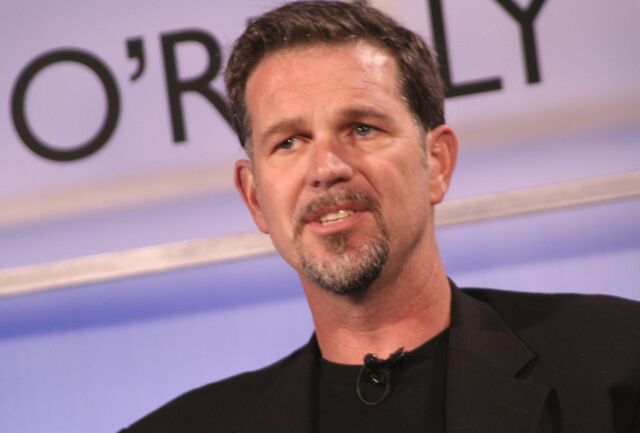
 Photo by Gage Skidmore, Wikimedia Commons. License: CC BY-SA 3.0.
Confinity: The Company Before PayPal
The company that became PayPal was originally called Confinity, founded in December 1998 by Max Levchin, Peter Thiel, Luke Nosek, Russel Simmons, and Ken Howery. Before settling on Confinity, the company had briefly operated under the name Fieldlink. The founders were a mix of Stanford connections and University of Illinois at Urbana-Champaign alumni, brought together by Levchin’s technical vision and Thiel’s philosophical ambition.
Levchin, a Ukrainian-born cryptography enthusiast, was obsessed with security on handheld devices. Thiel, a Stanford law graduate and former derivatives trader, was looking for a vehicle to advance his libertarian ideas about money and individual freedom. The marriage of these two interests produced Confinity’s founding thesis: secure money transfer on mobile devices.
Thiel put in the initial $100,000 to get the company started. It was not a large sum by Silicon Valley standards, even in 1998, but it was enough to hire a small team and build a prototype. The early fundraising was modest and personal. In February 1999, Confinity raised a $500,000 friends-and-family round. Among the investors were Thiel’s own parents, who contributed approximately $35,000. When you are raising money from your parents, you are not yet a company that the world takes seriously.
It is worth pausing on that: the company that would eventually process more transactions than most banks started with $35,000 from Peter Thiel’s mom and dad.
The next milestone was a $3 million investment from Nokia Ventures, the corporate venture arm of the Finnish phone giant. Nokia was interested because Confinity’s technology aligned with its vision of mobile commerce. The investment gave Confinity credibility and runway, but it also reinforced the company’s focus on handheld devices rather than the internet.
The PalmPilot Demo
The core product was elegant in concept: you could transfer money from one PalmPilot to another using the device’s infrared port. Two people at lunch, both with PalmPilots, could split the bill in about five seconds. One person would beam the payment to the other through the infrared connection, the same technology used to sync the PalmPilot with a desktop computer.
Confinity demonstrated this technology at a press conference where they transferred their $3 million Nokia investment between two PalmPilots on stage. The demonstration was impressive as a technical achievement. Levchin’s cryptographic expertise ensured that the transfer was secure. The user interface was simple. The speed was remarkable.
But there was a problem so obvious that it barely needed to be stated: only about 2 million people on Earth owned PalmPilots. The total addressable market for a PalmPilot payment app was vanishingly small. Even if Confinity captured every single PalmPilot user, which was impossible, the business would have been tiny. They had built a beautiful solution for a market that did not exist at scale.
I find this fascinating because it contradicts the popular narrative that great founders always see the future clearly. Thiel and Levchin, two of the most celebrated minds in Silicon Valley, started by building a product for a market of 2 million people. The genius was not in the original idea. It was in what they did when the original idea hit a wall.
The Pivot to Email
The pivot happened partly by accident and partly by necessity. While developing the PalmPilot product, Confinity had also built a web-based demo that allowed users to send money via email. This was intended as a secondary feature, a way to showcase the technology to potential investors and partners who might not own PalmPilots. It was a marketing tool, not a product.
At my hosting company, I never watched what people actually used, the way Confinity watched users gravitate toward email payments. I had exactly one employee, for about two years, and I was a terrible manager. Not cruel — just absent. I gave no feedback, set no goals, and assumed they would figure it out. They did not. Neither did I.
But people started using it. The email payment feature, which Confinity had treated as an afterthought, turned out to be the thing users actually wanted. The reason was simple: everyone had an email address. The addressable market for email payments was not 2 million PalmPilot owners. It was everyone on the internet.
The pivot from PalmPilots to email was not a single dramatic decision. It was a gradual realization, driven by usage data, that the secondary feature was becoming the primary product. By mid-1999, the email payment service was growing faster than anything the PalmPilot product had achieved. Confinity leaned into it, eventually naming the email payment service PayPal.
The Collision with X.com
At almost exactly the same time, a few blocks away in Palo Alto, another company was building a competing vision of online payments. That company was X.com, founded by Elon Musk in early 1999 with $12 million of his own money from the Zip2 sale. X.com’s ambition was broader than Confinity’s. Musk wanted to build a full-service online bank, not just a payment tool. But the feature that was gaining the most traction on X.com was, like Confinity’s email payments, a simple person-to-person money transfer.
The two companies were burning through cash trying to acquire the same customers. They were literally in the same building for a period, sharing office space in a Palo Alto complex. The competition was expensive and, from a strategic perspective, destructive. Both companies were spending millions on sign-up bonuses, giving new users $10 or $20 just for creating an account, in a race to build the largest user base.
In March 2000, X.com and Confinity merged. The merger was contentious from the start, as I explored in my piece on how Musk bet everything on X.com. The technical teams clashed over whether to use Musk’s preferred Windows-based infrastructure or Confinity’s Unix-based stack. The strategic vision was divided between Musk’s ambition for a full bank and Thiel’s focus on the payment product. The cultural differences were immense.
The merged company eventually took the PayPal name, adopted the Unix infrastructure, and focused on payments. Musk was removed as CEO in September 2000, replaced by Thiel. The story of that boardroom shift is one of the most dramatic chapters in the saga of founders being fired from their own companies.
The eBay Explosion
The pivot to email payments intersected with another phenomenon that neither Confinity nor X.com had anticipated: eBay. Sellers on eBay needed a way to collect payments from buyers quickly and reliably. Checks took days to clear. Wire transfers were expensive and complicated. PayPal’s email payment system solved the problem perfectly: a buyer could pay a seller instantly, with no need for a bank account number or wire transfer instructions.
PayPal’s growth on eBay was explosive and largely organic. Sellers started putting “Pay with PayPal” in their auction listings. Buyers started signing up because sellers required it. The network effect, the same dynamic that makes social networks valuable, kicked in: the more people used PayPal, the more valuable it became for everyone else.
By the time eBay acquired PayPal for $1.5 billion — the deal was announced in July 2002 and closed that October — the platform had tens of millions of users and was processing payment volumes that dwarfed anything the PalmPilot demo had imagined. The company that started by beaming money through infrared signals between two handheld devices had become the backbone of the world’s largest online marketplace.
What the PalmPilot Teaches
I keep coming back to the PalmPilot origin because it contains a lesson that applies far beyond fintech. The founders of Confinity were not wrong about the core insight. They were right that people wanted to send money digitally. They were right that security mattered. They were right that simplicity and speed would win. They were wrong about the medium. They thought the future was infrared beams between handheld devices. The future was email. Then it was websites. Then it was mobile apps.
The ability to be right about the what and wrong about the how, and then to adapt before the money runs out, is the defining skill of successful startup founders. Thiel and Levchin had it. Musk, who built X.com with a similarly broad thesis that needed narrowing, had it too. And as I explored in my article on what Netflix and PayPal have in common, both companies shared a commitment to talent density that made rapid adaptation possible.
The PayPal story is often told as a story of vision. I think it is more accurately a story of revision. The original vision was too small. The revised vision was too big. And somewhere in between, in the messy process of building, arguing, merging, and pivoting, a company emerged that changed how the world moves money. It started with two PalmPilots, an infrared beam, and a lunch bill that needed splitting. The rest is history, but only because the founders were willing to let go of where they started.
Sources
- Thiel, P. and Masters, B. Zero to One: Notes on Startups, or How to Build the Future. Crown Business, 2014.
- Soni, J. The Founders: The Story of PayPal and the Entrepreneurs Who Shaped Silicon Valley. Simon & Schuster, 2022.
- Isaacson, W. Elon Musk. Simon & Schuster, 2023.
- Vance, A. Elon Musk: Tesla, SpaceX, and the Quest for a Fantastic Future. Ecco, 2015.
- Jackson, E. The PayPal Wars: Battles with eBay, the Media, the Mafia, and the Rest of Planet Earth. World Ahead Publishing, 2004.
- Fortune Magazine. “The PayPal Mafia.” November 2007.