I was at a weekend market last Saturday and a guy was selling old Compaq laptops as vintage collectibles. I picked one up and thought: this company used to be the biggest PC maker on the planet. Then I went home and started reading about the aftermath of the Zip2 acquisition, and I realized something that doesn’t get discussed nearly enough. The company that paid $307 million for Elon Musk’s first startup – the company that gave Musk the capital to go build X.com and eventually PayPal – doesn’t exist anymore. Compaq Computer Corporation, once the largest personal computer manufacturer on the planet, was swallowed by HP in 2002 and erased from history. The company that bought Zip2 couldn’t even outlive the decade.
How does the world’s biggest PC maker disappear?
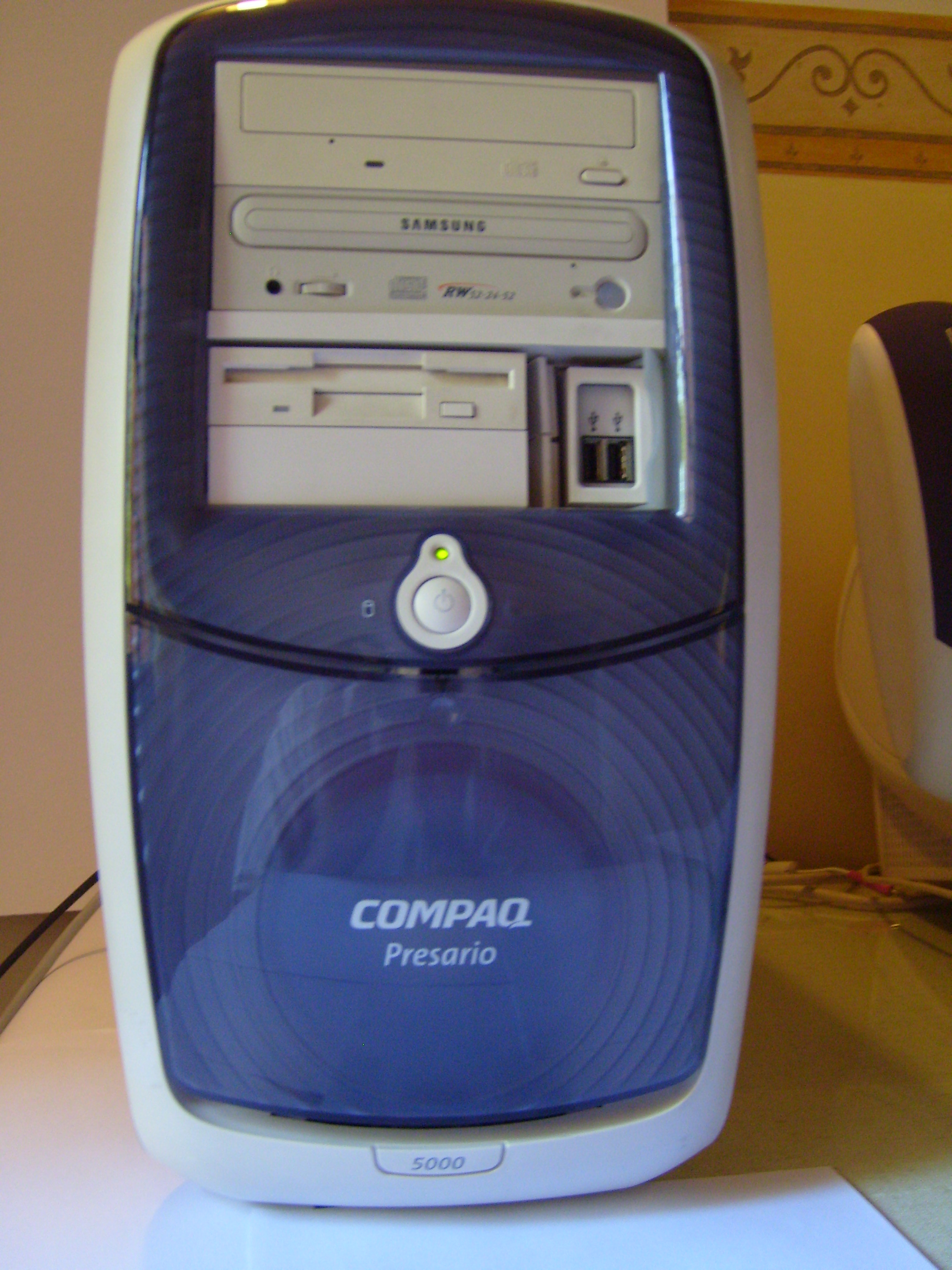 Photo: Wikimedia Commons. CC BY-SA.
The Rise: From a Diner Napkin to Market Dominance
Compaq’s origin story is itself remarkable. In 1982, three former Texas Instruments engineers – Rod Canion, Jim Harris, and Bill Murto – sketched the design for a portable IBM-compatible computer on a placemat at a Houston diner. They founded Compaq and shipped their first product, the Compaq Portable, in 1983. It was one of the first IBM PC clones, and it sold well because it did something IBM’s own products couldn’t: it was portable.
By 1987, Compaq had reached $1 billion in annual revenue faster than any company in American business history at that time. Through the late 1980s and 1990s, Compaq became the world’s largest supplier of personal computers, overtaking IBM itself. The company that had started with a sketch on a placemat was now the king of the PC industry.
“Compaq’s early success was built on a simple idea: make something compatible with the industry standard, but make it better and more portable.” – Rod Canion, Open: How Compaq Ended IBM’s PC Domination and Helped Invent Modern Computing, 2013
The Shopping Spree
In the late 1990s, Compaq’s leadership decided that selling PCs wasn’t enough. They wanted to become a full-service technology company that could compete with the likes of IBM, Sun Microsystems, and the emerging internet giants. What followed was one of the most aggressive acquisition sprees in tech history.
In June 1998, Compaq acquired Digital Equipment Corporation (DEC) for $9.6 billion. DEC had been a pioneer in minicomputers and networking, and the acquisition made Compaq one of the largest computer companies in the world overnight. But the deal came with something unexpected: AltaVista, a search engine that DEC had built. At its peak, AltaVista was one of the most popular search engines on the internet, processing tens of millions of queries per day.
Then in February 1999, Compaq acquired Zip2 for $307 million, with the total deal valued at approximately $341 million. The plan was to fold Zip2’s local search and mapping technology into AltaVista, creating a comprehensive internet portal that could compete with Yahoo. Compaq envisioned AltaVista as its gateway to the internet economy, and Zip2’s technology – the vector maps, business directories, and local search capabilities that the Musk brothers had built from scratch – was supposed to be a key piece of that puzzle.
For Elon Musk, the deal was transformative. His 7% stake yielded roughly $22 million before taxes. He immediately plowed most of it into X.com. For Compaq, the deal was one acquisition among many in a strategy that was about to collapse.
The Threats They Didn’t See
While Compaq was buying companies and building portals, two forces were quietly destroying its core business.
My hosting company served clients in the Balkans. The market was small, the budgets were tight, and the growth ceiling was real — not unlike the PC market Compaq believed it owned. But I also used the small market as an excuse to think small, the way Compaq kept defending its retail channel while Dell attacked from a different angle. The market did not hold me back. My thinking did.
The first was Dell. Michael Dell had pioneered a direct-to-consumer sales model that cut out retailers entirely. Customers ordered custom-configured PCs directly from Dell, which built them to order and shipped them straight to the buyer. This eliminated inventory costs, retail margins, and the inefficiencies of the traditional channel model. Dell’s computers were cheaper, more customizable, and delivered faster than Compaq’s.
Compaq relied on a vast network of retailers and resellers. Its entire business model depended on distribution channels that Dell was making obsolete. By the time Compaq realized the threat, Dell had already eaten significant market share. Compaq tried to build its own direct sales capability, but it was too late and too half-hearted. You can’t bolt a direct model onto a channel-dependent company without alienating the very retailers who drive your revenue.
The second threat was the dot-com crash. When the bubble burst in 2000, the internet economy that Compaq had been betting on evaporated. The grand vision for AltaVista as an internet portal suddenly looked absurd. Web traffic plummeted, advertising revenue dried up, and the companies Compaq had acquired at premium prices were now worth fractions of what had been paid for them.
AltaVista: The Search Engine That Could Have Been Google
The AltaVista story within the Compaq story is its own tragedy. AltaVista was one of the first truly powerful search engines. Launched in 1995 by DEC researchers, it could index the entire web and return results in milliseconds. At its peak in 1998, it was handling 80 million hits per day.
But Compaq didn’t know what to do with it. Instead of doubling down on search – the technology that would make Google the most valuable company on earth – Compaq tried to turn AltaVista into a Yahoo-style portal. They cluttered it with news, shopping, email, and dozens of features that diluted the core search experience. It was a classic case of a company not understanding the value of what it owned.
Meanwhile, two Stanford graduate students named Larry Page and Sergey Brin were building a search engine that did one thing and did it brilliantly. Google launched in 1998 and rapidly overtook AltaVista by offering faster, cleaner, more relevant search results. AltaVista had a multi-year head start and an established user base. It didn’t matter. Google won because it stayed focused while AltaVista was being pulled in every direction by corporate strategy.
Compaq eventually sold AltaVista to Overture Services in 2003 for approximately $140 million – a fraction of what the search engine’s potential had been worth. Yahoo later acquired Overture and shut down AltaVista entirely in 2013.
The HP Merger and the End
By 2001, Compaq was hemorrhaging money. PC margins were shrinking. The internet strategy had failed. The DEC acquisition had created integration nightmares. The company that had once been the fastest to $1 billion in revenue was now a cautionary tale about overexpansion.
On September 3, 2001, Hewlett-Packard announced it would acquire Compaq for approximately $25 billion in stock. The merger was controversial. HP co-founder Walter Hewlett, son of Bill Hewlett, publicly opposed the deal and launched a proxy fight to block it. He argued that combining two struggling PC companies would not create one successful one. He was, in many ways, proven right.
The merger was approved by a razor-thin margin of HP shareholders in March 2002 and closed in May 2002. The Compaq name was gradually phased out. By 2013, HP had stopped using the Compaq brand entirely. The company that had been the world’s largest PC maker simply ceased to exist.
The Irony
I keep thinking about the irony at the center of this story. Compaq paid $307 million for Zip2, and that money fueled the career of a man who would go on to build companies worth hundreds of billions of dollars. Meanwhile, the company that wrote the check didn’t survive long enough to see what that money enabled.
Elon Musk took his Zip2 proceeds and built X.com, which merged with Confinity to become PayPal, which sold to eBay for $1.5 billion, which funded SpaceX and Tesla. Compaq took Zip2’s technology and folded it into a portal strategy that the dot-com crash obliterated.
The lesson here isn’t that Compaq was run by incompetent people. It was run by people who were very good at the business model that had made them successful. The problem was that the world was changing, and they kept trying to apply old playbooks to new realities. They bought their way into the internet instead of building their way in. They tried to turn a search engine into a portal instead of recognizing that search itself was the product.
The Netscape IPO in 1995 had kicked off an era where everyone wanted to be an internet company. Compaq’s response was to buy internet companies. But acquisitions alone don’t create vision. And without vision, even the largest company in its industry can disappear in less than a decade.
For anyone building something today, the Compaq story is a powerful reminder. The company that pays you might not outlast you. The check you receive today might be worth more than the company that wrote it. What matters is not the size of the organization but the clarity of the mission. Compaq lost its mission. The people it funded did not.
Sources
- Rod Canion, Open: How Compaq Ended IBM’s PC Domination and Helped Invent Modern Computing, BenBella Books, 2013
- “Compaq to Buy Digital Equipment for $9.6 Billion,” New York Times, January 27, 1998
- “Compaq Acquires Zip2,” Compaq press release, February 17, 1999
- “Hewlett-Packard to Acquire Compaq,” HP press release, September 3, 2001
- “Walter Hewlett’s Proxy Fight,” Wall Street Journal, various 2002 coverage
- John Battelle, The Search: How Google and Its Rivals Rewrote the Rules of Business, Portfolio, 2005
- Ashlee Vance, Elon Musk: Tesla, SpaceX, and the Quest for a Fantastic Future, Ecco, 2015 (Chapter 4: Elon’s First Start-Up)
- Eric Jorgenson, The Book of Elon, 2021
- Franziska M. Renz and Julian U. N. Vogel, “Elon Musk: Leader or Liability?”, Journal of Case Research and Inquiry, Vol. 6, 2020