A friend’s kid asked me at a birthday party last weekend how Elon Musk got rich, and I gave the standard answer about Zip2 selling for $307 million. But walking to my car afterward, I realized I had done exactly what most success stories conveniently do – I left out the part where it almost never happened. Before Zip2 became a $307 million acquisition, it nearly died half a dozen times. Not in the dramatic, Hollywood way where a single crisis threatens to destroy everything. In the slow, grinding way where you can’t afford a second computer, you sleep on the office floor, and you drill a hole through a ceiling just to get online.
What does it actually look like when a startup almost doesn’t make it?
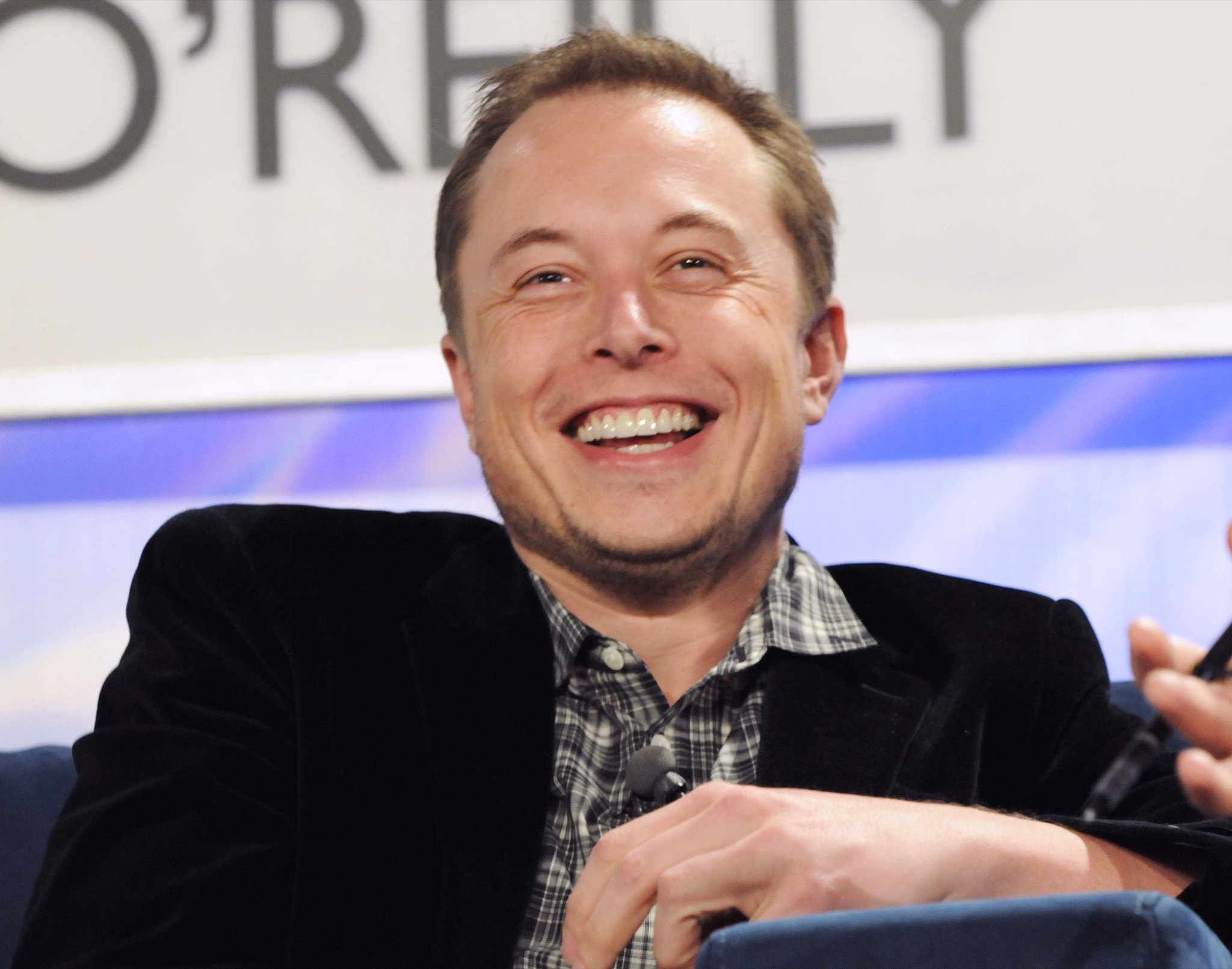
 Photo: Steve Jurvetson, Wikimedia Commons. CC BY 2.0.
Did you know? Zip2’s entire starting capital was about $15,000 — and Musk walked away with roughly $15 million after taxes. Same number, one thousand times over.
One Computer, Two Jobs
The detail that stuck with me most was the computer situation. Elon and Kimbal Musk founded Zip2 in 1995 with almost nothing. Elon had about $2,000 and his home-built PC. Kimbal contributed $5,000. Their friend Greg Kouri added $8,000. That was the entire war chest for a company that would eventually sell for over $300 million.
But here is the part that matters: they had one computer. A single machine. During the day, it served as the web server running the Zip2 website. At night, when traffic dropped, Elon would take over and write code.
“I couldn’t even afford a 2nd PC at Zip2, so programmed at night & website only worked during day.” – Elon Musk
I keep thinking about what that schedule actually means. You code from roughly midnight until morning. You sleep a few hours. Then you spend the day doing everything else a startup demands: sales calls, meetings, fixing whatever broke overnight. And you do this not for a week or a month but for the better part of a year. That is not glamorous entrepreneurship. That is survival.
Drilling Through the Ceiling
The internet connection problem was equally absurd. The Musk brothers couldn’t afford their own dedicated line. But there was an ISP operating in the same building, on the floor above them. So they did what any resourceful, cash-strapped founders would do: they convinced the ISP to let them drill a hole through the ceiling and run a cable down to their office.
This was 1995. The web was barely a thing. Most businesses didn’t have websites. And here were two brothers from South Africa, working out of a small office in Palo Alto, literally punching through drywall to connect to the internet so they could build a company on it.
They couldn’t afford an apartment either. The office was where they worked and where they slept. One shower at the local YMCA. Whatever food was cheapest. This wasn’t a lifestyle choice or some Silicon Valley badge of honor. It was the only option available.
Commission-Only Sales and the First Revenue
I wondered how they managed to generate any revenue at all in those early days. The idea behind Zip2 was straightforward: an online business directory with maps, searchable listings, and directions. Essentially an early version of Google Maps combined with Yelp. But in 1995, convincing small business owners to pay for an internet listing was like selling air conditioning in Antarctica. Nobody understood why they needed it.
At my company, the best month of revenue and the worst month of revenue were only twenty percent apart. That sounds stable. What it actually means is that nothing I did made a meaningful difference.
Elon’s solution was characteristically scrappy. He hired salespeople who worked entirely on commission. No base salary, no benefits, no overhead. If they sold a listing, they got paid. If they didn’t, they didn’t. It was a high-risk model for the salespeople, but it was the only model Zip2 could afford.
And it worked. Slowly, painfully, the money started coming in. Not enough to get rich, but enough to keep the lights on. Enough to prove the concept had legs.
V2: The Newspaper Pivot
The real breakthrough came when Zip2 expanded beyond individual business listings and pivoted toward newspapers. Version two of the platform became a publishing system that brought hundreds of regional and city newspapers online for the first time.
“Zip2 also built a newspaper publishing platform that brought hundreds of regional & city papers online for the first time and made major functionality advancements to the NY Times, Boston Globe & Knight-Ridder websites. NYT, KR & Hearst were all major investors in Zip2.” – Elon Musk
This was the move that transformed Zip2 from a scrappy startup into a serious company. The New York Times, Knight-Ridder, and Hearst didn’t just use the platform. They became investors. When major media companies are writing checks to fund your growth, the conversation changes entirely. Suddenly you have credibility, distribution, and the kind of partnerships that attract even more investment.
The Boardroom Revolt
But growth brought new problems. As Zip2 attracted more institutional money, the investors wanted professional management. They brought in Rich Sorkin as CEO, pushing the Musk brothers into more limited roles. This is a pattern I’ve seen repeated across Silicon Valley: founders build the thing, investors fund the thing, and then the investors hire someone else to run the thing.
Musk disagreed with Sorkin’s direction. The tension simmered through 1997 and into 1998. Then Sorkin made a move that forced a confrontation: he tried to merge Zip2 with CitySearch, a competing online city guide. Musk saw this as the wrong strategy. Instead of accepting the decision, he organized what can only be described as a boardroom revolt.
Musk rallied enough board support to have Sorkin removed. Derek Proudian replaced him as CEO. It was a bold play for a young founder who held a minority stake, and it demonstrated something that would become a recurring theme in Musk’s career: when he believes a direction is wrong, he will fight to change it, regardless of the political consequences.
The $307 Million Exit
On February 17, 1999, Compaq Computer Corporation acquired Zip2 for $307 million, with the total deal valued at approximately $341 million when all components were included. Zip2 was folded into Compaq’s AltaVista search engine division to boost its local search and mapping capabilities. As I covered in my article on the company that bought Zip2 and then disappeared, Compaq’s own fate would prove far less fortunate.
For the Musk brothers, the payday was life-changing but not outrageous. Elon’s 7% stake yielded roughly $22 million before taxes. Kimbal received his share as well. It was enough to be wealthy but nowhere near the billions that would come later. What it provided was something more valuable than money at that moment: proof.
Proof that the Musk brothers could build something from nothing. Proof that the idea of putting maps and business directories online, which had seemed absurd to investors and business owners just four years earlier, was worth hundreds of millions of dollars. Proof that sleeping on an office floor and coding through the night could actually lead somewhere.
The Story Behind the Story
When I look at the full arc of Zip2, what strikes me most is how many moments could have been the end. Running out of money. Having one computer. No apartment. A CEO pushing a merger you believe is wrong. Any one of those moments could have been the point where the Musk brothers said this isn’t working and walked away.
They didn’t.
Every “almost died” story, when you look closely enough, is really a “refused to quit” story. The startup didn’t survive because conditions improved or because someone swooped in with a rescue. It survived because the people building it decided, over and over again, that the alternative to continuing was unacceptable. That stubbornness, that refusal to accept the most logical outcome, is the thread that connects Zip2 to everything Elon Musk built afterward. It all started with a road trip through the desert where the brothers first spotted the opportunity.
For anyone building something right now with limited resources and unlimited uncertainty, the Zip2 story is worth remembering. Not because it guarantees a $307 million exit. But because it proves that starting with almost nothing is not a disqualification. It is, more often than not, exactly where the best stories begin.
“Even then, as essentially a college kid with zits, Elon had this drive that this thing — whatever it was — had to get done and that if he didn’t do it, he’d miss his shot.” — Jeff Heilman, early Zip2 employee, quoted in Vance, Elon Musk
Sources
- Ashlee Vance, Elon Musk: Tesla, SpaceX, and the Quest for a Fantastic Future, Ecco, 2015 (Chapter 4: Elon’s First Start-Up)
- Eric Jorgenson, The Book of Elon, 2021
- Franziska M. Renz and Julian U. N. Vogel, “Elon Musk: Leader or Liability?”, Journal of Case Research and Inquiry, Vol. 6, 2020