My partner and I were driving through the desert on a road trip last month, and she asked me why I kept grinning at my phone. I’d just found a detail about the founding of Zip2 that most accounts of the company gloss over entirely. Before there was a business plan, before there was venture capital, before there was even a company name, there were two brothers in a beat-up BMW driving through the Mojave Desert in 120-degree heat with no air conditioning. And the idea that would make them millionaires did not come from a textbook or a Stanford lecture. It came from a salesman who pitched the wrong product to the wrong person — and a young intern who saw the opportunity the salesman was missing.
What if the best business ideas do not come from research or brainstorming sessions? What if they come from paying attention to the world as it breaks down in front of you?
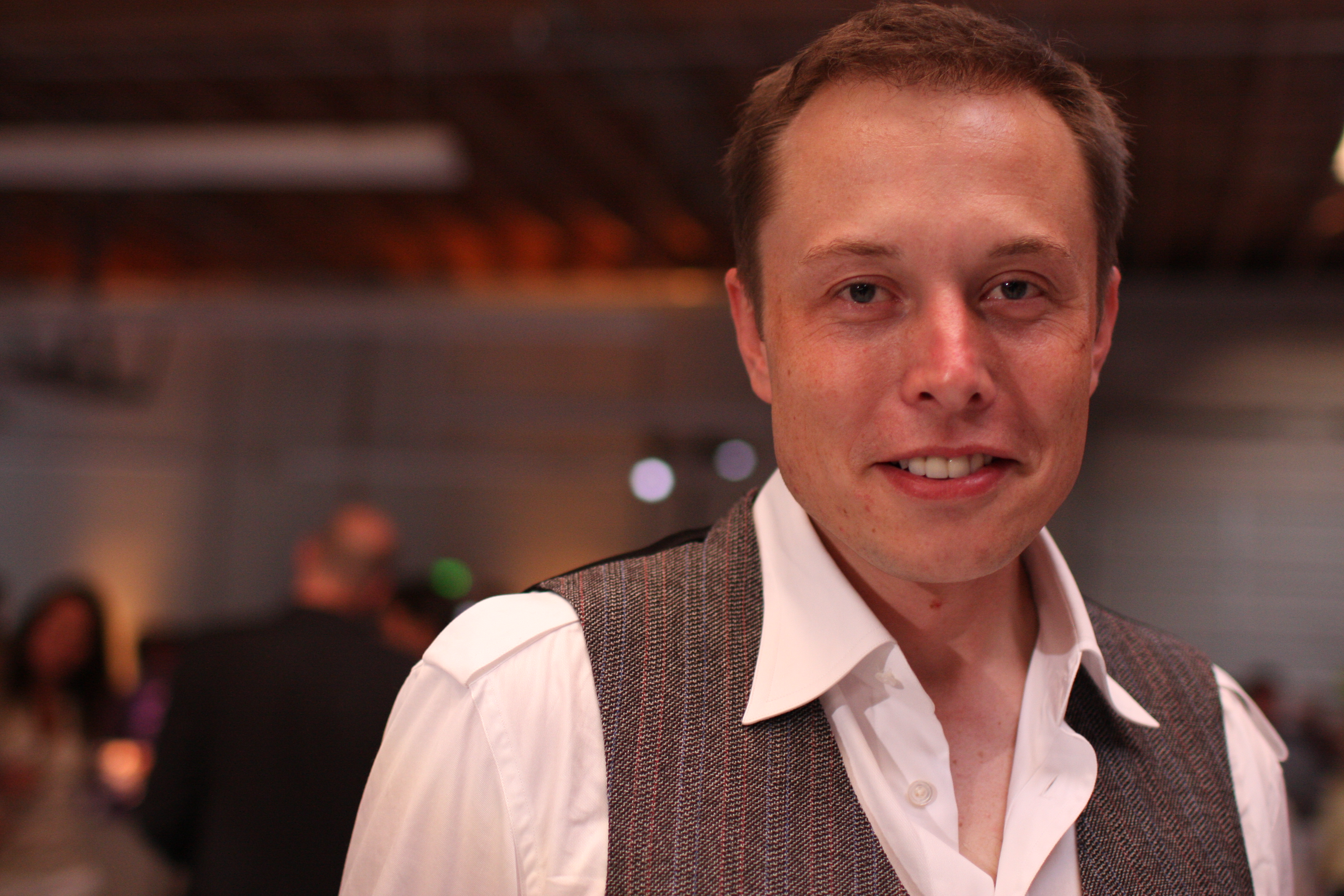
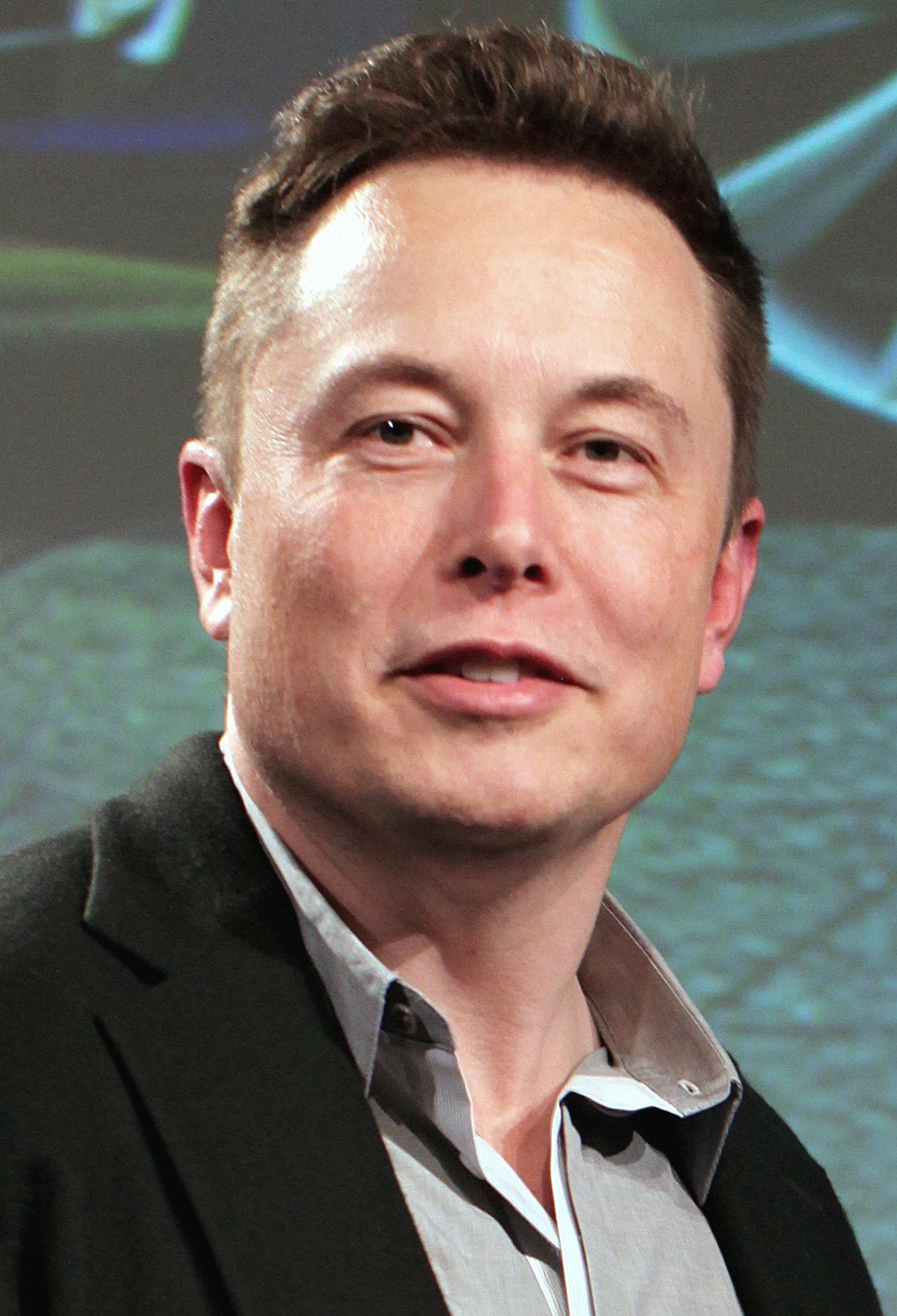 Photo: Steve Jurvetson, Wikimedia Commons. CC BY 2.0.
The BMW and the Desert
In the summer of 1994, Kimbal Musk had just sold his College Pro Painters franchise — a house-painting business popular among Canadian university students. He had some cash. His brother Elon was finishing up at the University of Pennsylvania. The two brothers pooled their money and bought a 1970s BMW. It was not a glamorous car. It was the kind of car you buy when you want to get from point A to point B and you are not entirely sure it will make it.
They set out from near San Francisco and headed south. Their first stop was Needles, a city in the Mojave Desert, where temperatures regularly climb past 120 degrees Fahrenheit in summer. The BMW had no air conditioning. I have driven through the Mojave in a modern car with functioning climate control, and even then the heat is oppressive. The idea of doing it in a 1970s BMW with the windows down makes me uncomfortable just thinking about it.
But the heat was not the point of the trip. The brothers were exploring, talking, arguing about the future the way brothers do. From California to Colorado, Wyoming, South Dakota, and Illinois, they took turns driving, brainstorming, and — as Vance puts it — “talking shit” before heading back east to get Musk back to school that fall. And somewhere on that road, they decided to bet on the idea Elon had been turning over since his summer internship.
The Salesman Who Pitched the Wrong Person
The detail that caught my attention was this: the idea did not come to Musk in a classroom or a lecture hall. During his summer internship at Pinnacle Research Institute in 1994, a Yellow Pages salesman came by to pitch the company on getting an internet listing. The pitch was aimed at his employer — but the person paying attention was Musk.
The salesman was, in a sense, pitching the past. He was selling space in a printed directory to a company operating in the newly digital world. Musk watched the pitch and recognized something that the salesman apparently did not: the internet could do everything the Yellow Pages did, and do it better. No one had yet built a bridge between the physical world of local business and the digital world that was just beginning to emerge. The Yellow Pages worked because everyone understood them. The internet did not work for local business because no one had made it understandable.
The idea was deceptively simple: create a searchable online business directory integrated with maps, and give small businesses an internet presence without asking them to understand the internet. This was the seed of what would become Zip2. Not a flash of genius in a laboratory. Not a billion-dollar vision sketched on a whiteboard. A salesman pitching an outdated product to the wrong person — and a young intern who saw the opportunity hiding in plain sight.
Global Link Information Network
The brothers did not act on the idea immediately. They spent the rest of 1994 refining the concept and figuring out how to execute it. On November 9, 1995, they officially founded a company called Global Link Information Network in Palo Alto, California. The name was later changed to Zip2 — shorter, punchier, and easier to remember.
My hosting company had no competitors in my immediate market, and I thought that was an advantage. What it actually meant was that nobody else thought the market was worth pursuing. The Musk brothers walked into a market just as empty — but they saw it as an opening, not a warning sign.
As I detailed in my earlier piece on the Musk family’s backstory, the founding capital was modest to the point of absurdity. Elon put in $2,000 and his personal computer. Kimbal contributed $5,000. Their friend and co-founder Greg Kouri added $8,000. The total starting capital for the company was roughly $15,000.
“We started Zip2 with ~$2k from me plus my overclocked home-built PC, ~$5k from my bro & ~$8k from Greg Kouri (such a good guy — he is greatly missed).”
According to Vance, their father Errol Musk also gave them $28,000 during this early period to help with office space, licensing software, and buying equipment — though they were “more or less broke” after spending it. Musk has disputed this, saying his father provided roughly 10 percent of a ~$200,000 round only after the company was already established. Fifteen thousand dollars in co-founder capital. In 1995, that was barely enough to keep the lights on.
Living in the Office
And so the Musk brothers did what any rational person with $15,000 and a business to build would do: they lived in the office at 430 Sherman Avenue in Palo Alto — a tiny studio-apartment-sized space, twenty feet by thirty feet, in a three-story building with no elevators and toilets that often backed up. They slept on the floor. They showered at the local YMCA. They ate at Jack in the Box four meals a day because it was open twenty-four hours.
“Sometimes we ate four meals a day at Jack in the Box. It was open twenty-four hours, which suited our work schedule. I got a smoothie one time, and there was something in it. I just pulled it out and kept drinking. I haven’t been able to eat there since, but I can still recite their menu.” — Kimbal Musk, quoted in Vance, Elon Musk
They shared a single computer — during the day it served as the web server running their site, and at night Elon used it to code.
“I couldn’t even afford a 2nd PC at Zip2, so programmed at night & website only worked during day.”
I find this detail astonishing. The website that was supposed to convince businesses to move online was itself only functional during business hours because its creator needed the hardware to write code at night. There is a beautiful absurdity to that — a company selling the future of the internet, running on a schedule that would have been familiar to a 19th-century general store.
They convinced an ISP in the same building to let them drill through the ceiling and tap into their internet connection. The technical infrastructure of a company that would eventually sell for $307 million started with a hole in someone else’s ceiling.
The Grind
What happened next was not a montage. It was months of grinding, unglamorous work. Elon coded the entire first version of the software himself — vector maps, point-to-point directions, business listings with reviews. Kimbal handled the business side. They hired salespeople who worked on commission, knocking on doors and trying to convince local businesses to pay for online listings.
The salespeople faced the exact same problem Musk had spotted at Pinnacle Research Institute. Business owners did not understand the internet. They did not see why they needed an online presence. The pitch was a hard sell in 1995, when most Americans had never used a web browser.
But slowly, it worked. Money started coming in. The cash flow turned positive. The concept that had been born in a Silicon Valley internship was proving itself in the real world.
Why This Story Matters
I keep coming back to the BMW. Not because it is a romantic detail — though it is — but because of what it represents. The Musk brothers did not find their first business idea in a classroom, at a conference, or in a venture capitalist’s office. Elon stumbled onto it during a summer internship, watching a salesman pitch the wrong product — and the brothers shaped it into a business on the road, watching the world as it actually was, not as business textbooks said it should be.
Elon saw a salesman pitch an outdated product and asked the right question: why was nobody connecting local businesses to the internet? The answer was that the bridge between the product and the customer did not exist yet. And so they built the bridge.
The best business ideas come from noticing what is broken, not from business school. That BMW road trip in the summer of 1994 was not a vacation. It was an education. The heat, the broken air conditioning, the dusty desert roads — all of it forced the Musk brothers out of their comfort zone and into direct contact with a world that was about to change dramatically. They paid attention. They asked questions. And then they built something.
Zip2 would go on to sell for $307 million in 1999, though as I wrote in my article on how Zip2 almost died before that exit, the road from desert road trip to nine-figure acquisition was far from smooth. The two brothers who could not afford a second computer would walk away as millionaires. But the lesson of how they got there — by watching, by listening, by noticing what everyone else was ignoring — that lesson is worth more than any exit price. Years later, reflecting on the Zip2 experience, Musk acknowledged how much he learned about leadership the hard way:
“I had never really run a team of any sort before. I had to think, Okay, what are the things that affect how a team functions. The first obvious assumption would be that other people will behave like you. But that’s not true. Even if they would like to behave like you, they don’t necessarily have all the assumptions or information that you have in your mind.” — Elon Musk, quoted in Vance, Elon Musk
That lesson is available to anyone willing to look at the world with honest eyes and ask: what is broken here, and how do I fix it?
Sources
- Ashlee Vance, Elon Musk: Tesla, SpaceX, and the Quest for a Fantastic Future, Ecco, 2015 (Chapter 4: Elon’s First Start-Up)
- Eric Jorgenson, The Book of Elon, 2021
- Franziska M. Renz and Julian U. N. Vogel, “Elon Musk: Leader or Liability?”, Journal of Case Research and Inquiry, Vol. 6, 2020