My wife held her phone up the other morning and said “did you know Elon Musk almost died from malaria?” I grabbed the phone, read the headline, and realised I had never heard this story – not once, in all the Musk coverage I have consumed over the years. So I went looking for the full account around the X.com and PayPal era, and what I found stopped me cold. In late December 2000, just months after being ousted as CEO of his own company, Elon Musk nearly died. Not in a car crash (though he would famously total his McLaren). He nearly died from malaria – specifically falciparum malaria, the deadliest strain of the disease.
Without this story, you cannot understand how close the world came to losing Tesla, SpaceX, and everything that followed.
Did you know? Musk was a 29-year-old at his near-death in 2000 — the same age Reed Hastings was in 1989, watching management huddle behind glass in the scene that shaped Netflix’s culture. The site’s two biggest stories both pivot on a 29-year-old.
The First Vacation in Years
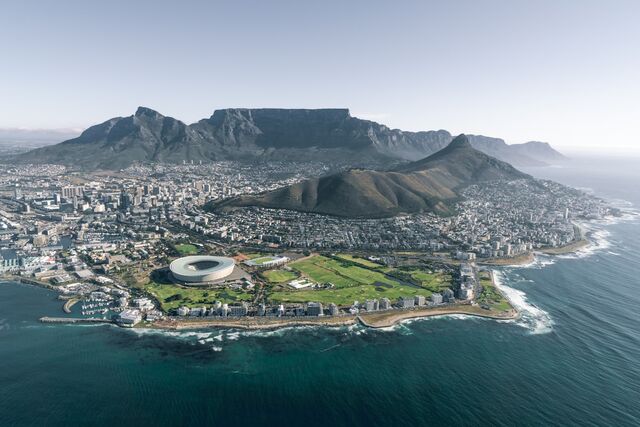
The timing matters. In September 2000, Musk had been fired as CEO of X.com while on his honeymoon flight to Sydney. Peter Thiel had replaced him. The startup life – from Zip2 through X.com – had consumed him for years without a real break. By late December 2000, things had calmed down enough for Musk to take his first genuine vacation. He and Justine arranged a two-week trip, with the first part in Brazil and the second in South Africa at a game reserve near the Mozambique border.
It was there, in the malaria belt of southern Africa, that a mosquito carrying Plasmodium falciparum bit him. Falciparum malaria is not the mild version. It is the strain that kills roughly 400,000 people per year worldwide, according to the World Health Organization. It attacks red blood cells, causes organ failure, and can kill within days if untreated.
The Diagnosis
Musk returned to California in January 2001, and that is when the illness took hold. He started feeling sick and was bedridden for a few days before Justine took him to a doctor, who ordered that he be rushed by ambulance to Sequoia Hospital in Redwood City. The doctors there misdiagnosed his condition and mistreated it to the point that Musk was near death.
Then, as Vance recounts, a stroke of luck:
“There happened to be a guy visiting from another hospital who had seen a lot more malaria cases. He spied Musk’s blood work in the lab and ordered an immediate maximum dosage of doxycycline, an antibiotic. The doctor told Musk that if he had turned up a day later, the medicine likely would no longer have been effective.” — Vance, Elon Musk
Musk spent approximately 10 days in the ICU. The disease ravaged his body. He lost approximately 45 pounds during his illness and recovery. For a man who was not heavy to begin with, that represented a dramatic physical toll. It took six months to fully recover. Justine was shocked by what she saw:
“He’s built like a tank. He has a level of stamina and an ability to deal with levels of stress that I’ve never seen in anyone else. To see him laid low like that in total misery was like a visit to an alternate universe.” — Justine Musk, quoted in Vance, Elon Musk
Musk’s own takeaway was characteristically dark:
“I came very close to dying. That’s my lesson for taking a vacation: vacations will kill you.” — Elon Musk, quoted in Vance, Elon Musk
The Recovery and What Came Next
The recovery is where it gets interesting. He had already founded X.com in March 1999, long before the malaria. He had already been fired as its CEO in September 2000. The malaria hit during what should have been a moment to decompress and reflect on what had been a bruising year.
Instead, during those months of recuperation, Musk’s friends noticed him gravitating toward a new obsession. He’d lost a tremendous amount of weight fighting off the malaria and looked almost skeletal. But with little prompting, he would start talking about doing something meaningful with his life, something lasting. His next move had to be either in solar energy or in space.
“He said, ‘The logical thing to happen next is solar, but I can’t figure out how to make any money out of it,’” said George Zachary, a close friend and investor. “Then he started talking about space, and I thought he meant office space like a real estate play.” — quoted in Vance, Elon Musk
The malaria experience appears to have reinforced rather than diminished Musk’s sense of urgency. Rather than making him cautious, the brush with death amplified his already intense drive. In May 2002, he founded SpaceX. The man who nearly died from a mosquito bite decided his next venture would be to reach Mars.
What If Musk Had Died?
I do not normally play counterfactual history, but I could not help it here. If the malaria had killed Musk in early 2001, what would be different today?
PayPal might have sold too early. Musk was still the company’s largest shareholder and a board member. When eBay came calling, most of the board wanted to sell fast. Musk and investor Mike Moritz urged them to hold out for more money. Without Musk’s resistance, PayPal might have sold for far less than the eventual $1.5 billion.
Tesla might not exist. Musk did not found Tesla (that was Martin Eberhard and Marc Tarpenning), but he was the critical early investor and became CEO. Without his funding and obsessive involvement, Tesla’s survival through its own near-death experiences in 2008 is difficult to imagine.
SpaceX would almost certainly not exist. SpaceX was Musk’s personal vision, funded with his own money. No other private individual was attempting orbital rocketry in 2002.
The entire electric vehicle revolution, the commercial space industry, and the trajectory of online payments might look fundamentally different. All of it hinged on a 29-year-old surviving a mosquito bite at a game reserve near the Mozambique border.
The Pattern of Near-Death and Rebirth
This malaria episode fits a pattern I have noticed across Musk’s career and across the stories of many Silicon Valley founders. The path from outsider to industry titan is not smooth. It is punctuated by moments where everything nearly falls apart – financial ruin, health crises, organizational disasters – and the response to those moments defines what comes next.
Musk nearly died from malaria and immediately plunged into X.com. He got fired from his own company when the PayPal board replaced him as CEO and he channeled that into SpaceX and Tesla. He nearly went bankrupt in 2008 when both companies were on the verge of collapse and found a way through.
The malaria was the first in a series of moments where everything could have ended. Each time, Musk treated the near-death experience not as a warning to slow down but as evidence that slowing down was a luxury he could not afford.
I do not recommend nearly dying from malaria as a motivational strategy. But Musk’s career almost ended before it truly began, on a vacation that was supposed to be a reward for years of hard work. If that mosquito had bitten him one day later, or if the visiting doctor had not spotted his blood work in the lab, there would be no Tesla, no SpaceX, no Starlink.
Editor’s note (July 2026): An earlier version of this article placed the malaria episode in 1999. It occurred in late December 2000, after Musk was ousted from X.com. The timeline, hospital name, and location have been corrected based on Ashlee Vance’s biography.
Sources
- Ashlee Vance, Elon Musk: Tesla, SpaceX, and the Quest for a Fantastic Future (Ecco/HarperCollins, 2015), Chapter 5: PayPal Mafia Boss.
- Eric Jorgenson, The Book of Elon, 2021.
- Franziska M. Renz and Julian U. N. Vogel, “Elon Musk: Leader or Liability?”, Journal of Case Research and Inquiry, Vol. 6, 2020.
- Walter Isaacson, Elon Musk (Simon & Schuster, 2023).
- Jimmy Soni, The Founders: The Story of PayPal and the Entrepreneurs Who Shaped Silicon Valley (Simon & Schuster, 2022).
- World Health Organization, “Malaria Fact Sheet,” who.int, updated annually.