

I was watching an old Steve Jobs interview on YouTube the other night – the one where he is barefoot on a couch, still in his NeXT years – and it hit me how different he sounds from the guy who launched the iPhone. I had been deep in the Wozniak story and I already knew Jobs was never the engineer – he was always something harder to define. The visionary who could see around corners. The salesman who could bend reality to his will. The perfectionist who once sent back a font because the kerning was wrong. And then I found the thread that made everything else make sense: the exile. Twelve years between getting fired and coming back to save the company he built from scratch.
That journey — the fall, the wandering, the return — is not just a remarkable business story. It is one of the most instructive arcs in the entire history of technology. What Steve Jobs did between 1985 and 1997 explains everything he was able to accomplish afterward.
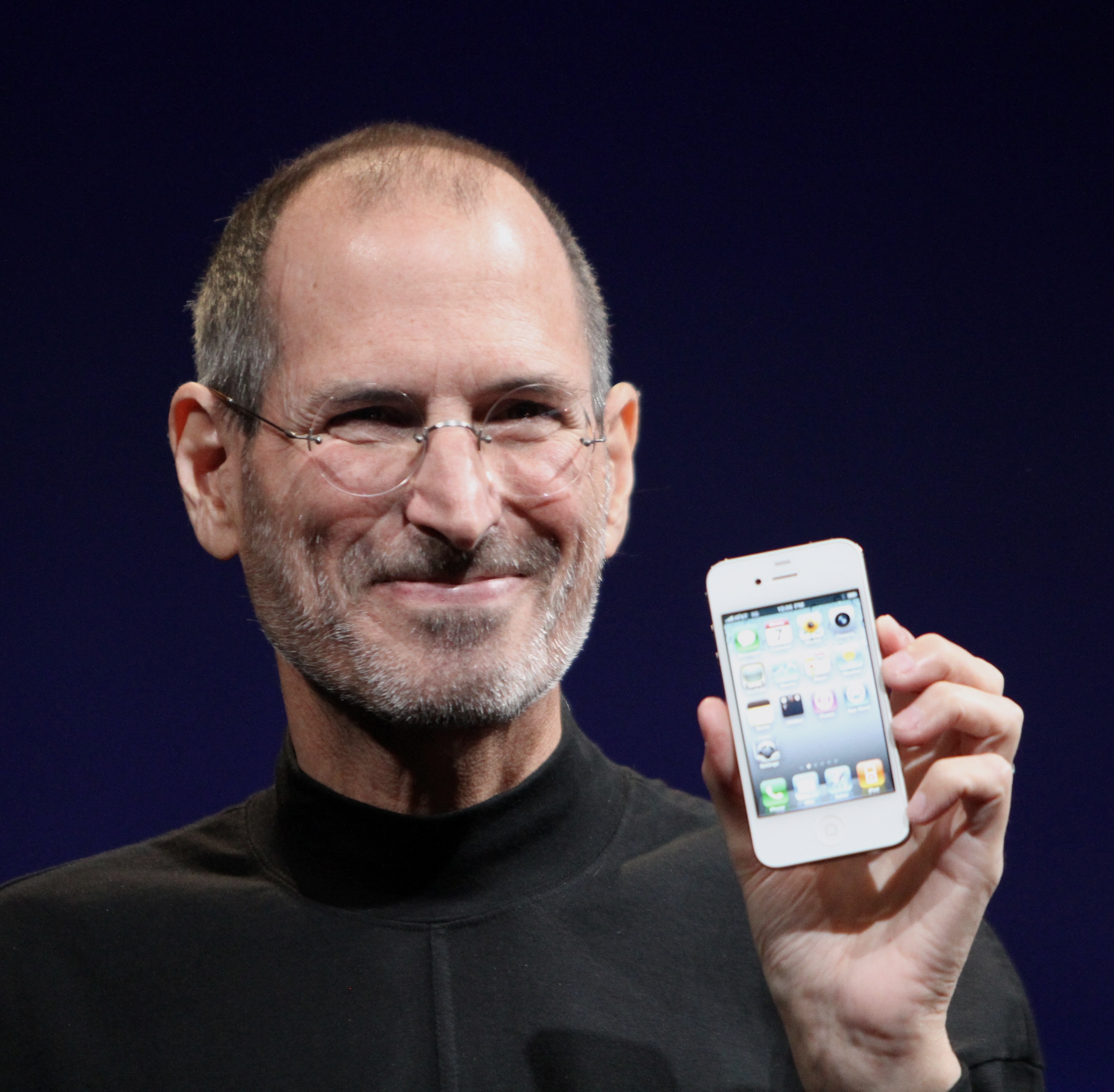
Photo by Matthew Yohe, CC BY-SA 3.0, Wikimedia Commons.
Did you know? Jobs was born in 1955 — the same year as Bill Gates, Andy Bechtolsheim, and Vinod Khosla. Four of tech’s most consequential figures, one birth year.
The Beginning: Garage, Woz, and the Audacity of $1,300
We have already covered how Steve Wozniak built the Apple I in deep technical detail, and the garage myth that grew up around it. So here I will move quickly through the founding and get to the part that most biographies treat as a detour but that I think is the core of the whole story.
In 1976, Jobs and Wozniak started Apple Computer in the garage of Jobs’ parents’ home in Los Altos, California, with $1,300 scraped together from selling a VW van and an HP calculator. Wozniak provided the engineering genius. Jobs provided everything else: the commercial instinct, the marketing, the relentless pressure to ship and to sell. By 1980, Apple had gone public at a valuation of $1.8 billion. Jobs was 25 years old and worth more than $200 million.
The Apple II became one of the bestselling personal computers of its era. The Macintosh, launched in January 1984 with one of the most famous television commercials ever made, introduced the world to the graphical user interface that Xerox PARC had invented but never commercialized. Apple was on top of the world.
And then it fell apart.
 Photo: Wikimedia Commons. License: CC BY-SA 3.0.
The Fall: John Sculley and the 1985 Coup
What happened at Apple in 1985 is one of the most studied and most misunderstood events in Silicon Valley history. Jobs himself had recruited John Sculley, the president of PepsiCo, to serve as Apple’s CEO in 1983. The pitch Jobs delivered has become legend:
“Do you want to sell sugared water for the rest of your life, or do you want to come with me and change the world?” — Steve Jobs, quoted in Walter Isaacson, Steve Jobs (Simon & Schuster, 2011)
Sculley came. For a while the partnership worked. But by 1985, with Macintosh sales disappointing after a strong launch, and with Jobs’ management style generating serious internal friction, the relationship broke down completely. Jobs attempted to engineer a boardroom coup against Sculley. Sculley found out. The board sided with Sculley.
Jobs was stripped of all operational responsibilities. His division was taken away. He was left with a title and no power. He was 30 years old.
“I didn’t see it then, but it turned out that getting fired from Apple was the best thing that could have ever happened to me.” — Steve Jobs, Stanford University Commencement Address, June 12, 2005
He resigned and sold all but one of his Apple shares. The company he had co-founded, nurtured, and poured himself into for nine years was no longer his. The exit was bitter and public. The press treated it as the end of his story.
They were wrong.
The Exile: NeXT Computer (1985–1996)
Within weeks of leaving Apple, Jobs founded NeXT Computer. The mission was to build the next great personal computer — a machine for higher education and scientific research that would be so far ahead of its time that the rest of the industry would have no choice but to follow.
He was partly right and partly wrong, in ways that would only become clear a decade later.
The NeXT workstation, unveiled in 1988, was breathtaking. The magnesium cube enclosure, machined to exacting tolerances. The optical disk drive. The NeXTSTEP operating system, built on a Unix foundation with an object-oriented programming framework that made developing software faster and more elegant than anything that existed. Jobs was so obsessed with the physical appearance of the machine’s circuit boards that he insisted they be painted to look beautiful even though users would never see them.
The trouble was the price. The NeXT Cube launched at $6,500 — approximately $17,000 in today’s money. The target market was universities, but universities couldn’t afford it in meaningful quantities. Commercial sales never materialized. By 1993, NeXT had abandoned hardware entirely and was selling the NeXTSTEP software alone.
On the surface, NeXT looked like a failure. But in the background, something remarkable was happening. A British scientist named Tim Berners-Lee was working at CERN, the European physics laboratory, when he invented the World Wide Web in 1989. The first web server in history ran on a NeXT computer. The machine that Jobs built — the commercial disappointment — hosted the invention that transformed human civilization.
And NeXTSTEP, that elegant operating system that the market had largely ignored, would turn out to be exactly what Apple needed when its own operating system was falling apart.
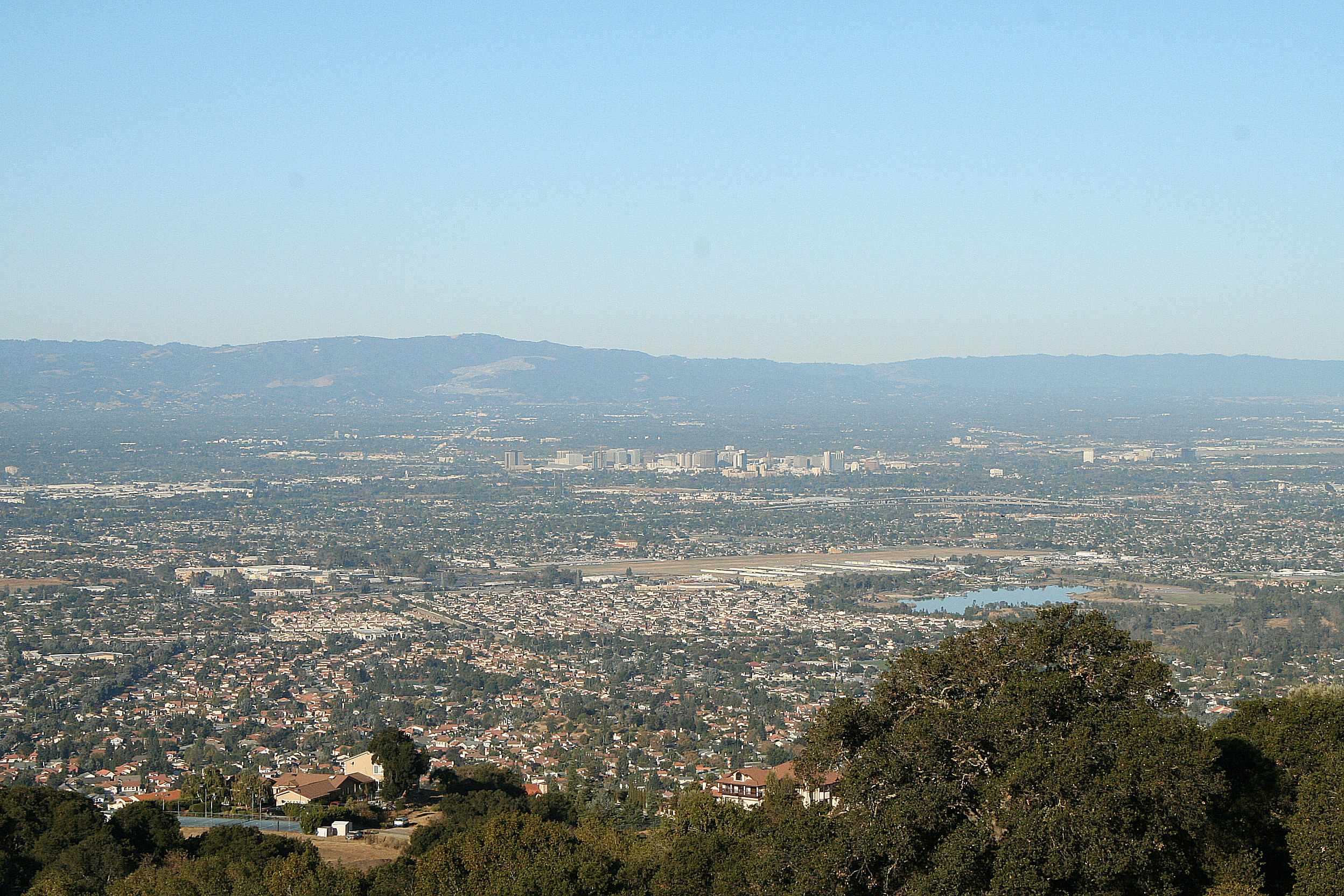 Photo: Wikimedia Commons. License: CC BY-SA 3.0.
The Accident: Pixar (1986–2006)
In 1986, while Jobs was building NeXT, he made what appeared to be a side bet. George Lucas was divorcing and needed cash. He was selling the computer graphics division of Lucasfilm, a small team of engineers who had been working on computer animation and visual effects tools. The price was $5 million.
Jobs bought it. He renamed it Pixar.
For the first several years, Pixar was not an animation studio. It was a hardware and software company trying to sell a high-end graphics workstation called the Pixar Image Computer to government agencies and medical researchers. The machine was too expensive for the market. Jobs poured in more money — eventually around $50 million of his own money — trying to keep the company alive.
The central figure was John Lasseter, a former Disney animator who had been fired from Disney for championing computer animation. Lasseter was making short computer-animated films at Pixar as a way to demonstrate the company’s software capabilities. His 1988 short Tin Toy won the Academy Award for Best Animated Short Film — the first computer-animated film ever to win an Oscar.
That award caught the attention of Disney. A deal was struck: Pixar would produce a computer-animated feature film for Disney. In 1995, Toy Story became the first fully computer-animated feature film in history, grossing $373 million worldwide against a $30 million production budget.
Pixar followed Toy Story with A Bug’s Life, Toy Story 2, Monsters, Inc., Finding Nemo, and The Incredibles — a streak of creative and commercial successes that had no precedent in Hollywood history. In 2006, Disney acquired Pixar for $7.4 billion. Jobs, who owned approximately 50% of the company, received Disney stock that made him Disney’s largest individual shareholder.
The man who had been forced out of Apple with $200 million in 1985 was now a billionaire many times over. And he had not done it by returning to what he knew. He had done it by stumbling into animation, staying patient, and betting on talent.
The Return: 90 Days from Bankruptcy (1997)
By 1996, Apple was in crisis. The company had lost hundreds of millions of dollars. Its operating system, the Mac OS, was years behind Windows technologically. Microsoft had pulled so far ahead that most analysts were writing Apple’s obituary. Gil Amelio, the CEO brought in to stabilize the company, needed a modern operating system and he needed it fast.
Apple was evaluating two options: Be Inc., whose BeOS was elegant and modern, and NeXT. In December 1996, Apple chose NeXT and paid $429 million for the company. Jobs came with it, initially as an informal advisor.
Within months, it became clear that Jobs was the only person who could save what he had built. The board ousted Amelio. Jobs agreed to serve as “interim CEO” — a title he insisted on, as if reluctant to fully commit. He kept the “interim” designation for more than two years. In 1997, the company he returned to was, in the words of Apple’s then-CFO, approximately 90 days from being insolvent.
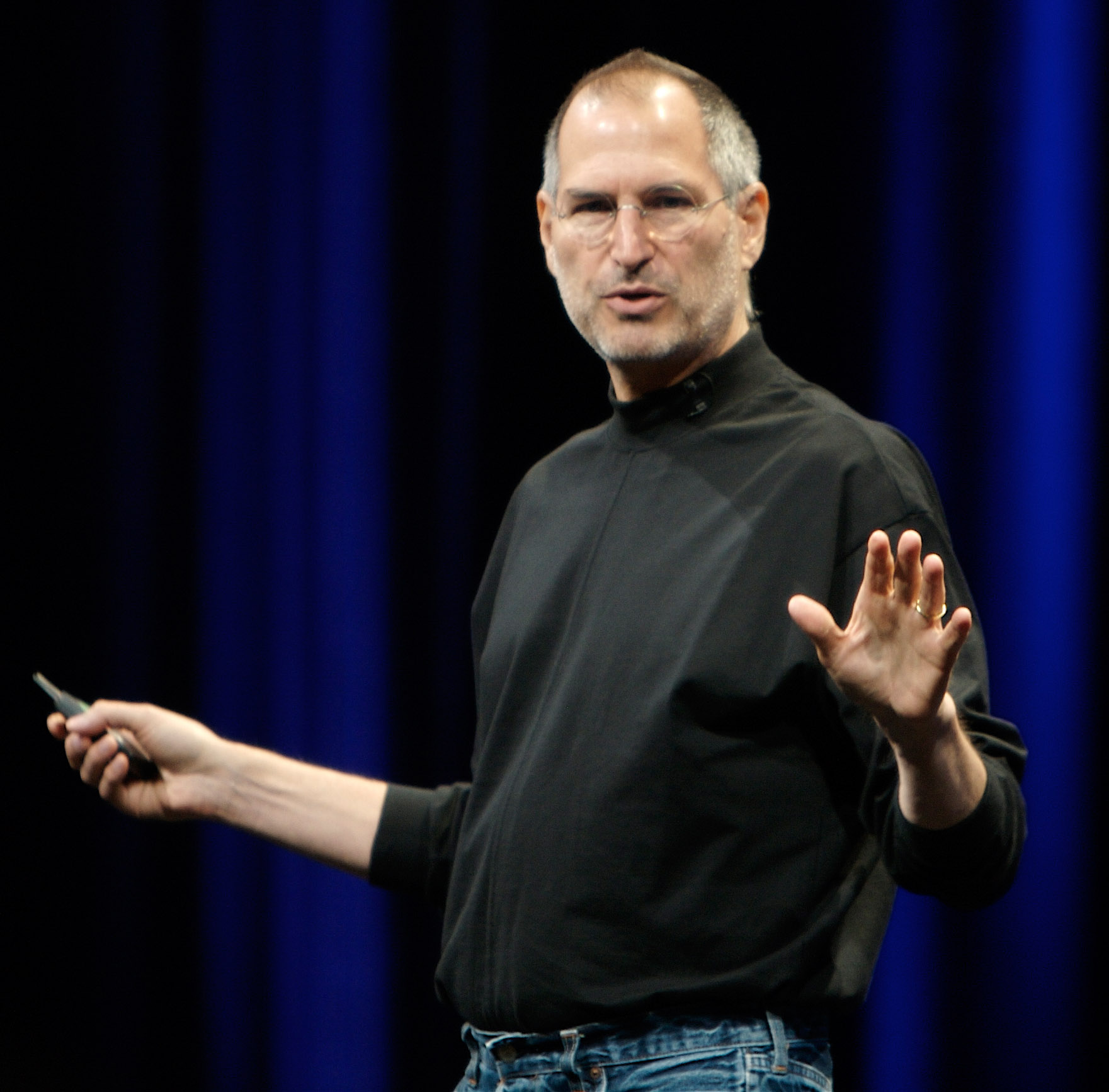 Photo: Wikimedia Commons. License: CC BY 2.0.
The Reinvention: iMac to iPhone
Jobs moved immediately. He cut Apple’s product line from dozens of models to four. He renegotiated supplier contracts. He killed projects that were consuming resources without producing results. He called Bill Gates and negotiated a $150 million investment from Microsoft, which stabilized Apple’s finances and, crucially, committed Microsoft to continuing to develop Office for the Mac — a signal to the market that Apple was not dying.
Then he designed his way out of the crisis.
The iMac, launched in 1998, was a candy-colored all-in-one computer that looked like nothing else on the market. Jobs and his design partner Jony Ive — who had joined Apple from a British design consultancy and whose work had been largely ignored before Jobs returned — created something that people wanted to display on their desks rather than hide under them. The iMac returned Apple to profitability.
The iPod, launched in 2001, was not the first digital music player. But it was the first one that was simple to use, and it came with iTunes, the software that made managing a digital music library intuitive rather than painful. The phrase Jobs used to launch it has become one of the most famous product descriptions in history: “1,000 songs in your pocket.” The iPod made Apple cool in a way that extended far beyond its existing customer base and set the stage for everything that followed.
iTunes evolved into a legal music store in 2003, at a moment when the music industry was being destroyed by Napster and its successors. Apple negotiated deals with all the major labels — an achievement that seemed impossible — and offered individual songs for 99 cents. The iTunes Store sold a million songs in its first week. The music business was never the same. The Napster story makes this transition especially vivid: the disruption that the music industry spent years fighting ultimately arrived through a door that Jobs opened.
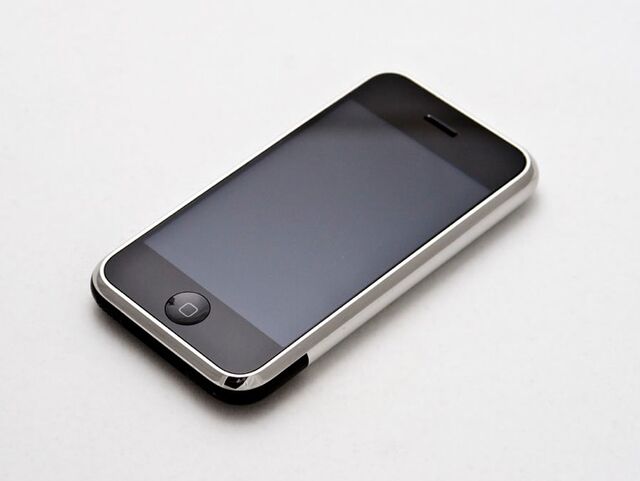
And then, in January 2007, Jobs walked onto a stage in San Francisco and introduced a product that was three things at once: “an iPod, a phone, and an internet communicator.” He said it three times slowly, with increasing pause. The crowd laughed with recognition. They were laughing because they understood what had just happened.
The iPhone did not just create a new product category. It made every existing mobile phone look obsolete overnight. Nokia, Motorola, BlackBerry — companies that had dominated mobile for years — spent the next decade trying to recover from a single keynote presentation. Most of them never did.
The iPad, launched in 2010, extended the same philosophy to a new form factor. Critics said there was no need for a device between a phone and a laptop. Within months, it was clear that millions of people disagreed.
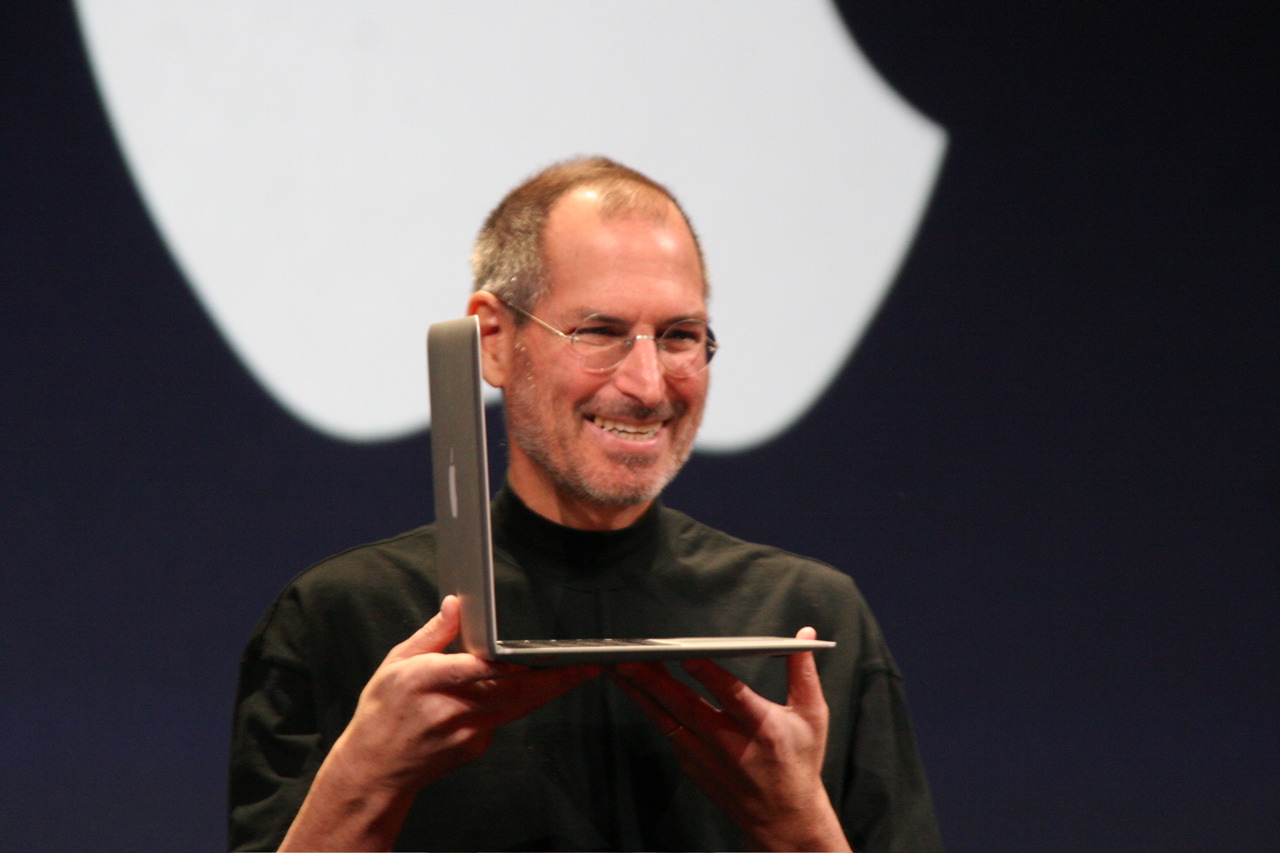 Photo: Wikimedia Commons. License: CC BY-SA 2.0.
The Legacy: What His Story Actually Teaches
Jobs was diagnosed with pancreatic cancer in 2003. He died on October 5, 2011, at 56. Apple became the world’s most valuable publicly traded company during his second tenure, and has maintained that position, or come close to it, for most of the years since. The company that was 90 days from bankruptcy in 1997 crossed a $3 trillion market capitalization in 2022.
I have been writing about founders — their origins, their failures, their reinventions — and Jobs is the archetype that all the others seem to orbit. I wrote about the pattern in founders who got fired from their own companies and Jobs was the clearest case in the group. But his story teaches something more specific than “resilience pays off” or “failure is a teacher.”
The person who built NeXT and Pixar could not have built the iPhone. That sounds strange, but I mean it precisely. The Jobs of 1985 — brilliant, charismatic, terrifying — did not have the patience that Pixar required, or the discipline that running a failing hardware company for a decade demanded, or the ability to see around corners that only comes from having been genuinely wrong before.
“I’m pretty sure none of this would have happened if I hadn’t been fired from Apple. It was awful tasting medicine, but I think the patient needed it.” — Steve Jobs, Stanford University Commencement Address, June 12, 2005
The exile did not happen to him. It happened for him. NeXT gave him the operating system that became macOS. Pixar gave him the financial independence that meant he could return to Apple on his own terms. Twelve years in the wilderness gave him the depth that the success of his twenties had never required.
And that is the part of his story I find most useful. Not the products, though the products are remarkable. Not the design philosophy, though it changed every industry it touched. The arithmetic of what happened: the 1976 garage plus the 1985 firing plus the twelve-year exile equals the 2007 iPhone. You cannot remove any of those terms and get the same result.
We are all building toward something. Sometimes the path there looks nothing like a path. It looks like a detour, or a demotion, or a product that sold three hundred units when you needed thirty thousand. Jobs spent twelve years on what everyone called a failed chapter. That chapter built the foundation for everything that came after.
The fellow techies who find themselves reading about Jobs at the wrong moment in their own careers — between the firing and the return, so to speak — might take some comfort in that arithmetic.
Sources
- Walter Isaacson, Steve Jobs (Simon & Schuster, 2011).
- Steve Jobs, Stanford University Commencement Address, Stanford University, June 12, 2005. Transcript.
- Steve Wozniak with Gina Smith, iWoz: Computer Geek to Cult Icon (W.W. Norton, 2006).
- Brent Schlender and Rick Tetzeli, Becoming Steve Jobs: The Evolution of a Reckless Upstart into a Visionary Leader (Crown Business, 2015).
- Michael Moritz, The Little Kingdom: The Private Story of Apple Computer (William Morrow, 1984).
- Karen Blumenthal, Steve Jobs: The Man Who Thought Different (Feiwel and Friends, 2012).
- Leander Kahney, Jony Ive: The Genius Behind Apple’s Greatest Products (Portfolio, 2013).
- David Price, “How Steve Jobs Saved Apple,” Macworld, January 5, 2012.
- Tim Berners-Lee, Weaving the Web: The Original Design and Ultimate Destiny of the World Wide Web (HarperSanFrancisco, 1999).
- “Apple’s Comeback: The Inside Story,” Fortune, November 9, 1998.
- Phil Patton, “NeXT Computer Workstation,” Industrial Design exhibition, Museum of Modern Art, New York, 2007.



.jpg)


