I have written about the garage myth before – the romanticized idea that every great tech company started with two people and a dream in someone’s garage. But when I went back and researched the Apple I specifically, I realized that in Apple’s case, the garage story is not a myth at all. It is largely accurate. What makes it remarkable is not the garage itself but the sheer improbability of what happened inside it.
In 1976, Steve Wozniak was a 25-year-old engineer at Hewlett-Packard. Steve Jobs was 21 and had recently returned from a trip to India. Between them, they had almost no money. Wozniak had a vision for a personal computer that he had been building by hand, piece by piece, in his spare time. Jobs had a vision for selling it. Together, they scraped together $1,300 and built the machine that started Apple Computer.
The $1,300 That Started Everything
The capital came from sacrifice. Jobs sold his Volkswagen van for roughly $750. Wozniak sold his beloved Hewlett-Packard 65 calculator – a programmable scientific calculator that was state-of-the-art at the time – for about $500. That gave them approximately $1,300 in working capital.
To put this in perspective, $1,300 in 1976 is equivalent to roughly $7,000 today. They started one of the most valuable companies in human history with what amounts to a few months of groceries.
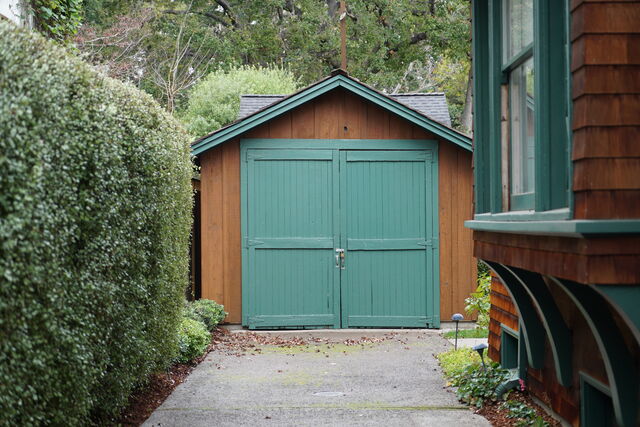
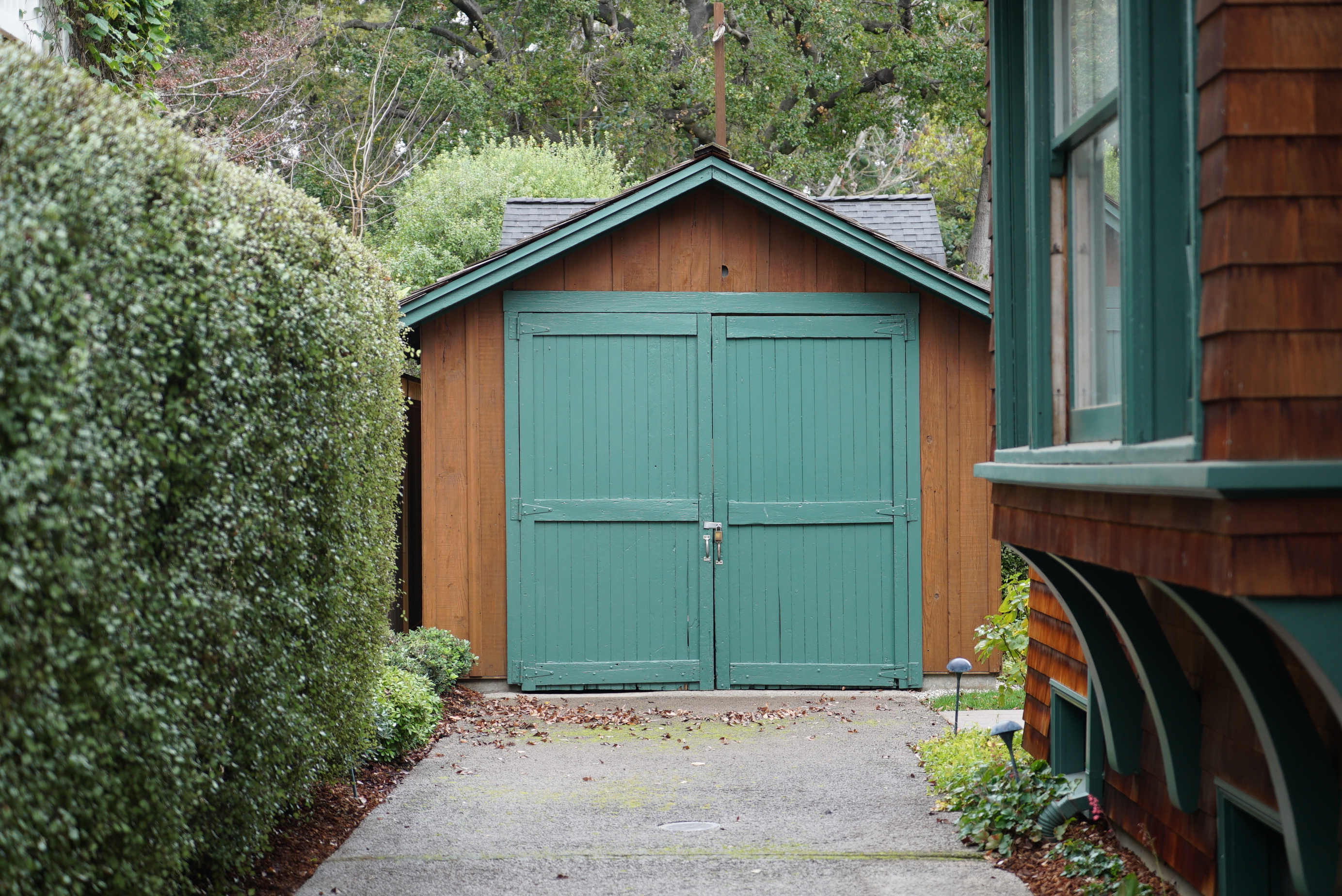
The workspace was the garage of Paul and Clara Jobs’ house at 2066 Crist Drive in Los Altos, California. The garage was not a fancy workshop. It was a standard suburban garage with a workbench, some tools, and whatever space Jobs and Wozniak could clear. The actual engineering work – designing the circuit board, writing the firmware, testing the components – was primarily done by Wozniak, often late at night after his day job at HP.
What Made the Apple I Different
Wozniak’s genius was in simplification. The personal computers that existed in 1976 – if you could call them that – were kits aimed at hobbyists. The Altair 8800, released in 1975, came as a box of parts that you soldered together yourself. It had no keyboard, no screen, and no storage. You programmed it by flipping switches on the front panel and read the output from blinking lights.
Wozniak wanted something fundamentally different. He designed the Apple I to be a fully assembled circuit board that could connect to a standard television for display and use a regular keyboard for input. The user did not need to solder anything or read blinking lights. You plugged it in, turned it on, and typed.
He wanted the computer to be something that anybody could use – not just engineers. That philosophy – that computers should be accessible to ordinary people – was radical in 1976. Most engineers in the hobbyist community scoffed at the idea. Real computer enthusiasts built their own machines. Wozniak disagreed. He believed the future belonged to computers that people could simply use.
The Byte Shop Order That Changed Everything
Jobs was the one who turned Wozniak’s engineering project into a business. He began showing the Apple I at the Homebrew Computer Club, a gathering of electronics hobbyists in Menlo Park. The reception was mixed – some members were impressed by the design, while others were skeptical of a pre-assembled board that took the fun out of building your own computer.
But Jobs was not selling to hobbyists. He walked into The Byte Shop, a computer store in Mountain View owned by Paul Terrell, and pitched the Apple I. Terrell was interested but wanted fully assembled computers, not just circuit boards. Jobs agreed, even though he and Wozniak did not yet have the parts or the money to fulfill the order.
Terrell ordered 50 Apple I computers at $500 each, for a total of $25,000. This was the moment that transformed a garage project into a real company. Jobs used the purchase order to secure 30 days of credit from an electronics parts supplier, bought the components, and he and Wozniak (along with Jobs’ sister and friend Daniel Kottke) assembled the boards in the garage.
They delivered the 50 units to Terrell and collected $25,000. After subtracting parts costs, they had their first real profit. They went on to sell approximately 200 Apple I units in total, each priced at $666.66 for retail customers. Wozniak later said the price was simply $500 (the wholesale price to Terrell) with a one-third markup, and that the repeating digits were just a coincidence, though the number attracted attention.
The Apple II: From Garage to Phenomenon
The Apple I was the proof of concept. The Apple II, released in 1977, was the product that turned Apple into a real company. Wozniak designed it with color graphics, sound, expansion slots, and a built-in BASIC programming language. It was the first personal computer that felt like a consumer product rather than a science experiment.
The Apple II became one of the bestselling personal computers of the late 1970s and early 1980s, eventually selling millions of units. The introduction of VisiCalc, the first spreadsheet program, in 1979 gave businesses a concrete reason to buy an Apple II and transformed the machine from a hobbyist toy into a business tool.
By 1980, Apple Computer went public at $22 per share, raising $100 million and making both Jobs and Wozniak multimillionaires. The company was valued at $1.8 billion on its first day of trading, making it the largest IPO since Ford Motor Company in 1956.
What $1,300 Teaches Us
I keep returning to that $1,300 figure because it challenges the assumption that great companies require great capital. Wozniak and Jobs did not have investors when they started. They did not have a business plan. They did not have office space or employees or a corporate structure. They had a circuit board, a garage, and the nerve to walk into a store and take an order they were not yet equipped to fill.
The early Silicon Valley was full of stories like this – people betting everything on an idea before the world was ready for it. What made Apple different was not the garage or the $1,300. It was Wozniak’s insistence that computers should be for everyone and Jobs’ insistence that someone would pay for that vision.
Fifty years later, Apple is worth more than $3 trillion. The garage at 2066 Crist Drive is a designated historic site. And the Apple I circuit boards that sold for $666.66 now fetch over $400,000 at auction. Not a bad return on $1,300.
Sources
- Walter Isaacson, Steve Jobs (Simon & Schuster, 2011).
- Steve Wozniak with Gina Smith, iWoz: Computer Geek to Cult Icon (W.W. Norton, 2006).
- Steve Wozniak, interview with Computer History Museum, “Oral History of Steve Wozniak,” 2007.
- Michael Moritz, The Little Kingdom: The Private Story of Apple Computer (William Morrow, 1984).
- Paul Freiberger and Michael Swaine, Fire in the Valley: The Making of the Personal Computer (McGraw-Hill, 2000).
- “Apple’s First Product, the Apple I, Sells for $400,000 at Auction,” The Verge, October 2014.