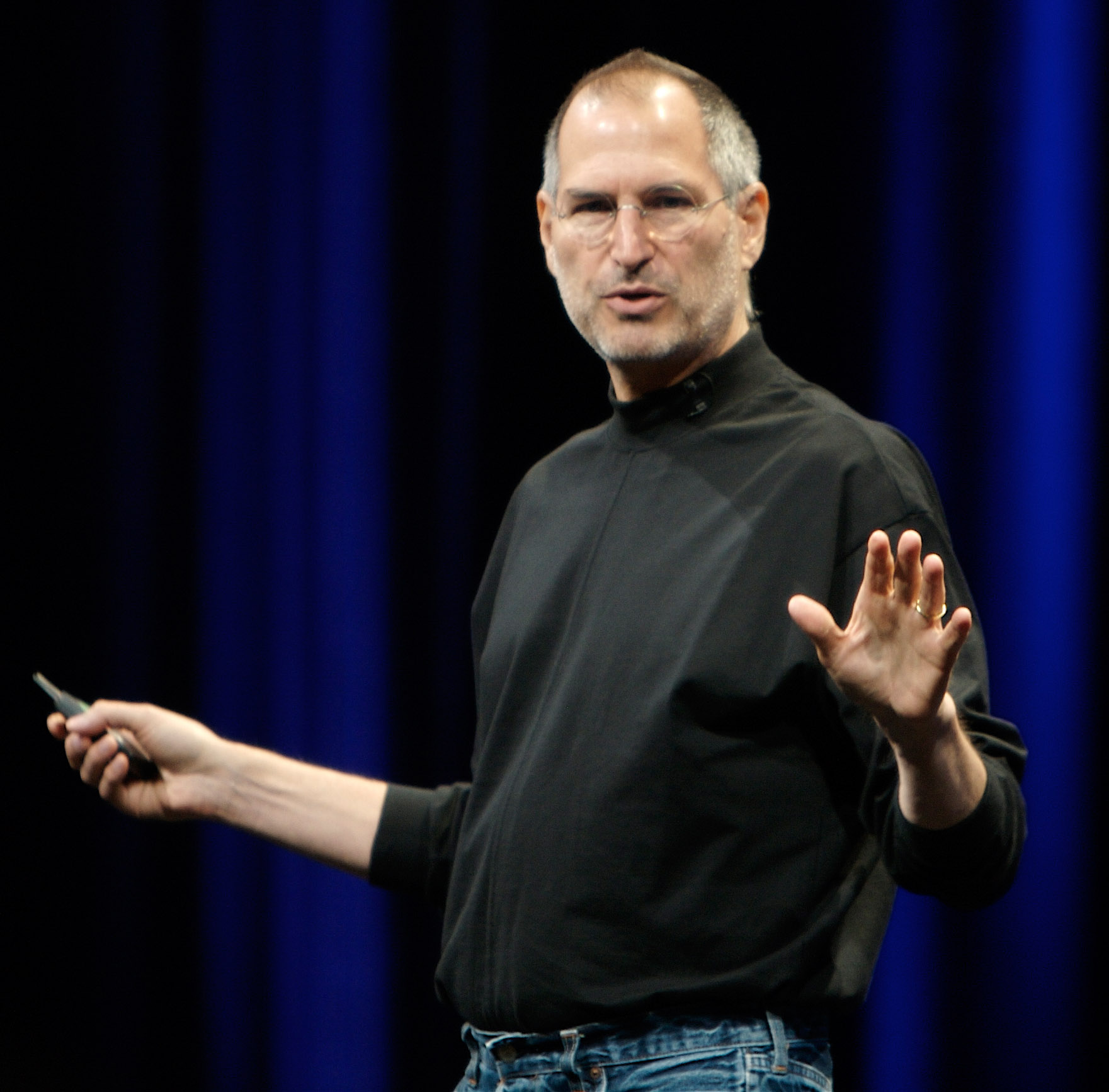
I was thinking about a pattern that kept showing up in my research across both the Netflix story and the Musk saga. Two founders, working in the same era, building companies just miles apart in Silicon Valley, both experienced the same humiliation: they were pushed out of the companies they had built. And both went on to create something far greater than what they lost.
That got me wondering: is getting fired from your own company a catastrophe, or is it secretly one of the most powerful catalysts in business?
Did you know? It’s not just Hastings and Musk: Jobs (Apple), Dorsey (Twitter), and Eberhard (Tesla) were all fired from companies they founded. Getting pushed out is practically a Silicon Valley rite of passage.
Reed Hastings: The Founder Who Fired Himself
I covered the Pure Software story in detail, but the key moment bears repeating. By 1996, Hastings had watched his company grow bloated with process and bureaucracy. Talent density had collapsed. And he did something almost unheard of: he told his own board he was not the right person to lead the company anymore.
The board merged Pure Software with Atria Software, and Rational Software absorbed the combined entity. Pure Software ceased to exist.
“We realized with the right density of talent, there’s very little process needed, and that that was the joyful thing.” – Reed Hastings, Stanford University
Hastings walked away with a very specific education. He knew what kind of company he would never build again. When he co-founded Netflix in 1997, every decision reflected the scars of Pure Software. The result was the Keeper Test, the culture deck, and a $300 billion streaming empire.
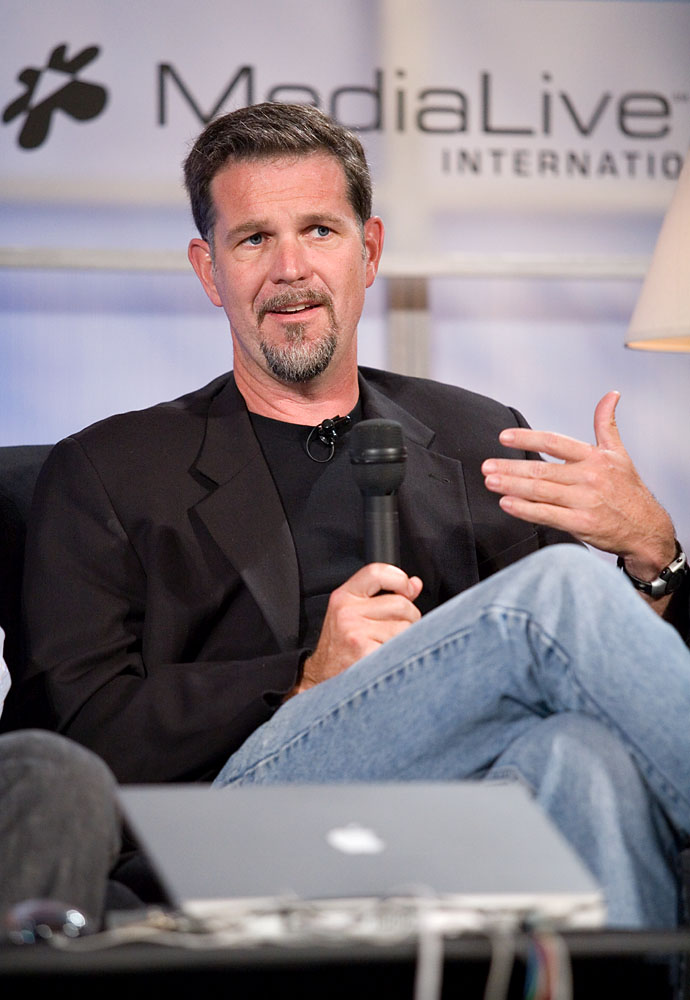 Photo by James Duncan Davidson, Wikimedia Commons. License: CC BY 2.0.
Elon Musk: Fired on His Honeymoon
Musk’s removal is one of the most dramatic founder-ousting stories in tech history. In September 2000, he was on his honeymoon in Australia. While he was away, the board, led by Peter Thiel and backed by Max Levchin and David Sacks, voted to replace him as CEO. As I detailed in my article on the X.com to PayPal transition, the merger between X.com and Confinity had been tense from the start, with clashing cultures and technical philosophies.
Musk returned from his honeymoon to find Peter Thiel in the CEO chair. He was 29. He had poured $12 million into X.com. And now it was no longer his to run.
What did he do? He stayed on as an investor. When eBay acquired PayPal for $1.5 billion, Musk’s stake earned him approximately $175 million. He made three bets that most people considered insane: $100 million into SpaceX, $70 million into Tesla, and $10 million into SolarCity. Getting pushed out of PayPal did not break him. It freed him.
Steve Jobs: The Original Comeback Kid
No conversation about founders getting fired would be complete without Steve Jobs. In 1985, after a bitter power struggle with CEO John Sculley, the man he had personally recruited from Pepsi, Jobs was stripped of all operational responsibilities at Apple. He was 30 years old, and he had been effectively exiled from the company he had co-founded in his parents’ garage.
My hosting company failed the Keeper Test every year I ran it. If someone had asked me whether I would fight to keep any of my team members, the honest answer would have been: I do not know. That uncertainty was the answer.
“I didn’t see it then, but it turned out that getting fired from Apple was the best thing that could have ever happened to me.” – Steve Jobs, Stanford Commencement Address, 2005
Jobs founded NeXT Computer in 1985, a company that never achieved commercial success but produced an operating system that would eventually become the foundation of macOS and iOS. He also acquired Pixar from George Lucas for $5 million in 1986. Pixar went on to produce Toy Story, the first fully computer-animated feature film, and was eventually sold to Disney for $7.4 billion in 2006.
When Apple was on the verge of bankruptcy in 1997, the board brought Jobs back. He returned not as the brash 30-year-old who had been pushed out but as a seasoned executive who had spent twelve years learning how to build products, manage teams, and think about design with a depth he had never possessed before. The products he created after his return, the iMac, the iPod, the iPhone, the iPad, transformed Apple into the most valuable company on Earth.
Jack Dorsey: The Twitter Parallel
There is a less celebrated but equally instructive example: Jack Dorsey. In 2008, Twitter’s board removed Dorsey as CEO, replacing him with Evan Williams. Dorsey was 32. The reasons were familiar: concerns about his management style, questions about his focus, internal politics that favored a different leadership approach.
Dorsey went on to co-found Square (now Block) in 2009, a mobile payments company that democratized credit card processing for small businesses. Square went public in 2015 and grew into a financial services company worth tens of billions. And in a turn that mirrors Jobs’ Apple return almost exactly, Dorsey came back as Twitter CEO in 2015, serving until 2021.
The Pattern Behind the Pain
These stories are not exceptions. They are the pattern. Getting pushed out forces a reckoning that nothing else can provide. When you are inside the machine, you cannot see its flaws clearly. Being removed creates the distance necessary for genuine self-reflection.
Hastings realized he had substituted process for trust. Musk was freed to pursue ventures that a payments company board would never have endorsed. Jobs spent twelve years learning discipline and design. And consider Patty McCord, Netflix’s chief talent officer who helped build the Keeper Test that was eventually used to let her go. Even at Netflix, the pattern held: departure became a doorway to reinvention.
The thing that made these founders great the second time was not their talent. They were talented before they were fired. What changed was their understanding of themselves. Being removed forces you to answer a question that success never asks: Who are you without this company?
Not every fired founder builds a $300 billion empire. But every founder who has been pushed out faces the same choice: let the experience embitter you, or let it educate you. Hastings, Musk, Jobs, and Dorsey all chose education. And the companies they built afterward were not just successful. They were transformative.
Sources
- Hastings, R. and Meyer, E. No Rules Rules: Netflix and the Culture of Reinvention. Penguin Press, 2020.
- Vance, A. Elon Musk: Tesla, SpaceX, and the Quest for a Fantastic Future. Ecco, 2015.
- Isaacson, W. Steve Jobs. Simon & Schuster, 2011.
- Isaacson, W. Elon Musk. Simon & Schuster, 2023.
- Jobs, S. “Stanford Commencement Address.” Stanford University, June 12, 2005.
- Hastings, R. “Blitzscaling 16: Reed Hastings on Building a Streaming Empire.” Stanford University. YouTube.
- Fortune Magazine. “The PayPal Mafia.” November 2007.
- Bilton, N. Hatching Twitter: A True Story of Money, Power, Friendship, and Betrayal. Portfolio, 2013.