I have always been drawn to origin stories where the founders had absolutely no intention of starting a company. When I dug into the history of Yahoo, I expected to find a calculated business plan and a polished pitch deck. What I found instead was two sleep-deprived PhD students in a portable trailer on the Stanford campus, manually sorting websites into categories while their dissertations gathered dust.
How does a personal bookmark list, maintained by two people who never planned to build a business, become the most visited website on the early internet?
A Bookmark File That Got Out of Hand
In January 1994, Jerry Yang and David Filo were electrical engineering doctoral students at Stanford University. They were supposed to be finishing their dissertations. Instead, they spent most of their time doing what every early internet user did — wandering the web, clicking from link to link, and bookmarking anything interesting. The difference was that Yang and Filo started organizing their bookmarks into categories on a shared server.
They called it “Jerry and David’s Guide to the World Wide Web.” It was not a product. It was a hobby. It lived on a Stanford server that happened to be publicly accessible.
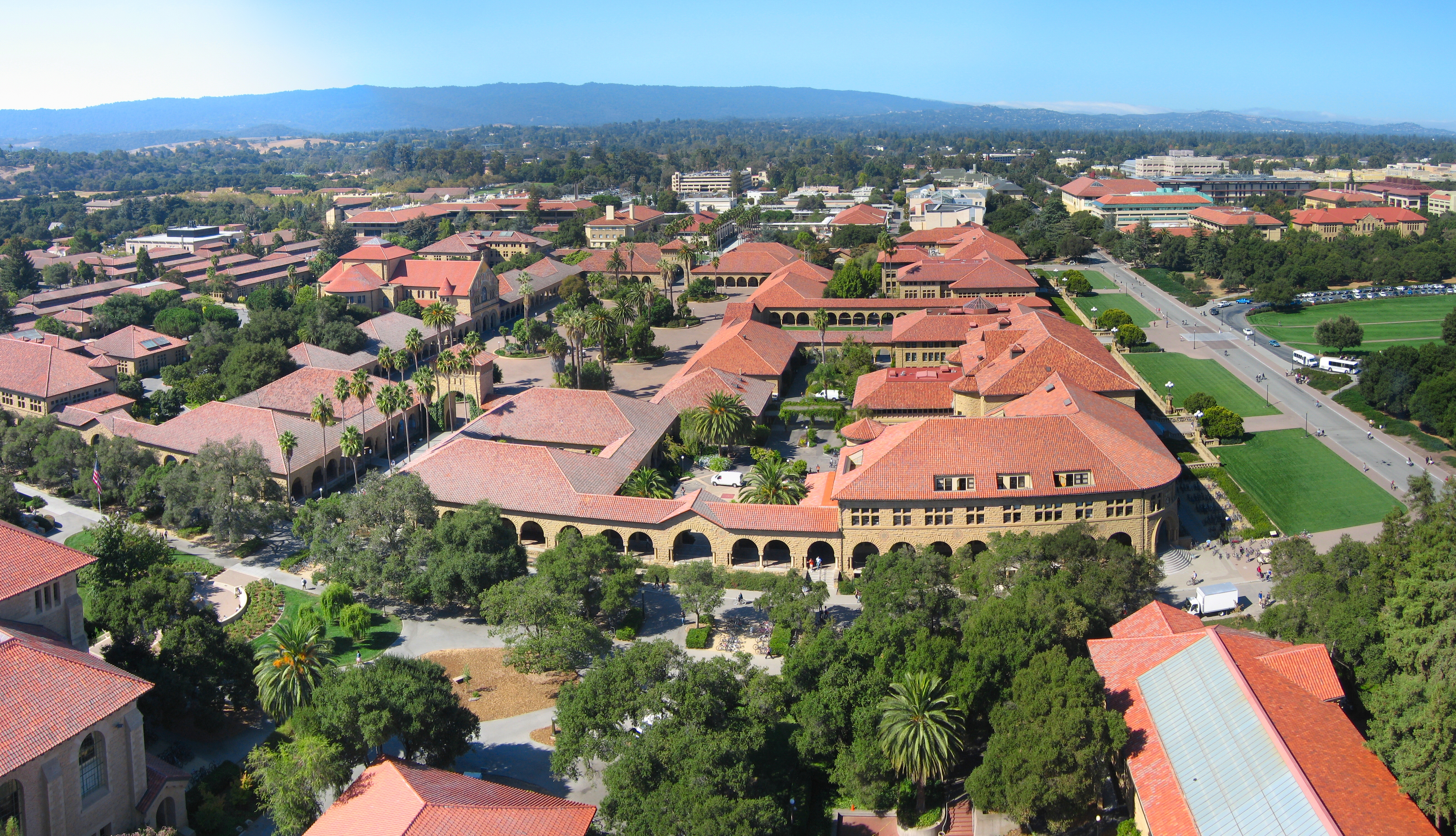 Photo: Aerial view of Stanford University, where Yang and Filo built Yahoo in a campus trailer. Wikimedia Commons. License: CC BY-SA 3.0.
Their workspace was a campus trailer — one of those temporary portable buildings that universities use when they run out of office space. Yang and Filo sat in side-by-side cubicles, their monitors glowing late into the night, categorizing websites by hand. There was no algorithm doing this work. Every single entry in their directory was a human decision.
“We were just organizing the web for ourselves. We had no idea anyone else would care.” – Jerry Yang, interview with Fortune, 1998
Two Very Different People
Jerry Yang was born in Taipei, Taiwan, and moved to San Jose, California, at the age of ten. He arrived speaking almost no English. Within three years, he was near the top of his class. Yang was outgoing, confident, and comfortable in front of a crowd — qualities that would make him Yahoo’s public face.
David Filo could not have been more different. Born in Wisconsin and raised in Moss Bluff, Louisiana, Filo was so reclusive that his friends gave him the nickname “The Unabomber” — a reference to his preference for isolation and marathon coding sessions. While Yang handled press and partnerships, Filo stayed behind the screen, writing scripts and keeping the servers alive.
In March 1994, they renamed their project. Yahoo stood for “Yet Another Hierarchically Organized Oracle”, though Yang has also said they simply liked the dictionary definition — a rude, unsophisticated person. It fit their self-image as two guys who stumbled into something huge without meaning to.
One Million Hits and a Real Company
By the end of 1994, Yahoo was receiving over one million hits. Stanford’s servers were groaning under the traffic, and the university made it clear that hosting one of the busiest websites in the world was not part of its mission. Yang and Filo had a choice: shut it down or go legitimate.
At my company, every problem felt urgent. Server down — fix it now. Customer complaint — respond within the hour. Invoice late — chase it today. What I never had time for was the problems that were important but not urgent — the growth decision Yang and Filo faced when Stanford’s servers started groaning under a million hits. Growth. Strategy. Vision. Those waited forever.
They incorporated Yahoo! Inc. on March 2, 1995. Sequoia Capital invested $2 million. Tim Koogle was brought in as CEO because neither founder wanted the job. Yang became “Chief Yahoo” — a title that perfectly captured his role as the company’s visionary and evangelist.
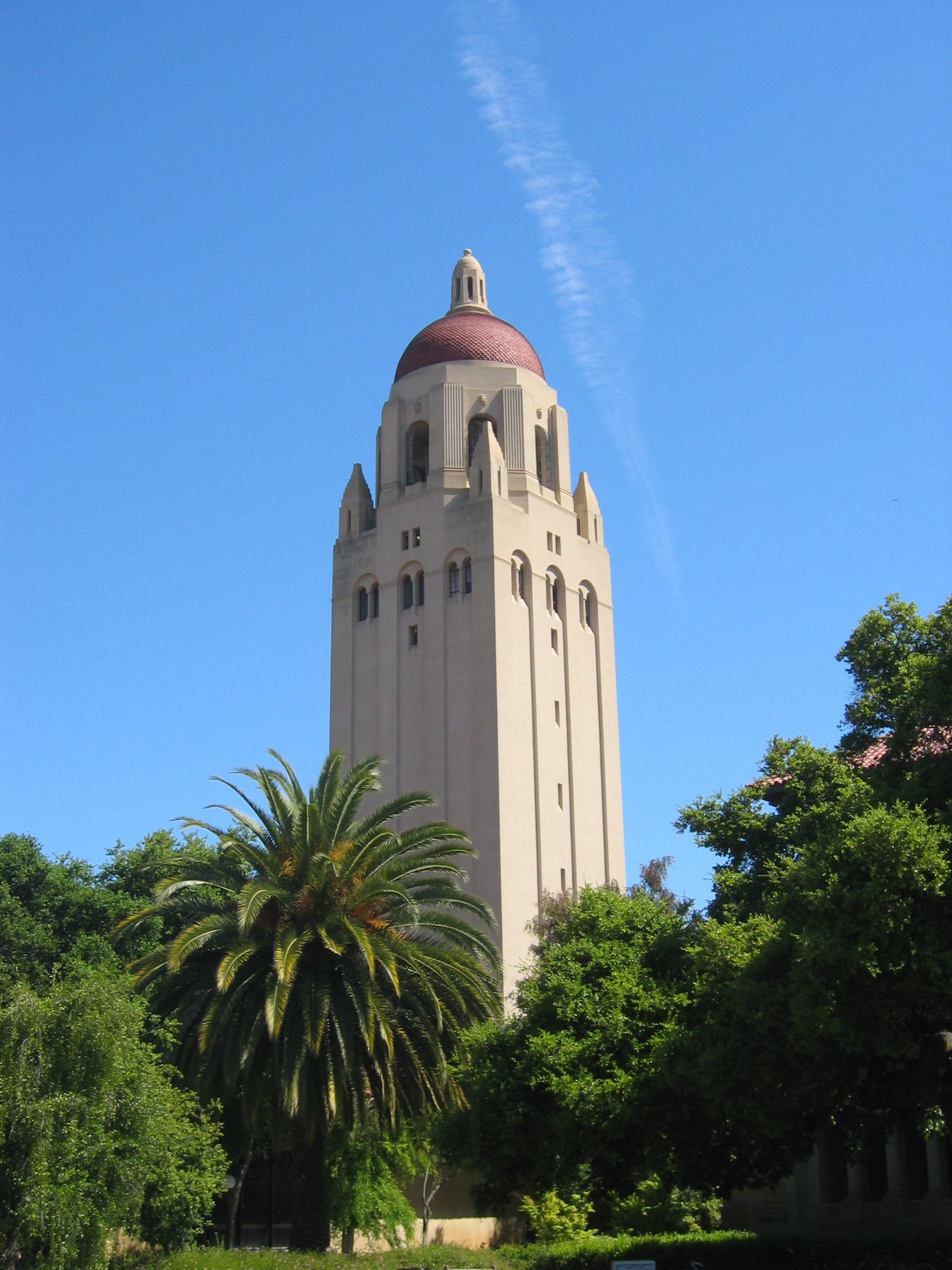 Photo: Stanford’s Hoover Tower, a landmark of the campus where Yahoo was born. Wikimedia Commons. License: CC BY-SA 3.0.
What set Yahoo apart from every other early internet venture was its human curation model. While competitors raced to build automated crawlers, Yahoo employed teams of editors — called “surfers” — who visited, evaluated, and categorized every website in the directory. In the mid-1990s, when the web was still small enough for humans to organize, this approach produced results that felt remarkably trustworthy. You did not get a list of ten thousand links. You got a carefully curated directory, organized like a library card catalog, built by people who actually visited every site.
The Dot-Com Rocket
Yahoo’s IPO in April 1996 was one of the defining moments of the early internet boom. The stock soared. By the peak of the dot-com bubble in 2000, Yahoo shares hit $118.75. The company was valued at over $125 billion. Yang and Filo, who had started with a bookmark file in a trailer, were each worth billions.
But the very thing that made Yahoo special — human curation — was also the thing that could not scale. As the web exploded from thousands of sites to millions, no team of human editors could keep up. A small company in a garage in Menlo Park was building something different: an algorithm that could index the entire web automatically. That company was Google — which had started as a Stanford project called BackRub — and its approach would eventually make Yahoo’s directory model obsolete.
I find it remarkable that the Netscape IPO and Yahoo’s rise happened almost simultaneously. Both companies were born at Stanford, both rode the same wave of internet enthusiasm, and both demonstrated that the web was not just a curiosity — it was a platform for enormous businesses. If you look at what Silicon Valley was actually like in 1995, Yahoo and Netscape were the twin engines driving the whole ecosystem forward.
The Lesson in the Trailer
Yahoo’s story is often told as a cautionary tale — the company that had everything and lost it. But I think that framing misses the point. Yang and Filo proved that two people with no business plan, no funding, and no management experience could build something that changed how millions of people experienced the internet. They did it by following their curiosity, not a strategy document.
The web in 1994 was chaos. Yang and Filo brought order to it, one bookmark at a time. That impulse — the desire to organize, to make sense of overwhelming information — is the same impulse that drives every great technology company. The tools change. The instinct does not.
If two grad students in a campus trailer could build the internet’s first directory, then the next world-changing idea might already be sitting on someone’s laptop right now, waiting for them to realize what they have.
Sources
- Randall Stross, “How Yahoo! Won the Search Wars,” Fortune, March 2, 1998.
- Kara Swisher, “Speeding the Net: The Inside Story of Netscape and How It Challenged Microsoft,” Atlantic Monthly Press, 1998.
- Yahoo! Inc. SEC Filing, S-1 Registration Statement, 1996.
- John Battelle, “The Search: How Google and Its Rivals Rewrote the Rules of Business and Transformed Our Culture,” Portfolio, 2005.
- “Jerry Yang,” Stanford Engineering Heroes Lecture Series, 2007.