I remember the AOL CDs. They were everywhere — in the mailbox, inside magazines, taped to cereal boxes, stacked on tables at electronics stores. You could not escape them. If you were alive in 1990s America, you received an AOL CD whether you wanted one or not. I recently learned that AOL mailed out approximately 600 million free CDs over the course of the decade. That number is so absurd that I had to verify it multiple times. It was real. And it worked.
How did a company that started as a small online service in the 1980s become the gateway to the internet for an entire nation — and then destroy itself in what is widely called the worst corporate merger in history?
From Control Video to America Online
AOL’s origins trace back to 1985, when it was founded as Quantum Computer Services by Steve Case, Jim Kimsey, and others. The company initially provided online services for Commodore 64 and Apple II computers under the name Q-Link. In 1991, the company rebranded as America Online — AOL.
In its early years, AOL was one of several competing online services, alongside CompuServe and Prodigy. What distinguished AOL was its relentless focus on ease of use. While CompuServe catered to technical users and Prodigy tried to be an interactive newspaper, AOL positioned itself as the internet for people who had never used a computer before. The interface was colorful, friendly, and intuitive. Logging in was as simple as inserting a CD, following the prompts, and hearing those three famous words: “You’ve got mail.”
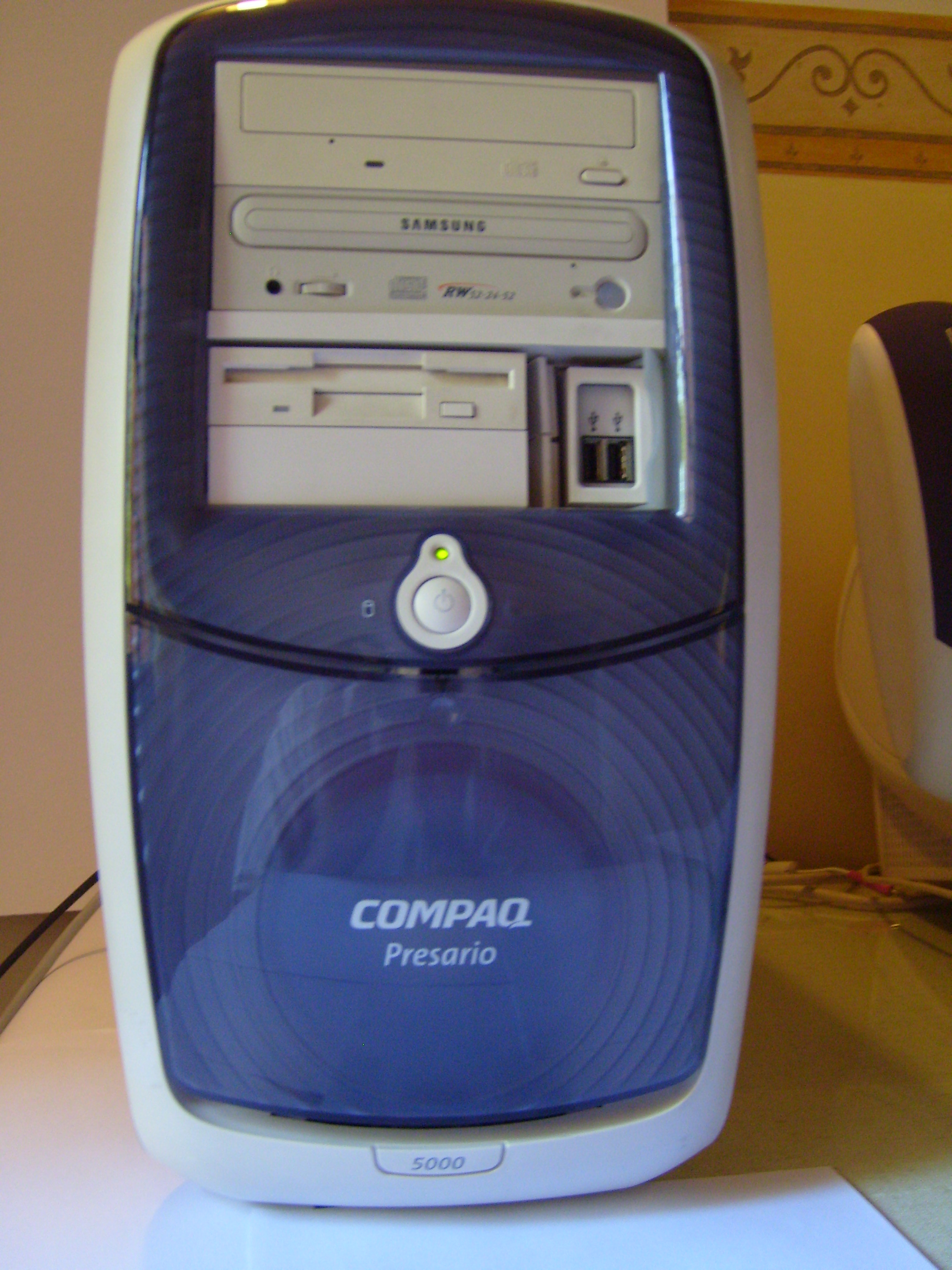 Photo: A Compaq personal computer typical of the machines that AOL users connected through in the 1990s. Wikimedia Commons. License: CC BY-SA 3.0.
The CD Carpet Bombing
The person responsible for AOL’s most famous strategy was Jan Brandt, the company’s head of marketing. Brandt’s idea was simple and aggressive: put a free AOL trial CD into the hands of every person in America. She experimented with direct mail, magazine inserts, in-store displays, and even partnerships with airlines and fast-food restaurants.
“At one point, 50% of the CDs produced worldwide had an AOL logo on them.” – Jan Brandt, interview with Business Insider, 2014
The numbers were staggering. AOL’s subscriber base grew from 200,000 in 1992 to 8 million by 1996. It passed 10 million in late 1997 and reached 16 million by 1999. At its peak in 2002, AOL had 26.7 million subscribers, each paying a monthly fee of around $23. That was more than $600 million in monthly recurring revenue — a financial engine that most modern SaaS companies can only dream of.
The CD strategy cost AOL an estimated $300 million over the decade. But the customer lifetime value far exceeded the cost of acquisition. Each new subscriber paid monthly fees, bought premium content, and — most importantly — spent time on AOL’s proprietary services: chat rooms, instant messaging (AIM), email, and curated content channels.
The Walled Garden
AOL’s approach to the internet was fundamentally different from what we know today. AOL did not provide access to the open web — at least not at first. Instead, it offered a walled garden: a curated, controlled environment where users could read news, send email, join chat rooms, and shop, all within AOL’s proprietary interface. The open web existed outside, but AOL made its own world so comfortable that many users never left.
For millions of Americans, AOL was the internet. They did not know about browsers, URLs, or search engines. They knew about AOL keywords — short phrases you could type into AOL’s search bar to go directly to a specific destination. Companies paid AOL millions of dollars for premium keywords, the same way they would later pay Google for search ads.
Buying Netscape
In November 1998, AOL announced that it would acquire Netscape Communications for approximately $4.2 billion. It was a stunning move. Netscape had lost the browser wars to Microsoft’s Internet Explorer, but it still had valuable technology, a strong brand, and a large enterprise business.
 Photo: A DVD disc — the physical media format that, like AOL’s CDs, defined how Americans accessed digital content in the late 1990s. Wikimedia Commons. License: CC BY-SA 3.0.
The Netscape acquisition was a signal that AOL was trying to evolve from a walled garden into a true internet platform. But the bigger move was still to come.
The Worst Merger in History
On January 10, 2000, AOL announced that it would merge with Time Warner in a deal valued at $164 billion. It was the largest corporate merger in American history at the time. AOL, with a market capitalization inflated by dot-com euphoria, was technically the acquirer — an internet company swallowing a media conglomerate that owned HBO, CNN, Warner Bros., and Time magazine.
The merger was a disaster from the start. The dot-com crash wiped out AOL’s stock value. The cultural clash between AOL’s aggressive tech culture and Time Warner’s traditional media culture was toxic. Promised “synergies” never materialized. By 2002, the combined company reported a loss of $99 billion — the largest annual corporate loss in American history.
Time Warner eventually dropped “AOL” from its name in 2003. AOL was spun off as an independent company in 2009. It was acquired by Verizon in 2015 for $4.4 billion — a fraction of the value it had commanded during the merger.
What AOL Actually Built
It is easy to mock AOL in retrospect — the CDs, the dial-up modem sound, the walled garden, the catastrophic merger. But I think that narrative ignores what AOL actually accomplished. Before AOL, the internet was an obscure network used primarily by academics, military personnel, and tech enthusiasts. AOL made the internet accessible to ordinary Americans — people who had never used a computer, people who did not know what a URL was, people who just wanted to send email to their grandchildren.
AOL Instant Messenger (AIM) was the precursor to every messaging platform that followed. AOL’s chat rooms were the precursor to social media. AOL’s email service introduced millions of people to digital communication. The Netscape IPO may have launched the internet economy, but AOL made the internet a household utility.
The company’s decline was not caused by a bad product. It was caused by a business model — dial-up subscriptions — that became obsolete when broadband arrived. AOL’s walled garden only made sense when the open web was confusing and slow. Once broadband made the open web fast and accessible, users no longer needed AOL to hold their hand.
The Sound of Connection
“You’ve got mail” might be the most recognizable phrase of the 1990s internet. It represented a moment — the moment when Americans realized that the internet was not a toy, not a fad, and not just for engineers. It was a utility, as essential as the telephone. AOL was the company that made that realization possible, even if it could not survive the world it helped create.
Sources
- Kara Swisher, There Must Be a Pony in Here Somewhere: The AOL Time Warner Debacle, Crown Business, 2003.
- Alec Klein, Stealing Time: Steve Case, Jerry Levin, and the Collapse of AOL Time Warner, Simon & Schuster, 2003.
- Jan Brandt, “AOL’s Marketing Story,” interview with Business Insider, 2014.
- “AOL Time Warner Reports $99 Billion Loss,” The New York Times, April 25, 2002.
- AOL corporate history, Computer History Museum archives.