
I was too young for GeoCities in its prime, but I have spent a surprising amount of time exploring the archived pages that the Internet Archive managed to save before Yahoo pulled the plug in 2009. What I found was a time capsule: millions of personal websites with glittering star backgrounds, auto-playing MIDI music, “under construction” GIFs, and guest books that nobody ever signed. It was messy, garish, and utterly wonderful. It was also the first time ordinary people — not engineers, not designers, not corporations — could publish their own content on the World Wide Web.
How did a single platform, home to 38 million pages, become the third most visited site on the internet, get acquired for $3.57 billion, and then vanish?
Virtual Neighborhoods
David Bohnett founded GeoCities in 1994 under the name Beverly Hills Internet. The concept was straightforward but radical for the time: give anyone a free web page, no technical knowledge required. Users could pick a template, type in their content, add images, and publish — all through a browser-based interface.
What made GeoCities unique was its neighborhood metaphor. Instead of assigning users random URLs, GeoCities organized its free web pages into themed virtual communities. If you built a website about movies, you lived in Hollywood. Technology enthusiasts moved to SiliconValley. Science fiction fans set up shop in Area51. Pet owners gathered in Heartland. Each neighborhood had its own community leaders, message boards, and culture.
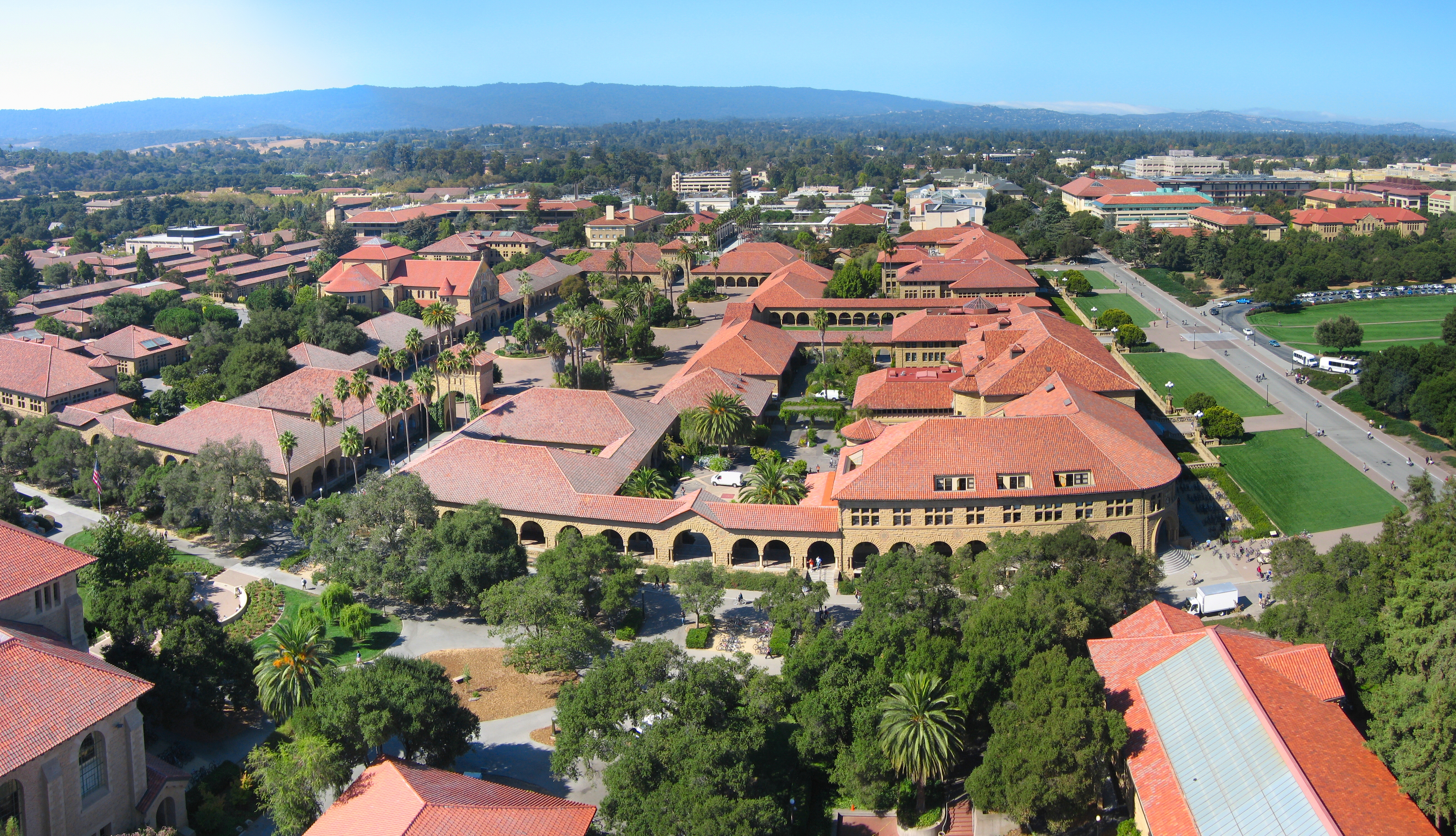 Photo: Stanford University — the academic cradle of Silicon Valley where many of GeoCities’ competitors and successors were born. Wikimedia Commons. License: CC BY-SA 3.0.
From the start, Bohnett’s vision was to give everyone a voice on the internet — not just companies, not just universities — and the neighborhood concept was not just a marketing gimmick. It created a sense of belonging in what was otherwise a vast and impersonal internet. Users were not just building websites — they were joining communities. They were neighbors. That social layer, primitive as it was, anticipated the community-driven platforms that would follow: MySpace, Facebook, Reddit.
The Third Most Visited Site on Earth
GeoCities grew with astonishing speed. By 1999, it was the third most visited website on the internet, behind only AOL and Yahoo. The numbers were staggering: millions of unique visitors per month, tens of millions of user-created pages, and a growth rate that showed no signs of slowing.
The sites themselves were, by modern standards, chaotic. Visitors were greeted by tiled backgrounds, blinking text, animated GIF construction workers, hit counters that proudly displayed “You are visitor #000047,” and pages that took minutes to load over dial-up connections. The aesthetic was maximalist — every HTML tag was explored, every font color was tested, every background pattern was tried.
But beneath the visual chaos was something profound: ordinary people were learning to publish. Teachers shared lesson plans. Hobbyists cataloged their collections. Teenagers wrote fan fiction. Families posted vacation photos. For millions of users, GeoCities was not just their first website — it was their first experience with the idea that they could create something and share it with the world.
Yahoo’s $3.57 Billion Bet
In January 1999, Yahoo announced that it would acquire GeoCities for approximately $3.57 billion in stock. It was one of the largest acquisitions of the dot-com era and a bet that user-generated content was the future of the internet.
Looking at what these founders accomplished in their twenties makes me think about my own twenties, which I spent learning to manage servers. I do not regret the technical skills. I regret not pairing them with business skills when it would have mattered most.
The acquisition made strategic sense on paper. Yahoo was the internet’s most popular directory, and GeoCities was the internet’s most popular publishing platform. Together, they could offer users a complete experience: find information on Yahoo, then create your own content on GeoCities.
 Photo: Yahoo headquarters — the company that acquired GeoCities for $3.57 billion and later shut it down. Wikimedia Commons. License: CC BY-SA 3.0.
But the integration was rocky. Yahoo imposed new terms of service that initially claimed ownership of users’ content — a decision that sparked a massive backlash and was quickly reversed. More fundamentally, Yahoo never figured out how to monetize GeoCities effectively. The free hosting model generated enormous traffic but minimal revenue. As the dot-com bubble burst, GeoCities went from strategic asset to financial liability.
The Shutdown and the Archive
On April 23, 2009, Yahoo announced that it would shut down GeoCities. The reaction from the internet community was a mix of nostalgia and outrage. 38 million user-created pages were about to disappear.
The Internet Archive, along with a dedicated group of volunteers called the Archive Team, launched a desperate effort to save as many GeoCities pages as possible before Yahoo pulled the plug. They managed to archive a significant portion of the site — roughly one terabyte of data — preserving a snapshot of what the early web looked like when ordinary people were in charge of it.
The GeoCities shutdown was a reminder that content hosted on someone else’s platform is never truly yours. When Yahoo decided that GeoCities was no longer worth maintaining, millions of personal pages — family histories, hobby projects, creative writing — vanished overnight. It was a lesson that the next generation of internet users, who would build their lives on Facebook, Instagram, and TikTok, would need to learn all over again.
GeoCities’ True Legacy
I think the conventional wisdom about GeoCities — that it was a relic, a joke, an embarrassment of blinking text and bad design — misses the point entirely. GeoCities was the first platform that told ordinary people: you belong on the internet too. Before GeoCities, publishing on the web required knowing HTML, owning a domain name, and paying for hosting. After GeoCities, it required nothing but an email address and something to say.
That same democratizing impulse drives every social platform that exists today. When we look at the dot-com crash and the thousands of companies that did not survive it, we tend to focus on the financial losses. But the cultural legacy of that era — the idea that the internet is for everyone, not just for corporations and engineers — that legacy endures. GeoCities was one of its strongest expressions.
The blinking text is gone. The MIDI music has stopped. The hit counters have frozen at their last number. But the idea that anyone can create something and share it with the world — that idea is more alive than ever. Every blog post, every YouTube video, every TikTok — all of it traces back to the moment when the internet first became a place where ordinary people could build something.
Sources
- Ian Milligan, “The GeoCities Archive and the Digital Preservation of Online Communities,” Internet Histories, 2017.
- “David Bohnett: GeoCities Founder,” interview with Wired, 1998.
- “Yahoo to Acquire GeoCities,” Yahoo press release, January 28, 1999.
- Archive Team GeoCities preservation project, archiveteam.org.
- “Yahoo to Close GeoCities,” TechCrunch, April 23, 2009.