I have been tracing the paths of PayPal Mafia members for a while now, and I keep noticing that the most influential alumni are not always the most famous. Everyone knows Elon Musk. Everyone knows Peter Thiel. But the person who may have shaped the modern tech landscape more than any of them – by choosing which companies got funded at critical moments – is someone most people outside Silicon Valley have never heard of. His name is Roelof Botha, and his track record as a venture capitalist is arguably the most impressive in the history of the industry.
How does a South African actuary become the person who decides which startups get to become the next YouTube, Instagram, or WhatsApp? The answer starts in Pretoria, runs through PayPal’s IPO, and ends in the managing partner’s office at Sequoia Capital.
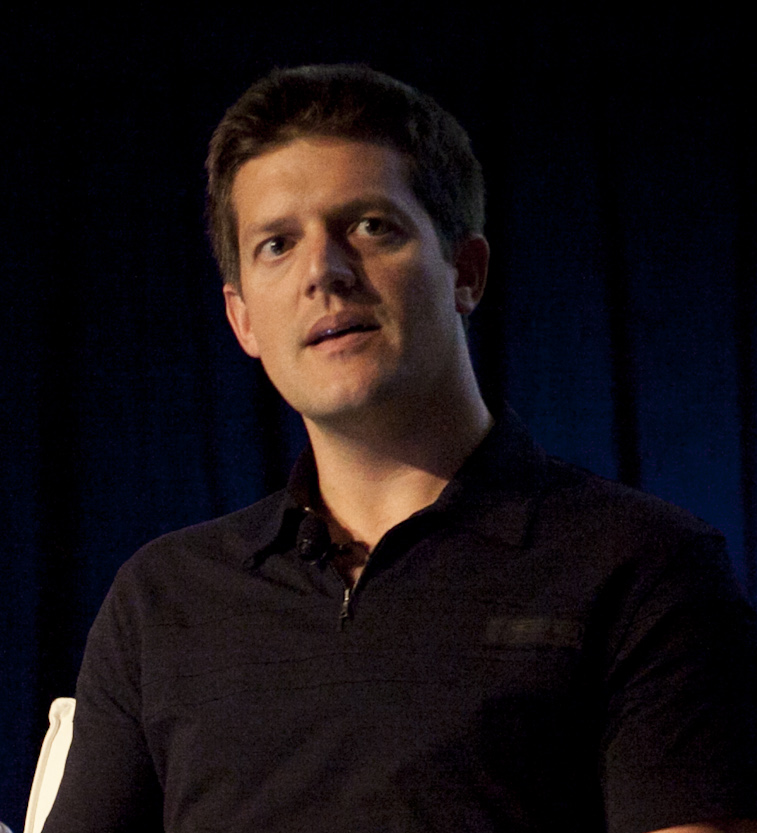 Photo: Wikimedia Commons.
Did you know? Botha turned down Meg Whitman’s offer to be PayPal-eBay’s CFO — and instead joined Sequoia, where he backed YouTube, Instagram, and WhatsApp. He stayed inside the PayPal Mafia while funding the rest of it.
From Pretoria to PayPal
Roelof Botha grew up in South Africa, where he studied actuarial science before pursuing an MBA at Stanford University. The actuarial background is worth pausing on. Actuaries are trained to assess risk with mathematical precision, to build models that predict outcomes under uncertainty. It is not the typical path into Silicon Valley, but it turned out to be the perfect preparation for what came next.
While at Stanford, Botha caught the attention of the PayPal team. He joined the company in 2000, at the age of 26, as Director of Corporate Development, and was quickly promoted to CFO. This was not a ceremonial title. PayPal was burning cash, fighting fraud, managing a contentious merger with Elon Musk’s X.com, and preparing for one of the most closely watched IPOs of the early 2000s.
Botha took PayPal public in February 2002, at a time when the tech market was still recovering from the dot-com crash. The IPO priced at $13 per share. It was one of the first successful tech IPOs after the bubble burst, and it required weathering a hostile market environment where investors were deeply skeptical of internet companies. Botha was 28 years old.
“Taking PayPal public in 2002 was like trying to sell lemonade during a blizzard. The market didn’t want to hear about internet companies.” – Roelof Botha, reflecting on the IPO environment
When eBay acquired PayPal for $1.5 billion later that year, Botha found himself at a crossroads. Meg Whitman, eBay’s CEO, offered him the role of CFO of the combined company. It was a prestigious position at one of the most important e-commerce companies in the world. Most people in his position would have taken it.
Botha did not take it. Instead, he accepted an offer from Michael Moritz, the legendary Sequoia Capital partner, to join the venture firm. The decision to leave a guaranteed executive role at eBay for the uncertain world of venture capital was, in retrospect, one of the most consequential career decisions in tech history.
The YouTube Bet
Botha joined Sequoia Capital in January 2003, and he quickly established himself as someone with an unusual ability to spot companies that were about to explode. His first landmark investment came with YouTube.
In 2005, three former PayPal engineers – Chad Hurley, Steve Chen, and Jawed Karim – were building a video-sharing platform. The company was burning through bandwidth costs and had no clear revenue model. Most investors saw risk. Botha saw something else: he saw the same viral growth dynamics he had witnessed at PayPal, where user acquisition fed on itself through network effects.
Sequoia invested $11.5 million in YouTube. Less than a year later, in October 2006, Google acquired YouTube for $1.65 billion. The return on investment was remarkable, but what made Botha’s involvement notable was not just the financial outcome. It was the pattern recognition. He had been inside PayPal when it experienced explosive, viral, user-driven growth. He recognized the same pattern at YouTube before the numbers made it obvious to everyone else.
This is a theme I keep coming back to when studying the PayPal Mafia: the alumni did not just take money and connections from PayPal. They took pattern recognition. They had seen what hypergrowth looked like from the inside, and they could identify it in other companies faster than investors who had only read about it in case studies.
Instagram, WhatsApp, and the Billion-Dollar Eye
After YouTube, Botha’s investment record became almost surreal in its consistency. In 2012, he led Sequoia’s Series B investment in Instagram. Shortly after, Facebook acquired Instagram for approximately $1 billion. The timing was so precise that it looked like insider knowledge, but it was really the same skill: recognizing that a product with explosive user growth and deep engagement was going to become essential infrastructure for communication.
In ten years of hosting, I never once raised my prices. Not because they were fair — because I was afraid of losing even one customer. That fear cost me far more than any lost customer would have.
I think the reason I am drawn to these stories is that every founder mistake I read about — the ones they survived and learned from — I recognize. I made the same mistakes. I just did not have the framework to understand what I was doing wrong.
Even more striking was the WhatsApp investment. Sequoia invested in WhatsApp in 2011, when the messaging application was still relatively unknown in the United States but was growing rapidly in international markets. In February 2014, Facebook acquired WhatsApp for $19 billion – at the time, the largest acquisition of a venture-backed company in history. Sequoia’s investment returned approximately 50 times its value.
What is remarkable about these three investments – YouTube, Instagram, WhatsApp – is that they share a common structure. All three were communication platforms. All three had explosive user growth driven by network effects. All three were undervalued by most investors because they lacked obvious revenue models. And all three were acquired by larger companies for prices that seemed absurd at the time but look prescient in retrospect.
“The best investments are in companies where the users are so passionate that they do your marketing for you.” – Roelof Botha, on what connects his most successful investments
The South African Connection
I find it interesting that two of the most important people in the PayPal story – Botha and Elon Musk – are South Africans who emigrated to the United States and ended up reshaping the technology industry. The parallels are not exact. Musk left South Africa at 17 with $2,000 and a desire to escape. Botha left as a graduate student pursuing an MBA at Stanford. But both brought an outsider’s perspective that allowed them to see opportunities that insiders took for granted.
There is a quality that many immigrant founders and investors share: a willingness to question assumptions that locals treat as obvious. When you arrive in a new country, nothing is assumed. Everything is observed, evaluated, and decided upon. This is an advantage in venture capital, where the most profitable investments often violate conventional wisdom.
Botha has spoken about his South African background as something that shaped his approach to risk. Growing up in a country with genuine economic and political uncertainty taught him to distinguish between risks that are real and risks that are merely unfamiliar. Most investors confuse the two. They see an unfamiliar business model and perceive danger, when what they are actually seeing is an opportunity that has not yet been validated by consensus.
Managing Partner of Sequoia
In 2022, Botha was named managing partner of Sequoia Capital, succeeding the firm’s previous leadership structure. The appointment made him one of the most powerful people in Silicon Valley – the person who ultimately decides which companies Sequoia will back and which it will pass on.
By 2025, Fortune named Botha to its list of the most powerful people in business, a recognition that reflected not just his investment returns but his influence on the broader tech ecosystem. In 2026, he also joined the board of SpaceX, further cementing his connection to the PayPal Mafia network that continues to shape the industry.
The Sequoia managing partner role is significant because of the firm’s history. Sequoia’s previous investments include Apple, Google, Oracle, Cisco, and LinkedIn. The firm has been involved in companies that collectively represent trillions of dollars in market value. Leading that firm means having a disproportionate influence on which technologies get built and which founders get the resources to build them.
What Botha’s Career Reveals
I think Roelof Botha’s story reveals something important about how the tech industry actually works. The popular narrative focuses on founders – the visionary CEO who builds a company from nothing. And founders are essential. But behind almost every successful startup is an investor who saw something before the market did, who provided not just money but credibility, introductions, and strategic guidance at exactly the right moment.
Botha’s career also illustrates the compounding power of the PayPal network. He was CFO of PayPal. He invested in a company founded by three PayPal engineers (YouTube). In 2026, he joined the board of a company founded by another PayPal alumnus (SpaceX). The network that formed inside a single startup in the early 2000s continues to generate value across the entire technology industry, two decades later.
What strikes me most about Botha is the consistency. It is one thing to make a single great investment. It is another to make three or four of the best investments in the history of venture capital. That level of consistency suggests something beyond luck – a genuine ability to recognize the patterns that separate transformative companies from merely good ones. He learned those patterns inside PayPal, and he has been applying them ever since.
The kid from Pretoria who studied actuarial science became the person who decides which companies get to become the next big thing. That is a career arc worth studying, and it is another chapter in the remarkable story of the PayPal Mafia’s ongoing influence on the world.
Sources
- Soni, J. The Founders: The Story of PayPal and the Entrepreneurs Who Shaped Silicon Valley. Simon & Schuster, 2022.
- Fortune Magazine. “The PayPal Mafia.” November 2007.
- Fortune Magazine. “Most Powerful People in Business.” 2025.
- Sequoia Capital. Firm history and portfolio disclosures, various years.
- SEC filings. PayPal Inc. IPO prospectus, February 2002.
- Isaacson, W. Elon Musk. Simon & Schuster, 2023.
- TechCrunch. “Google Acquires YouTube for $1.65 Billion.” October 2006.
- Wall Street Journal. “Facebook to Acquire WhatsApp for $19 Billion.” February 2014.
- Bloomberg. “Sequoia Capital Leadership Changes.” 2022.