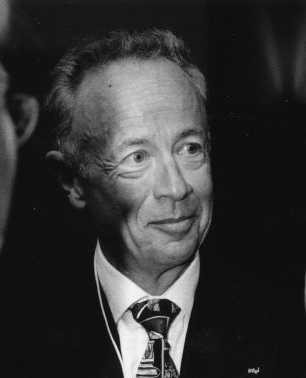
I got into an argument with a friend last month about whether Silicon Valley founders have it easy compared to previous generations. He said tech people complain about 80-hour weeks like it is a war zone. I told him about Andy Grove — a man who literally crawled through mud and barbed wire to escape Soviet tanks in Budapest at age twenty, arrived in America with nothing, and then built Intel into the most important company in the history of computing. My friend went quiet. Grove’s story is one of those that reminds you how much of the technology industry was built by people who had already survived things far worse than a failed startup. It is a story about escaping two totalitarian regimes, arriving in a new country with nothing, and then building one of the most important companies in the history of computing.
What strikes me most is not just what Grove accomplished at Intel. It is how his early life, marked by fear, displacement, and relentless self-reliance, shaped the management philosophy that would define an entire industry.
From Budapest to the Border
Andras Istvan Grof was born in Budapest, Hungary, in 1936, into a Jewish family. He was eight years old when the Nazis occupied Hungary in 1944. His mother obtained forged identity papers, and young Andras survived by posing as a Christian boy. His father was sent to a forced labor camp but survived. Much of their extended family did not.
After the war, Hungary fell under Soviet control. Grove grew up under Communism, studying chemical engineering at the Technical University of Budapest. When the Hungarian Revolution of 1956 erupted, the twenty-year-old Grove made a decision that would alter the trajectory of technology. As the revolution faltered and Soviet forces prepared to crush it, he fled — crossing the border into Austria on foot before the second Soviet invasion, crawling through mud and barbed wire in the middle of the night.
 Photo: Wikimedia Commons. CC BY-SA 3.0. The HP Garage in Palo Alto, birthplace of Silicon Valley’s startup culture. Grove would carry that same spirit of ambitious self-invention into Intel.
He arrived in the United States as a refugee, penniless and speaking almost no English. He enrolled at the City College of New York, where tuition was free, and earned a degree in chemical engineering. From there, he went to the University of California, Berkeley, and completed a PhD in chemical engineering. This trajectory alone, from a refugee camp to a Berkeley doctorate, would be remarkable. But Grove was just getting started.
Intel’s Third Employee
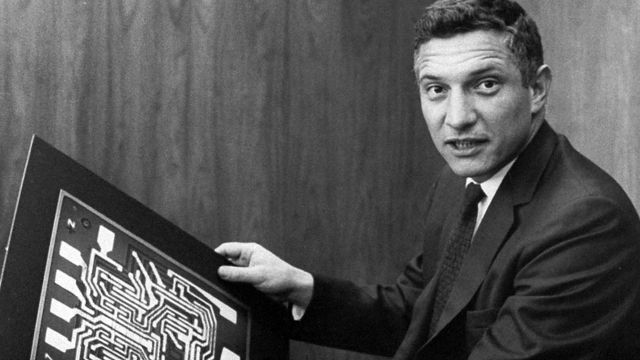
In 1968, when Robert Noyce and Gordon Moore left Fairchild Semiconductor to start a new company, they needed someone to run the operation day to day. They chose Grove, who had been working at Fairchild as a researcher. He became Intel’s third employee, and from the beginning, he was the one who turned ideas into execution.
Where Noyce was the visionary and Moore was the scientist, Grove was the operator, the person who built the systems, enforced the discipline, and drove results. Intel’s early years were focused on memory chips, and Grove’s rigorous management style helped the company dominate that market. But the real test of his leadership came in the mid-1980s, when Japanese manufacturers began undercutting Intel on price and quality in the memory chip business.
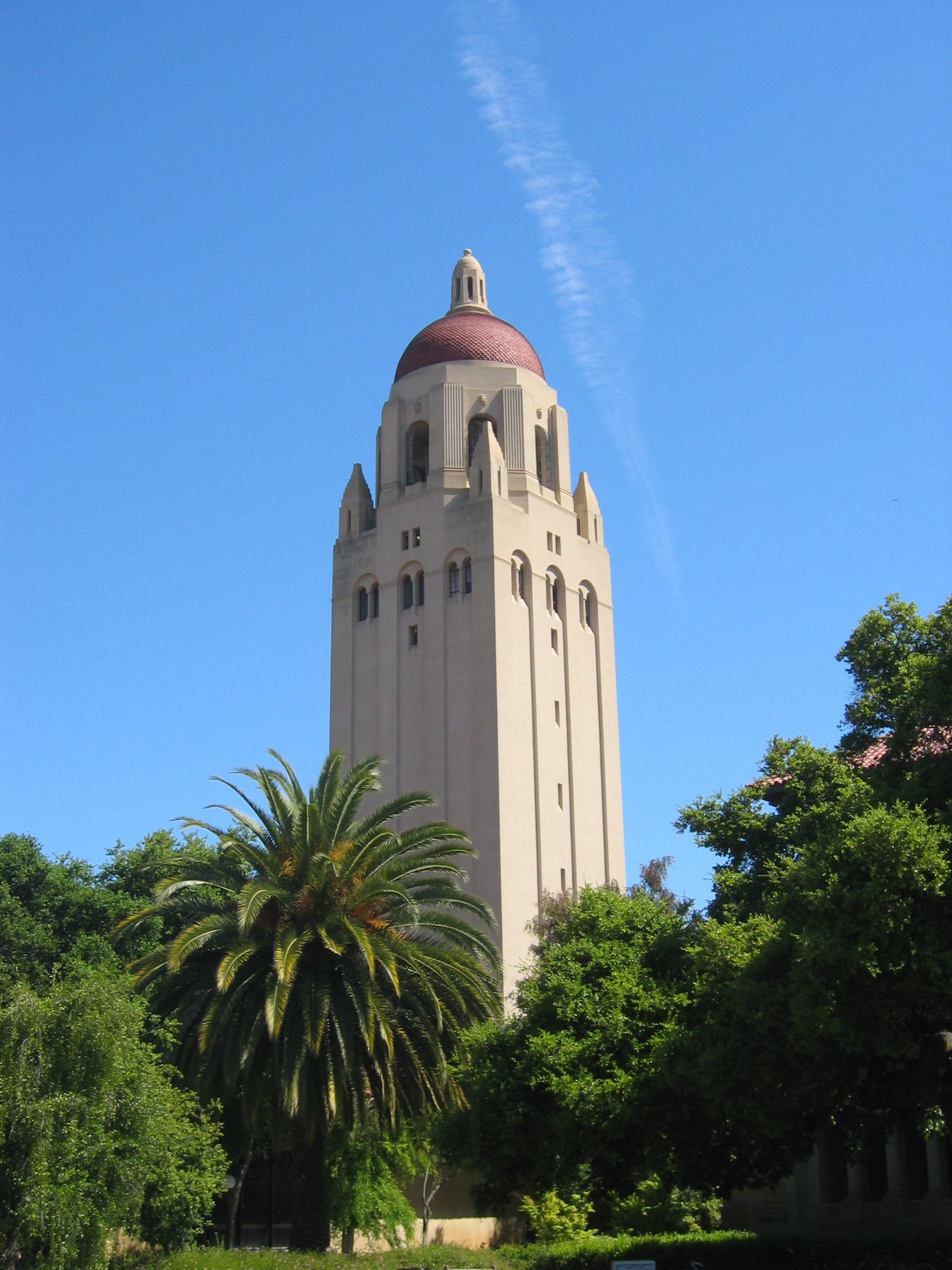 Photo: Wikimedia Commons. CC BY-SA 3.0. Stanford University’s Hoover Tower. The university was central to the talent pipeline that powered companies like Intel throughout the Valley’s growth.
The Decision That Changed Everything
Grove became CEO in 1987, and he faced a crisis that could have destroyed the company. Intel was losing the memory chip war to Japanese competitors. In his book “Only the Paranoid Survive” (1996), Grove described the pivotal moment. He asked Gordon Moore: “If we got kicked out and the board brought in a new CEO, what do you think he would do?” Moore answered without hesitation: “He would get us out of memories.” Grove replied: “Why shouldn’t you and I walk out the door, come back in, and do it ourselves?”
At my hosting company, I once spent three months building a feature that exactly one customer asked for. Musk built PayPal for millions of people he had never met, and Grove bet the whole company on microprocessors before that market even existed. The difference is not ambition — it is who you are building for.
And that is exactly what they did. Grove made the agonizing decision to abandon memory chips, Intel’s founding product, and bet everything on microprocessors. It was one of the boldest strategic pivots in corporate history, and it worked spectacularly.
The “Wintel” alliance with Microsoft, pairing Intel’s processors with Microsoft’s Windows operating system, powered the 1990s PC boom. Every major personal computer manufacturer, from Dell to Compaq to HP, ran on Intel chips. The “Intel Inside” marketing campaign made a semiconductor company into a household name. By the mid-1990s, Intel was the most profitable and important company in the technology industry, and Andy Grove was the man who had driven it there.
Only the Paranoid Survive
Grove’s management philosophy was shaped by his early life. Having survived both Nazism and Communism, he understood that complacency could be fatal. His famous maxim, “Only the paranoid survive,” was not corporate posturing. It was the worldview of a man who had learned the hard way that the world can change overnight, and that those who fail to adapt do not get a second chance.
Time magazine named him “Man of the Year” in 1997, calling him “the person most responsible for the amazing growth in the power and the innovative potential of microchips.” The magazine noted that Grove’s influence extended far beyond Intel, that he had essentially driven the growth phase of Silicon Valley itself.
 Photo: Wikimedia Commons. CC BY 2.0. Silicon Valley, the region Grove helped transform from a cluster of chip companies into the global center of technology.
His influence on management thinking was enormous. Grove pioneered OKRs (Objectives and Key Results) at Intel, a goal-setting framework that would later be adopted by Google and dozens of other technology companies. He insisted on a culture of constructive confrontation, where anyone in a meeting could challenge anyone else’s ideas, regardless of rank. This was revolutionary in the hierarchical corporate world of the 1980s, and it became a model for the flat organizational structures that define Silicon Valley companies today.
A Legacy Forged by Adversity
Andy Grove died on March 21, 2016, at the age of 79. His journey from a boy hiding from Nazis in Budapest to the CEO of the world’s most important semiconductor company is one of the most remarkable in American business history. The Traitorous Eight created Fairchild and planted the seeds of Silicon Valley, but it was Grove who cultivated those seeds into a global industry. As Arthur Rock once observed, Intel needed “Noyce, Moore, and Grove, in that order”, each one essential, each one irreplaceable.
What I find most powerful about Grove’s story is that it is, at its core, a story about what happens when talent meets determination and is given the freedom to build. A refugee who arrived in America with nothing became the person who put a processor in every personal computer on earth. The garage myth tells us that great companies start small. Andy Grove’s life tells us that great people can come from anywhere, and that the harshest beginnings sometimes forge the sharpest leaders.
Sources
- Grove, Andrew S. Only the Paranoid Survive: How to Exploit the Crisis Points That Challenge Every Company. Currency Doubleday, 1996.
- Malone, Michael S. The Intel Trinity: How Robert Noyce, Gordon Moore, and Andy Grove Built the World’s Most Important Company. Harper Business, 2014.
- Tedlow, Richard S. Andy Grove: The Life and Times of an American Business Icon. Portfolio, 2006.
- “Man of the Year: Andrew Grove.” Time, December 29, 1997.
- “Andrew S. Grove, Who Helped Shape the Computer Age, Dies at 79.” The New York Times, March 22, 2016.