
I was packing for a move last month, taping up boxes of old tech books, and I found a copy of a magazine from the mid-nineties with a profile of a software company I had completely forgotten about. That company was Reed Hastings’ first venture. Before Netflix, before the culture deck, before the streaming empire worth over $300 billion, Hastings had already built a company, taken it public, and watched it slowly suffocate under the weight of its own bureaucracy. The company was called Pure Software. And most people have never heard of it.
That got me wondering: what happens to a brilliant founder when his first venture doesn’t die in a dramatic crash but instead drifts into irrelevance? And more importantly, what does he learn from it?
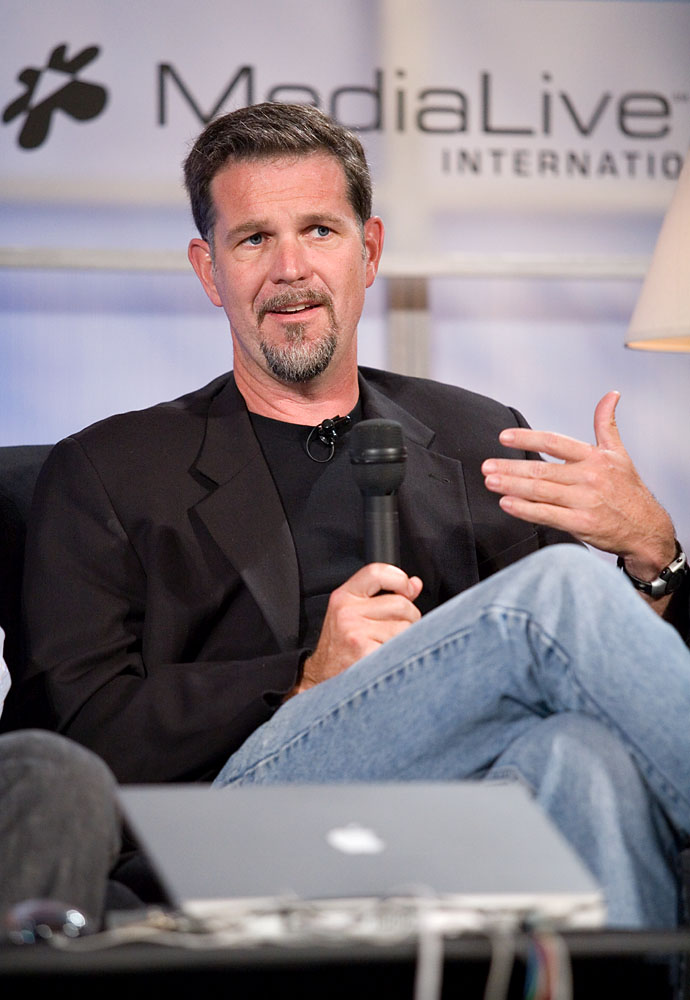 Photo by James Duncan Davidson, Wikimedia Commons. License: CC BY 2.0.
A Debugging Tool and a Dream
In October 1991, Reed Hastings founded Pure Software in Sunnyvale, California. The product was a debugging tool called Purify, designed to help engineers find memory leaks and access errors in C and C++ programs. It was a clever, technical product aimed squarely at developers, and it solved a real problem. Hastings was an engineer himself, a Stanford-trained one who had been working in the industry since the late 1980s, and he understood the pain his customers felt.
The product worked. The company grew. By the mid-1990s, Pure Software had expanded its product line, hired aggressively, and attracted serious investor attention. In August 1995, it went public with Morgan Stanley as its lead underwriter.
For a founder in his mid-thirties, this was the kind of validation that should have felt like a triumph. But Hastings would later describe this period with a tone closer to regret than celebration.
When Growth Becomes the Problem
I wondered what went wrong. The answer, as Hastings has explained in multiple interviews over the years, was deceptively simple: as headcount grew, talent density dropped. If that phrase sounds familiar, it should. It became the cornerstone of everything Netflix would later stand for.
At Pure Software, the pattern was textbook. The company hired fast to keep up with demand. Not every hire was exceptional. Some were adequate. Some were mediocre. And as the ratio of outstanding people to average people shifted, something insidious happened: the culture started to change.
Mistakes increased. Communication broke down. Projects slipped. And Hastings, the engineer-founder, responded the way many technically minded leaders do. He added process.
More sign-offs. More approvals. More checklists. More documentation. More layers of management to ensure that the growing workforce stayed on track. He later admitted that he tried to “run software like a manufacturing plant.” The irony was painful: every new process designed to prevent mistakes also prevented the best people from doing their best work.
The Talent Spiral
The process did exactly what it was designed to do. It reduced errors. It standardized workflows. It created predictability. But it also created something else: boredom.
The most talented engineers, the ones who thrived on autonomy and creative problem-solving, looked around and saw a company that no longer trusted them. They didn’t need guardrails. They needed freedom. And one by one, they left.
When the best people leave, the average quality of the remaining team drops further. Which means more mistakes. Which means more process. Which means more talented people leave. It is a vicious cycle, and Hastings watched it happen in real time.
The Hardest Admission a Founder Can Make
By 1996, Hastings had lost confidence in his ability to lead the company he had built. This is worth pausing on. How many founders have the self-awareness to look at a company they created, a company that went public, that was generating tens of millions in revenue, and say: I am not the right person to run this anymore?
I ran my company the way I ran my life: carefully, conservatively, and always within my comfort zone. These founders ran theirs the way you run through a burning building — fast, and toward whatever exit you can find.
Hastings went to his board and asked them to find a replacement CEO. He has spoken about this moment with striking honesty, describing it not as a strategic pivot but as a genuine admission of failure. He felt he had driven the culture into a ditch and didn’t know how to get it out.
The board’s solution was not a new CEO but a merger. In 1996, Pure Software merged with Atria Software, a company that made configuration management tools. The combined entity became Pure Atria. But the merger didn’t solve the cultural problems. It compounded them. Two bureaucratic organizations stitched together just created a larger bureaucratic organization.
Shortly after, Rational Software acquired Pure Atria, absorbing it into a much bigger enterprise. Pure Software, the company Hastings had founded from a single debugging tool, effectively ceased to exist as an independent entity.
The Lessons That Built Netflix
I watched the Blitzscaling 16: Reed Hastings on Building a Streaming Empire video from Stanford University, where Hastings talks about the early Netflix culture. What struck me was how every principle he describes is a direct inversion of what went wrong at Pure Software.
Talent density over headcount. At Pure Software, Hastings hired to fill seats. At Netflix, he hired only people who would raise the average quality of the team. The Keeper Test, which I covered in my earlier article, was the mechanism for maintaining that standard over time.
Freedom over process. At Pure Software, every problem was met with a new rule. At Netflix, the operating principle became the opposite: hire people you trust, then trust them. Remove approvals. Remove expense policies. Remove vacation tracking. Let adults make decisions.
Context over control. Instead of telling people what to do and how to do it, Netflix leaders were taught to share the strategic context and let talented individuals figure out the execution. This was the antidote to the manufacturing-plant mentality that had suffocated Pure Software.
“We realized with the right density of talent, there’s very little process needed, and that that was the joyful thing.” – Reed Hastings, Stanford University
The Painful Teacher
There is a saying that experience is what you get when you didn’t get what you wanted. Hastings didn’t want Pure Software to become a cautionary tale. He wanted it to be a great company. But the failure taught him something that success never could have: process is a tool, not a culture. When you substitute rules for trust, you optimize for compliance and lose the creative energy that made your company worth building in the first place.
From Wreckage to Blueprint
After Rational Software completed its acquisition, Hastings walked away with money, connections, and a very specific kind of knowledge. He knew exactly what kind of company he did not want to build next.
When he co-founded Netflix in 1997, every structural decision reflected the scars of Pure Software. Small teams. High talent bar. Minimal hierarchy. Generous severance instead of process-heavy performance improvement plans. A culture deck that would eventually be viewed over 15 million times and change how an entire industry thinks about managing people.
The lessons from Pure Software’s failure would eventually be codified in the 124-slide culture deck that changed Silicon Valley. What I find most remarkable is the scale of the transformation. Pure Software at its peak was a respectable mid-tier software company. Netflix became one of the most influential businesses of the 21st century, reshaping entertainment, technology, and corporate culture simultaneously. The distance between those two outcomes is enormous. And the bridge between them was failure.
The Worst Experience, the Best Education
I keep coming back to a simple truth when I think about the Pure Software story. Hastings did not succeed at Netflix despite his failure at Pure Software. He succeeded because of it. Every principle in the Netflix culture, the talent density, the freedom and responsibility framework, the rejection of bureaucratic process, was forged in the specific pain of watching a good company become an average one.
For any founder reading this, the lesson is not that you need to fail before you can succeed. The lesson is that failure is only wasted if you refuse to examine it honestly. Hastings looked at the wreckage of Pure Software and asked the hardest possible question: what did I do wrong? Not what went wrong. What did I do wrong.
That willingness to take ownership of failure, to study it, to let it reshape your entire philosophy, is what turned a debugging-tool startup into the blueprint for a $300 billion streaming empire. The worst professional experience of Reed Hastings’ life became the most valuable education he ever received.