

A guy at the gym asked me last week what I was reading on my phone between sets, and I told him I was deep into the PayPal origin story. He said “PayPal has an origin story?” It does, and the deeper I go, the more I realize that one strategic decision defined the entire company. It was not the technology. It was not the encryption. It was not even the merger between Confinity and X.com. The decision that turned PayPal from a clever idea into a financial juggernaut was absurdly simple: pay people to sign up.
The numbers behind this strategy are staggering, and the ripple effects are still visible in every fintech app you have ever downloaded.
The $10 Handshake
In the late 1990s, PayPal — then still operating under the Confinity banner — faced the classic chicken-and-egg problem that plagues every payments platform. A payments system is only useful if both the sender and the receiver are on it. But why would anyone sign up for a payments system that nobody else uses?
Peter Thiel, PayPal’s co-founder and early CEO, had an answer that most people thought was insane: give everyone $10 just for creating an account, and then give them another $10 for every friend they referred who also signed up. In an era when most internet companies were spending their marketing budgets on banner ads and Super Bowl commercials, PayPal was putting cash directly into users’ pockets.
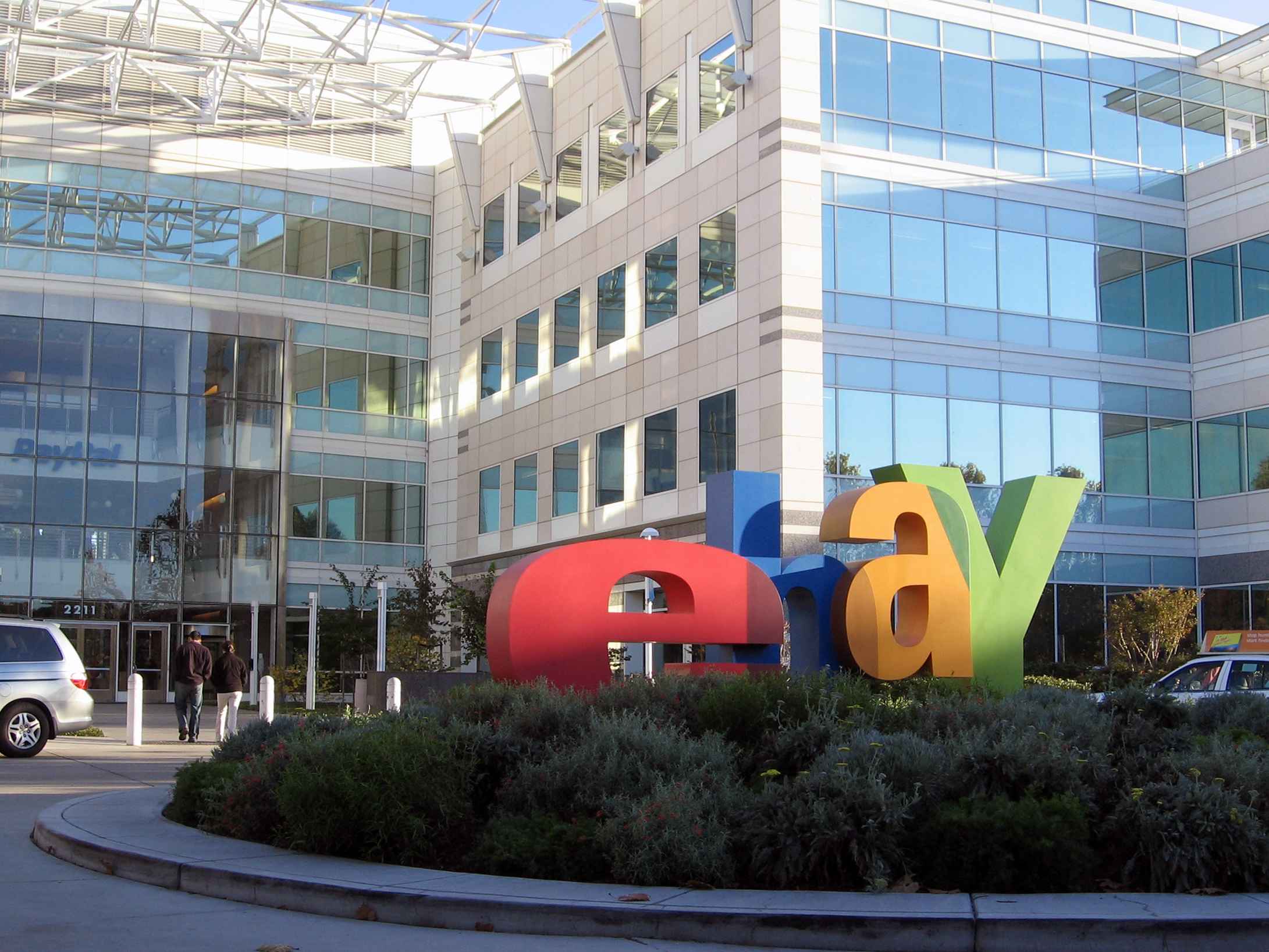
 Photo: Wikimedia Commons. CC BY-SA 4.0. PayPal’s San Jose headquarters — built on the foundation of a strategy that literally paid customers to show up.
The logic was counterintuitive but sound. Thiel understood that network effects — the phenomenon where a product becomes more valuable as more people use it — were the key to winning in payments. If you could get enough people on the platform quickly enough, the network itself would become the moat. And the fastest way to get people on the platform was to make it financially irrational not to join. Ten dollars was real money for clicking a button and entering your email address. People told their friends. Their friends told their friends. The viral loop was powered by cash.
Burning $10 Million a Month
The scale of the spending was breathtaking. Within the first month of the referral program, PayPal had acquired roughly 100,000 users. The growth was exponential, driven by word of mouth and the simple mathematics of a $10 referral bonus. But the cost was equally exponential. At its peak, PayPal was burning approximately $10 million per month on signup and referral bonuses alone.
This was not sustainable, and everyone at PayPal knew it. The company was engaged in a deliberate, calculated race: acquire users faster than you burn cash, then reduce the bonuses once the network effect kicks in and people start joining because the platform is actually useful, not just because you are paying them.
The reduction happened in stages. The signup bonus dropped from $10 to $5, then to $2, and eventually to $0. At each reduction, the growth team watched nervously to see if signups would collapse. They did not. By the time the bonuses disappeared entirely, PayPal had enough users that the platform’s utility — the ability to send money to anyone with an email address — was the draw. The paid growth had bootstrapped a genuine network effect.
The Nokia Demo
One moment from PayPal’s early marketing efforts has always fascinated me. At a press demonstration, PayPal staged a dramatic showcase of its PalmPilot-based payment technology. Using Nokia devices and PalmPilots, executives demonstrated beaming money between devices in front of journalists and industry analysts. The transfer took seconds. The room understood immediately: money was becoming digital, and PayPal was making it happen.
I understand the feeling of watching a competitor do something you know you should have done first. At my hosting company, I watched larger providers launch features I had been thinking about for years but never built — a gap PayPal closed by paying users to come along before anyone else could.
The demo was a publicity masterstroke. It generated headlines and positioned PayPal as the future of money at a time when most people still thought of the internet as a place to read news and send email. The fact that the underlying technology would eventually shift from PalmPilot beaming to email-based web payments did not matter. What mattered was the demonstration of speed, simplicity, and the visceral experience of watching money move through the air.
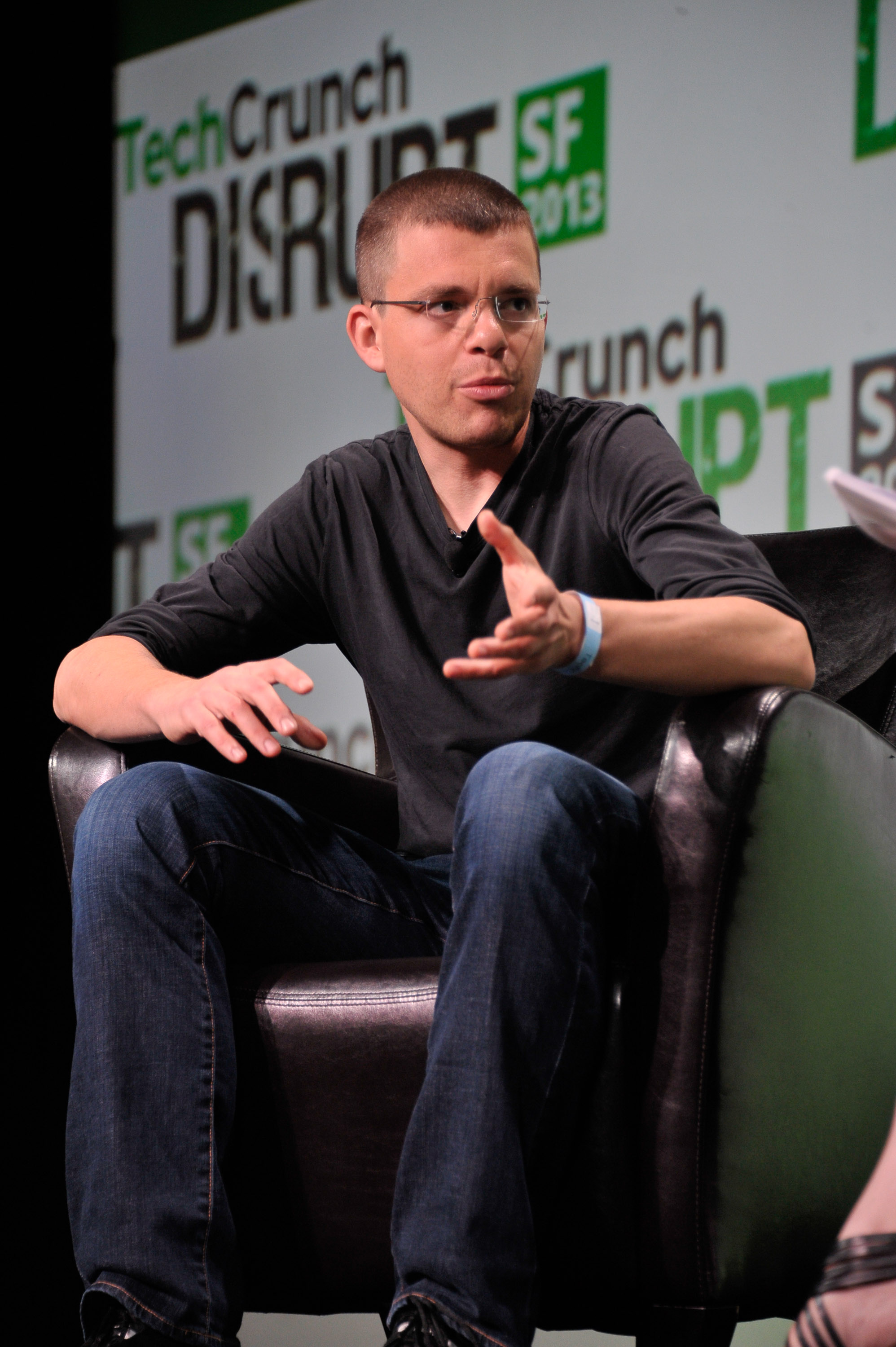 Photo by Steve Jennings / TechCrunch on Wikimedia Commons. CC BY 2.0. Max Levchin, the engineering mind behind PayPal’s technology, at TechCrunch Disrupt.
eBay: The Engine Nobody Planned For
The growth hack got PayPal its first wave of users, but the second wave came from an unexpected source: eBay. PayPal’s team did not initially target eBay as a market. But eBay’s PowerSellers — the high-volume merchants who made their living on the platform — discovered PayPal on their own and realized it solved a critical problem.
Before PayPal, eBay transactions were painfully slow. Buyers sent personal checks or money orders through the mail. Sellers waited days or weeks for payments to clear before shipping. PayPal collapsed that timeline to seconds. A buyer could pay immediately after winning an auction, and the seller could ship the same day.
Once a critical mass of sellers started accepting PayPal, buyers began demanding it. Listings that said “PayPal accepted” got more bids. Sellers who did not accept PayPal lost business. The network effect that Thiel had engineered through paid bonuses was now self-sustaining, powered by eBay’s massive marketplace. By the time PayPal went public in February 2002, it had more than 12 million users.
The IPO and the Price Tag
PayPal’s IPO on February 15, 2002 was one of the few bright spots in a market still reeling from the dot-com crash. The stock was priced at $13 per share, opened around $18.50, and closed the day at $20.09 — a first-day gain of more than 50%. Just months later, eBay acquired PayPal for $1.5 billion in stock, cementing the relationship that had driven so much of PayPal’s growth.
The total cost of the signup and referral bonuses? Hundreds of millions of dollars. But the return on that investment was a $1.5 billion acquisition and the creation of a company whose alumni — the PayPal Mafia — would go on to found or lead YouTube, LinkedIn, Tesla, Palantir, Yelp, and a dozen other companies that shaped the modern tech landscape.
The Template That Everyone Copied
What PayPal proved was that in a network-effects business, the cost of acquiring users is an investment, not an expense. This insight became the playbook for an entire generation of startups. Uber gave free rides to new users and paid existing users to refer friends. Robinhood offered free stocks for referrals. Cash App gave away money for signups. Dropbox offered free storage for referrals. Every one of these growth strategies traces a direct line back to Peter Thiel’s decision to pay people $10 to join PayPal.
I find it remarkable that the most important innovation in the history of fintech was not a technology. It was a business strategy. Sometimes you have to spend money to make money, and PayPal proved it at a scale that nobody had attempted before. The $10 that eventually changed fintech was not a transaction fee or a product price. It was a signup bonus — a bet that if you paid enough people to show up, they would stay.
They did.
Sources
- Thiel, Peter, with Blake Masters. Zero to One: Notes on Startups, or How to Build the Future. Crown Business, 2014.
- Jackson, Eric M. The PayPal Wars: Battles with eBay, the Media, the Mafia, and the Rest of Planet Earth. World Ahead Publishing, 2004.
- Soni, Jimmy. The Founders: The Story of PayPal and the Entrepreneurs Who Shaped Silicon Valley. Simon & Schuster, 2022.
- eBay Inc. “eBay Completes Acquisition of PayPal.” Press release, October 2002.
- PayPal Inc. SEC Form S-1 Filing, 2002.
- Chen, Andrew. “Growth Hacker Is the New VP Marketing.” AndrewChen.com, 2012.
- Hoffman, Reid. Interview on Masters of Scale podcast, 2017.




.jpg)