An old colleague posted on LinkedIn last week about how his company just hired forty new people in a single quarter, and he called it “scaling.” I stared at that post for a good minute because everything I have been reading for the past year says the opposite – that Reed Hastings and Netflix’s culture and Elon Musk’s journey from Zip2 through PayPal both proved that fewer, better people beat larger teams every time. On the surface, these stories have almost nothing in common. One is about a streaming entertainment company. The other is about an online payments startup. Different industries. Different founders. Different cultures.
But the deeper I dug, the more I realized that Netflix and PayPal landed on the same fundamental insight, arrived at independently, tested under extreme pressure, and validated by decades of remarkable results. That insight is talent density: a small group of exceptional people will consistently outperform a much larger group of average ones.
How did two companies, operating in parallel, reach the same conclusion? And what does that tell us about what actually drives success in technology?
Netflix: When Losing People Made Everything Better
In early 2001, the dot-com crash had devastated tech, and Netflix was bleeding money. Hastings cut approximately one-third of the company, from 120 to about 80 employees.
Then something unexpected happened.
The remaining 80 people started doing better work than the original 120 had ever done. Productivity increased. Quality improved. Morale went up.
The layoffs had disproportionately removed adequate-but-not-exceptional performers. The people who remained were the best, and without the drag of mediocre colleagues, they operated at full potential.
This became the foundation of the Keeper Test: If this person told you they were leaving, would you fight to keep them? If not, generous severance and best wishes. As I explored in my article on the Netflix culture deck, this philosophy reshaped how an entire generation of tech companies thought about hiring.
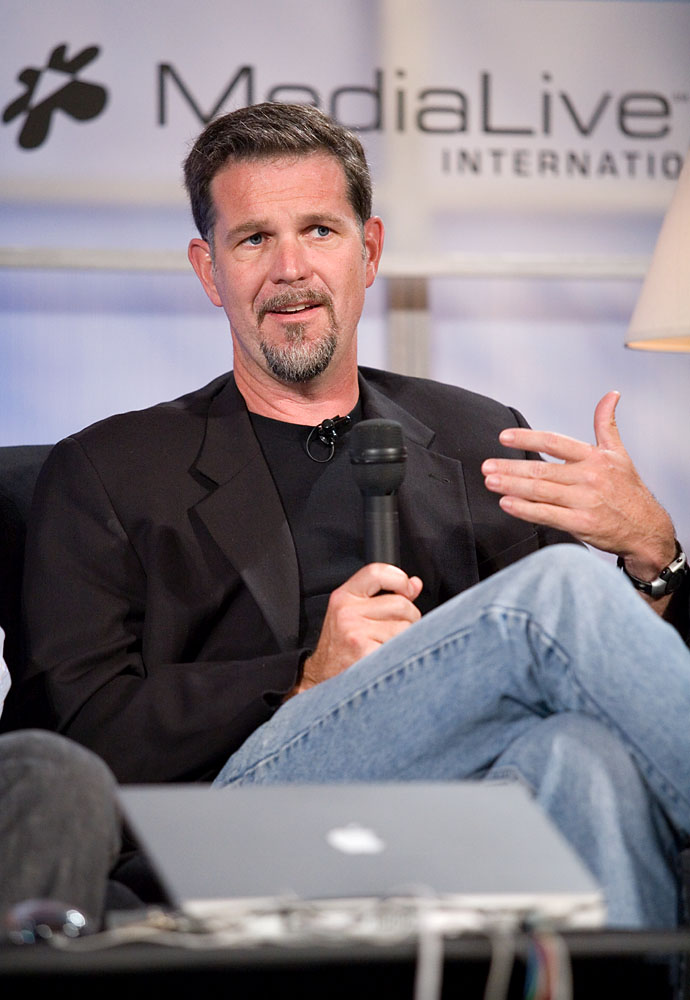 Photo by James Duncan Davidson, Wikimedia Commons. License: CC BY 2.0.
PayPal: The Accidental Laboratory
While Hastings was discovering talent density through the pain of layoffs, a similar experiment was playing out a few miles away at PayPal. But at PayPal, the mechanism was different. Nobody designed the talent density. It emerged organically from the chaos.
Between 1999 and 2002, PayPal was fighting fraud at massive scale, surviving the explosive merger between X.com and Confinity, replacing its CEO, changing its name, and weathering the dot-com crash. As I detailed in my article on the PayPal Mafia, the people who thrived were exceptional: Peter Thiel, Max Levchin, Reid Hoffman, David Sacks, Roelof Botha. And Musk himself, who had poured $12 million of his own money into X.com.
The environment was so demanding that anyone who couldn’t operate at an elite level simply left. The work itself did the filtering. The result was the same as at Netflix: a concentrated group of exceptional people performing at a level a larger team never could have achieved.
The Same Lesson, Two Different Classrooms
What fascinates me is that Hastings and the PayPal team arrived at the same conclusion through completely different paths.
I used to think I was an entrepreneur. After reading enough of these stories, I realize I was a craftsman with a business license. There is nothing wrong with being a craftsman. But you should know which one you are.
The thing I got wrong was not the product, the pricing, or the market. It was that I never asked anyone for help. Every founder in these stories had partners, mentors, investors, or advisors. I had a server room and my own certainty.
Hastings learned it through subtraction. He removed people and watched performance improve. The lesson was direct and painful: fewer, better people equals better outcomes.
PayPal learned it through natural selection. The intensity of the environment filtered out everyone who couldn’t keep up. The people who remained were, by definition, the most capable.
But the underlying principle was identical: talent density matters more than headcount. A team of 80 exceptional people will outperform a team of 120 mixed-quality people. A startup of 200 people working under extreme pressure will produce more future founders than a corporation of 20,000 people working in comfortable mediocrity.
The Proof Is in the Alumni
The PayPal alumni created YouTube, LinkedIn, Tesla, SpaceX, Palantir, Yelp, Yammer, Affirm, and a venture capital firm that made the first outside investment in Facebook. Combined market value: trillions of dollars. No other company has produced an alumni network of comparable impact.
Netflix’s influence is different but equally profound. The culture deck was viewed over 15 million times. And Patty McCord, who helped design the Keeper Test and was eventually let go under the same system, went on to become one of the most influential voices in talent management. Even Netflix’s departures prove the thesis: exceptional people go on to do exceptional things.
Why Most Companies Get This Wrong
If talent density is so powerful, why don’t more companies practice it? Most leaders are afraid of it. It requires hard conversations, letting go of adequate-but-not-exceptional people, paying top-of-market compensation, and trusting people with genuine autonomy.
Hastings learned this at Pure Software. His first instinct when quality declined was to add process. The process reduced errors but drove away the best people. At Netflix, he inverted everything. As I explored in my piece on No Rules at Netflix, policies like unlimited vacation only work when talent density is high enough. Give it to exceptional performers, and they take less vacation than under a traditional policy because they are genuinely invested in their work.
The Bridge Between Two Empires
Netflix and PayPal both proved that the most important decision any company makes is who gets to be in the room. Not how many people. Not what process governs them. Who is in the room.
Hastings built a formal system, the Keeper Test. PayPal’s pressure cooker accomplished the same thing through sheer intensity. Both produced alumni networks whose founders went on to build some of the most valuable companies in the world.
You don’t need a big team. You need the right team. Reed Hastings proved it with 80 people outperforming 120. The PayPal Mafia proved it with a few hundred people who built trillions in value. Two companies, two founders, one principle. Talent density built two empires. And for anyone willing to commit to that standard, the same principle is available today, waiting to build the next one.
Sources
- Hastings, R. and Meyer, E. No Rules Rules: Netflix and the Culture of Reinvention. Penguin Press, 2020.
- McCord, P. Powerful: Building a Culture of Freedom and Responsibility. Silicon Guild, 2018.
- Vance, A. Elon Musk: Tesla, SpaceX, and the Quest for a Fantastic Future. Ecco, 2015.
- Isaacson, W. Elon Musk. Simon & Schuster, 2023.
- Hastings, R. “Blitzscaling 16: Reed Hastings on Building a Streaming Empire.” Stanford University. YouTube.
- Fortune Magazine. “The PayPal Mafia.” November 2007.
- Netflix Culture Deck. Originally published on SlideShare, 2009.
- Thiel, P. and Masters, B. Zero to One: Notes on Startups, or How to Build the Future. Crown Business, 2014.