

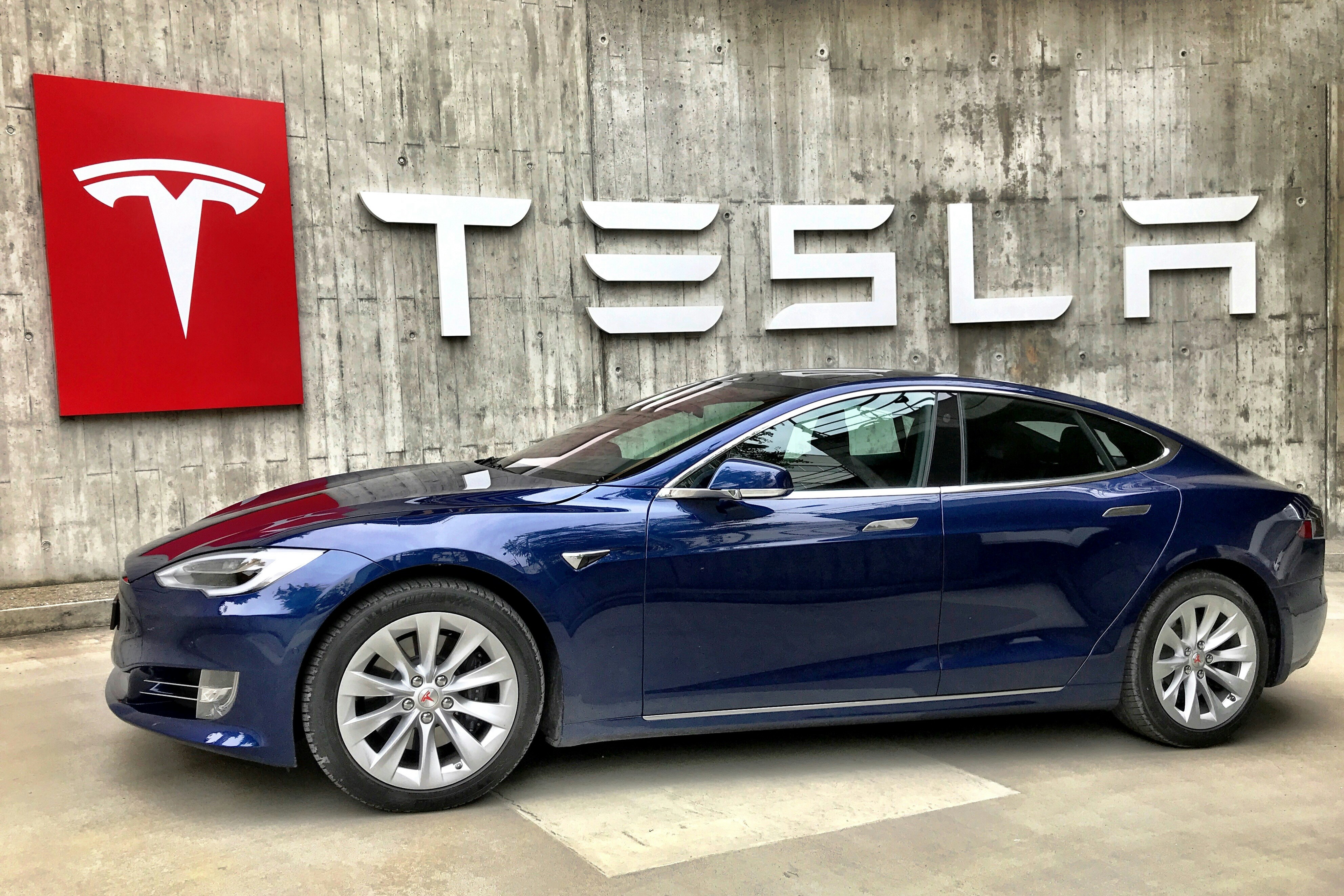
I was at a barbecue with neighbours last weekend and someone asked me what I thought was the smartest business move of the last twenty years. I did not even hesitate. I said “Tesla gave away all its patents.” The look on their face was priceless – half confused, half convinced I was making it up. But I was not, and it really might be the most strategically brilliant decision Elon Musk ever made, even though at first glance it looked like the most reckless.
In June 2014, Elon Musk committed to the open source movement. He removed the framed patents from the wall of Tesla’s headquarters lobby in Palo Alto and published a blog post with the title “All Our Patent Are Belong To You” – a reference to a classic internet meme. The message was simple: Tesla would not initiate patent lawsuits against anyone who, in good faith, wanted to use its technology.
The company had spent years and millions of dollars building a portfolio of electric vehicle patents. And then it gave them all away.
When I first read about this, my initial reaction was the same as most people’s: why would any company voluntarily surrender its competitive moat? The answer, once you dig into it, reveals a kind of thinking that most business leaders never reach.
The Fear That Created the Patents
To understand why Musk opened the patents, you have to understand why Tesla filed them in the first place. Musk explained the reasoning in his 2014 blog post with characteristic bluntness:
“At Tesla, we felt compelled to create patents out of concern that the big car companies would copy our technology and then use their massive manufacturing, sales and marketing power to overwhelm Tesla.”
– Elon Musk, “All Our Patent Are Belong To You” (2014)
This fear was entirely rational. Tesla was a startup. General Motors, Ford, and Toyota were industrial giants with decades of manufacturing infrastructure and dealer networks spanning the globe. If any of them had decided to go all-in on electric vehicles using Tesla’s innovations, they could have buried the small Palo Alto company under sheer scale.
So Tesla did what every startup does: it built a patent wall. And then Musk realized the wall was protecting against a threat that did not exist.
 Photo: Wikimedia Commons. CC BY 2.0.
The Real Enemy Was Not Competition – It Was Indifference
The big automakers were not racing to copy Tesla. They were ignoring electric vehicles almost entirely. Musk laid this out plainly:
“We couldn’t have been more wrong. The unfortunate reality is the opposite: electric car programs (or programs for any vehicle that doesn’t burn hydrocarbons) at the major manufacturers are small to non-existent, constituting an average of far less than 1% of their total vehicle sales.”
– Elon Musk, “All Our Patent Are Belong To You” (2014)
This was the key insight. Tesla’s competitive threat was not another electric car company stealing its designs. The threat was the nearly 100 million gasoline-powered cars rolling off factory lines around the world every single year, with a global fleet of approximately 2 billion combustion vehicles on the road. Musk put it in terms that made the math undeniable:
“Given that annual new vehicle production is approaching 100 million per year and the global fleet is approximately 2 billion cars, it is impossible for Tesla to build electric cars fast enough to address the carbon crisis. Our true competition is not the small trickle of non-Tesla electric cars being produced, but rather the enormous flood of gasoline cars pouring out of the world’s factories every day.”
– Elon Musk, “All Our Patent Are Belong To You” (2014)
This reframing changed everything. If the enemy was gasoline, not General Motors, then every electric car on the road – regardless of who built it – was helping Tesla’s mission succeed. Hoarding patents in that context was not just unnecessary. It was actively counterproductive.
A Master Plan Hidden in Plain Sight
This was not a spontaneous act of generosity. It was the logical extension of a strategy Musk had published eight years earlier. In 2006, Musk released what he called the Tesla Master Plan on the company’s blog. The plan was disarmingly simple:
- Build a sports car
- Use that money to build an affordable car
- Use that money to build an even more affordable car
- While doing above, also provide zero emission electric power generation options
The mission statement behind all of it was that “electric vehicles can be better, quicker and more fun to drive than gasoline cars.” Every step was designed to prove that going electric was not a sacrifice – it was an upgrade.
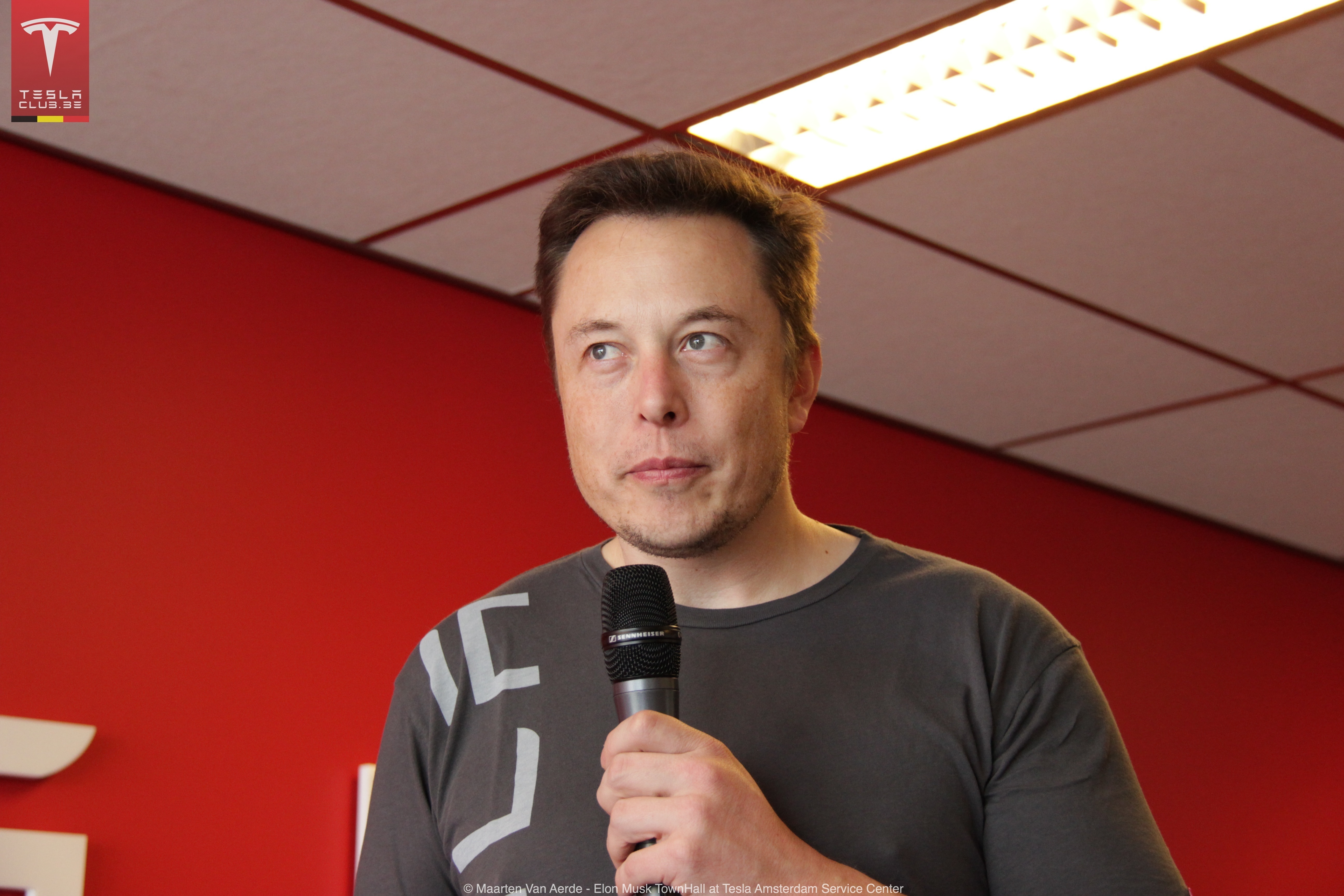 Photo: Wikimedia Commons. CC BY 2.0.
Opening the patents was the missing piece of this master plan. Tesla alone could never convert the world to electric vehicles. But Tesla plus hundreds of companies using Tesla’s technology could begin to shift the balance. The bigger the electric vehicle market grew, the more charging infrastructure would be built, the more battery costs would fall, and the more consumers would consider going electric – with Tesla positioned at the top of that growing market as the company that started it all.
Patents Are Not What You Think They Are
Musk also challenged the fundamental assumption that patents provide meaningful protection. His blog post made an argument that most CEOs would never publicly admit:
“Technology leadership is not defined by patents, which history has repeatedly shown to be small protection indeed against a determined competitor, but rather by the ability of a company to attract and motivate the world’s most talented engineers.”
– Elon Musk, “All Our Patent Are Belong To You” (2014)
This is a deeply unconventional view in the business world, where intellectual property portfolios are treated as sacred assets. But Musk’s reasoning was sound. The history of technology is filled with examples of companies that held ironclad patents and still lost to faster, more innovative competitors. What kept Tesla ahead was not a legal document sitting in a filing cabinet. It was the engineering culture inside the company – the kind of culture where the best talent in the world wanted to work.
By opening the patents, Musk actually strengthened that culture. He sent a signal to every ambitious engineer on the planet: Tesla is not a company that hides behind lawyers. It is a company that wins by building better products, faster. That kind of message attracts exactly the people you want building your cars.
The Grow-the-Pie Mindset
What fascinates me most about this decision is that it reflects a philosophy Musk has articulated repeatedly throughout his career. As captured by Jorgenson in The Book of Elon, Musk has said:
“I put a lot of stock in having a grow-the-pie mindset, not a zero-sum mindset.”
– Elon Musk, as quoted in Jorgenson, The Book of Elon
Most executives operate from the assumption that the market is a fixed pie and the goal is to grab the largest slice. Musk’s insight was that the electric vehicle market in 2014 was not a pie at all – it was a seed. Growing that seed into something massive would benefit Tesla far more than protecting a dominant share of something tiny.
 Photo: Wikimedia Commons. CC BY-SA 3.0.
This is the same thinking he has applied elsewhere: “It’s much better to work on adding to the economic pie. Create more than you consume” (Jorgenson, The Book of Elon). And perhaps most revealing: “I do not start companies from the standpoint of asking, ‘What’s the best risk-adjusted rate of return?’… I just find things that need to happen, and try to make them happen” (Jorgenson, The Book of Elon).
Whether you admire Musk or find him exasperating, it is hard to argue with the results of this particular decision. In 2014, when the patents were opened, Tesla was a niche automaker selling roughly 32,000 cars per year. The global EV market was a rounding error. A decade later, the electric vehicle market had exploded worldwide, and Tesla was the most valuable car company on the planet. Opening the patents did not weaken Tesla. It helped create the market conditions under which Tesla could thrive.
What I Take Away From This
Every time I research a pivotal moment in tech history, I look for the underlying principle that made the decision work. With the Traitorous Eight, it was the power of defiance. With the PayPal Mafia, it was talent density. With Tesla’s patents, the principle is this: when your mission is bigger than your company, sharing your advantage accelerates your mission and your company at the same time.
Musk understood something that most founders never grasp. If you are building a company, you protect your territory. If you are building a movement, you open the gates. Tesla’s patent decision was the moment Musk chose the movement – and that choice, more than any single car or battery or factory, is what made Tesla unstoppable.
I hope this story helps fellow techies see that the most powerful competitive moves are not always the ones that feel competitive. Sometimes the smartest thing you can do is give away everything you have built and trust that the world you are trying to create will reward you for it. In Tesla’s case, it did.
Sources
- Musk, Elon. “All Our Patent Are Belong To You.” Tesla Blog, June 12, 2014. https://www.tesla.com/blog/all-our-patent-are-belong-you
- Renz, F. & Vogel, R. “Tesla: Open Source as Strategic Action.” JCRI Case Study, 2020.
- Jorgenson, Eric. The Book of Elon. Scribe Media.
- Musk, Elon. “The Secret Tesla Motors Master Plan (just between you and me).” Tesla Blog, August 2, 2006. https://www.tesla.com/blog/secret-tesla-motors-master-plan-just-between-you-and-me
- Vance, Ashlee. Elon Musk: Tesla, SpaceX, and the Quest for a Fantastic Future. Ecco, 2015.




.jpg)