The coffee machine at work was broken last Tuesday, so I was standing in line at Starbucks scrolling through old notes on the founding of Tesla, and I noticed a name that kept appearing in every account of how the company actually worked. Not Elon Musk, not Martin Eberhard, but a quiet engineer from Wisconsin named JB Straubel — the person who figured out how to stuff thousands of tiny laptop batteries into a car and make the whole thing go fast without catching fire. That is not an exaggeration. That is literally what he did, and it changed the entire automotive industry.
What caught my attention was not just the engineering. It was the backstory. Straubel has a two-inch scar on his left cheek from a high school chemistry experiment that went wrong. According to Ashlee Vance’s biography Elon Musk (2015), “Straubel whipped up the wrong concoction of chemicals, and the beaker he was holding exploded, throwing off shards of glass, one of which sliced through his face.” Most people would have stepped away from the lab bench after that. Straubel kept going. He built an entire chemistry lab in his parents’ basement, complete with fume hoods.
That tells you everything about who this person is.
The Kid Who Found a Golf Cart at the Dump
Straubel grew up in Wisconsin, and from an early age, he was the kind of kid who could not leave machines alone. Vance describes him plainly: “Straubel was always taking something apart, sprucing it up, and putting it back together.” At thirteen years old, he found an old golf cart at the local dump. Most teenagers would have walked past it. Straubel hauled it home, restored it, and rebuilt the electric motor himself.
This was not random tinkering. It was inherited. Straubel’s great-grandfather had started the Straubel Machine Company in the late 1890s — the family business built one of the first internal combustion engines in the United States and used it to power boats. Engineering ran in the family the way music runs in some families or politics in others. As Eric Jorgenson put it: “Engineering is, for all intents and purposes, magic, and who wouldn’t want to be a magician?”
Straubel wanted to be a magician. And he was willing to bleed for it.
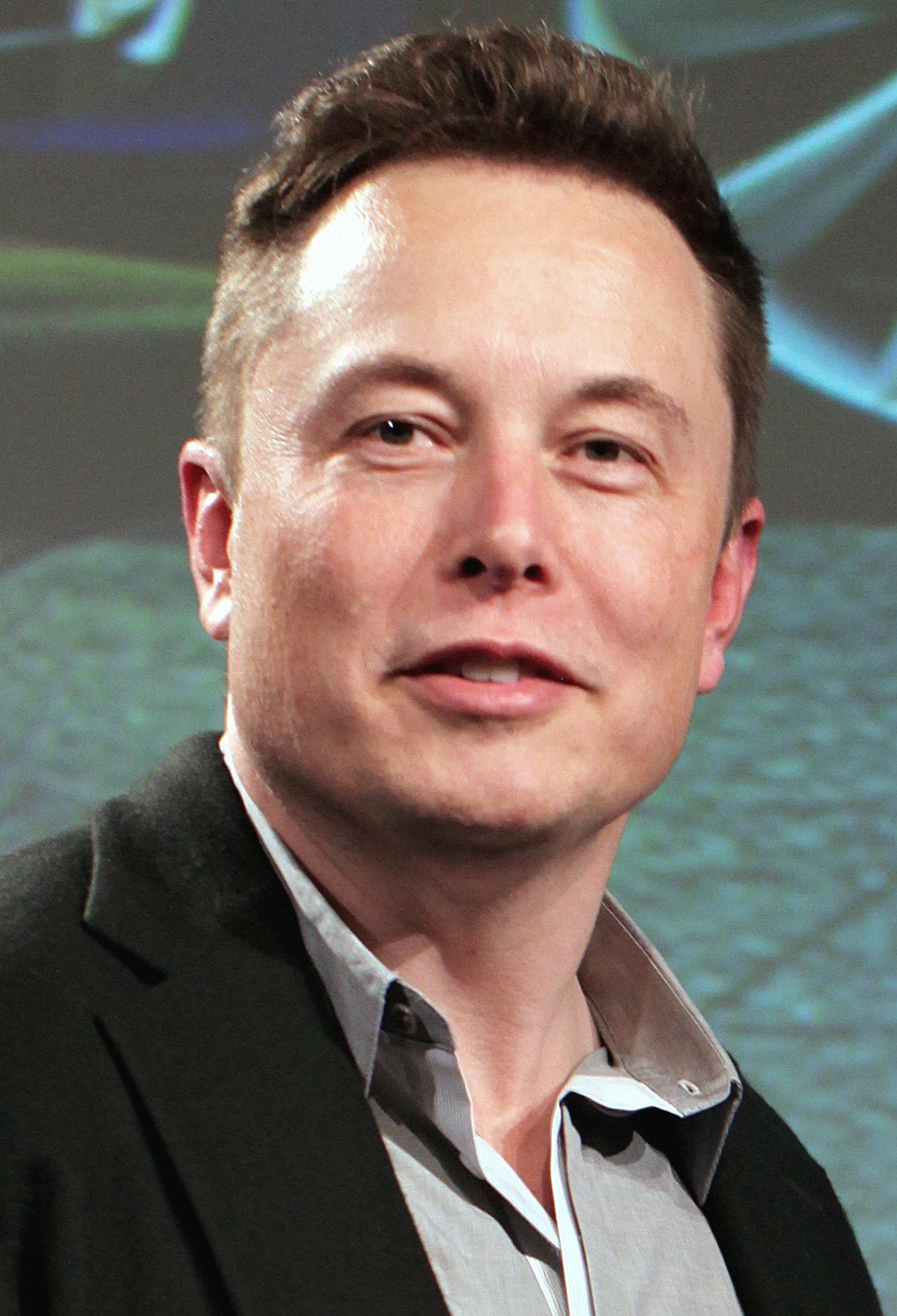 Photo: Steve Jurvetson, Wikimedia Commons. CC BY 2.0.
Stanford and the Piece-of-Shit Porsche
In 1994, Straubel arrived at Stanford University and quickly found that traditional physics was too theoretical for someone who wanted to build things. So he did something unusual — he created his own major. He called it “energy systems and engineering.” In his own words: “I wanted to take software and electricity and use it to control energy. It was computing combined with power electronics.”
Then he bought a car. Not just any car — a Porsche 914 that he described as a “piece of shit,” purchased for $1,600. He tore out the engine and turned it into an electric vehicle. Vance records a quarter mile time of 17.28 seconds for the car. But the batteries were terrible. The car had a range of about thirty miles. Straubel, undeterred, built a gasoline-powered contraption that he towed behind the Porsche to recharge the batteries on the fly. It was absurd and brilliant at the same time.
At Stanford, Straubel also joined the solar car team — a group of rogue engineers working out of a World War II-era Quonset hut filled with toxic chemicals. Stanford administration tried to shut them down more than once. They built solar-powered cars and raced them 2,300 miles from Chicago to Los Angeles. Through that team, Straubel formed relationships with students who would later become central to Tesla’s early engineering efforts.
The Late-Night Calculation That Changed Everything
One night during the solar car project, Straubel and his fellow engineers started doing math. They had been working with 18650 lithium-ion cells — the same cylindrical batteries found in laptop computers — and they asked a simple question: what would happen if you put ten thousand of them together?
“We did the math and figured you could go almost one thousand miles. It was totally nerdy shit, and eventually everyone fell asleep, but the idea really stuck with me.” — JB Straubel, quoted in Vance, Elon Musk (2015)
This was the insight that made Tesla possible. Not a new kind of battery. Not a breakthrough in chemistry. Just thousands of cheap, mass-produced laptop cells wired together in a clever way. The batteries already existed. Nobody had thought to use them like this before.
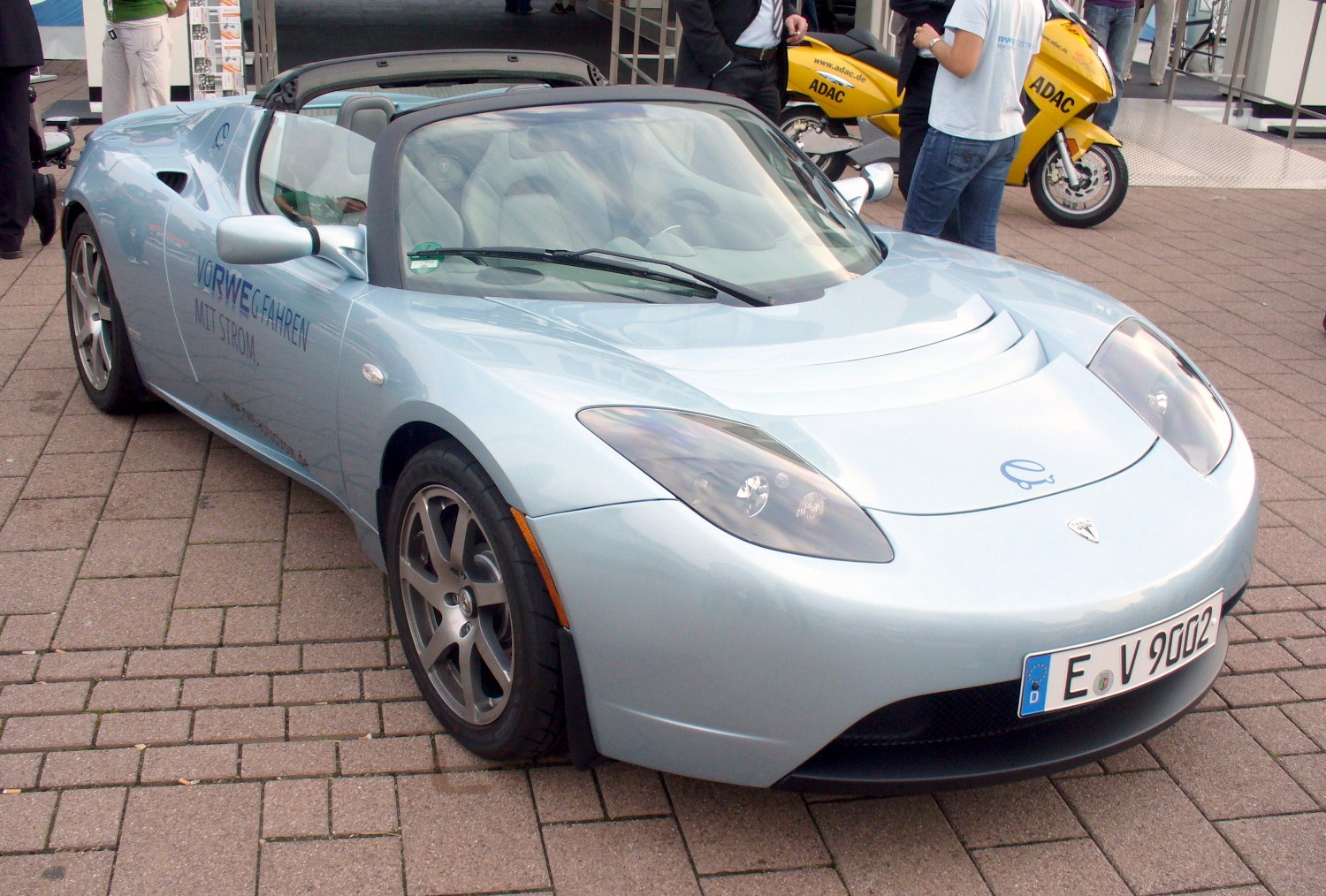 Photo: Thomas doerfer, Wikimedia Commons. CC BY 3.0.
Electric Planes and a Chance Encounter
After Stanford, Straubel took a job with Harold Rosen, the legendary engineer who had invented the geostationary communications satellite. Rosen hired Straubel to build an electric plane — a solar-powered aircraft that could hover over a specific spot for two weeks at a time, acting as a low-cost alternative to satellites. Straubel loved the work: “I’m a pilot and love to fly, so this was perfect for me.” This was years before drones became commonplace.
But the batteries for the plane project kept bringing Straubel back to his real obsession: putting lithium-ion cells into cars.
In the fall of 2003, Rosen brought Straubel along to a meeting with Elon Musk at a seafood restaurant near the SpaceX headquarters in Los Angeles. Rosen wanted to pitch the electric plane. Musk was polite but not interested. Then Straubel mentioned his lithium-ion battery car project — the math he had done at Stanford, the idea of thousands of laptop cells in a vehicle.
“The crazy idea struck an immediate chord.” — Vance, Elon Musk (2015)
Musk had been thinking about electric vehicles himself, though he had been exploring ultracapacitors rather than lithium-ion batteries. Every other person Straubel had pitched the idea to had dismissed him. As Straubel recalled: “Everyone else had told me I was nuts.” Musk’s reaction was different. He said, “Sure, I will give you some money.” He promised Straubel $10,000 of the $100,000 Straubel was seeking.
That dinner changed both of their lives.
Employee Number Five
In May 2004, Straubel was hired by Tesla Motors at a salary of $95,000. He was employee number five. He told the team something that must have sounded almost too convenient: “I told them that I had been building the battery pack they need down the street with funding from Elon.”
Straubel brought more than his own expertise. He brought people. Gene Berdichevsky, a Stanford undergraduate Straubel knew from the solar car team, quit school to join Tesla as employee number seven. Berdichevsky had to tell his Russian immigrant parents he was leaving Stanford for an electric car startup. “Only now do I realize how insane it was,” Berdichevsky later said.
The first Tesla prototype was built in just four months — from October 18, 2004 to January 27, 2005 — by a team of only eighteen people. When Musk drove it at a board meeting, he was so impressed that he invested an additional $9 million into the company.
From Tesla’s CTO to Redwood Materials
Straubel served as Tesla’s Chief Technology Officer for fifteen years, overseeing the battery architecture that powered every car the company ever built — from the Roadster to the Model S to the Model 3. The core insight never changed. It was still thousands of small cells, wired together, managed by sophisticated software. The idea that everyone had fallen asleep during had become the foundation of a company worth hundreds of billions of dollars.
In 2017, Straubel quietly founded Redwood Materials, a company focused on battery recycling, while still serving as Tesla’s CTO. He stepped down as Tesla’s CTO in July 2019 to run it full-time. The logic was pure Straubel — he had spent his career putting lithium-ion cells into cars, and now he wanted to make sure those cells could be recovered, recycled, and reused rather than ending up in landfills. Redwood Materials has since become one of the most valuable cleantech startups in the world.
What Straubel Teaches Us
I keep coming back to that image of a thirteen-year-old kid dragging a broken golf cart home from the dump. Or a college student buying the cheapest Porsche he could find and turning it into an electric vehicle. Or an engineer staying up late with his friends doing math about batteries while everyone else fell asleep.
Straubel did not have a grand plan to change the automotive industry. He had a deep curiosity about how energy works, a willingness to get his hands dirty — and occasionally his face cut open — and the persistence to keep building things even when everyone told him the ideas were crazy. When the right moment came, at a seafood restaurant in Los Angeles, he was ready.
I hope this story serves as a reminder that the people who change industries are not always the ones who get the most attention. Sometimes they are the quiet ones with scars on their faces and grease under their fingernails, doing the math while everyone else falls asleep.
Feel free to come back for more stories about the people who built the technology we use every day, fellow techies.
Sources
- Vance, Ashlee. Elon Musk: Tesla, SpaceX, and the Quest for a Fantastic Future. New York: Ecco/HarperCollins, 2015. Chapter 7, “All Electric.” All direct quotes from Straubel, Berdichevsky, and narrative details about Straubel’s biography are from this chapter.
- Jorgenson, Eric. The Almanack of Naval Ravikant. Magrathea Publishing, 2020. Source of the “Engineering is magic” quote, widely attributed in entrepreneurial literature.
- Tesla Motors corporate history and founding timeline, as documented in SEC filings and Vance (2015).
- Redwood Materials company background, as reported by Bloomberg and TechCrunch (2020-2025).