I have been following the SpaceX story from the Moscow trips where Musk was laughed out of the room to the garage where Tom Mueller built rocket engines as a hobby. But the chapter that genuinely surprised me was the one about where SpaceX actually launched its first rocket. Not from some pristine NASA facility or a military base in California. From a seven-acre, palm-tree-covered island in the middle of the Pacific Ocean, where engineers slept on cots in converted offices, rolled the rocket on wooden planks like ancient Egyptians, and went scuba diving to recover wreckage after the thing crashed.
The island was Omelek, part of Kwajalein Atoll in the Marshall Islands, roughly halfway between Guam and Hawaii. And the whole operation was, as one SpaceX engineer put it, “like Gilligan’s Island except with rockets.”
Kicked Out Before They Could Launch
SpaceX’s original plan was to launch from Vandenberg Air Force Base in California. It made geographic sense, and SpaceX had technically received permission to fly there. But permission on paper meant nothing when the real power at Vandenberg belonged to Lockheed Martin and Boeing, the defense giants launching billion-dollar spy satellites from the same facility.
Nobody wanted a scrappy startup testing unproven rockets anywhere near their precious national security payloads. Gwynne Shotwell, SpaceX’s head of business development at the time, later described the situation plainly: “Even though they said we could fly, it was clear that we would not” (Vance, 2015, p. 118).
So SpaceX needed a new home. Shotwell and Hans Koenigsmann, SpaceX’s head of mission assurance, taped a Mercator projection to the wall and started looking for a spot near the equator. Rockets launched from the equator get a speed boost from the Earth’s rotation, making equatorial launch sites more efficient for reaching orbit. Their search eventually landed on a remote U.S. Army installation in the middle of the Pacific.
 Photo: Steve Jurvetson on Wikimedia Commons. CC BY 2.0. Musk once said of starting SpaceX: “I thought the odds of success were less than 10 percent” (Jorgenson, 2023).
A Tropical Paradise with a Nuclear History
Kwajalein Atoll is a ring of about 100 islands in the Marshall Islands, many of them just a few hundred yards wide. Pete Worden, a former Air Force general who visited, described the view from above: “From the air, the place looks like these beautiful beads on a string” (Vance, 2015, p. 119).
But Kwajalein was not just beautiful. The U.S. Army had used the atoll for decades as a missile test site, including for lobbing ICBMs during the Star Wars era. The military infrastructure on the main island featured what Ashlee Vance described as “hulking, windowless trapezoidal concrete structures clearly conceived by someone who deals with death for a living” (Vance, 2015, p. 119). It was, in Vance’s memorable phrasing, “part tropical paradise and part Dr. Evil’s secret lair.”
Shotwell e-mailed the colonel running the test site. Three weeks later, the Army called back and said they would love to have SpaceX fly from the islands. Just like that, SpaceX had a launchpad – 4,800 miles from its headquarters in El Segundo, California.
Building a Launchpad on a Seven-Acre Island
In June 2005, SpaceX engineers began filling shipping containers with equipment and sending them to Kwaj. The team took commercial flights through Hawaii, then boarded boats for a 45-minute ride to Omelek, the tiny island that would become their launchpad.
Looking back, the biggest investment I could have made in my hosting company was not a new server or a better data center. It was a conversation with someone who had built something ten times bigger than what I had — the kind of informal seminars the Kwajalein crew ran on radios and engines. I never had that conversation.
Omelek was seven acres of palm trees, brush, and vegetation. The SpaceX crew cleared the brush, poured concrete, and converted a double-wide trailer into offices. They worked in soul-sapping humidity under a sun so powerful it could burn skin through a T-shirt.
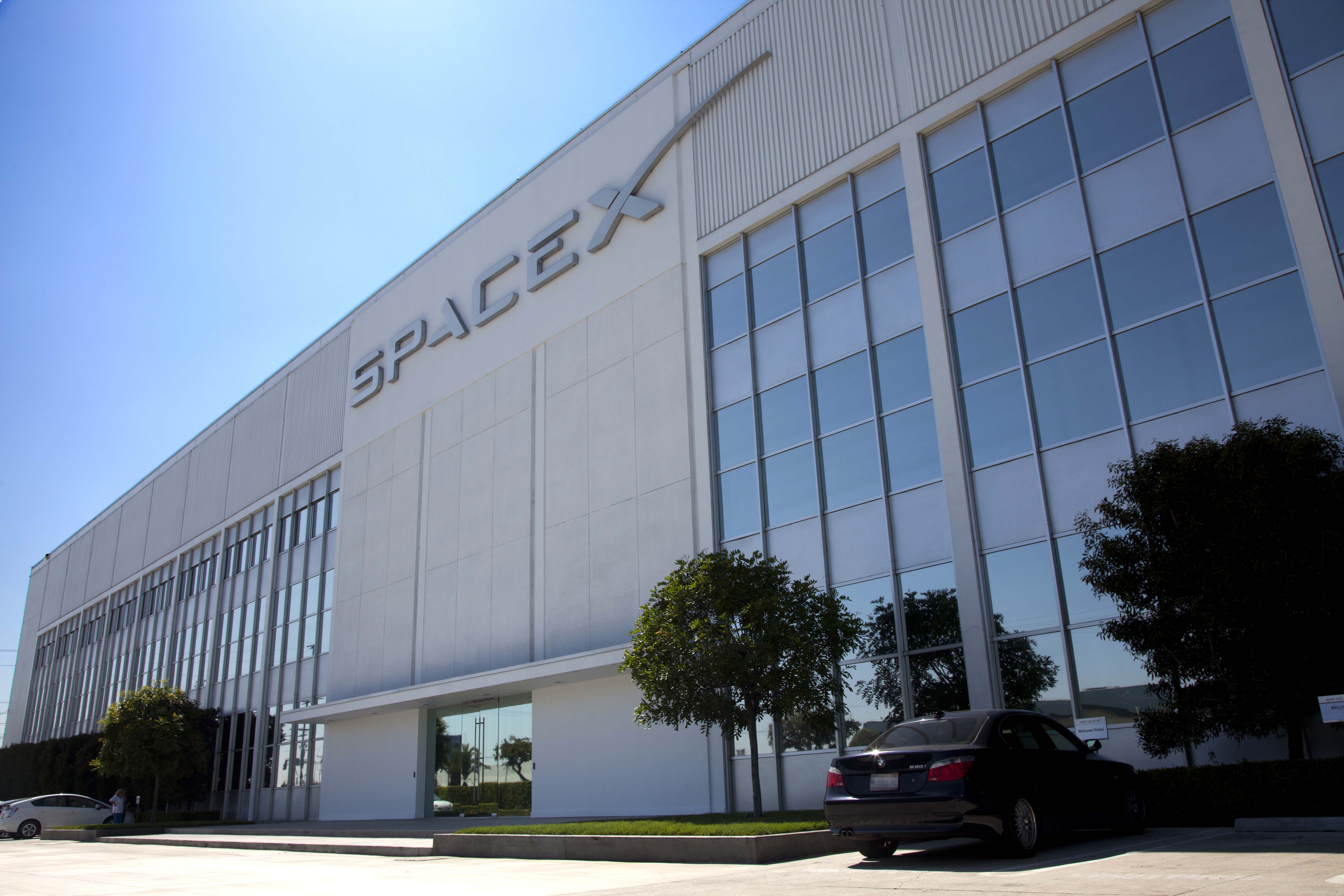 Photo: Wikimedia Commons. CC BY-SA 4.0. SpaceX’s headquarters in Hawthorne, California – a long way from the palm trees of Omelek.
Some workers preferred sleeping on the island rather than enduring the rough boat ride back to the main island every night. “Some of the offices were turned into bedrooms with mattresses and cots. Then we shipped over a very nice refrigerator and a good grill and plumbed in a shower” (Vance, 2015, p. 120). The engineers worked twelve-hour shifts from 7 AM to 7 PM, then cooked steak and potatoes on the grill, watched movies on a DVD player, and went fishing off the docks.
Walter Sims, one of the engineers on Kwaj, captured the intensity and the camaraderie of the place: “Every person on that island was a fucking star, and they were always holding seminars on radios or the engine. It was such an invigorating place” (Vance, 2015, p. 121).
This was not a corporate engineering program. It was a band of obsessives living together on a speck of land in the Pacific, building something nobody believed could work.
Wooden Planks and Ancient Egyptian Engineering
One detail from Kwajalein that I keep coming back to is how the SpaceX team moved the rocket. There was no crawler-transporter, no sophisticated rail system. They used wooden planks. As Vance describes it, “They laid down a series of wooden planks and rolled the rocket across them, grabbing the last piece of wood from the back and running it forward in a continuous cycle” (Vance, 2015, p. 120). The same technique the ancient Egyptians used to move stone blocks for the pyramids, repurposed for a twenty-first-century orbital rocket.
This is the kind of resourcefulness that defined early SpaceX. You work with what you have. You solve the problem in front of you with whatever materials are available, and you do not wait for someone to deliver a purpose-built solution.
The First Launch – and the First Crash
The first launch attempt came on November 26, 2005. A valve would not close, and liquid oxygen was boiling off at 500 gallons per hour. The attempt was aborted. In December, high winds and faulty valves scrubbed more attempts. Then a power distribution system failed entirely. A SpaceX employee flew to Minnesota on a Sunday, found an electronics supplier that was actually open, bought the capacitors they needed, and flew back. The parts were installed in under 80 hours.
Finally, on March 24, 2006, the Falcon 1 stood on the launchpad. Elon Musk sat in the control room wearing shorts, flip-flops, and a T-shirt. Twenty-five seconds after liftoff, a fire broke out above the Merlin engine. The rocket tumbled and crashed 250 feet from the launchpad. Debris scattered across the reef. The satellite payload smashed through the roof of the machine shop.
The cause turned out to be an aluminum b-nut, a fitting that connected the fuel lines. It had corroded after months of sitting in Kwajalein’s salty atmosphere. Tom Mueller, who designed the Merlin engine, recalled the state of the hardware: “The rocket was literally crusted with salt on one side, and you had to scrape it off” (Vance, 2015, p. 124).
After the crash, the engineers did something that perfectly captures the spirit of Omelek. They put on snorkeling and scuba gear, dove into the water, and recovered rocket remnants from the reef, packing them into two refrigerator-sized crates. That evening, they gathered at a bar on the main island, drank, and vowed to take a more disciplined approach going forward. As engineer Bret Hollman said: “It was like Gilligan’s Island except with rockets” (Vance, 2015, p. 125).
What Kwajalein Taught SpaceX
Musk himself has always been honest about the odds SpaceX faced. “When starting SpaceX, I thought the odds of success were less than 10 percent,” he has said. His philosophy was equally direct: play to win, or don’t play at all (Jorgenson, 2023).
Kwajalein was where that philosophy was tested. The Falcon 1 would fail two more times before finally reaching orbit on its fourth attempt in September 2008 – by which point SpaceX was almost out of money. But the foundation built on that tiny island held. The engineers who worked through the humidity and the salt corrosion and the twelve-hour days became the core team that eventually put the Falcon 9 into service and made SpaceX the most successful private launch company in history.
I find the Kwajalein chapter important because it reminds us what the earliest days of ambitious companies actually look like. Not sleek mission control rooms and press conferences, but cots in converted offices, steak on a grill, wooden planks under a rocket, and engineers diving into a reef to pick up the pieces after a failure. The fact that SpaceX went from rolling rockets on wooden planks to landing boosters on drone ships in the ocean shows what a small group of determined people can accomplish when they refuse to stop after a crash.
If you are interested in the earlier chapters of the SpaceX origin story, take a look at how Musk tried to buy Russian ICBMs and the man who built SpaceX’s engines in his garage. There is plenty more to come, fellow techies.
Sources
- Vance, Ashlee. Elon Musk: Tesla, SpaceX, and the Quest for a Fantastic Future. Ecco/HarperCollins, 2015. Chapters 6-7.
- Jorgenson, Eric. “Elon Musk Quotes,” compiled from interviews and public statements. 2023.