I was cleaning out the garage on a Sunday afternoon, sorting through bins of old parts and screws, and I caught myself thinking about how much junk I was holding that originally cost real money. That reminded me of a concept I kept running into while writing about first-principles thinking and SpaceX’s early launches – one that I think deserves its own article. It is a deceptively simple idea that Elon Musk used to slash costs at SpaceX, and it is something any engineer, founder, or builder can start using today. He calls it the Idiot Index.
The premise is almost embarrassingly straightforward. Take a finished part. Look at how much it costs. Then look at how much the raw materials cost. Divide one by the other. If the ratio is high, something has gone wrong — either the design is too complex or the manufacturing process is wasteful. As Musk puts it bluntly: “If the ratio is high, you’re an idiot” (Jorgenson, The Book of Elon, p. 64).
Starting from the Atoms
To understand why the Idiot Index works, you have to understand the thinking behind it. SpaceX was founded with a mission that the aerospace industry considered laughable: become the “Southwest Airlines of Space” — cheaper, faster, more frequent launches (Vance, Elon Musk, Chapter 6). Everyone told Musk it was impossible. Rockets had always been expensive, so rockets would always be expensive. That was the prevailing logic.
Musk rejected that logic entirely.
“First-principles thinking built SpaceX. Most people think, ‘Historically, all rockets have been expensive. Therefore, in the future, all rockets will be expensive.’ But that’s not true.”
— Elon Musk, in Jorgenson, The Book of Elon, p. 61
Instead of accepting historical pricing as a given, Musk asked a different question: what are rockets actually made of? The answer turned out to be surprisingly mundane. Aluminum, titanium, copper, and carbon fiber. Regular materials you can price on any commodities exchange.
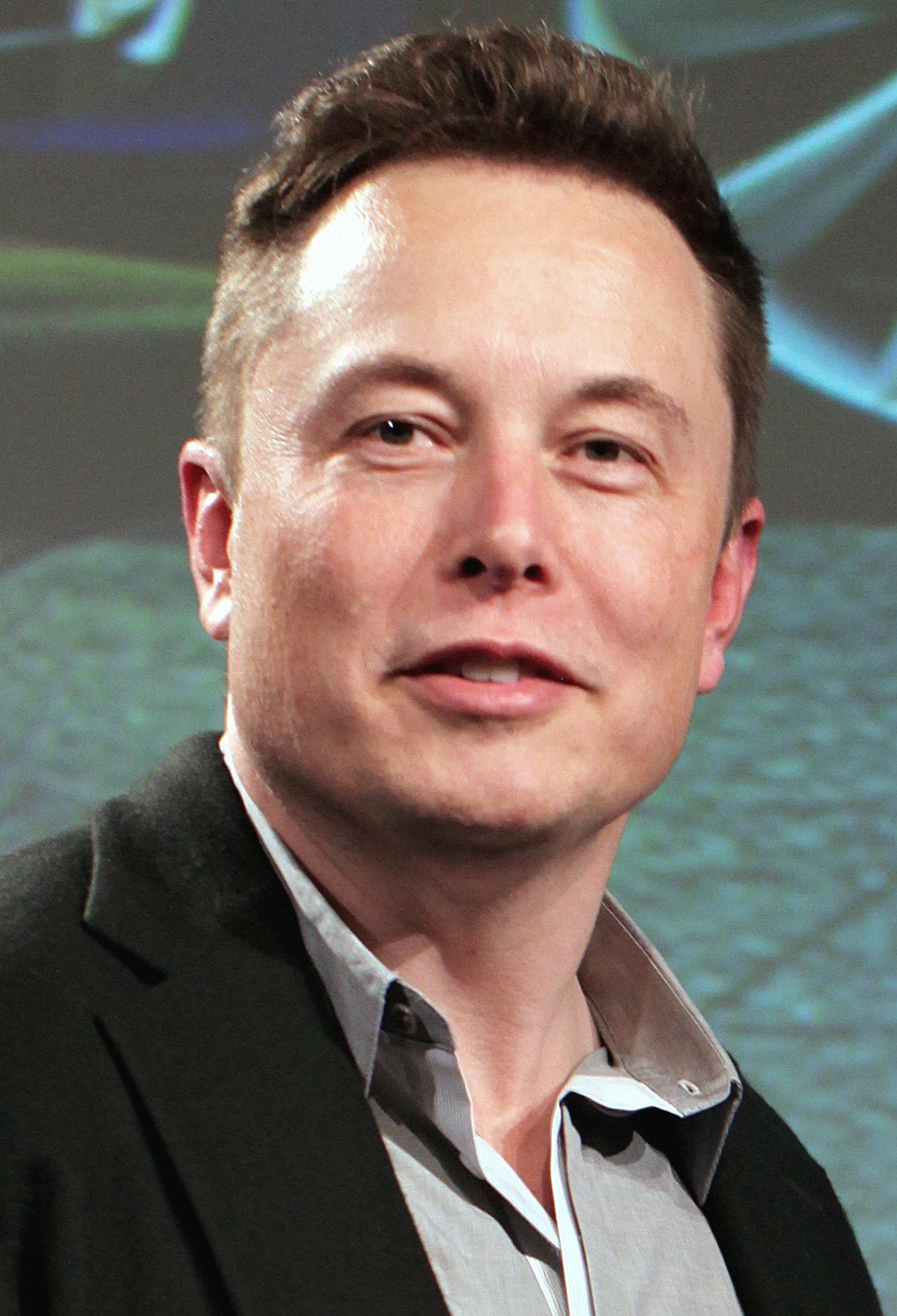 Photo: Wikimedia Commons. Elon Musk in 2015, the period when SpaceX was aggressively driving down launch costs using manufacturing metrics like the Idiot Index.
He then asked a question that I think is one of the best thought experiments in modern engineering: if you had all those raw materials stacked on the floor and could wave a magic wand to rearrange the atoms into a finished rocket, what would it cost? The answer was startling. “For rockets, that turned out to be a relatively small number, well under 5 percent of the current cost, in some cases closer to 1 or 2 percent” (Jorgenson, The Book of Elon, p. 62).
Musk called this the “magic wand number” — the hypothetical floor price if manufacturing were perfectly efficient. And the gap between that number and the actual price tag told him exactly how much waste existed in the system.
“The manufacturing must be very inefficient if the raw material cost is only 1 or 2 percent of the finished product.”
— Elon Musk, in Jorgenson, The Book of Elon, p. 63
The Metric That Cuts Through Everything
That gap became the Idiot Index. The formula is simple: finished part cost divided by raw material cost. A high ratio means either the design is needlessly complex or the process of turning raw material into a finished part is bloated.
Musk gave a concrete example that I find particularly striking. “A component that costs $1,000 when the aluminum it was made of costs only ten dollars likely has a design that is too complex or an inefficient manufacturing process” (Jorgenson, The Book of Elon, p. 64). That is a 100:1 ratio. Even without knowing anything about manufacturing, you can see that something has gone wrong.
The real-world application at SpaceX was immediate and ruthless. One part of the rocket, the half nozzle jacket, cost $13,000 to produce. But it was made from just $200 worth of steel. That is a 65:1 Idiot Index. Musk expected every engineer on the team to know the best and worst parts in their systems as judged by this metric at all times (Jorgenson, The Book of Elon, p. 65).
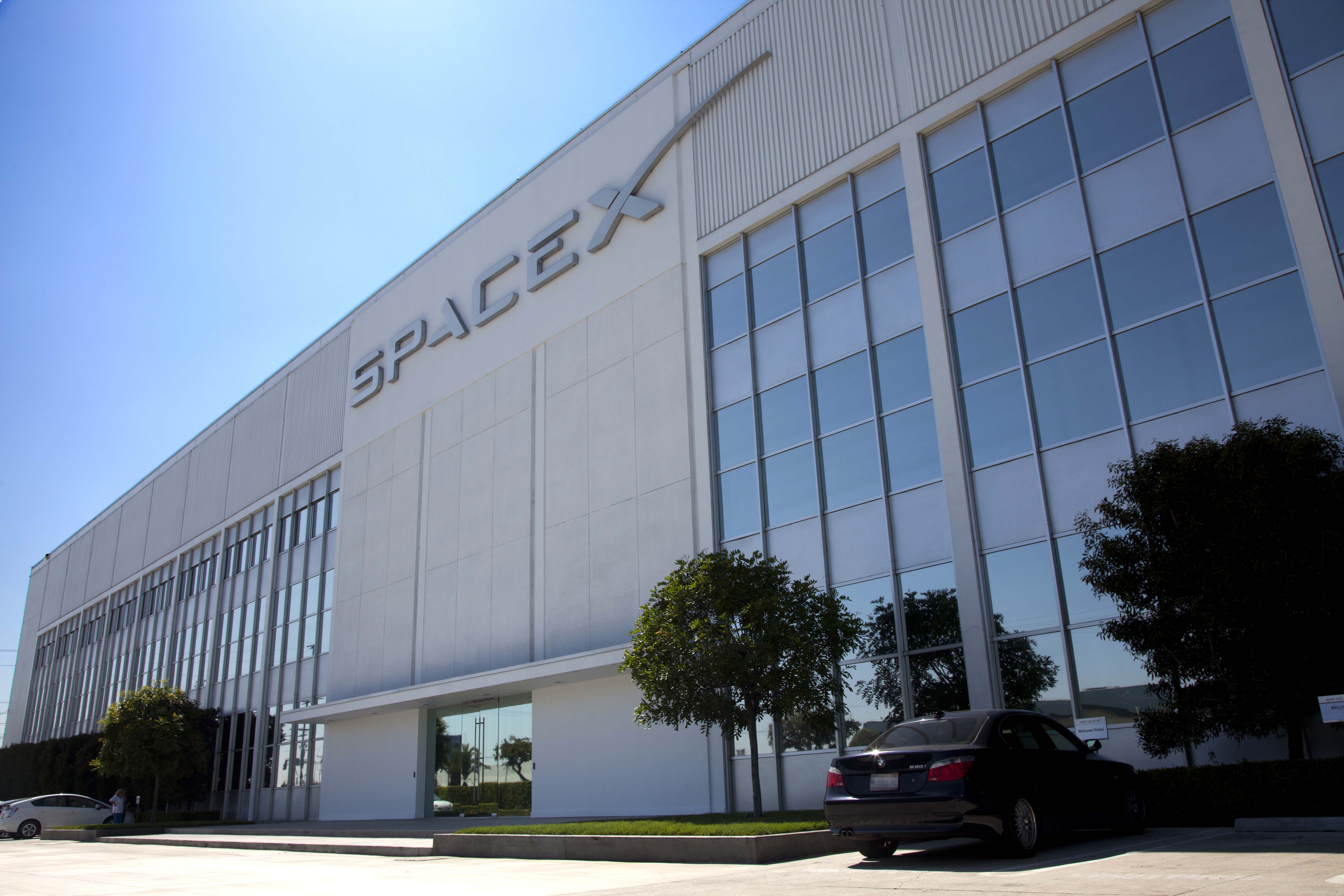 Photo: Wikimedia Commons. SpaceX headquarters in Hawthorne, California, where engineers applied the Idiot Index to every component in the Falcon rocket program.
What I find powerful about this approach is that it does not require any specialized knowledge to apply. You do not need an MBA or decades of manufacturing experience. You need two numbers: what the part costs and what the materials cost. The ratio tells you where to focus your attention.
Car Wash Valves and Desert Cows
The Idiot Index was not just a spreadsheet exercise. It drove SpaceX engineers to find solutions that the traditional aerospace industry would have dismissed as absurd. One of my favorite examples involves Jeremy Hollman, an early SpaceX engineer who discovered that standard car wash valves — the kind you can buy off the shelf — could be repurposed for rocket fuel lines. All it took was changing the seals to make them compatible with rocket propellant. Parts that aerospace suppliers would have charged thousands of dollars for were replaced with hardware that cost a fraction of the price (Vance, Elon Musk, Chapter 6).
This was the culture Musk built. Engineers were expected to question every component, challenge every price, and find creative alternatives. Tom Mueller, SpaceX’s founding propulsion engineer, described the early days in the Mojave Desert where the team built test-worthy engines in as little as three days, using a mill and lathe that Mueller had brought out himself. They ran their first gas generator test by loading it onto the back of a pickup truck and driving out to the desert.
“Cows have this natural defense mechanism where they gather and start running in a circle.”
— Jeremy Hollman, describing the reaction of nearby farm animals during SpaceX’s first engine test in Mojave (Jorgenson, The Book of Elon, p. 65)
The tests did not always go well. Mueller recalled that Musk kept his composure through repeated failures: “Elon had pretty good patience. I remember one time we had two test stands running and blew up two things in one day” (Vance, Elon Musk, Chapter 6). But every failure generated data, and every data point helped the team push the Idiot Index lower.
Why This Matters Beyond Rockets
I keep thinking about the Idiot Index because it is not really about rockets at all. It is a universal diagnostic tool for anyone who builds things. Whether you are manufacturing physical products, developing software, or running a service business, the core question is the same: how much of what you are paying for is the actual value, and how much is waste baked into the process?
The beauty of the Idiot Index is that it gives you a number — not a feeling, not a hunch, but a ratio you can track, compare, and improve over time. A high ratio is not an insult. It is an invitation. It tells you exactly where to look for savings, where to simplify a design, where to rethink a process.
When I look at how SpaceX went from being laughed at by the entire aerospace industry to becoming the dominant launch provider on Earth, the Idiot Index is one of the key tools that made it happen. It took the abstract philosophy of first-principles thinking and turned it into a practical, repeatable metric that every engineer on the factory floor could use every day.
You do not need to build rockets to benefit from this idea. Pick any product, any process, any system you work on. Ask yourself: what are the raw inputs, and what does the finished output cost? If the gap feels too large, you have just found your next opportunity. That is the gift of the Idiot Index — it does not just tell you something is wrong. It tells you exactly where to start fixing it.
I hope this gives you a useful lens for your own work. Feel free to come back for more, fellow techies.
Sources
- Jorgenson, Eric. The Book of Elon. Pages 61-65. All Elon Musk quotes about the Idiot Index, magic wand number, and first-principles cost analysis are sourced from this book. Jeremy Hollman’s quote about the cow defense mechanism is also from this source.
- Vance, Ashlee. Elon Musk: Tesla, SpaceX, and the Quest for a Fantastic Future. Chapter 6. Tom Mueller quotes about test failures, car wash valves, and early SpaceX engine development are sourced from this chapter.