I was sitting in the waiting room at the mechanic last Tuesday, watching some guy on YouTube take apart a turbocharger, and I thought about how the best engineers I have ever read about all started the same way – as kids who could not stop disassembling things. That led me back to the one name that keeps appearing in the engineering chapters of every SpaceX history, someone most people outside the aerospace world have never heard of: Tom Mueller.
Mueller was SpaceX’s first employee. He designed the Merlin engine and the Kestrel engine – the propulsion systems that powered the Falcon 1 into orbit and later evolved into the engines behind Falcon 9 and Falcon Heavy. Before any of that, he built the world’s largest liquid-fuel rocket engine ever constructed by an amateur – an 80-pound device that produced 13,000 pounds of thrust – and he did it in his garage.
His story is one of the best arguments I have come across for a simple truth: the people who change the world are often the ones who could not stop tinkering with it.
A Logger’s Son in the Library
Tom Mueller grew up in St. Maries, Idaho, a small timber town where his father worked as a logger. While the other kids explored the surrounding woods, Mueller spent his time in the library, reading books and watching Star Trek. He was drawn to machines the way some kids are drawn to sports – obsessively, completely, with no interest in doing anything else.
The tinkering started early. He smashed a clock apart, then turned it into a project, fixing it piece by piece until it ran again. He disassembled the family lawn mower on the front lawn, spreading parts across the grass like a mechanical autopsy. As Ashlee Vance recounts in his biography Elon Musk: Tesla, SpaceX, and the Quest for a Fantastic Future:
“My dad came home and was so mad because he thought he’d have to buy a new mower. But I put it back together, and it ran.”
That instinct – take something apart, understand it, put it back together better – would define Mueller’s entire career.
Rocket Science as a Science Project
Mueller’s first real rocket engine came out of his father’s workshop. Using his dad’s oxyacetylene welding equipment, he built a working engine prototype as a science fair project. The cooling system was pure backyard ingenuity – he placed the engine upside down in a coffee can full of water.
“I could run it like that all day long.”
That coffee-can-cooled engine won regional science fairs and eventually sent Mueller to an international competition. The experience was humbling. “That’s where I promptly got my ass kicked,” he later admitted. But it lit a fire that never went out.
Mueller earned a mechanical engineering degree and went to work at Hughes Aircraft, building satellites. It was not rockets, but it was close. He then moved to TRW Space & Electronics, where the real rocket work began. At TRW, he worked on the TR-106 engine, a massive 650,000-pound-thrust machine fueled by liquid oxygen and liquid hydrogen, designed in 2000 under the NASA X-33/Space Launch Initiative program. He was doing serious propulsion engineering at one of the most respected aerospace firms in the country.
But Mueller’s passion always extended beyond office hours. On weekends, he hung out with fellow rocket enthusiasts at the Reaction Research Society, a group of amateur rocket builders founded in 1943. They tested their creations in the Mojave Desert. It was during this period that Mueller built the engine that would change his life: an 80-pound engine producing 13,000 pounds of thrust, the largest liquid-fuel rocket engine ever built by an amateur. He kept his rockets hanging in his garage.
The Sunday That Changed Everything
In January 2002, Mueller was at the workshop of John Garvey in Huntington Beach, California. Garvey, a former McDonnell Douglas engineer, had rented an industrial space the size of a six-car garage where aerospace hobbyists gathered to build and test hardware. Jim Cantrell – one of the people Musk had been consulting about his space ambitions – suggested that Musk check out Garvey’s shop.
My hosting company taught me what not to do. Mueller’s story — a hobbyist who never stopped tinkering until the right door opened — is teaching me what I should have done instead. The gap between those two lessons is where the real education lives.
On a Sunday, Musk arrived with his pregnant wife Justine, who Vance describes as “wearing a stylish black leather trench coat and looking like a high-paid assassin.” Mueller had the 80-pound engine slung over his shoulder.
Musk peppered Mueller with technical questions. How much thrust did it have? Had he ever worked on anything bigger?
“I told him that yeah, I’d worked on a 650,000-pound thrust engine at TRW.”
Then came the question that revealed everything about how Musk thinks:
“How much would that big engine cost?” Musk asked. “TRW built it for about $12 million,” Mueller replied. Musk shot back: “Yeah, but how much could you really do it for?”
That question – how much could you really do it for? – was the founding philosophy of SpaceX compressed into a single sentence. Not what does it cost, but what should it cost if you strip away the bureaucracy, the cost-plus contracts, the institutional inertia of the traditional aerospace industry.
Mueller and Musk talked for hours that day. The following weekend, Musk invited Mueller to his house. Mueller realized he had found someone who genuinely understood rockets – not just the business case, but the engineering. He became SpaceX employee number one.
Building the Engines That Made It Real
Mueller designed two engines for SpaceX’s first rocket: the Merlin and the Kestrel, both named after types of falcons. The Merlin powered the first stage. The Kestrel handled the upper stage. These were not scaled-down versions of existing government engines. They were designed from scratch with a mandate to be cheaper, simpler, and more reliable than anything the aerospace industry had produced.
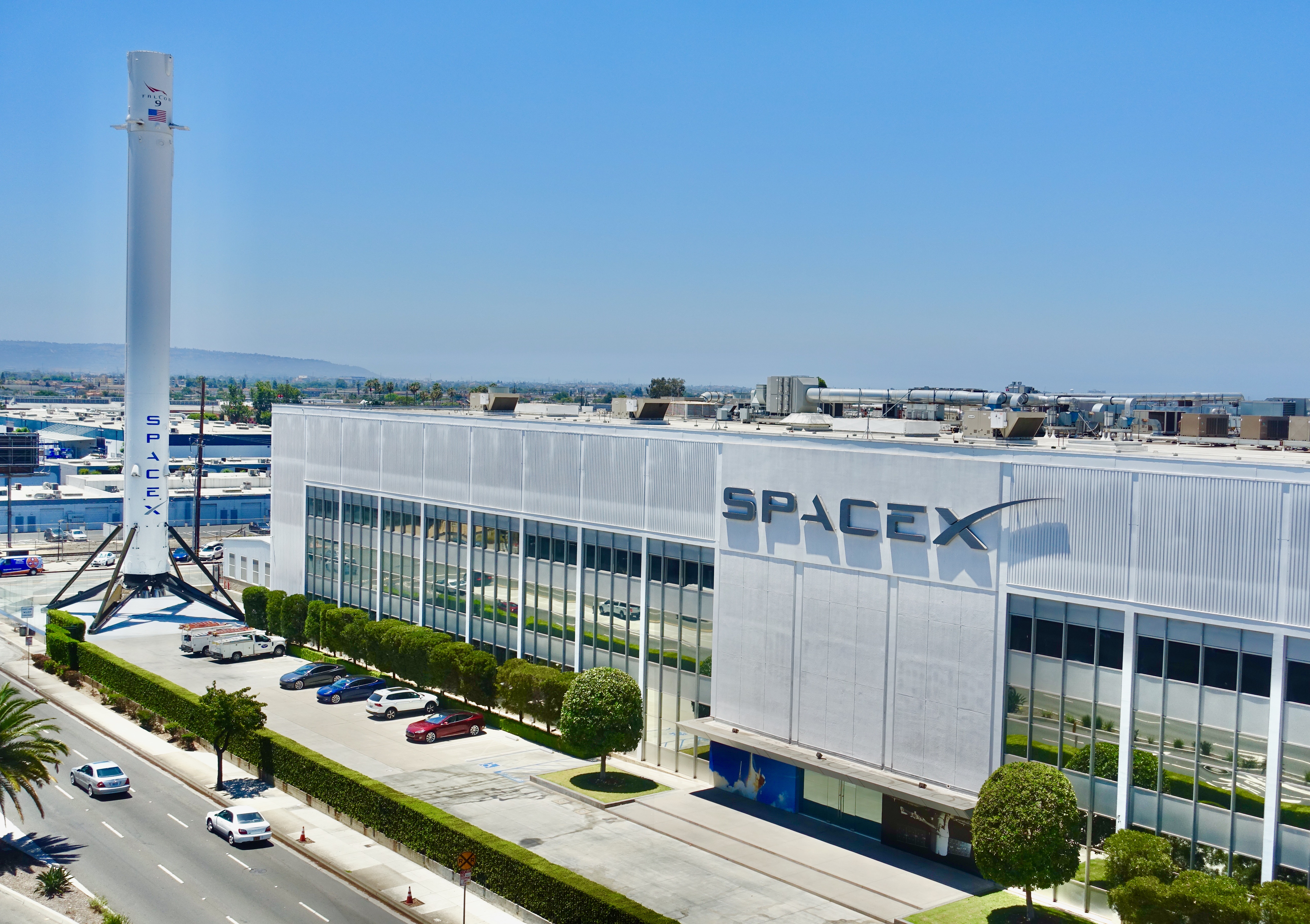
SpaceX set up headquarters in an old warehouse at 1310 East Grand Avenue in El Segundo, California – 75,000 square feet with dusty floors, 40-foot ceilings, and wooden beams. Musk drove his silver McLaren right into the building. The vision was audacious: build the “Southwest Airlines of Space.” Manufacture your own engines. Contract only the components you cannot build yourself. Do everything faster and cheaper than the established players.
The Falcon 1 rocket – named after the Millennium Falcon from Star Wars – was designed to carry a 1,400-pound payload to orbit for $6.9 million. The industry standard at the time was roughly $30 million for a 550-pound payload. That price difference was not a rounding error. It was a declaration of war against an industry that had grown comfortable with government cost-plus contracts and decades of unchallenged pricing.
Why This Story Matters
There is a version of this story where Tom Mueller spends his entire career at TRW, builds impressive engines for government contracts, retires comfortably, and nobody outside the aerospace community ever learns his name. That version almost happened. What changed it was not a sudden burst of ambition on Mueller’s part. It was the collision of his deep expertise with someone who had both the vision and the capital to put that expertise to work.
Elon Musk once reflected on the nature of engineering itself with a line that has stuck with me: “Engineering is, for all intents and purposes, magic, and who wouldn’t want to be a magician?” That sentiment captures something important about the people who build things. They are not motivated primarily by money or fame. They are motivated by the act of making something work – of turning an idea into a physical object that defies gravity.
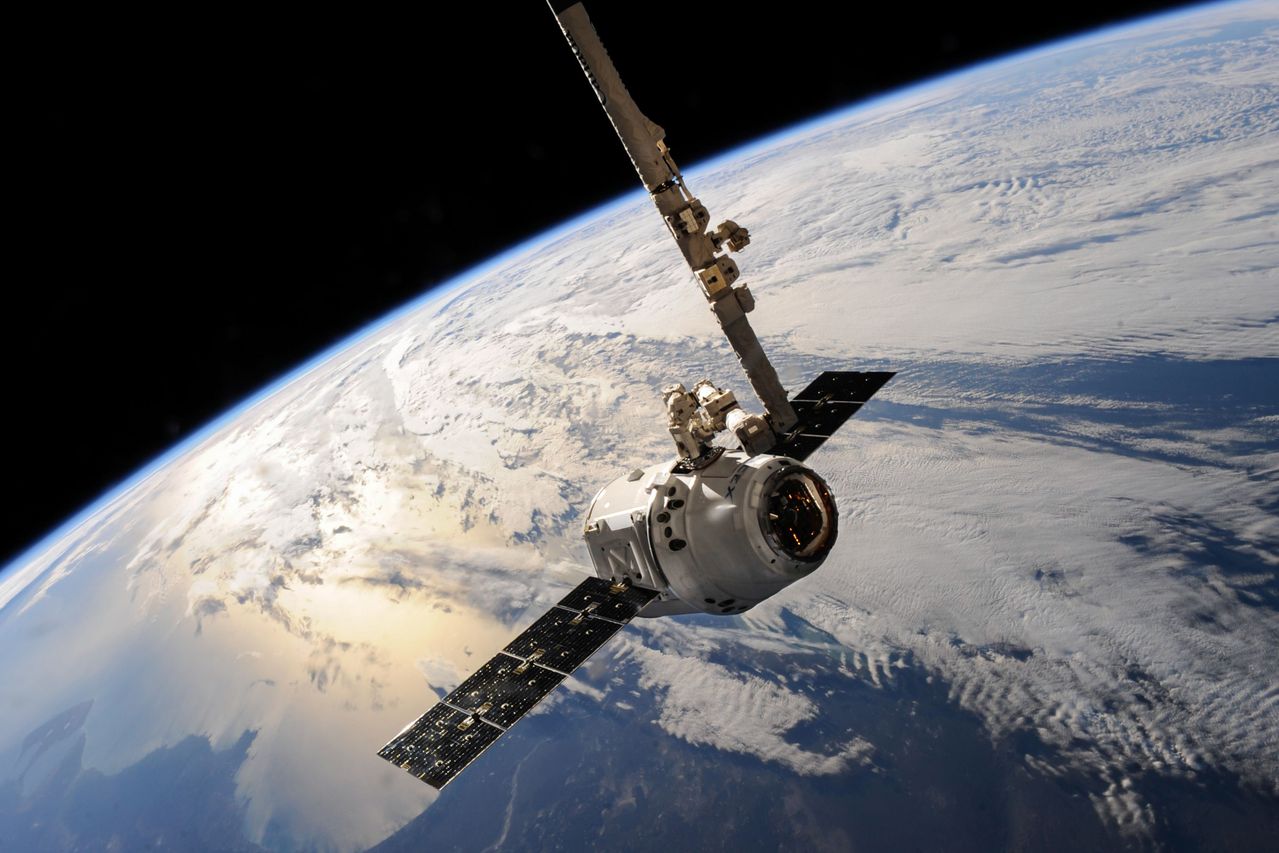
The Merlin engine that Mueller designed has now flown hundreds of missions. It has landed on drone ships, returned to launch pads, and carried astronauts to the International Space Station. Every one of those flights traces back to a kid in Idaho who took apart a lawn mower to see how it worked, built a rocket engine cooled by a coffee can, and kept his rockets hanging in the garage.
I find that deeply encouraging. The path from a small-town library to the forefront of commercial spaceflight was not straight, and it was not fast. But it was built on something that anyone can cultivate: an unrelenting curiosity about how things work, and the willingness to get your hands dirty figuring it out.
Sources
- Vance, Ashlee. Elon Musk: Tesla, SpaceX, and the Quest for a Fantastic Future. Ecco/HarperCollins, 2015. Chapter 6.
- Jorgenson, Eric. Remarks on engineering as cited in SpaceX oral histories.
- Reaction Research Society – Founded 1943, America’s oldest amateur rocketry organization.
- SpaceX corporate history and Falcon 1 program documentation.