My nephew asked me over dinner last week, “Why do rockets blow up sometimes?” I told him the short answer, but the real answer kept bouncing around my head all evening, because no story I have come across captures the thin line between failure and transformation quite like SpaceX’s first four Falcon 1 launches. Three catastrophic failures, each one more painful than the last, burned through roughly $100 million and brought SpaceX to the edge of oblivion. The fourth launch, on September 28, 2008, succeeded – and in doing so became the first privately funded liquid-fueled rocket to reach orbit.
The distance between the third failure and the fourth success was measured in weeks. The distance between bankruptcy and a $1.6 billion NASA contract was measured in one launch.
Did you know? Three windfalls in Musk’s orbit all landed between $1.5 and $1.65 billion: eBay’s $1.5 billion for PayPal, Google’s $1.65 billion for YouTube, and NASA’s $1.6 billion SpaceX contract.
Launch 1: Fire at 25 Seconds (March 24, 2006)
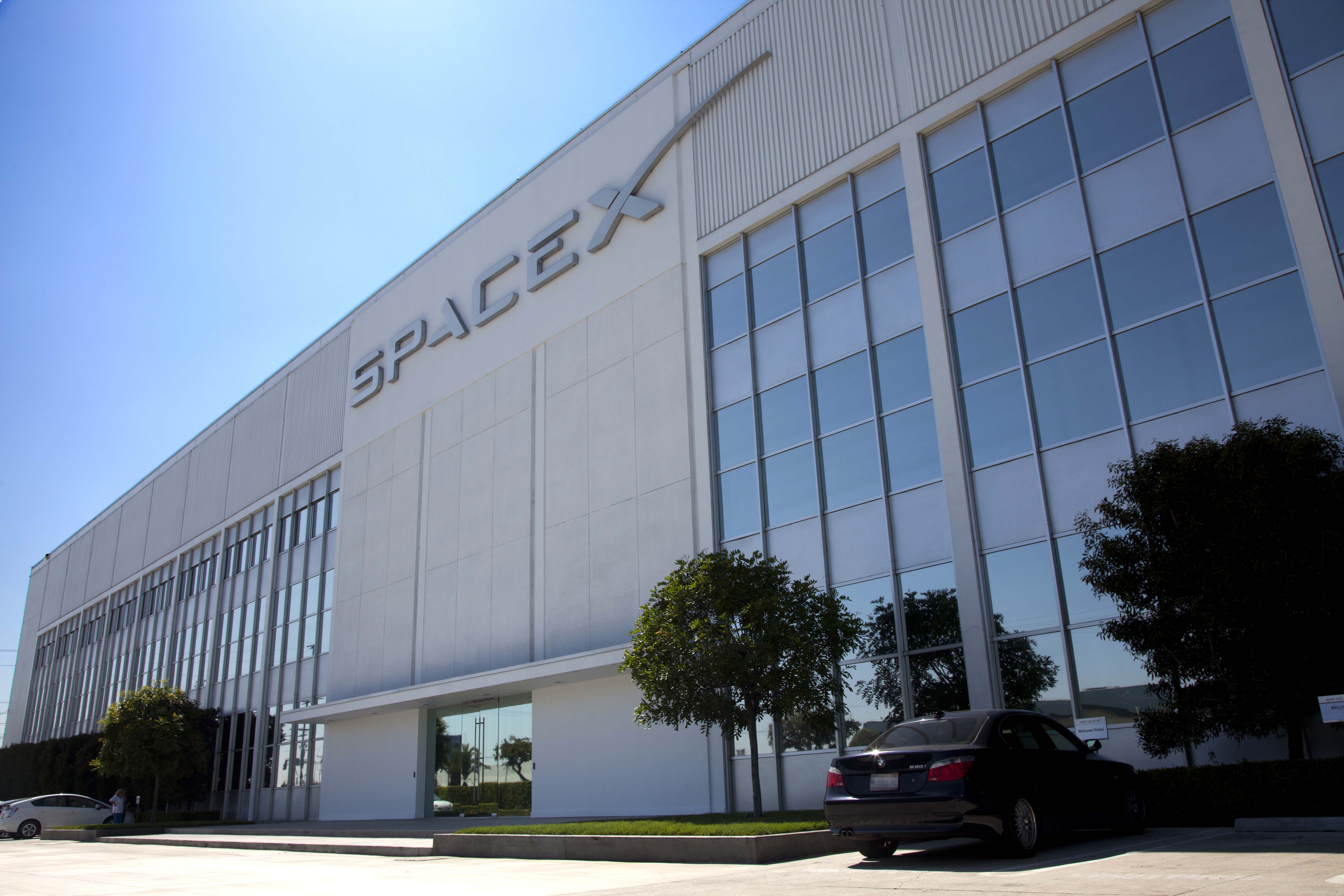
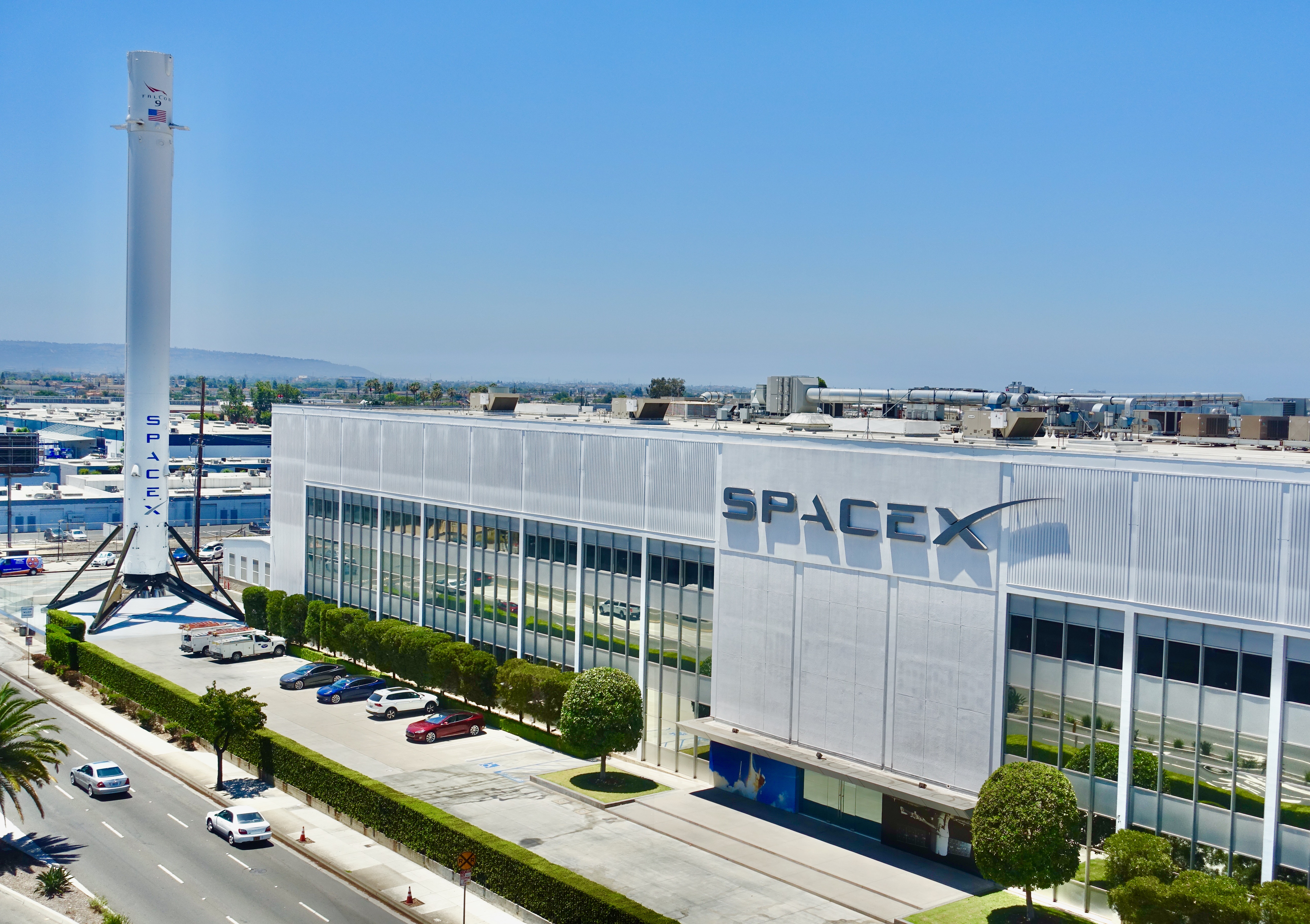
SpaceX had been working toward its first launch for four years. Musk founded the company in 2002 after being rejected by the Russian space program, which wanted to charge him roughly $8 million per rocket. He calculated that he could build a rocket from scratch for less. He hired a small team of engineers, many from established aerospace companies like Boeing and TRW, and set up operations in a warehouse in El Segundo, California.
The Falcon 1 was designed to be a small, low-cost orbital rocket. It used a single Merlin engine, designed and built in-house, burning kerosene and liquid oxygen. The launch site was Omelek Island, a tiny atoll in the Kwajalein Atoll in the Marshall Islands, chosen because it was remote enough for safe launches and available through the U.S. military.
On March 24, 2006, Falcon 1 lifted off for the first time. Twenty-five seconds into the flight, a fuel line corroded by salt air leaked kerosene onto the engine, which caught fire. The rocket tumbled and crashed onto the reef near the launch pad. The payload – a small satellite called FalconSAT-2 built by Air Force Academy cadets – was recovered from the island, damaged but not destroyed.
The team was devastated but not defeated. They identified the corrosion issue and implemented fixes. Musk publicly treated the failure as a learning experience.
Launch 2: Second-Stage Oscillation (March 21, 2007)
Almost exactly one year later, Falcon 1 flew again. This time, the first stage performed perfectly. The Merlin engine burned for the full duration, and stage separation occurred as planned. But roughly five minutes into the flight, the second stage began oscillating – a sloshing of liquid oxygen in the upper stage caused the engine to gimbal erratically. The rocket lost control and failed to reach orbit.
The failure was arguably more painful than the first because it came so close to success. The first stage had worked. The fundamental design was sound. But a fluid dynamics problem that the team had not fully anticipated destroyed the mission.
Musk later described the emotional toll of these failures in an interview with 60 Minutes: “When you have a failure like that, it’s crushing. But you have to pick yourself up and keep going.”
Launch 3: Stages Collide (August 3, 2008 UTC)
The third launch was the most painful of all. Once again, the first stage performed beautifully. The Merlin engine burned through its full sequence. Stage separation was initiated. But this time, residual thrust from the first stage caused it to continue accelerating slightly after separation. The first stage collided with the second stage before the upper engine could ignite. Both stages were destroyed.
The cause was cruelly specific: SpaceX had upgraded to a more powerful version of the Merlin engine for this flight, and the longer thrust tail-off time was not adequately accounted for in the separation timing. A fraction of a second’s difference in timing would have prevented the collision.
Three satellites were destroyed in the crash, including a NASA payload and the ashes of astronaut Gordon Cooper and actor James Doohan (Scotty from Star Trek), which were being carried as memorial payloads.
By this point, SpaceX had spent approximately $100 million – nearly all of Musk’s remaining fortune from PayPal. Musk was simultaneously fighting to keep Tesla alive during the 2008 financial crisis. He was borrowing money from friends to pay his rent. The fourth launch would be the last one SpaceX could afford.
Launch 4: Success (September 28, 2008)
The team had just eight weeks between the third failure and the fourth attempt. In that span, they analyzed the collision, redesigned the staging sequence to add a longer delay between stage separation and second-stage ignition, and prepared a new rocket.
On September 28, 2008, Falcon 1 launched from Omelek Island for the fourth time. The first stage ignited and performed nominally. Stage separation occurred cleanly. The second stage ignited on schedule. Nine minutes and thirty-one seconds after liftoff, the second stage reached orbit.
Falcon 1 became the first privately developed liquid-fueled rocket to reach Earth orbit.
The video of the SpaceX control room at the moment of orbital insertion is one of the most emotional recordings in aerospace history. Engineers who had spent six years building rockets that kept failing erupted in cheers, tears, and embraces. Musk, who had staked everything on this moment, was visibly overwhelmed.
“That’s what I’m talking about,” Musk said in the raw aftermath, his voice cracking.
The NASA Contract That Saved Everything
The orbital success of Falcon 1 validated SpaceX’s entire approach to rocketry: build everything in-house, iterate rapidly, and keep costs radically lower than traditional aerospace contractors. But validation alone would not have saved the company.
What saved SpaceX was timing. On December 23, 2008, less than three months after the successful fourth launch, NASA announced that SpaceX had been awarded a $1.6 billion contract under the Commercial Resupply Services program to deliver cargo to the International Space Station using the larger Falcon 9 rocket and Dragon spacecraft.
The contract transformed SpaceX from a startup on the edge of bankruptcy into a funded aerospace contractor with a guaranteed revenue stream. Without the fourth launch succeeding when it did, the NASA contract would have gone to a competitor, and SpaceX would almost certainly have run out of money.
What Four Launches Teach
I find this story impossible to read without being struck by how thin the margins were. One corroded fuel line. One fluid dynamics miscalculation. One timing error in stage separation. Any of these could have been the final chapter if they had occurred on the fourth launch instead of the first three.
The PayPal Mafia members who went on to build companies after PayPal all experienced their own versions of near-death moments. But Musk’s SpaceX story is the most literal: actual rockets exploding, actual fortunes burning, and actual survival coming down to a single launch that either worked or didn’t.
The lesson is not that persistence always pays off. Plenty of persistent companies fail. The lesson is that SpaceX learned from each failure and applied those lessons on a compressed timeline that most organizations could not match. Eight weeks between a catastrophic collision and a successful orbital insertion is not just perseverance. It is engineering discipline under existential pressure.
Today, SpaceX is the most prolific launch provider on Earth, sending astronauts to the International Space Station and deploying the Starlink satellite constellation. All of it traces back to one launch on a remote Pacific atoll, funded with the last of Elon Musk’s money, that finally worked.
Sources
- Ashlee Vance, Elon Musk: Tesla, SpaceX, and the Quest for a Fantastic Future (Ecco/HarperCollins, 2015) (Chapter 6: Mice in Space).
- Eric Jorgenson, The Book of Elon, 2021.
- Franziska M. Renz and Julian U. N. Vogel, “Elon Musk: Leader or Liability?”, Journal of Case Research and Inquiry, Vol. 6, 2020.
- Eric Berger, Liftoff: Elon Musk and the Desperate Early Days That Launched SpaceX (William Morrow, 2021).
- Walter Isaacson, Elon Musk (Simon & Schuster, 2023).
- SpaceX Falcon 1 Flight Reports, spacex.com, 2006-2008.
- “SpaceX Wins NASA Contract,” NASA press release, December 23, 2008.
- Elon Musk, interview with 60 Minutes, CBS, March 2014.