I was sitting in the dentist’s waiting room flipping through stuff on my phone when I came across this story while reading about the Musk family’s early years in Silicon Valley, and I could not stop thinking about it. It is the kind of story that sounds like it belongs in a movie script, except that every detail is documented and confirmed by multiple sources. A twenty-eight-year-old who had just pocketed $22 million from the sale of Zip2 bought one of the rarest and most expensive cars on the planet, failed to insure it, and then destroyed it on one of Silicon Valley’s most famous roads while trying to impress the man who would later help him build PayPal.
What does it tell us about a founder when his first big purchase after a life-changing exit is a million-dollar supercar? And what does it tell us about that same founder when he crashes it and shrugs?
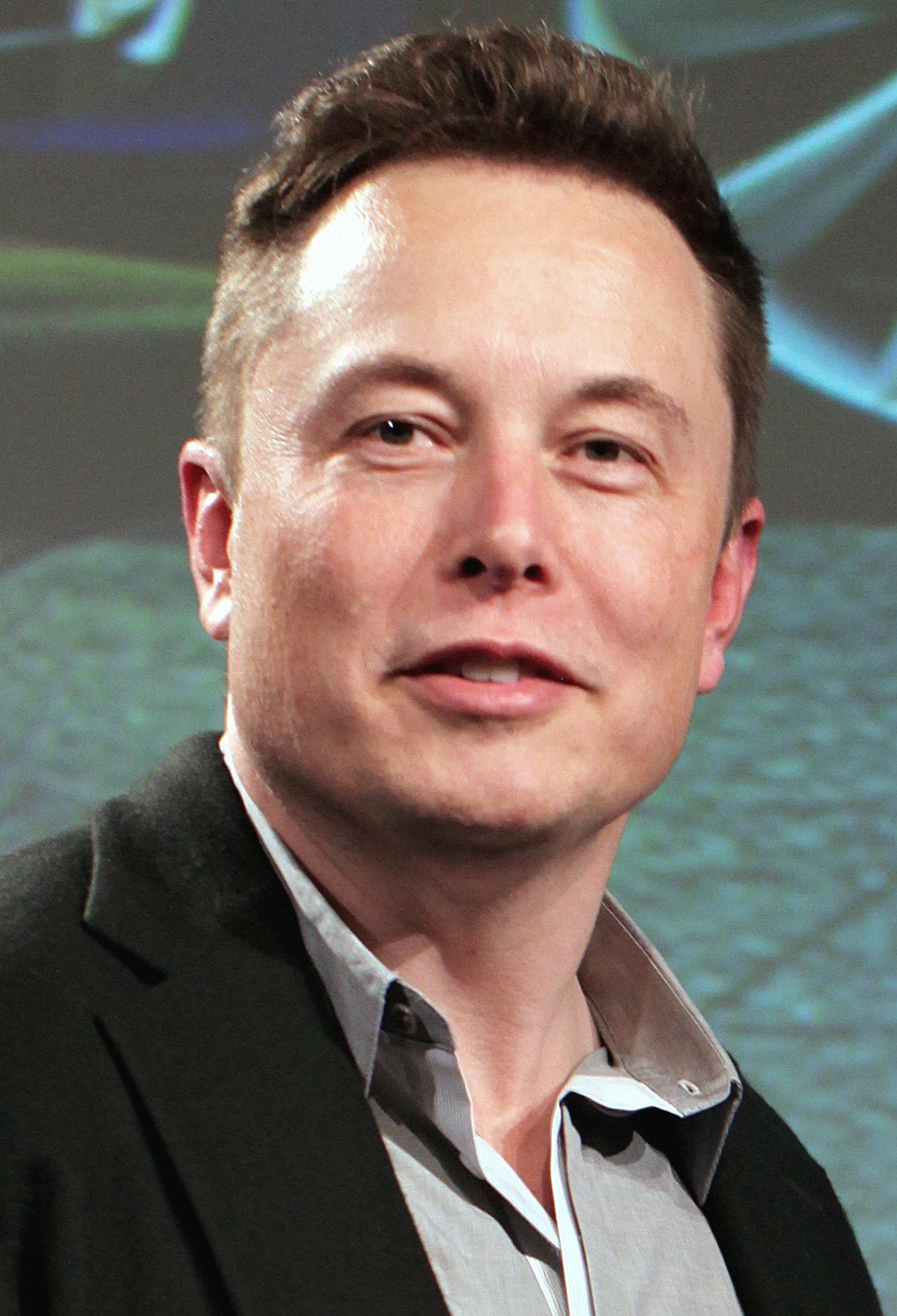 Photo by Steve Jurvetson, Wikimedia Commons. License: CC BY 2.0.
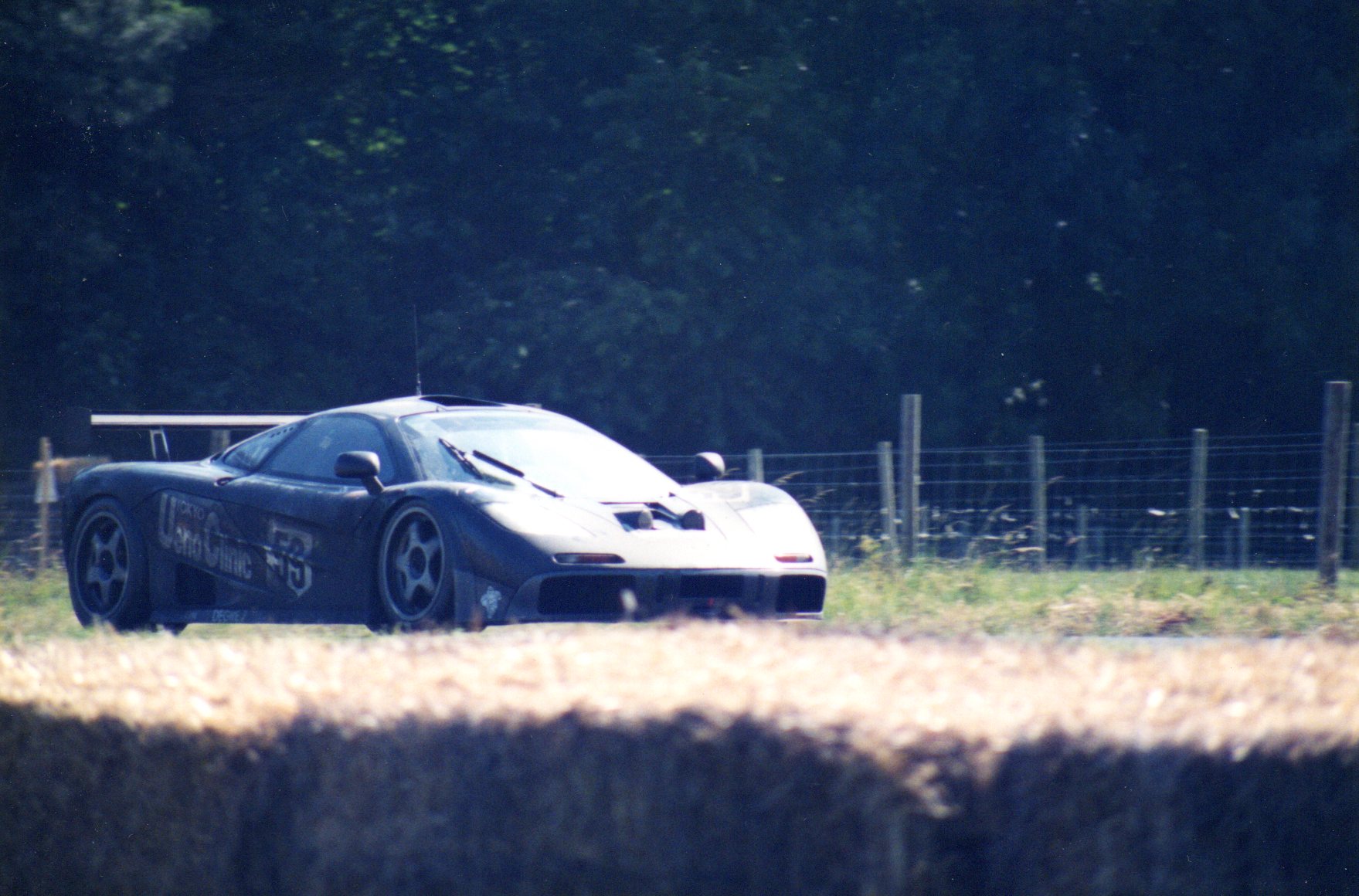
The McLaren F1
The car in question was a McLaren F1, widely regarded as the greatest supercar ever made at the time of its production. Only 64 road cars were built between 1992 and 1998 (106 total including racing variants). The McLaren F1 held the record for the fastest production car in the world, capable of reaching 240 miles per hour. Its engine was a BMW-sourced 6.1-liter V12 producing 627 horsepower. The car’s designer, Gordon Murray, had built it as the ultimate expression of automotive engineering: a three-seat layout with the driver in the center, a body made of carbon fiber and gold foil, and a price tag that exceeded $1 million.
Musk bought his McLaren F1 in 1999, shortly after Compaq acquired Zip2 for $307 million. His personal share was approximately $22 million before taxes — roughly $15 million after the tax bill. And one of the first things he did with that money was purchase the McLaren.
CNN filmed the delivery. The footage, which has circulated widely online, shows a young Musk, visibly giddy, watching as his new supercar is unloaded from a transport truck. He described it as his dream car. The moment was both celebration and declaration: he had arrived.
“There are sixty-two McLarens in the world, and I will own one of them. Wow, I can’t believe it’s actually here. That’s pretty wild, man.” — Elon Musk to CNN during the car’s delivery, 1999, quoted in Vance, Elon Musk
Sand Hill Road
What happened next has become one of the most retold anecdotes in Silicon Valley history. In 2000, Musk was driving on Sand Hill Road in Menlo Park, the street famous for housing the offices of the most powerful venture capital firms in the world. He had a friend in the passenger seat, and the two were driving to a meeting with a venture capitalist. According to Vance’s account, Musk turned to his companion and said: “Watch this.”
He floored the accelerator. The McLaren F1, with 627 horsepower propelling a car that weighed barely more than a ton, launched forward. Musk did a lane change, spun out, hit an embankment, and the car went spinning through the air. The windows and wheels were blown to smithereens, and the body was severely damaged. The car was effectively totaled.
Here is the detail that elevates this from a car crash story to a character study: Musk had no insurance on the car. A million-dollar vehicle, one of the rarest on Earth, and he had not bothered to insure it. The total financial loss was absorbed entirely by Musk himself.
“That Was Really Intense”
Thiel’s recollection of Musk’s reaction, as reported in multiple profiles over the years including a 2017 New York Times piece, was that Musk was not angry or panicked. His first words after the crash were something along the lines of:
At my hosting company, I had one metric that mattered: are the servers up? Everything else — revenue growth, market share, customer acquisition cost — I ignored. Musk shrugged off the wrecked McLaren the way I shrugged off a flat year. That single-metric focus kept me alive and kept me stuck.
I know what it feels like to have a product that works but a business that does not grow. The product was never the problem, just as the McLaren itself was never the problem — leaving it uninsured was. The problem was me.
According to Vance’s account, Musk turned to his companion after the crash and said:
“The funny part is it wasn’t insured.” — Elon Musk, quoted in Vance, Elon Musk
No rage. No despair. No hand-wringing about the financial loss. The two of them then thumbed a ride to the venture capitalist’s office they had been heading to. Just a matter-of-fact acknowledgment that something dramatic had happened, followed by a pivot to the next thing. This reaction pattern, the ability to absorb a catastrophic setback and immediately recalibrate, would define Musk’s career for the next two decades.
I think this moment reveals something important about how Musk relates to money and risk. The McLaren was not an investment. It was a trophy. And when the trophy shattered, he treated it the way most people treat a broken glass at a party: a momentary disruption, not a crisis. For a man who would later put his entire $175 million PayPal fortune into SpaceX, Tesla, and SolarCity, the McLaren crash was a preview of a relationship with money that most people find difficult to comprehend.
The Musk-Thiel Dynamic
The crash happened during one of the most consequential business relationships in modern tech history. Musk and Thiel were negotiating the merger of X.com and Confinity, a deal that would create the PayPal Mafia, the single most influential group of founders in Silicon Valley history. Members of that group would go on to found or lead YouTube, LinkedIn, Tesla, SpaceX, Palantir, Yelp, and a dozen other companies.
The merger was not friendly. As I detailed in my piece on how Musk bet everything on online banking, the cultures of X.com and Confinity clashed constantly. Musk wanted to build a full-service online bank. Thiel and his team wanted to focus on the peer-to-peer payment feature that was gaining explosive traction on eBay. The McLaren crash happened against this backdrop of tension and ambition, two men who respected each other’s talent but disagreed about nearly everything else, sharing a near-death experience on the most symbolically loaded road in venture capital.
Thiel would later lead the boardroom coup that removed Musk as CEO of PayPal while Musk was on his honeymoon. The McLaren ride may have been the last moment of uncomplicated camaraderie between them.
What the Car Meant
There is a reading of the McLaren purchase that dismisses it as simple vanity, a young man with new money buying a flashy toy. I think that reading misses the context. Musk had arrived in North America as a seventeen-year-old with $2,000 and a suitcase of books. He had worked at a lumber mill, cleaned boilers, and shared a computer with his brother while building Zip2 in a small office where they also slept. The McLaren was not just a car. It was tangible evidence that the bet had worked.
The fact that he crashed it and moved on almost immediately tells a different story than vanity. It tells a story about impermanence. Musk treated the McLaren the way he treats most things: as a means to an end, not an end in itself. The car was fun until it was not, and then he had X.com to build.
Remarkably, despite the crash damage, Musk held onto the car for years. He eventually sold it in 2007 at a profit, because the McLaren F1’s rarity meant its value appreciated even in damaged condition. The man who could not be bothered to insure a million-dollar car ended up making money on the deal.
Risk as Identity
The McLaren story would be just a colorful anecdote if it existed in isolation. But it does not. It sits in a long chain of moments where Musk absorbed enormous financial risk with what appears to be genuine indifference to the possibility of total loss. After PayPal sold to eBay, Musk put essentially everything into three ventures that experts considered likely to fail. SpaceX nearly went bankrupt after three consecutive rocket explosions. Tesla came within days of running out of cash in 2008. The road from Zip2 to X.com had already shown this pattern: Musk poured his Zip2 earnings into X.com with no safety net, funded in part by Greg Kouri’s early bet.
The McLaren crash was not the moment that defined Musk’s risk tolerance. But it was the most literal, physical expression of it: a million-dollar machine, no insurance, maximum speed, and a response to the wreckage that amounted to “that was intense.” Whether you find that inspiring or reckless probably depends on whether you believe the future belongs to people who calculate their bets or to people who refuse to calculate at all.
I think the answer, as usual, is somewhere in between. But the image stays with me: a car flying like a discus on Sand Hill Road, two future billionaires walking away from the wreck, and a journey that was just getting started.
Editor’s note (July 2026): An earlier version identified Peter Thiel as the passenger during the crash. Vance’s biography does not confirm who was in the car. The production count has been clarified: 64 road cars, 106 total including racing variants.
Sources
- Vance, A. Elon Musk: Tesla, SpaceX, and the Quest for a Fantastic Future. Ecco, 2015 (Chapter 5: PayPal Mafia Boss).
- Jorgenson, E. The Book of Elon. 2021.
- Renz, F. M. and Vogel, J. U. N. “Elon Musk: Leader or Liability?”, Journal of Case Research and Inquiry, Vol. 6, 2020.
- Isaacson, W. Elon Musk. Simon & Schuster, 2023.
- CNN. “Elon Musk McLaren F1 Delivery.” 1999.
- Bilton, N. “Elon Musk’s Appetite for Destruction.” New York Times, October 2017.
- Chafkin, M. The Contrarian: Peter Thiel and Silicon Valley’s Pursuit of Power. Penguin Press, 2021.
- Fortune Magazine. “The PayPal Mafia.” November 2007.