I was cooking dinner the other night and had a news stream on in the background when I heard David Sacks’s name come up in a White House briefing about crypto policy. I nearly dropped the pan. I have been writing about the PayPal Mafia for a while now, tracing what happened to PayPal’s key players after eBay acquired the company in 2002. Every one of them built something remarkable. But no one’s career has been as wildly unpredictable as David Sacks. He went from running product at a payments startup to producing a Golden Globe-nominated film to building a billion-dollar enterprise tool to advising the President of the United States on artificial intelligence and cryptocurrency.
How does one person’s career contain all of those things? And what connects them?
The PayPal Years
David Sacks was born in Cape Town, South Africa – a detail that makes him one of at least two South African-born members of the PayPal Mafia, alongside Elon Musk. Sacks moved to the United States as a child, attended Stanford University for his undergraduate degree, and then earned a law degree from the University of Chicago.
He joined PayPal in 1999 and quickly became the company’s Chief Operating Officer. His role was product-focused. Sacks was the person who shaped what PayPal actually looked and felt like as a product. He was responsible for driving the company’s product decisions during the period when PayPal was fighting a brutal war with X.com and then managing the internal politics of the merger between the two companies.
Peter Thiel, PayPal’s co-founder and eventual CEO, has credited Sacks with being the person who kept the product coherent while everything around it was chaotic. When Musk was replaced as CEO – in a boardroom coup that happened while Musk was literally on a plane – Sacks was one of the people who kept the company moving.
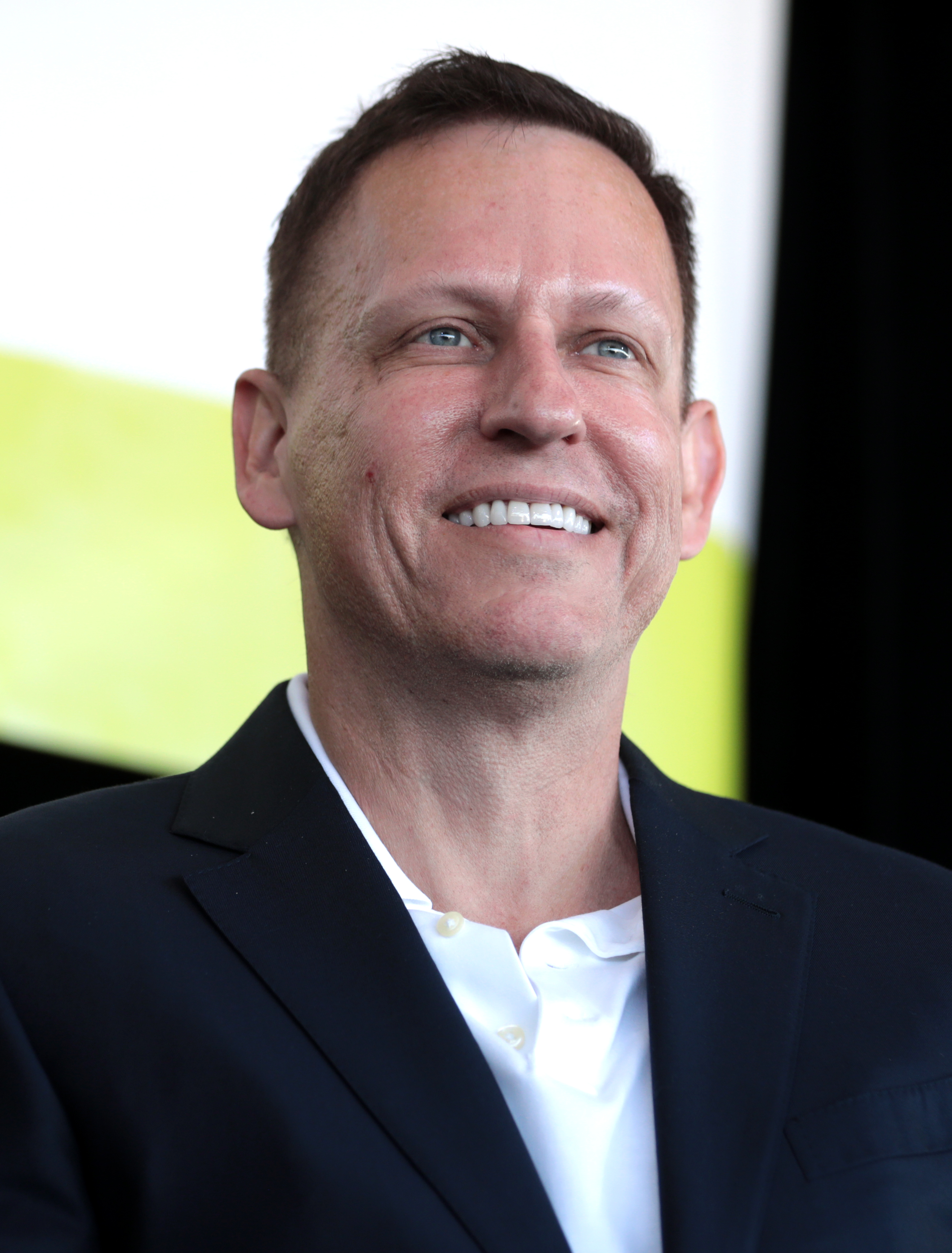 Photo by Gage Skidmore, Wikimedia Commons. License: CC BY-SA 3.0.
“David was the enforcer,” one former PayPal employee told Fortune in their 2007 PayPal Mafia profile. “He was the one who made sure things actually shipped.”
After eBay’s $1.5 billion acquisition of PayPal in October 2002, Sacks walked away with his share of the proceeds and faced a question every PayPal alumnus faced: what do you do after the most intense professional experience of your life?
The Hollywood Detour
What Sacks did next surprised everyone. He produced a movie.
In 2005, Sacks was the producer of “Thank You for Smoking,” a satirical comedy based on Christopher Buckley’s novel about a tobacco industry lobbyist. The film starred Aaron Eckhart and was directed by Jason Reitman. It premiered at the Toronto International Film Festival and went on to receive a Golden Globe nomination for Best Motion Picture – Musical or Comedy.
This was not a vanity project. The film was critically praised and commercially successful relative to its budget. Sacks had identified a story he believed in, assembled a team, and executed it. The skills were different from building a payments platform, but the underlying pattern was the same: find something undervalued, put the right people together, and drive it to completion.
Was it a career pivot? A creative detour? Looking back, it fits a pattern that only becomes visible in retrospect. Sacks was never interested in doing the same thing twice.
Building Yammer
In 2008, Sacks returned to tech and founded Yammer, an enterprise social networking platform. The idea was straightforward: bring the communication patterns of consumer social networks into the workplace. Yammer allowed employees within a company to communicate in an open, threaded feed, breaking down the silos that traditional email created.
I think the hardest thing about running a company that does not grow is that nobody tells you it is failing — the same silence that kept old workplace communication trapped in email silos until Yammer came along. The revenue keeps coming. The customers stay. Everything looks fine from the outside. Only you know it is not.
I have never raised venture capital, never pitched to investors, never had a board meeting the way Sacks did through PayPal, Yammer, and Zenefits. My company was entirely self-funded. That felt like independence. But it also meant nobody ever forced me to answer the hard questions about growth.
Yammer grew rapidly by using a viral adoption model. Individual employees could sign up with their company email address without needing corporate IT approval. Once enough people within a company were using it, the company would upgrade to a paid plan. It was a bottom-up enterprise sales strategy before that concept had a name.
In June 2012, Microsoft acquired Yammer for $1.2 billion. Sacks had built, scaled, and sold a company in four years. The Yammer acquisition was one of the deals that signaled Microsoft’s shift toward cloud-based collaboration tools – a strategy that would eventually produce Microsoft Teams.
Microsoft CEO Steve Ballmer called Yammer “the best enterprise social network” and said the acquisition would accelerate Microsoft’s move toward enterprise social experiences.
Zenefits and the Art of the Turnaround
After Yammer, Sacks took on a role that most people in his position would have avoided. In 2016, he became the interim CEO of Zenefits, an HR software startup that was in the middle of a regulatory crisis. The company’s previous CEO had resigned after it was revealed that Zenefits had built an internal tool to help its insurance brokers bypass state licensing requirements.
Sacks stepped in, cut staff by roughly 17%, restructured the company’s compliance operations, and stabilized the business. The deeper cut — about 45% of the workforce — came in February 2017 under Sacks’s successor, CEO Jay Fulcher. It was not glamorous work. There were no Golden Globe nominations. But it demonstrated something important about Sacks: he was willing to walk into a burning building if he believed the underlying structure was worth saving.
Craft Ventures and the Investor Era
In 2017, Sacks co-founded Craft Ventures, a venture capital firm focused on early-stage investments in enterprise software, fintech, and crypto. The firm has invested in companies including ClickUp, Sourcegraph, and BitGo. Sacks also became a prominent voice in Silicon Valley through the “All-In” podcast, which he co-hosts with Chamath Palihapitiya, Jason Calacanis, and David Friedberg. The podcast, which covers technology, economics, and politics, has built an audience of over 400,000 followers across platforms.
It was through the podcast and his growing political commentary that Sacks began to exert influence beyond the tech world. He was one of the Silicon Valley figures who encouraged Elon Musk toward engagement with Republican politics, a shift that would have significant consequences for both men.
White House AI and Crypto Czar
In December 2024, President Trump named Sacks the White House “AI and Crypto Czar,” a special advisor role focused on artificial intelligence policy and cryptocurrency regulation. The appointment placed a PayPal Mafia member inside the executive branch of the United States government.
Sacks served in the role until March 2026, working on frameworks for AI governance and advocating for regulatory clarity in the cryptocurrency space. His tenure was controversial – critics argued that a venture capitalist with crypto investments should not be setting crypto policy, while supporters said his technical background made him one of the few people in government who actually understood the technology.
Regardless of where one stands on the politics, the fact remains: a South African-born technologist who helped build a payments startup in Palo Alto in the late 1990s was, two decades later, shaping American policy on the two most transformative technologies of the era.
The Thread That Connects Everything
I kept looking for the common thread across Sacks’s career, and I think it comes down to one thing: he is a product thinker who applies product thinking to everything. At PayPal, he shaped the product. In Hollywood, the film was the product. At Yammer, the product was communication itself. At Zenefits, he treated the broken company as a product that needed to be redesigned. At Craft Ventures, the portfolio is the product. In the White House, policy was the product.
The PayPal Mafia members all share certain traits – intensity, ambition, a high tolerance for risk. But Sacks stands out because his career cannot be reduced to a single industry or a single ambition. He is not “the payments guy” or “the enterprise guy” or “the politics guy.” He is all of them and none of them.
What makes Sacks different is that he fits a pattern the best founders seem to share: they are not specialists. They are people who can see connections that others miss — and David Sacks has spent his entire career proving that point.
What I find most interesting about Sacks is that his career makes sense only in retrospect. Each move looked like a departure at the time. But each move built on the skills and relationships from the one before it. The PayPal network gave him credibility. Hollywood gave him a different kind of pattern recognition. Yammer proved he could build and exit. Craft Ventures gave him a platform. And the White House put him at the center of the biggest policy questions of the decade.
For anyone building a career and wondering whether their next move “makes sense,” Sacks’s story is a powerful reminder. The most interesting careers are not straight lines. They are portfolios of bets, each one informed by everything that came before. The key is not to follow a predetermined path. The key is to be excellent at whatever you do, and trust that the connections will reveal themselves over time.
Sources
- Fortune, “The PayPal Mafia,” November 2007
- Ashlee Vance, Elon Musk: Tesla, SpaceX, and the Quest for a Fantastic Future, 2015
- Microsoft Press Release, “Microsoft to Acquire Yammer,” June 25, 2012
- Jason Reitman, Thank You for Smoking, Fox Searchlight Pictures, 2005
- Peter Thiel, Zero to One, Crown Business, 2014
- TechCrunch, “David Sacks Named White House AI and Crypto Czar,” December 2024
- All-In Podcast, various episodes, 2020-2025
- The Wall Street Journal, “Zenefits CEO Resigns Amid Regulatory Scrutiny,” February 2016