I have always been fascinated by the gap between invention and execution. It is one thing to build something remarkable in a lab. It is another thing entirely to ship it to the world. And no story in the history of technology illustrates that gap more vividly than the story of Xerox PARC — the research lab that invented nearly every component of modern personal computing and then watched from the sidelines as other companies turned those inventions into trillion-dollar industries.
How does a company invent the future and then fail to sell it?
A Lab Like No Other
In 1970, the Xerox Corporation established the Palo Alto Research Center — known as PARC — in Palo Alto, California. Xerox was the dominant force in the office copier market, and the company’s leadership understood that the future of the office would involve more than just paper. They wanted to be ready for whatever came next.
 Photo: Wikimedia Commons. CC BY-SA 3.0. Palo Alto was already a center of innovation long before PARC arrived, as this garage where Hewlett-Packard started reminds us.
To their credit, Xerox did not cut corners. They hired the best computer scientists in the country and gave them exceptional freedom. The result was one of the most productive research labs in history. The list of technologies invented or refined at PARC during the 1970s is staggering:
- The graphical user interface (GUI) — windows, icons, and menus that replaced the command line
- The computer mouse — a pointing device that made the GUI usable
- Ethernet — the networking protocol that connects computers to each other
- The laser printer — which would eventually become a billion-dollar product category
- WYSIWYG text editing — “what you see is what you get,” the principle behind every word processor
- The Xerox Alto — built in 1973, it was the first personal computer with a graphical user interface
The Alto was a machine ahead of its time. It had a bitmapped display, a mouse, a keyboard, and a network connection. It could send email. It could display proportionally spaced fonts. It looked and felt like a computer from the 1980s, built in 1973. PARC engineers used Altos every day. They knew they were sitting on something revolutionary.
Three Thousand Miles of Misunderstanding
The tragedy of Xerox PARC was not a failure of invention. It was a failure of communication — and geography. Xerox’s corporate headquarters was in Stamford, Connecticut, roughly three thousand miles from Palo Alto. The executives who controlled budgets, strategy, and product decisions were copier people. They understood toner, paper paths, and service contracts. They did not understand graphical user interfaces, mice, or networking protocols.
When PARC researchers tried to explain what they had built, the response from Connecticut was consistently lukewarm. The Xerox Alto was never commercialized in any meaningful way. Xerox did eventually release the Xerox Star in 1981, but it was priced at $16,595 per unit — roughly $59,000 in today’s dollars — and it was marketed primarily to large corporations. It sold poorly.
 Photo: Wikimedia Commons. CC BY-SA 2.0. Jobs recognized the potential of what PARC had built and had the courage to ship it.
The people at PARC could see the future. The people in Connecticut could not. And so the future sat in a lab, waiting for someone with the courage to ship it.
The Visit That Changed Everything
In 1979, that someone arrived. Steve Jobs, the co-founder of Apple Computer, negotiated a visit to Xerox PARC. The deal was straightforward: Apple would allow Xerox to invest in Apple’s upcoming IPO — purchasing 100,000 shares at the pre-IPO price — in exchange for a tour of PARC’s technology demonstrations.
I used to think the hard part of running a company was the technical work. After ten years, I learned the hard part is the conversation you keep avoiding.
The story of that visit has become Silicon Valley legend. Jobs and a small team from Apple watched as PARC engineers demonstrated the Alto, the GUI, the mouse, and the networking capabilities. According to multiple accounts, Jobs was electrified. He reportedly said something to the effect of: “Why isn’t Xerox marketing this? This is the most incredible thing I’ve ever seen.”
Jobs returned to Apple with a mission. He redirected the company’s efforts toward building computers with graphical user interfaces. The first result was the Apple Lisa, released in 1983 — a commercial failure due to its high price. The second result was the Apple Macintosh, released in January 1984 — one of the most important products in the history of personal computing.
Apple Did Not Just Copy
I want to be careful here, because the story is often reduced to “Steve Jobs stole the GUI from Xerox.” That is a dramatic simplification. What Apple took from PARC was a set of concepts — windows, icons, a pointing device. What Apple built was something different and in many ways better.
Apple’s engineers took the ideas PARC had demonstrated and made them friendlier and more polished — refining the pull-down menus and the desktop metaphor PARC had pioneered, adding features like drag-and-drop, and using a single-button mouse to reduce complexity for ordinary users. And they built all of this into a machine that cost $2,495 instead of $16,595.
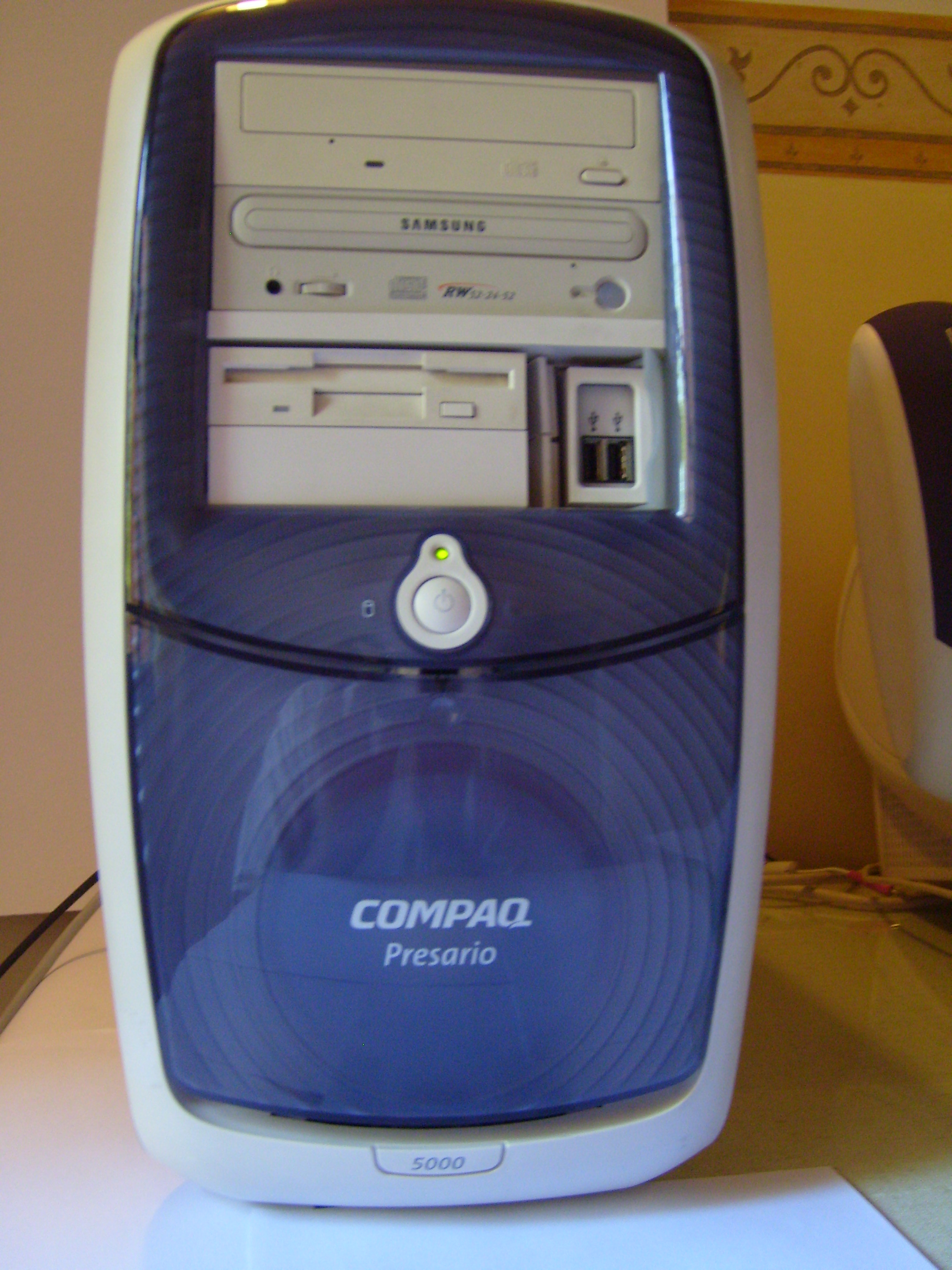 Photo: Wikimedia Commons. CC BY-SA 3.0. While companies like Compaq were building IBM-compatible machines, Apple was pursuing the graphical future that PARC had pioneered.
The PARC team built the raw ingredients. Apple baked the cake. And the distinction matters, because invention without execution is just a demo.
The Laser Printer Exception
Not everything PARC invented was squandered. The laser printer is the great exception. Xerox successfully commercialized laser printing technology, and it became one of the company’s most profitable product lines for decades. This proves that the problem was not with PARC’s inventions — it was with Xerox’s ability to recognize which inventions were worth pursuing outside of their existing business model.
The laser printer fit neatly into Xerox’s existing worldview: it was an office document machine. The GUI, the mouse, the personal computer — those required Xerox to become an entirely different kind of company, and that was a leap the Connecticut headquarters was never willing to make.
What PARC Actually Proved
I have read dozens of accounts of the Xerox PARC story, and most of them frame it as a cautionary tale about corporate incompetence. There is some truth to that framing. But I think the deeper lesson is more interesting and more useful.
PARC proved that the best research lab wins when someone else has the courage to ship. The ideas that came out of PARC did not die. They became the foundation of the personal computer industry, the networking industry, and the printing industry. They just needed different companies — Apple, Microsoft, 3Com, HP — to carry them from the lab to the market.
The researchers at PARC were brilliant. They saw the future of computing more clearly than anyone else in the 1970s. The Traitorous Eight had shown a decade earlier that talent will find a way to reach the market, even if it has to leave one company to do it. PARC’s alumni carried their knowledge to Apple, Adobe, 3Com, and dozens of other companies that shaped the technology industry.
The story of Xerox PARC is not really a story about failure. It is a story about how ideas find their way into the world — sometimes through the front door, and sometimes through the side. The inventions were too good to stay locked in a lab. They were going to reach the market one way or another. And in the end, they did — transforming the way every person on the planet interacts with computers.
Sources
- “Dealers of Lightning: Xerox PARC and the Dawn of the Computer Age” by Michael Hiltzik (1999, HarperBusiness)
- “Steve Jobs” by Walter Isaacson (2011, Simon & Schuster)
- “Fumbling the Future: How Xerox Invented, Then Ignored, the First Personal Computer” by Douglas K. Smith and Robert C. Alexander (1988, William Morrow)
- Xerox PARC official history, PARC.com
- Computer History Museum, “Xerox Alto” exhibit documentation
- Apple Lisa and Macintosh product specifications, Apple press releases, 1983-1984