I was mapping the companies that emerged from the PayPal alumni network when I started digging into the YouTube origin story. What I found was one of the strangest founding narratives in tech history. Three former PayPal employees wanted to share video clips online. They couldn’t. So they built what would become the largest video platform on earth. Google bought it 19 months after its founding for $1.65 billion.
But the real story is stranger than the headline suggests. YouTube didn’t start as a video sharing platform at all. It started as a dating site.
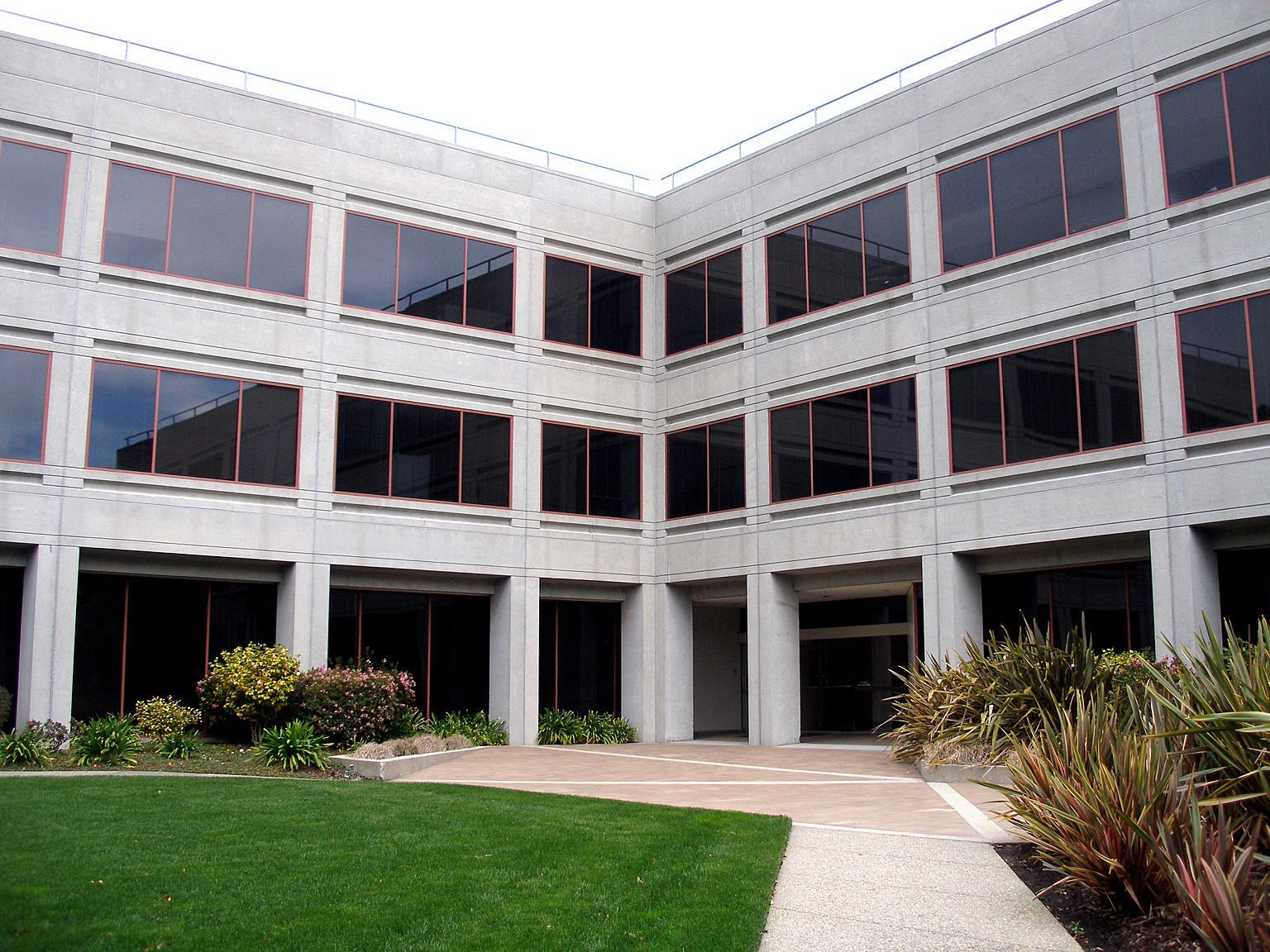 Photo: Wikimedia Commons. CC BY-SA 3.0.
The Super Bowl Incident and the Dinner Party
The origin of YouTube has been told in slightly different versions by its three founders, but the core details are consistent. In February 2004, two events happened that planted the seed. First, the Janet Jackson and Justin Timberlake Super Bowl halftime show incident generated massive public interest, and people wanted to find the footage online. They couldn’t. There was simply no easy way to share or find video clips on the internet in 2004.
Around the same time, Steve Chen hosted a dinner party and wanted to share video from the evening with friends who hadn’t attended. Email attachments had strict size limits. There was no platform designed for uploading and sharing personal video. The tools simply didn’t exist.
“We were trying to find clips of the Janet Jackson incident online, and we couldn’t find anything. That was the spark.” – Jawed Karim, University of Illinois lecture, 2006
Chad Hurley, Steve Chen, and Jawed Karim had all worked together at PayPal. Hurley had been a designer, Chen an engineer, and Karim an early employee who had worked on PayPal’s anti-fraud systems. They knew each other well enough to start a company together, and more importantly, they had experienced firsthand at PayPal how a product can scale rapidly when it solves a fundamental user need.
The Dating Site That Wasn’t
Here is where the story takes an unexpected turn. When the three founders activated the domain youtube.com on February 14, 2005 – Valentine’s Day – the initial concept was not the YouTube we know today. The original pitch was closer to an online dating platform. The tagline was “Tune In, Hook Up.” Users would upload videos of themselves talking about what they were looking for in a partner.
Nobody used it. The dating concept flopped completely. People did not want to record awkward video personal ads and upload them to a website run by three guys working out of a small office above a pizzeria in San Mateo, California.
But the founders noticed something interesting. The few people who did upload videos were not using the site for dating. They were uploading random clips – funny moments, personal stories, things they wanted to share with friends. The platform was being used in a way the founders hadn’t anticipated.
This is the pivot that made YouTube. Rather than forcing the dating concept, Hurley, Chen, and Karim followed their users. They stripped away the dating features and rebuilt the site as a general-purpose video sharing platform. Upload anything. Share it with anyone. The simpler the concept, the more powerful it became.
Me at the Zoo
On April 23, 2005, Jawed Karim uploaded the first-ever YouTube video. It was 19 seconds long, titled “Me at the zoo,” and showed Karim standing in front of the elephant enclosure at the San Diego Zoo. He talks about how cool the elephants are. That’s it.
When I read about founders who walked away from stability to chase growth, I feel a mix of admiration and recognition. I had stability. I chose to keep it. They chose differently.
I read these founder stories and I see the specific moments where they made a decision I could not have made. Not because I lacked the intelligence, but because I lacked the conviction. Conviction is the part nobody teaches you.
It is, by any measure, one of the least remarkable videos ever made. And that was exactly the point. YouTube wasn’t about producing professional content. It was about giving anyone with a camera and an internet connection the ability to share a moment with the world. The bar for participation was intentionally set as low as possible.
“The idea was to make it super easy for anyone to upload a video. No special software, no technical knowledge. Just upload and share.” – Chad Hurley, interview with USA Today, 2006
The site launched to the public in beta in April 2005 — the same month as the first video — and exited beta in December 2005. Growth was immediate and explosive. By July 2006, YouTube was serving 100 million video views per day. Users were uploading 65,000 new videos daily. The scale was unprecedented.
The PayPal DNA
I keep coming back to the PayPal connection because it explains so much about why these three particular people were able to build YouTube. At PayPal, they had learned how to build products that millions of people could use simultaneously. They understood scaling infrastructure. They understood user acquisition. They understood how to build simple interfaces that eliminated friction.
The PayPal experience also gave them a network. When they needed early funding, they could tap into the same PayPal Mafia trust network that was funding ventures across Silicon Valley. Sequoia Capital, where former PayPal CFO Roelof Botha was now a partner, led YouTube’s $3.5 million Series A in November 2005. The money flowed through relationships built in the PayPal trenches.
This pattern is something I’ve seen again and again in these stories. Elon Musk took what he learned building Zip2’s online directories and applied it to online banking at X.com. Reid Hoffman took what he learned at SocialNet and PayPal and applied it to LinkedIn. The YouTube founders took what they learned about scaling a payment platform and applied it to scaling a video platform. Each company was built on the wreckage and wisdom of the one before it.
Google Buys YouTube
By the summer of 2006, YouTube was the fastest-growing site on the internet but also one of the most expensive to operate. Bandwidth costs were enormous. The server infrastructure required to host and stream millions of videos was staggeringly expensive. YouTube was burning through cash at an alarming rate.
Google had been trying to build its own video platform, Google Video, but it had failed to gain traction. Rather than continuing to compete, Google made the obvious move. On October 9, 2006, Google announced the acquisition of YouTube for $1.65 billion in stock. The company was barely 19 months old.
The deal was, at the time, considered risky and potentially overpriced. A billion and a half dollars for a site full of amateur cat videos and copyright-infringing clips? Many analysts were skeptical. But Google saw what the founders saw: video was the future of internet content, and YouTube had already won the race to become the platform where it lived.
That bet has been validated many times over. YouTube now generates tens of billions of dollars in annual advertising revenue for Google. It hosts more than ten billion videos. It is the second-most-visited website on the planet, behind only Google itself. A platform born from a failed dating experiment in a small office above a pizzeria turned out to be one of the most valuable media properties in history.
The Accidental Revolution
What fascinates me about the YouTube story is how accidental it was. The founders didn’t set out to revolutionize media. They set out to build a dating site. When that failed, they didn’t give up. They watched what their users were actually doing and rebuilt the product around that behavior. The willingness to abandon the original plan and follow the evidence is what separated YouTube from the dozens of video startups that launched in the same period and vanished.
There is a broader lesson here that connects to many of the stories I’ve researched. The dot-com crash destroyed thousands of companies that were rigidly attached to their original business plans. The companies that survived – and the ones that emerged afterward, like YouTube – were the ones that stayed flexible, listened to their users, and pivoted when the evidence demanded it.
Three former PayPal engineers who couldn’t find a video clip online built a platform that changed how humanity creates and consumes media. They did it from a garage, with a failed dating concept, and a willingness to follow their users instead of their business plan. And they did it in 19 months.
That is worth remembering the next time an idea doesn’t work on the first try. The first idea almost never works. The magic is in what you build after you let it go.
Sources
- Jawed Karim, lecture at University of Illinois at Urbana-Champaign, 2006
- Chad Hurley, interview with USA Today, July 2006
- John Cloud, “The Gurus of YouTube,” Time magazine, December 2006
- Miguel Helft, “Google to Acquire YouTube for $1.65 Billion,” New York Times, October 9, 2006
- YouTube official blog, founding history and milestones
- Eric Jackson, The PayPal Wars, World Ahead Publishing, 2004
- Fortune, “The PayPal Mafia,” November 2007
- Sequoia Capital investment records, 2005