I have written about Elon Musk’s childhood coding projects, his complicated relationship with his father, and the books that built his worldview. But there is one story from his earliest years that I think captures the essence of the man better than any business decision or rocket launch ever could. It is the story of a six-year-old boy, grounded and told he could not go to his cousin’s birthday party, who simply decided that the answer “no” did not apply to him.
He escaped from his nanny. He walked across the entire city of Pretoria. Alone. At six years old.
And when his horrified mother found him on the road, he climbed a tree and refused to come down until she promised not to punish him.
“I Was Driven as a Kid, Very Willful”
The story comes directly from Musk himself, as recorded in Eric Jorgenson’s The Book of Elon. Musk remembers being grounded for some infraction he no longer recalls – but he remembers, with absolute clarity, that he felt the punishment was unjust. His cousin was having a birthday party. He was not allowed to go. So he went anyway.
“I was driven as a kid, very willful. One story I remember: At age six, I was grounded for some reason. I don’t remember why, but I felt it was unjust. I really wanted to go to my cousin’s birthday party. I escaped from my nanny and walked across the city.”
– Elon Musk, in Eric Jorgenson, The Book of Elon, pp. 93-95
Think about what this actually means in practical terms. A six-year-old child, barely able to read, sounding out road signs one letter at a time, walking across the capital city of South Africa. Alone. For nearly two hours. No phone, no map, no adult. Just raw determination to get to a party he had been told he could not attend.
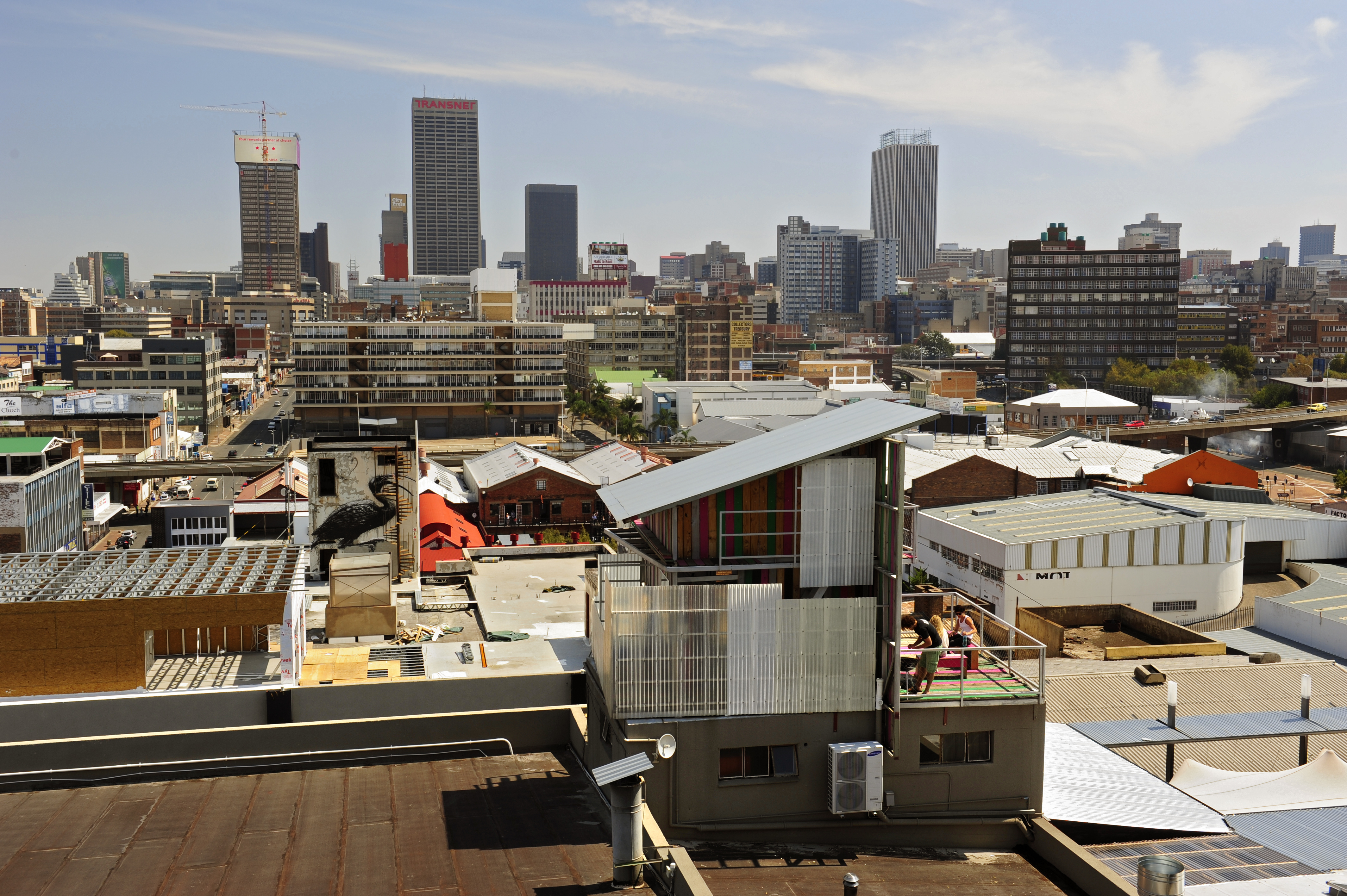 Johannesburg, South Africa – the urban landscape of the Musk family’s world. Photo via Wikimedia Commons.
Musk himself acknowledged how dangerous it was:
“I was just learning to read, so I could barely read the road signs. This was foolish, and something terrible could have happened. But I was so determined I walked clear across the capital city of South Africa at six years old.”
– Elon Musk, in Eric Jorgenson, The Book of Elon, pp. 93-95
His mother, Maye Musk, was leaving the party with Elon’s brother and sister when she spotted him walking down the road. She, understandably, freaked out. And this is where the story shifts from impressive to genuinely defining. Most children, caught in the act by a terrified parent, would accept the consequences. Musk climbed a tree.
“As my mom was leaving the party with my brother and sister, she saw me walking down the road and freaked out. So I climbed a tree and refused to come down until she promised not to punish me.”
– Elon Musk, in Eric Jorgenson, The Book of Elon, pp. 93-95
He did not just disobey the original rule. He negotiated from a position of leverage – at six years old. You cannot help but laugh at the image. But you also cannot help but recognize the pattern. This is the same person who, decades later, would fly to Moscow to buy decommissioned Russian ICBMs for a Mars mission. When the Russians laughed at him and spit on him, he did not go home defeated. He opened a spreadsheet on the flight back and decided to build his own rockets.
The Mind That Would Not Turn Off
What makes the Pretoria walk more than just a charming anecdote is the context around it. This was not a normal child having an adventurous day. Musk has described his own childhood mind in terms that sound closer to a medical condition than a personality trait.
“When I was five or six, I thought I was insane. It became clear other people’s minds weren’t exploding with ideas all the time. I felt strange. It’s hard to turn it off. It might sound great when it’s on. But what if it doesn’t turn off? It’s like a never-ending explosion.”
– Elon Musk, in Eric Jorgenson, The Book of Elon, pp. 93-95
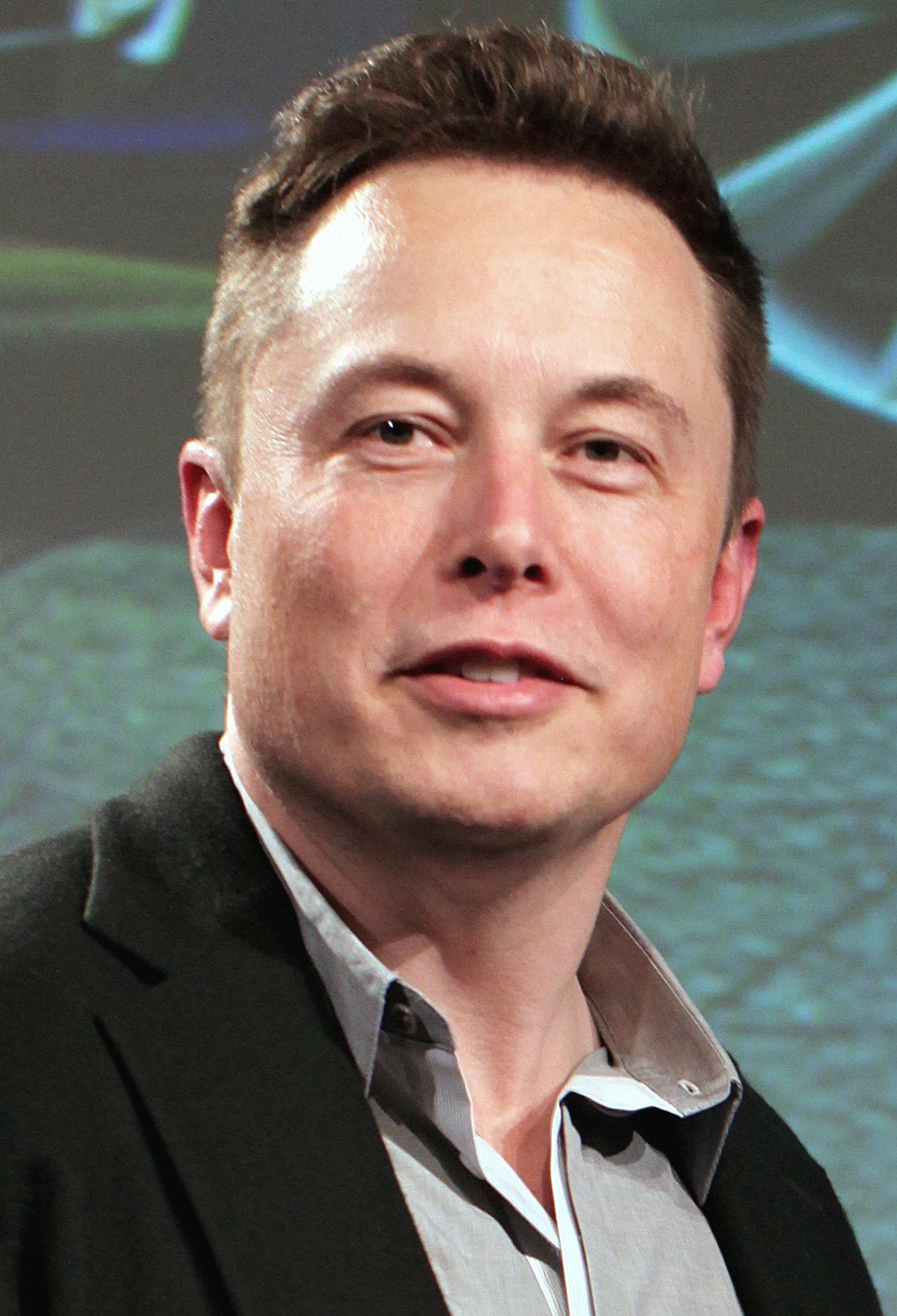 Photo by Steve Jurvetson, Wikimedia Commons. License: CC BY 2.0.
His mother Maye described how her son would drift into trance-like states as a child, completely oblivious to the people around him. As she told Ashlee Vance for his 2015 biography: “He goes into his brain, and then you just see he is in another world.” Doctors initially thought he was hard of hearing. They had his adenoids removed. The reality was simpler and stranger: he was not deaf. He was thinking so intensely that the outside world ceased to exist.
This is the same boy who walked across Pretoria. A child whose mind was already running so fast, so relentlessly, that once he decided he was going to that party, no locked door, no nanny, and no twelve-mile distance was going to stop him.
Pain as Teacher
The stubbornness that propelled him across Pretoria also made him a target. Musk was the youngest and smallest kid in his grade. He was also, by his own admission, “kind of a smart aleck.” At Bryanston High School, the bullying became severe. He was beaten down a flight of stairs and hospitalized for a week. In his own words, the violence went further than most people realize:
I built my hosting company the way you build a wall — one brick at a time, solid and reliable. Musk built his companies the way you build a bonfire — fast, hot, and willing to burn through fuel to get the heat he needed.
The founders in these stories share one trait I did not have: the ability to turn hardship into fuel for something larger than their own livelihood. My company was my livelihood. It was never anything more.
“I was almost beaten to death – within an inch of my life at one point.” And later: “Adversity shaped me. My pain threshold became very high.” (Jorgenson, The Book of Elon, pp. 93-95.)
Vance’s biography confirms the pattern. The bullying was not occasional teasing – it was sustained, physical, and brutal. As Musk told Vance: “For some reason, they decided that I was it, and they were going to go after me nonstop. That’s what made growing up difficult.”
What I find remarkable is not that he survived it, but what he took from it. Most people who endure that kind of childhood carry it as damage. Musk seems to have metabolized it into something else – a tolerance for pain and rejection that is almost inhuman. He has spoken about this directly:
“People say they’re worried about the damage of words. People worried about words have never been punched in the face. Once you’ve been punched in the face, real hard, right on the nose – you’ll take any words over that.” (Jorgenson, The Book of Elon, pp. 93-95.)
There is something important here. This is not a man who says he was not hurt. He is saying that being hurt raised the bar for what counts as hurt. After being beaten nearly to death as a child, hearing “private rockets are impossible” or “Tesla is going bankrupt” simply did not register as threatening.
The Pattern That Never Changed
I keep coming back to that image of a six-year-old in a tree, bargaining with his mother. Because the pattern never changed. The method scaled up – from trees to boardrooms to launchpads – but the underlying logic remained identical:
Decide what you want. Refuse to accept “no.” Find a way to make it happen. And if someone tries to punish you for it, negotiate from whatever position of strength you can find.
When his friends held interventions to stop him from starting a rocket company, he started SpaceX anyway. When Tesla was weeks from bankruptcy during the 2008 financial crisis, he poured his last dollars into it and kept going. When the first three Falcon 1 rockets exploded, he built a fourth. The man in the tree never came down.
I do not want to romanticize everything about Musk’s stubbornness. It has caused real damage to people around him, and other articles on this site explore that honestly. But the raw quality itself – the innate drive that he describes as having been present since his earliest memories – is genuinely remarkable. As he told Jorgenson: “I seem to have a high, innate drive, and that’s been true even since I was a little kid.”
The boy who walked across Pretoria at six grew up to try to get humanity to Mars. The distance got longer. The stubbornness stayed exactly the same. And if I had to point to the single moment that best predicts everything Elon Musk would become, it would not be a business deal or a product launch. It would be a small boy, alone on a road in South Africa, sounding out street signs, putting one foot in front of the other for four hours, because someone told him he could not go to a party.
That is the kind of willfulness that either destroys you or changes the world. In Musk’s case, it has done a bit of both.
Sources
- Jorgenson, Eric. The Book of Elon. Pages 93-95. All direct Musk quotes about the Pretoria walk, the bullying, and the “never-ending explosion” of ideas are sourced from this book.
- Vance, Ashlee. Elon Musk: Tesla, SpaceX, and the Quest for a Fantastic Future. Ecco, 2015. Chapter 2. Maye Musk’s description of the trance-like states, the adenoid removal, and the Bryanston High School bullying details are sourced from Vance’s reporting.