I was on a video call with an old classmate from college last week, and he asked me why I keep writing about Elon Musk. I said because the backstory is wilder than people think. I have been deep into the Musk family backstory – the siblings, the businesses, the family dynamics that produced three entrepreneurs from a single household. But the more I dug into the timeline, the more I realized that the most important chapter in the Musk family story is not about any company. It is about a decision that began in the late 1980s, when Elon left South Africa alone for Canada, with Maye and the other children following later.
Why did they leave? What were they leaving behind? And how much of Elon Musk’s story is actually Maye Musk’s story in disguise?
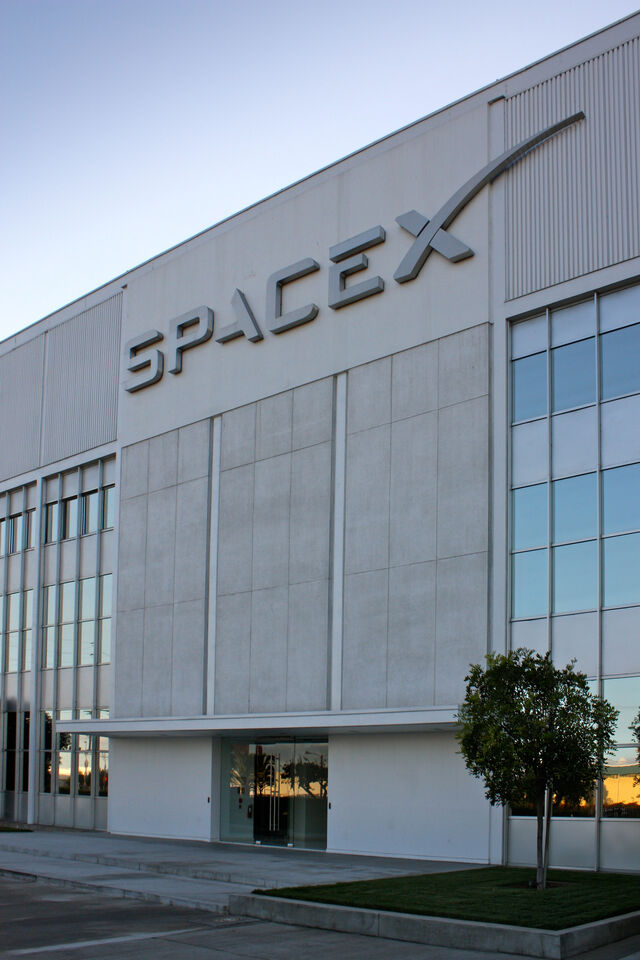
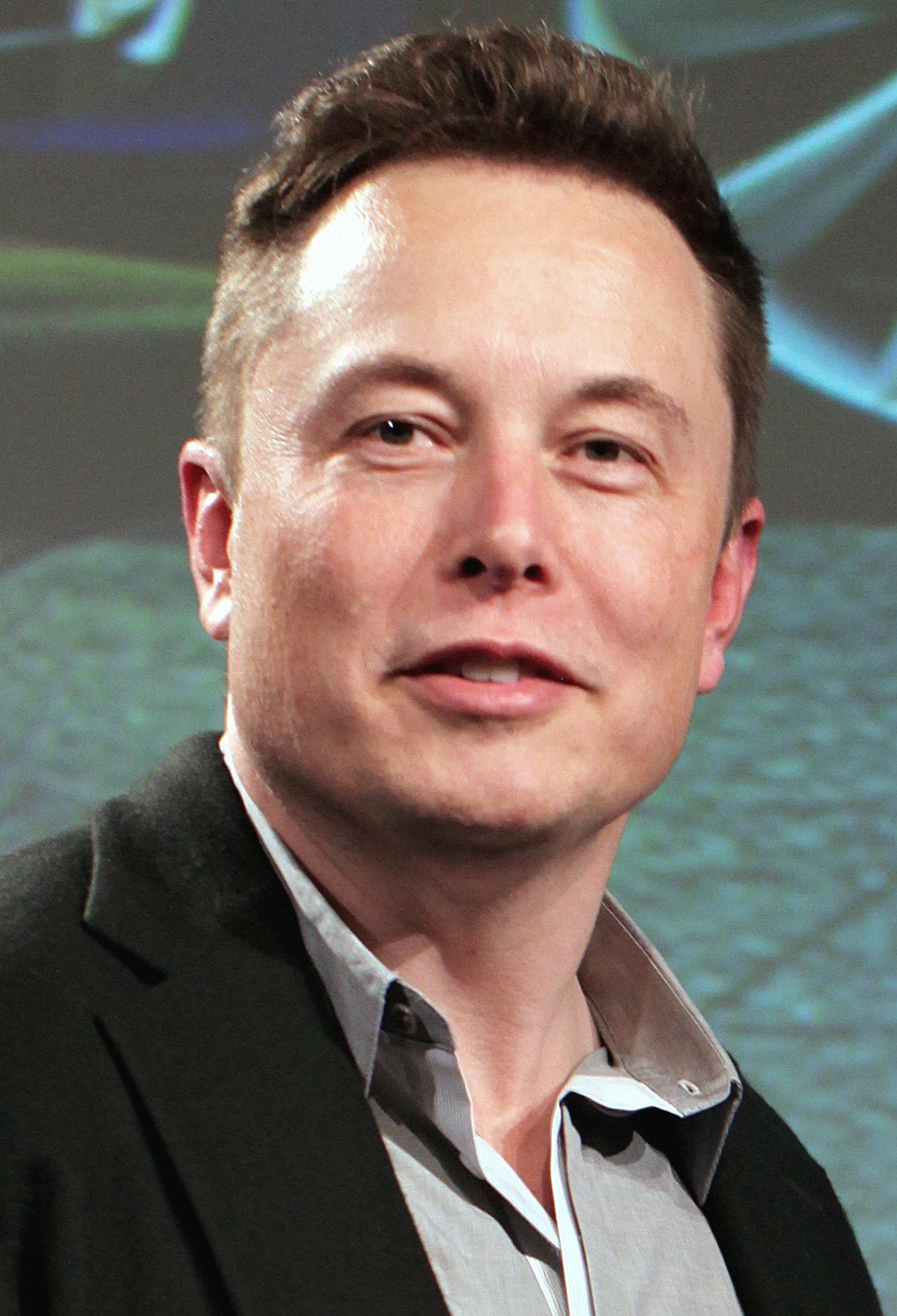 Photo by Steve Jurvetson, Wikimedia Commons. License: CC BY 2.0.
The Divorce
The story begins ten years earlier. In 1979, Maye Musk divorced Errol Musk after nine years of marriage. Maye has been forthcoming about the reasons. In her memoir and in numerous interviews, she has described Errol as abusive – emotionally and, she has implied, physically. The marriage, by her account, was something she endured rather than enjoyed.
After the divorce, Maye raised three children – Elon (born 1971), Kimbal (born 1972), and Tosca (born 1974) – largely on her own. She worked as a dietitian and a model. The financial situation was difficult. Maye has described periods of genuine hardship, stretching limited resources to feed and clothe three children in Johannesburg and later in Durban.
“After the divorce, I was a single mom with three kids,” Maye Musk wrote in her memoir A Woman Makes a Plan. “I worked five jobs. I did what I had to do.”
Elon, as the eldest, spent some years living with his father after the divorce – a decision he has called one of the worst of his life. In a 2017 Rolling Stone interview, Musk described his father as “a terrible human being” but also acknowledged that Errol was “brilliant at engineering.” The relationship between Elon and Errol has been complicated and painful, and Elon has spoken about it rarely and reluctantly.
The Emerald Mine
No discussion of the Musk family’s departure from South Africa is complete without addressing the emerald mine. The story has become one of the most persistent – and most contested – elements of the Musk mythology.
Here is what the evidence supports: in approximately 1986, Errol Musk acquired rights to the output of an emerald mine in Zambia – not South Africa, as is sometimes reported. According to Errol’s own account, the deal was made “under the table,” an informal arrangement rather than a formal mining operation. Errol has told reporters that the mine produced modest wealth – enough to fund a comfortable lifestyle in Pretoria but not the kind of fortune that would fund a startup empire in America.
Elon has repeatedly denied that his father’s money played any meaningful role in his career. When asked about the emerald mine, Musk has pushed back sharply, calling the narrative “false” and emphasizing that he arrived in North America with minimal resources.
Musk has said he arrived in Canada with roughly $2,000 in hand. “I did not have some wealthy father bankrolling my career.”
The fact-checking organization Snopes has investigated the emerald mine claims and found no evidence that Errol’s mining income funded Elon’s ventures in North America. Errol did make a disputed $28,000 investment in Zip2, but Elon has contested even this, saying the investment came after the company was already established and that he did not want his father’s money.
The emerald mine is real. Its role in Elon’s career is, at best, marginal. The narrative that Musk is a trust-fund billionaire who built his empire on family mining wealth does not hold up under scrutiny.
Apartheid and Military Service
There was another, more urgent reason for Elon to leave South Africa. In 1988, South Africa was still under apartheid, the system of institutionalized racial segregation and white minority rule that had defined the country since 1948. The international community had imposed sanctions. The country was isolated. And for white South African men, there was a mandatory military service requirement.
I used to tell myself that my hosting company was a lifestyle business and that was okay. It was okay — but it was also an excuse for not trying harder, the kind of comfortable excuse Musk never had, since staying in South Africa was simply not an option for him.
Elon faced the prospect of serving in the South African Defence Force, which was at that time enforcing apartheid policies and engaged in military operations in Angola and Namibia. He did not want to serve. He has described the idea of supporting the apartheid regime through military service as morally repugnant.
“I didn’t want to be conscripted into the South African army to enforce apartheid,” Musk told Ashlee Vance for his biography. “I had no desire to shoot people.”
Musk’s brother Kimbal put the broader context bluntly:
“South Africa was not a happy-go-lucky place, and that has an impact on you. We saw some really rough stuff. It was part of an atypical upbringing — just this insane set of experiences that changes how you view risk. You don’t grow up thinking getting a job is the hard part. That’s not interesting enough.” — Kimbal Musk, quoted in Vance, Elon Musk
This was not an abstract political objection. It was a concrete, practical problem. If Elon stayed in South Africa, he would be required to serve. Leaving was the only way to avoid it.
The Canadian Passport
The escape route came through Maye. She had been born in Regina, Saskatchewan, which made her a Canadian citizen. That citizenship extended to her children. Elon was eligible for a Canadian passport, and in the summer of 1988 — some accounts place it in 1989 — at the age of seventeen, he used it.
Musk’s great escape to Canada was not well thought out. He knew of a great-uncle in Montreal, hopped on a flight, and hoped for the best. Upon landing, he found a pay phone and tried to use directory assistance to find his uncle. The uncle had moved to Minnesota, meaning Musk had nowhere to stay. After a few days exploring Montreal, Musk bought a countrywide bus ticket for about one hundred dollars and rode 1,900 miles to Swift Current, Saskatchewan, where he called a second cousin from the bus station and hitched a ride.
Musk spent the next year working a series of odd jobs around Canada – farming, cleaning boilers at a lumber mill, shoveling grain. These were not glamorous positions. They were the jobs available to a seventeen-year-old immigrant with no connections and limited funds.
“You have to put on this hazmat suit and then shimmy through this little tunnel that you can barely fit in. Then, you have a shovel and you take the sand and goop and other residue, which is still steaming hot, and you have to shovel it through the same hole you came through. There is no escape.” — Elon Musk, quoted in Vance, Elon Musk
Thirty people started the job at the beginning of the week. By the third day, five remained. By week’s end, it was just Musk and two others.
The image of a future billionaire shoveling grain and cleaning industrial boilers is one of those details that cuts through any narrative about inherited privilege. Whatever resources the Musk family had in South Africa, Elon’s early experience in Canada was defined by physical labor and economic uncertainty.
Maye and Tosca Follow
Maye and Tosca followed Elon to Canada, though the exact timing is less well documented. The family settled in Toronto, where Maye found a rent-controlled apartment and resumed the pattern of working multiple jobs that had defined her life since the divorce. She modeled, she consulted as a dietitian, she took whatever work was available.
Maye Musk’s story during this period is, in many ways, more remarkable than her son’s. She was a middle-aged woman starting over in a new country, with a teenage daughter, no established career network, and limited savings. She did not have the advantage of youth or a STEM education. What she had was resilience, work ethic, and the refusal to let circumstances define her children’s futures.
Kimbal Musk also eventually made his way to North America, and the sibling dynamics between Elon, Kimbal, and Tosca would later produce a remarkable cluster of entrepreneurial activity. Kimbal would co-found Zip2 with Elon, Tosca would build a streaming platform, and all three would credit their mother’s example as a foundational influence.
What They Left Behind
The Musk family left behind a country in crisis. South Africa in 1989 was approaching the end of apartheid – Nelson Mandela would be released from prison in February 1990, and the transition to democracy would begin in earnest. But no one in 1989 knew how the transition would unfold. There was genuine fear of civil war, economic collapse, and political chaos.
They also left behind Errol Musk. The relationship between Elon and his father has remained strained. Errol has given interviews over the years that have contradicted Elon’s public statements, and Elon has responded by distancing himself further. The family dynamics are painful and complicated, and they do not lend themselves to simple narratives.
What is clear is that the decision to leave South Africa was not made lightly. It was a bet on an uncertain future in an unfamiliar country, made by a family that had limited resources and no guarantee of success. Maye gave up whatever stability she had built in South Africa. Elon left his father, his childhood, and everything familiar.
The Immigrant Foundation
I have written about Elon Musk’s arrival in Canada and his early struggles. But understanding the full context of the migration – the divorce, the emerald mine controversy, apartheid, the military service requirement, Maye’s Canadian citizenship – changes how you read everything that followed.
Musk did not leave South Africa because he was eager to start companies. He left because staying was untenable. The decision was driven by necessity as much as ambition. And the early years in Canada were not a launchpad – they were a survival exercise.
Maye has described those early Canadian years the same way: they had almost nothing, but they were free and together, and that was enough to build on.
What the Musk migration story tells us is that the origin stories of exceptional careers are often ordinary in the most human ways. A mother protecting her children. A teenager avoiding a draft. A family starting over with almost nothing. These are not the stories of privilege. They are the stories of people who made difficult choices under difficult circumstances and then worked harder than anyone around them to turn those choices into something exceptional.
The rockets, the electric cars, the billions of dollars – all of it came later. First, there was a family that packed their bags, left everything they knew, and flew to a country where they had no jobs, no home, and no certainty. That is the foundation on which everything else was built, and it deserves to be told completely.
Sources
- Maye Musk, A Woman Makes a Plan: Advice for a Lifetime of Adventure, Beauty, and Success, Viking, 2019
- Ashlee Vance, Elon Musk: Tesla, SpaceX, and the Quest for a Fantastic Future, Ecco, 2015 (Chapters 2-3: Africa, Canada)
- Eric Jorgenson, The Book of Elon, 2021
- Franziska M. Renz and Julian U. N. Vogel, “Elon Musk: Leader or Liability?”, Journal of Case Research and Inquiry, Vol. 6, 2020
- Walter Isaacson, Elon Musk, Simon & Schuster, 2023
- Neil Strauss, “Elon Musk: The Architect of Tomorrow,” Rolling Stone, November 2017
- Snopes, “What We Know About Elon Musk and the Emerald Mine Rumor,” Fact Check, November 2022
- Business Insider, “Errol Musk and the Zambian Emerald Mine,” 2018
- The New York Times, “Maye Musk: The 70-Year-Old Supermodel,” 2018
- CBC News, “Elon Musk’s Canadian Roots,” 2021