I was sitting in a hotel lobby last month, killing time before a flight, reading Musk family articles on my laptop, and I noticed the same pattern in every single one: they all eventually circle back to one person who is not Elon, not Kimbal, and not Tosca. It is their mother, Maye Musk. And the more I read about her, the more I realized that the Musk success story does not begin with a startup in a small office in Palo Alto. It begins with a single mother in a rent-controlled apartment in Toronto who refused to let her circumstances define her children’s futures.
What does it take to raise three children who all become successful entrepreneurs? And what does it cost?
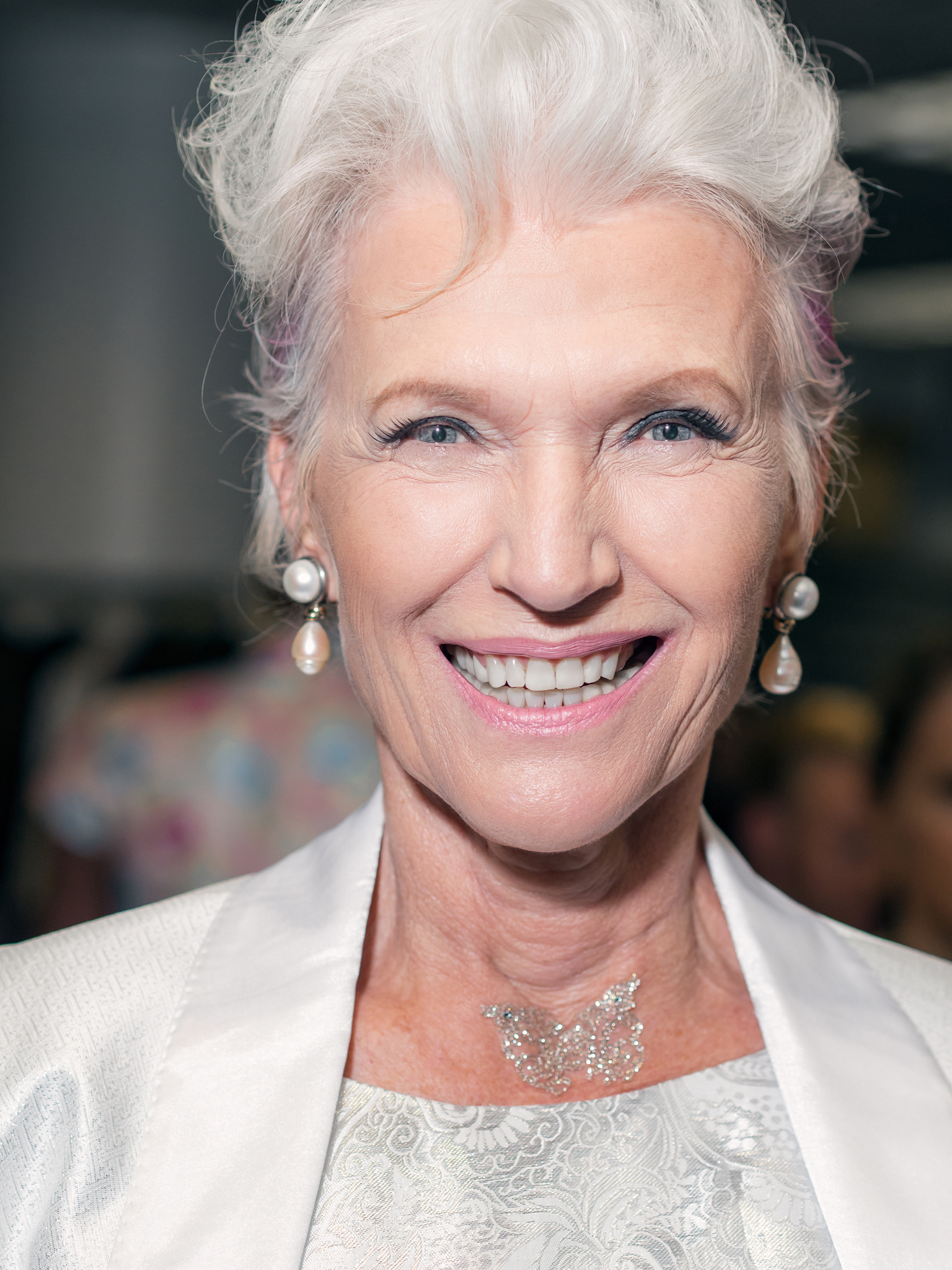 Photo by Luan Luu, Wikimedia Commons. License: CC BY 2.0.
Johannesburg to Toronto
In 1989, Maye Musk arrived in Toronto, Canada, with her daughter Tosca; Kimbal came later. Elon had already left South Africa alone in June 1988 and was by then enrolled at Queen’s University in Kingston, Ontario. Maye had divorced Errol Musk a decade earlier, around 1979, when Elon was about eight years old. The marriage had been, by all accounts, deeply difficult — Maye has described it as something she endured rather than enjoyed. Now she was starting over in a new country as a single mother.
The family landed in a rent-controlled apartment in Toronto. There was no safety net of wealth waiting for them. No trust fund. No family fortune to cushion the transition. Maye has been candid about how tight money was during this period, and one story in particular has stayed with me.
Maye has said she once cried over literally spilled milk — not as a metaphor, but because she could not afford to replace it.
That detail says everything about the daily reality of those years. This was not a family playing at hardship. This was a mother counting every dollar and knowing that a carton of milk on the floor meant a genuine problem.
Five Jobs
To keep the family afloat, Maye worked five jobs simultaneously. The number itself is staggering, but the nature of the work reveals something about her character. She was not simply surviving — she was strategically positioning herself and her children.
Her jobs included working as a research officer at the University of Toronto, drawing on her academic background in nutritional science. It was a strategic move — university employment provided stability and kept her connected to the academic world she valued.
She maintained her dietitian practice, drawing on her master’s degree in nutritional science. She had built expertise in this field over years, and she was not about to let it atrophy just because life had become harder. Maye also continued modeling — a career she had pursued since her youth in South Africa, where she had been a finalist in the 1969 Miss South Africa competition. As Vance notes, she has continued modeling into her sixties and beyond, appearing on covers of magazines like New York and Elle and even in Beyonce’s music videos.
Maye had grown up in a family of adventurers. Her parents, Joshua and Wyn Haldeman, had moved from Saskatchewan to South Africa in 1950, and made record-setting flights — including a 30,000-mile round trip to Australia in a single-engine Bellanca plane, believed to be the only private pilots to make the journey from Africa at the time. That spirit of daring would echo through everything her children would go on to build.
The remaining jobs filled whatever gaps were left. Every hour was accounted for. Every dollar had a purpose.
I wondered, reading about this period, how she managed the logistics alone. Five jobs and three children is not a schedule — it is a war of attrition against the clock. But Maye Musk has never been someone who waits for circumstances to improve. She improves circumstances.
The Front Row
One detail about the Musk family during this period is both charming and telling. When Maye had modeling jobs or fashion shows, she would bring her children along. Elon, Kimbal, and Tosca would sit in the front row of fashion shows — reading books. While other attendees watched the runway, the Musk children were buried in whatever they were reading at the time.
The thing I envy most about these founders is not their wealth. It is their clarity. They knew what they were building and why. I knew how to keep servers running. Those are not the same thing.
When I see these founders making million-dollar decisions in hotel lobbies and over lunch, I think about how long it took me to approve a two-hundred-dollar expense at my own company. The difference is not the money. It is the trust — in yourself and in the decision.
This image captures something essential about how Maye raised her children. Even when the children were young, Maye noticed something distinctive about Elon — he would drift into trancelike states of deep concentration, oblivious to the world around him:
“He goes into his brain, and then you just see he is in another world. He still does that. Now I just leave him be because I know he is designing a new rocket or something.” — Maye Musk, quoted in Vance, Elon Musk
She did not shield them from her working life. She brought them into it. They saw their mother working, hustling, building. They did not learn resilience from a lecture — they absorbed it by watching her live it, show after show, job after job.
Rebuilding from the Ground Up
Maye’s personal transformation during this period deserves its own attention. In her thirties, she lost 50 pounds through the nutritional science she practiced professionally. She applied her expertise to herself, and the discipline required to do that while managing five jobs and three children speaks to a kind of internal steel that most people never need to discover in themselves.
By her forties, Maye had rebuilt her modeling career in Canada. This is remarkable for an industry that famously discards women after thirty. Maye did not accept that timeline. She kept working, kept showing up, kept building her portfolio. The fashion industry eventually caught up to what she had always known about herself.
The woman who cried over spilled milk in a Toronto apartment would go on to become a CoverGirl model at 69 — the brand’s oldest spokesperson — gracing magazine covers and walking runways at an age when most people have long since retired.
That trajectory — from crying over spilled milk to CoverGirl — is not a fairy tale. It is the result of decades of relentless, unglamorous work.
The Musk Family Blueprint
As I explored in my earlier article on the Musk family’s backstory, Elon and Kimbal would go on to co-found Zip2 and launch the business careers that made them wealthy. Tosca would found Passionflix, a streaming service for romance films. All three became entrepreneurs. All three built companies from scratch.
When you look at what the Musk children accomplished, the question is not whether they were talented — of course they were. The question is where that talent was nurtured, and the answer is obvious. It was nurtured in a rent-controlled apartment in Toronto by a mother who worked five jobs and brought her kids to fashion shows because she could not afford a babysitter and would not dream of leaving them behind.
Maye Musk did not just raise three entrepreneurs. She demonstrated, through years of living example, what it looks like to refuse to be defeated by your circumstances. She showed her children that starting over is not a failure — it is an act of courage. She showed them that working five jobs is not a burden — it is what you do when three people you love are depending on you. That same courage drove Elon to leave South Africa at 17 with $2,000 and a suitcase of books, and it shaped Tosca’s path to building her own streaming empire.
What Resilience Actually Looks Like
There is a tendency in business writing to talk about resilience as though it is a personality trait — something you either have or you do not. Maye Musk’s story suggests something different. Resilience is not inherited. It is demonstrated. Her children did not learn to be tough from a gene. They learned it from watching their mother cry over spilled milk, wipe her eyes, and then leave for her second job of the day.
Every interview with Elon, Kimbal, or Tosca that touches on their mother carries the same tone: deep respect and a kind of awe at what she managed to do during those years. They know what it cost. They know what she sacrificed. And they carry that knowledge into everything they build.
Maye Musk proved that the most powerful thing you can give your children is not money, not connections, not a name. It is the lived example of someone who never, ever gives up. That example echoes forward through generations, and we are still watching it play out.
Sources
- Ashlee Vance, Elon Musk: Tesla, SpaceX, and the Quest for a Fantastic Future, Ecco, 2015 (Chapter 2: Africa)
- Maye Musk, A Woman Makes a Plan: Advice for a Lifetime of Adventure, Beauty, and Success, Viking, 2019
- Eric Jorgenson, The Book of Elon, 2021
- Franziska M. Renz and Julian U. N. Vogel, “Elon Musk: Leader or Liability?”, Journal of Case Research and Inquiry, Vol. 6, 2020