
An old university friend texted me last week asking if unlimited vacation policies were real or just a recruiting trick, because his company had just announced one and nobody knew what to do. I told him the answer was more complicated than he wanted it to be. Netflix’s “no rules” culture is really about replacing rules with personal accountability, and personal accountability is far more demanding than any policy manual.
Every company says it trusts its employees. How many actually prove it by eliminating every safety net, every approval chain, and every bureaucratic checkpoint — and then making that system work at a scale of thousands of employees across dozens of countries?
TL;DR — Netflix eliminated vacation tracking in 2003 and replaced its entire expense policy with five words: “Act in Netflix’s best interest.” There are no travel policies, no approval chains, and no per-diem rates. But the system is not anarchy — a 10% annual expense audit catches abuse, and the consequence is first-offense termination. The catch: this only works because Netflix pairs radical freedom with radical talent density, hiring only top performers and cutting everyone else through the Keeper Test.
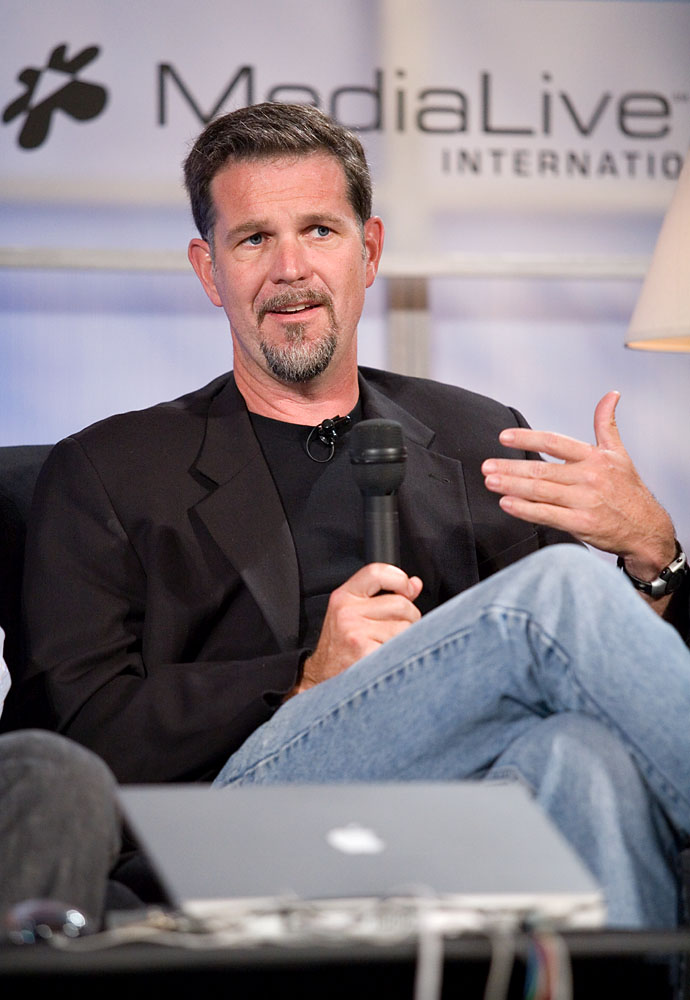 Photo: James Duncan Davidson, Wikimedia Commons. CC BY 2.0.
Did you know? Patty McCord, the woman who co-created Netflix’s no-rules culture — the unlimited vacation, the five-word expense policy, the Keeper Test — was herself let go under the Keeper Test she helped design.
In this article:
- The Day Netflix Stopped Counting Vacation Days
- The One-Sentence Expense Policy
- No Travel Policy Either
- Why This Only Works With Talent Density
- The Book That Explained It All
- A Company That Proved Trust Scales
- Sources
The Day Netflix Stopped Counting Vacation Days
In 2003, Netflix made a decision that the HR world thought was reckless. They eliminated vacation tracking. No accrual system. No maximum days. No minimum days. No forms to fill out. No manager approvals for time off. Employees would take vacation when they felt they needed it and coordinate with their teams to ensure work got done.
The reasoning, as Reed Hastings and Patty McCord explained it, was simple enough to fit on a napkin. Netflix did not track the number of hours people worked each day. Nobody clocked in or clocked out. So why were they tracking the days people did not work?
“We should focus on what people get done, not on how many days or hours they worked. Just as we don’t have a nine-to-five policy, we don’t need a vacation policy.”
— Reed Hastings, No Rules Rules (2020)
The key word there is “should.” Of course results matter more than hours. But implementing that belief as actual policy is something almost no company has the nerve to do. What if people take advantage? What if someone takes three months off? What if nobody takes vacation at all because there is no system telling them they have earned it?
When I freelanced, nobody tracked my hours but me. I still worked harder than I ever did in any structured environment — because every hour I did not bill was an hour I did not eat. The motivation was not a policy. It was ownership. Netflix bets that the same principle holds when you pay people top-of-market salaries and get out of their way.
Netflix’s answer to all of those questions was the same: we hired adults, so we will treat them like adults.
The One-Sentence Expense Policy
The vacation policy surprised people. The expense policy floored them. Netflix’s entire expense policy fits in a single sentence:
“Act in Netflix’s best interest.”
That is it. No per-diem rates for meals. No pre-approved hotel lists. No maximum airfare thresholds. No forms requiring three levels of management sign-off before you can book a conference registration. Just five words and the expectation that you will use judgment.
I wondered how this could possibly work in practice. In every company I have ever seen, expense policies exist precisely because some percentage of employees will spend irresponsibly if given the chance. Netflix knows this too. The difference is in how they handle it.
The Audit Nobody Talks About
Most writeups about Netflix’s “no rules” culture skip this part: the system has enforcement. It just has no bureaucracy.
Netflix conducts a 10% annual audit of all employee expenses. An internal team reviews a random sample of spending across the company. They are not looking for minor infractions or penny-pinching violations. They are looking for patterns of abuse — employees who are consistently spending in ways that a reasonable person would not consider “in Netflix’s best interest.”
When they find abuse, the consequence is first-offense termination. No warning, no conversation with HR, no performance improvement plan.
 Photo: Wikimedia Commons. CC BY 2.0.
And managers are required to tell their teams when someone has been fired for expense abuse. The identity is kept anonymous, but the fact of the termination and the reason for it are shared openly. Everyone on the team learns that the trust system has teeth.
Most companies build elaborate approval systems to prevent bad behavior before it happens. Netflix lets behavior happen freely and then responds with decisive consequences. We trust you completely, and if you violate that trust, you are gone.
I did some consulting work for the US government once. The procurement process for a simple software license took longer than the project it was needed for. That experience taught me that bureaucracy has a cost too — it is just harder to see on a spreadsheet because nobody tracks the hours lost to filling out forms.
No Travel Policy Either
The expense philosophy extends to travel. Netflix has no travel policy — no corporate booking tool, no mandate to fly economy, no per-night hotel caps.
The expectation is the same as everything else: use your judgment. If you are flying to a meeting that starts at 8 AM and there is a red-eye that gets you there at 6 AM, Netflix trusts you to decide whether you will be more effective arriving exhausted on the cheap flight or well-rested on the flight that leaves the day before with a hotel stay. The company would rather you show up sharp and effective than save $200 on airfare.
Traditional finance departments hate this. But Netflix’s argument is that the cost of the bureaucracy — the procurement systems, the approval workflows, the time employees spend filling out forms, the managers reviewing those forms — often exceeds the money saved by those controls.
I spent fifteen years solving technical problems because they were comfortable. The business problems — pricing, positioning, sales, growth — I left for someday, the way companies leave judgment to an expense policy. Someday never came. Netflix does not let “someday” exist. Every employee has to make the judgment call right now, today, with their own name on it.
Why This Only Works With Talent Density
This system would be a disaster at most companies. Netflix knows it.
The “no rules” approach only works as the second half of a two-part system. The first half is talent density — hiring and retaining only the highest-performing people, enforced through the Keeper Test.
I wrote about this in detail in my article on The Secret Strategy to Success of Netflix, where I traced how Hastings and McCord discovered that a smaller team of exceptional people outperformed a larger team with average performers. That discovery is the foundation on which every “no rules” policy rests.
“The best thing you can do for employees — a perk better than foosball or free sushi — is hire only ‘A’ players to work alongside them.”
— Reed Hastings and Erin Meyer, No Rules Rules (2020)
When every person on the team is an “A” player, the risk of abuse drops. High performers tend to be intrinsically motivated. They do not need rules to tell them to work hard, and they do not need expense caps to tell them to spend responsibly. They are invested in the company’s success because they take pride in their work.
Remove the underperformers who might abuse the system, and you can safely remove the rules designed to constrain them. The rules were never for the top performers anyway. They were always for the people who should not have been there in the first place.
At my hosting company, I kept people because I liked them and because firing someone felt cruel. Hastings would say that was a failure of leadership. He might be right. The people I kept out of loyalty were rarely the ones carrying the hardest projects.
The Virtuous Cycle
This creates what McCord and Hastings described as a virtuous cycle:
- High talent density means you can trust people with freedom
- Freedom attracts more top talent who want autonomy
- More top talent increases talent density further
- Higher density enables even more freedom
Each turn of the cycle reinforces the previous one. The company becomes more attractive to exactly the kind of people who thrive without rules, and less attractive to the kind of people who need them.
The Book That Explained It All
In 2020, Hastings co-authored “No Rules Rules: Netflix and the Culture of Reinvention” with Erin Meyer, an INSEAD professor who brought an outsider’s analytical eye to Netflix’s culture. The book examined the costs, the failures, and the specific conditions required to make the system work — not just the wins.
 Photo: Wikimedia Commons. Free to use.
Meyer interviewed Netflix employees across multiple countries and levels of seniority. She documented cases where the system broke down, where cultural differences made the approach harder, and where Netflix had to adapt its principles for international contexts. The result was far more honest than any corporate press release.
The book’s sharpest argument is that removing rules does not reduce accountability — it increases it. When there is no policy to hide behind, every decision you make is yours. You cannot say “I was just following the travel policy” when you book a questionable flight, because there is no travel policy. You own the decision completely.
“The most important thing for the future of our company is that the people have freedom to do really great work.”
— Reed Hastings, interview with Harvard Business Review (2014)
Most corporate systems diffuse responsibility — approvals, committees, policies, sign-offs. Netflix’s system concentrates it. Every employee is responsible for every dollar they spend, every day they take off, every decision they make. People who thrive on ownership stay. Everyone else leaves or gets pushed out.
A Company That Proved Trust Scales
When Netflix eliminated vacation tracking in 2003, they had a few hundred employees. Today, they have over 13,000 employees in more than 190 countries. The no-rules system has scaled across languages, cultures, regulatory environments, and an employee base that has grown by orders of magnitude.
It is easy to trust 50 people in a single office. Trusting 13,000 people scattered across the globe is a different problem. Netflix proved that trust, paired with high talent density and clear accountability, does not break at scale.
For anyone managing a team, building a company, or questioning whether all those approval workflows are really necessary: the rules you create for your worst employees are often the rules that drive away your best ones. Remove the rules, raise the talent bar, enforce consequences for abuse, and trust that the adults you hired will act like adults.
Sources
- Hastings, Reed and Meyer, Erin. No Rules Rules: Netflix and the Culture of Reinvention. Penguin Press, 2020.
- McCord, Patty. Powerful: Building a Culture of Freedom and Responsibility. Silicon Guild, 2018.
- Hastings, Reed. “How Netflix Reinvented HR.” Harvard Business Review, January 2014.
- Netflix Culture Memo. “Netflix Culture — Freedom & Responsibility.” Netflix Jobs, accessed 2024.