I have always loved origin stories — especially the ones where something world-changing begins with something absurdly ordinary. The automobile revolution started with a guy puttering down a road at four miles per hour. The aviation revolution started with a twelve-second flight. And the e-commerce revolution? It started with a Sting CD and a large pepperoni pizza.
The year was 1994. The World Wide Web was barely two years old as a public medium. Most people had never seen a web browser. And yet, within a span of weeks, two separate transactions took place that would foreshadow a $6 trillion global industry. I wanted to trace the exact details of how the very first things were bought and sold on the internet, because the stories are stranger and more human than I expected.
Did you know? The number 12 follows e-commerce everywhere: the first online sale was a Sting CD for $12.48, Kleiner Perkins’ Google round was $12.5 million, and Musk put $12 million into X.com.
Twelve Dollars and Forty-Eight Cents
On August 11, 1994, a twenty-one-year-old entrepreneur named Dan Kohn completed what is widely recognized as the first secure, encrypted e-commerce transaction in history. Kohn ran a website called NetMarket, based in Nashua, New Hampshire. A friend in Philadelphia used a credit card to purchase a copy of Sting’s album “Ten Summoner’s Tales” for $12.48, plus shipping.
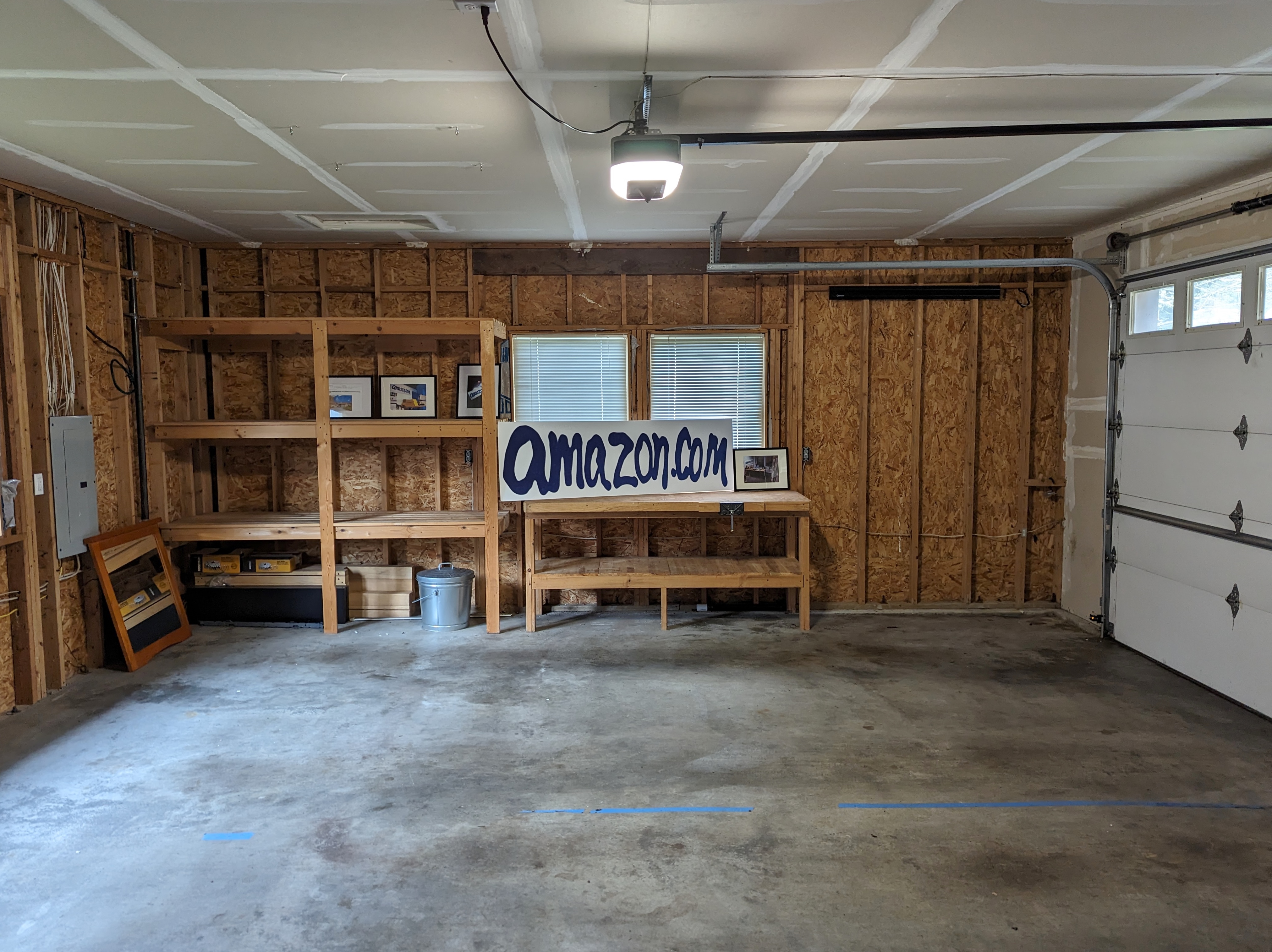 Photo: Wikimedia Commons. CC BY-SA 4.0. Less than a year after the first online sale, Jeff Bezos would launch Amazon from this garage.
What made this transaction historic was not the CD itself — it was the technology behind the purchase. Kohn used PGP encryption to secure the credit card data as it traveled across the internet. This was the first time anyone had demonstrated that you could safely transmit financial information online. The New York Times covered the story, reporting that the transaction used “a readily available version of powerful data encryption software” to protect the buyer’s credit card number.
It is worth pausing to appreciate what this meant in 1994. The internet was widely regarded as an interesting but fundamentally unserious medium. The idea that you would type your credit card number into a computer screen and trust that it would reach a merchant safely — rather than being intercepted by some unknown third party — was genuinely novel. Kohn proved it could work. That proof of concept, modest as it was, cracked open a door that would never close.
One Large Pepperoni, Extra Cheese
Around the same time — in late August 1994 — Pizza Hut launched a website called PizzaNet in Santa Cruz, California. PizzaNet was exactly what it sounds like: a website where you could order a pizza. It was a simple HTML form. You selected your toppings, entered your address, and submitted the order.
The first order placed through PizzaNet was a large pepperoni pizza with mushrooms and extra cheese. But what happened next reveals just how primitive the infrastructure was. A Pizza Hut employee called the customer back to verify the order. Why? Because they assumed it might be a prank. The idea that someone would seriously use a computer to order food was so unusual that the restaurant felt the need to confirm that a real human being was behind the request.
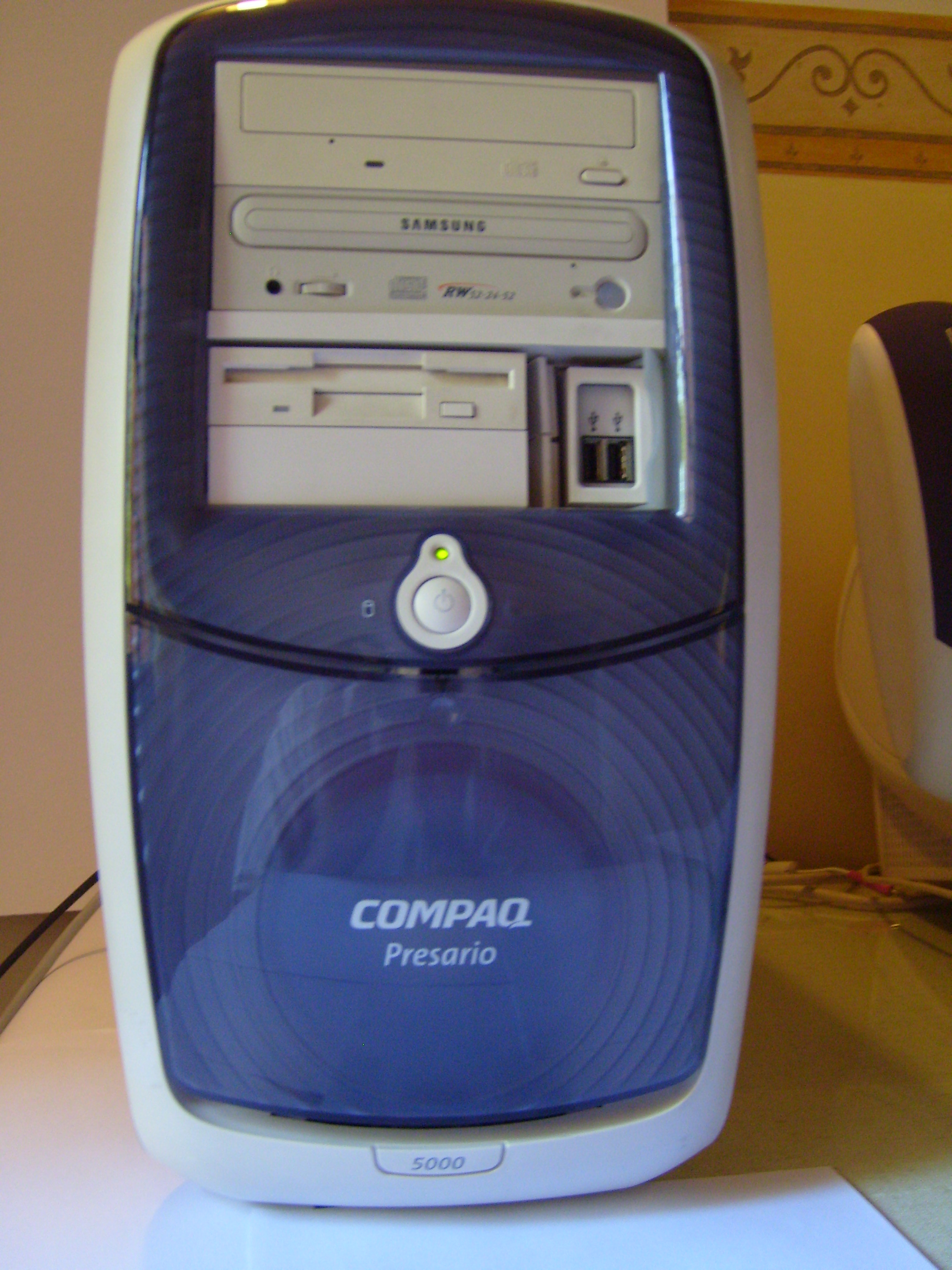 Photo: Wikimedia Commons. CC BY-SA 3.0. In 1994, the computers people used to access the web looked nothing like the devices we carry today.
And here is the detail that makes me smile: the customer paid cash on delivery. The entire premise of PizzaNet was online ordering, but the payment still happened the old-fashioned way — a person handing bills to a delivery driver at the front door. The internet was the ordering mechanism, not the payment mechanism. That distinction would take a few more years to disappear.
Before Amazon, Before eBay
I think it is easy to forget, sitting in a world where we can order anything from anywhere and have it delivered within hours, just how early August 1994 was in the timeline of the commercial internet. Consider what had not yet happened:
Reading how Kohn and Pizza Hut just tried something and watched it work makes me realize my hosting company failed not from a single bad decision but from a thousand days of not making the decisions that mattered.
The thing about running a small company that never grows is that everyone around you thinks it is fine. Your family thinks it is fine. Your customers think it is fine. In 1994, most people felt that same way about the internet itself. Only you know it is not fine. And you cannot explain why.
- Amazon would not launch until July 1995 — nearly a year later
- eBay would not launch until September 1995
- The Netscape IPO — the event that convinced Wall Street the internet was real — would not happen until August 1995
- PayPal would not be founded until 1998, initially as a way to beam money between Palm Pilots
Dan Kohn’s Sting CD and Pizza Hut’s pepperoni pizza arrived before any of these milestones. They were the proof points — the earliest demonstrations that buying things through a computer screen was not just theoretically possible but practically achievable.
The Numbers Since Then
The growth from those two transactions to the present day is almost incomprehensible. Global e-commerce revenue reached approximately $6.3 trillion in 2024, according to eMarketer. Online food delivery alone — the direct descendant of PizzaNet — is a $350 billion global market. Amazon, which launched eleven months after Kohn’s Sting CD sale, now generates over $600 billion in annual revenue.
 Photo: Wikimedia Commons. CC BY-SA 3.0. Within a few years of the first online sale, devices like the Palm Pilot would bring computing into people’s pockets.
Every single one of those billions of dollars traces its conceptual lineage back to a moment in 1994 when someone decided to type a credit card number into a web form and trust that it would work. The technology has changed beyond recognition — from PGP-encrypted text transmissions to one-click purchasing, mobile wallets, and cryptocurrency — but the fundamental bet is the same: you can buy something through a screen, and it will show up.
Why These Stories Matter
I find these origin stories compelling not because of the technology involved — a simple HTML form and PGP encryption are laughably primitive by today’s standards — but because of the mindset they represent. In 1994, the overwhelming consensus was that the internet was a curiosity. It was something academics used. It was something hobbyists played with. The idea that it could be a commercial medium — a place where real money changed hands for real products — was not obvious.
Dan Kohn and the team at Pizza Hut did not wait for the consensus to shift. They did not wait for the Netscape IPO to validate the commercial internet. They built something, put it online, and tried it. The Sting CD and the pepperoni pizza were not just products. They were experiments — experiments that proved an entire economy was possible.
From one CD and one pizza to a $6 trillion industry in thirty years. I cannot think of a better argument for the power of just trying something and seeing if it works.
Sources
- “Attention Shoppers: Internet Is Open,” The New York Times, August 12, 1994
- “The History of E-Commerce,” Computer History Museum
- Pizza Hut PizzaNet launch documentation, 1994, via Internet Archive
- eMarketer Global E-commerce Forecast, 2024
- “The Everything Store” by Brad Stone (2013, Little, Brown and Company)
- Dan Kohn’s NetMarket transaction, as documented in contemporary New York Times reporting
- Statista, “Online Food Delivery Revenue Worldwide,” 2024