I was walking the dog the other night and realized I had not looked at a paper map in probably fifteen years. My phone just tells me where to go. But somebody had to be first at putting maps online, and it was not Google. I had been reading about the early days of Elon Musk’s first company, Zip2, when I stumbled across a detail that stopped me in my tracks. Zip2 was building vector maps and business directory software for newspapers in the mid-1990s — essentially trying to put local maps and directions online. At almost exactly the same time, a small company in Lancaster, Pennsylvania — about as far from Silicon Valley as you can get — was building something remarkably similar. That company was MapQuest, and it would become one of the most visited websites in America before most people had even heard the word “Google.”
What happened to MapQuest is a story about timing, technology, and what happens when a dominant player stops innovating.
From GeoSystems to MapQuest
MapQuest did not start as an internet company. It began life as GeoSystems Global Corporation, a mapping and cartography firm that produced paper maps and atlases. The company had deep expertise in geographic data and saw the internet as a new distribution channel for its core product. In 1996, it launched MapQuest.com, one of the first consumer-facing web mapping services.
The timing was perfect. The mid-1990s internet was exploding with new users — millions of Americans were getting online for the first time through AOL, CompuServe, and local dial-up providers. These new users were discovering that the internet could do practical things, not just display academic papers and hobbyist message boards. And few things are more practical than figuring out how to get from point A to point B.
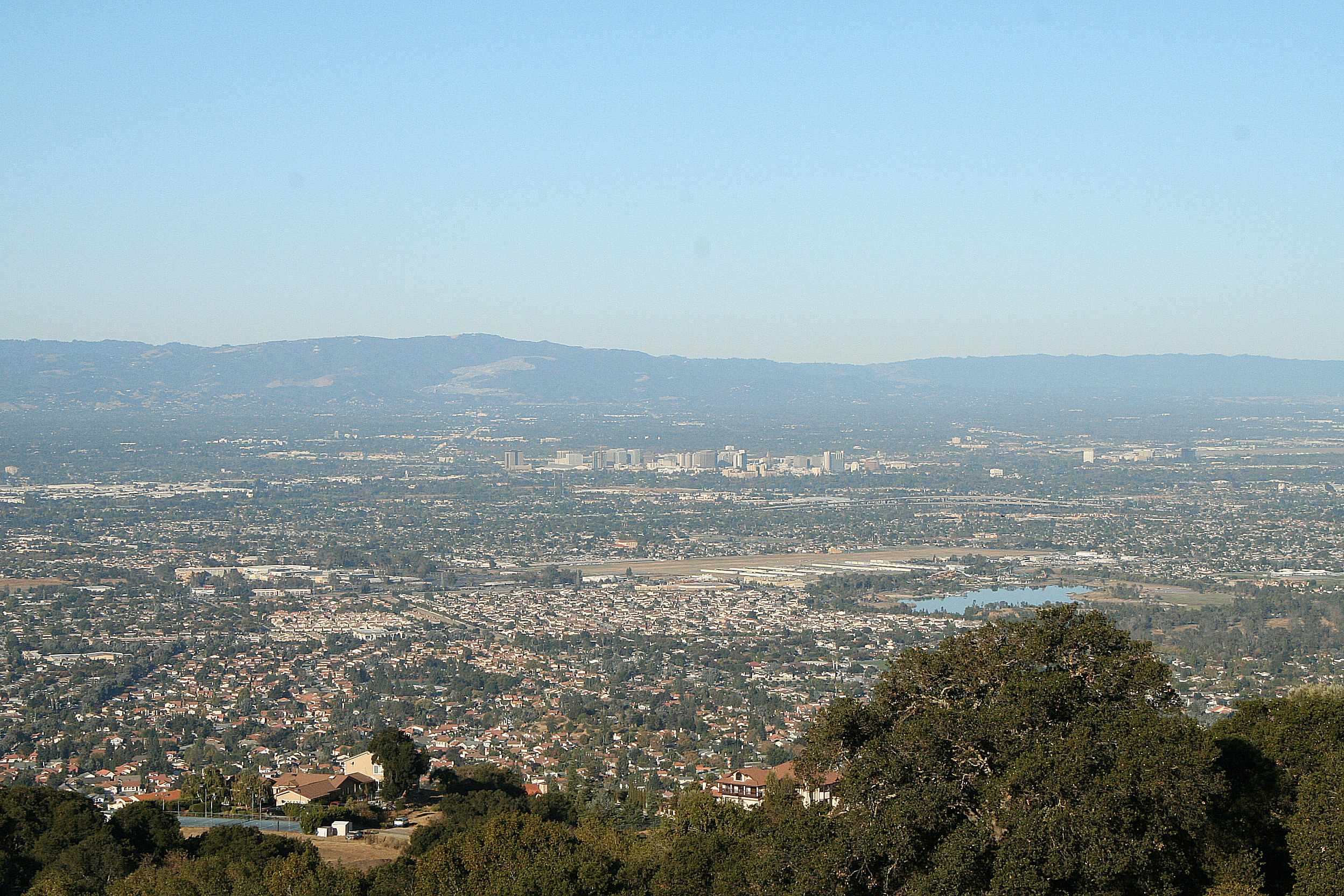 Photo: Wikimedia Commons. CC BY-SA 3.0. Silicon Valley, the epicenter of the tech boom — but MapQuest proved you did not have to be here to build a major internet product.
MapQuest’s interface was simple. You entered a starting address and a destination, clicked a button, and the website generated turn-by-turn driving directions along with a basic map. By today’s standards, this sounds unremarkable. In 1996, it felt like magic. Before MapQuest, getting driving directions meant calling someone who had been there before, consulting a paper map, or stopping at a gas station and hoping the attendant knew the route.
The Ritual of Printing Directions
What I find most fascinating about MapQuest is the behavior it created. Millions of Americans developed a ritual that now seems almost quaint: before leaving for an unfamiliar destination, they would sit down at their computer, type in the addresses, and print the directions. People would staple the pages together, fold them into their pockets, and read them aloud to the driver from the passenger seat.
This ritual was so widespread that it became a cultural reference point. Comedians joked about it. Office printers ran low on paper because of it. And everyone who used MapQuest in the late 1990s has at least one story about directions that were spectacularly wrong — a turn that did not exist, a road that had been closed for years, or a route that took you through the middle of nowhere when a highway was right there.
Despite its flaws, MapQuest was enormously successful. At its peak, the service attracted tens of millions of monthly visitors, making it one of the most trafficked websites on the entire internet. AOL announced the acquisition of MapQuest in December 1999 for approximately $1.1 billion — a massive sum that reflected how central online mapping had become to the daily lives of internet users.
Zip2 Was Doing the Same Thing
What strikes me about the MapQuest timeline is how closely it parallels the work that Elon Musk and his brother Kimbal were doing with Zip2 in Palo Alto. Zip2, founded in 1995, was building vector maps and business directory software that newspapers could embed on their websites. The idea was similar — put maps and local information on the internet — but the business model was different. MapQuest went directly to consumers. Zip2 went through newspapers as intermediaries.
MapQuest reached tens of millions of users and Zip2 scaled through its newspaper deals, but at my company I was the bottleneck and I did not know it. Every decision went through me because I thought that was what being the owner meant. It is not. It is what being a one-person company means.
Both companies recognized the same fundamental insight: people needed maps on the internet. The difference was execution and distribution. MapQuest had the consumer brand and the traffic. Zip2 had the newspaper partnerships and the B2B contracts. Zip2 was eventually sold to Compaq for $307 million in 1999, giving Musk the capital to start X.com, which would merge with Confinity to become PayPal. MapQuest took the consumer route and won the traffic war — until someone bigger showed up.
The Day Google Maps Arrived
On February 8, 2005, Google launched Google Maps, and the online mapping world changed overnight. The technical difference was immediately obvious. MapQuest used a traditional web architecture: you clicked a button, the page reloaded, and a new map appeared. Google Maps used a technology called AJAX (Asynchronous JavaScript and XML) that allowed the map to update without reloading the page. You could click and drag the map. You could zoom in and out smoothly. The map felt alive in a way that MapQuest’s static, page-by-page experience simply could not match.
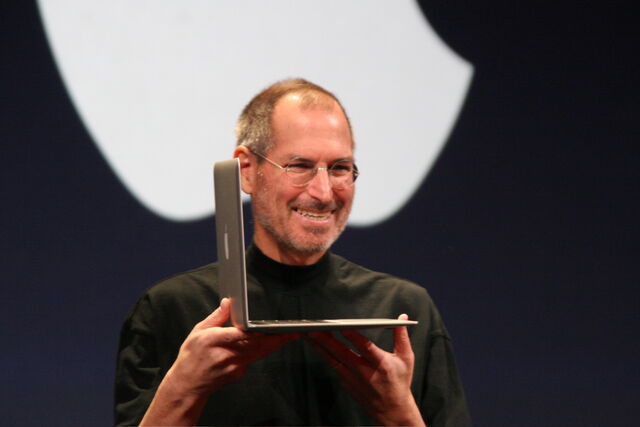
 Photo by Steve Jurvetson on Wikimedia Commons. CC BY 2.0. Elon Musk, who built Zip2’s mapping technology in the mid-1990s, years before Google Maps existed.
The impact was devastating and swift. MapQuest’s market share, which had been dominant for nearly a decade, collapsed within about two years. Google Maps did not just offer a better product — it offered a fundamentally different experience. And because it was Google, it had the distribution, the engineering talent, and the infrastructure to scale instantly. Google later added Street View in 2007 and launched Google Maps for mobile, which became the default navigation tool for an entire generation of smartphone users.
MapQuest did not disappear entirely — it still exists today, owned by System1 after being passed around by various parent companies. But it went from being the dominant mapping service on the internet to an afterthought, largely forgotten by the same users who once printed its directions by the millions.
What MapQuest Actually Proved
I think MapQuest deserves far more credit than it typically receives. It was the company that proved, at massive scale, that the internet could replace physical maps. That insight — which seems obvious now — was not obvious at all in 1996. Many people in the mid-1990s still viewed the internet as a novelty, a toy for techies and early adopters. MapQuest showed that ordinary people, the kind who had never written a line of code and did not know what a URL was, would use the internet to solve a real, everyday problem.
That behavioral shift — from paper maps to online directions — paved the way for Google Maps, Waze, Apple Maps, and the entire GPS navigation industry. Every time you open your phone and tap “Navigate,” you are building on the foundation that MapQuest laid in the early days of the commercial internet. The company that taught America to get directions online may have lost the war, but it won the argument. The internet was not just for geeks. It was for everyone.
Sources
- Garfield, Simon. On the Map: A Mind-Expanding Exploration of the Way the World Looks. Gotham Books, 2013.
- AOL. “AOL Completes Acquisition of MapQuest.com.” Press release, 2000.
- Google Official Blog. “Mapping Your Way.” February 8, 2005.
- Peterson, Michael P. Mapping in the Cloud. Guilford Press, 2014.
- Vance, Ashlee. Elon Musk: Tesla, SpaceX, and the Quest for a Fantastic Future. Ecco, 2015.
- StatCounter and comScore historical data on mapping website market share, 2005-2010.
- Madrigal, Alexis C. “The Secret History of the Future of Maps.” The Atlantic, September 2012.