

I was on the train home last Tuesday, reading yet another “genius founder” profile of Elon Musk, when it hit me that I had been making the same mistake as everyone else. I kept calling it the “Elon Musk story.” But the founding of Zip2 was never a solo act. It was two brothers, sleeping in the same office, sharing the same computer, building a company together. And what Kimbal Musk did after Zip2 sold for $307 million is a story that deserves to be told on its own terms.
What happens when you walk away from millions and decide that your calling has nothing to do with technology?
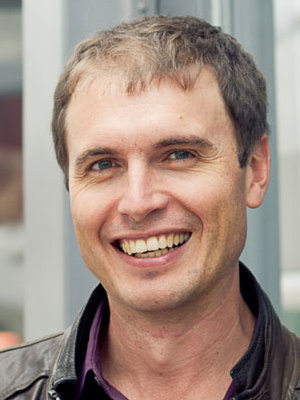 Photo by Wikiupdate1019, Wikimedia Commons. License: CC BY-SA 3.0.
The $5,000 That Started Everything
Before Zip2, before the millions, Kimbal’s first taste of entrepreneurship came in 1994 when he started a College Pro Painters franchise. It was a student-run house painting business, the kind of hustle that teaches you more about sales, logistics, and managing people than any MBA program. He was good at it. But when his older brother called from California with an idea about putting business directories on the internet, Kimbal didn’t hesitate.
He put $5,000 into Zip2. Combined with Elon’s $2,000 and Greg Kouri’s $8,000, that $5,000 was a meaningful chunk of the startup’s initial capital. The idea had come from a road trip the brothers took through the desert. Kimbal wasn’t a passive investor. He moved to Palo Alto, worked out of the same cramped office, and helped build the company from the ground up. He handled the business side while Elon wrote the code.
When Compaq acquired Zip2 in February 1999, both brothers walked away with life-changing money. Elon took his $22 million and immediately plowed it into X.com, which would become PayPal. Kimbal could have followed the same path. He had the track record, the connections, and the capital to launch another tech company.
He chose a completely different direction.
From Silicon Valley to Culinary School
After the Zip2 exit, Kimbal enrolled at the French Culinary Institute in New York City. For someone who had just made millions in the tech industry, this was not the obvious next move. His peers were starting internet companies, raising venture capital, and chasing the dot-com boom. Kimbal was learning how to make sauces.
I wondered what drove the decision. In interviews over the years, Kimbal has talked about a growing disconnection he felt between the food people ate and where it actually came from. The American food system, he observed, had become industrialized to the point where most people had no relationship with the farmers who grew their food. Supermarket produce traveled thousands of miles. Fast food dominated entire neighborhoods. The connection between land, farmer, and plate had been severed.
Kimbal wanted to rebuild that connection. And he wanted to do it not as an activist writing policy papers but as a chef and restaurateur who could demonstrate a different way.
The Kitchen: A Community Bistro
After culinary school, Kimbal moved to Boulder, Colorado. In April 2004, he opened The Kitchen, a community bistro co-founded with artist Jen Lewin and chef Hugo Matheson. The concept was simple but, at the time, radical: the restaurant would buy food directly from local farmers.
These founder stories all have a moment of transformation — a decision that changed the trajectory, the way Kimbal chose a culinary school over another startup. My company never had that moment. Not because the opportunity was not there, but because I was not looking for it.
When I read about Reed Hastings offering his resignation to his own board, I think about the times I should have had that level of honesty with myself about my own company — the kind of honesty it took Kimbal to walk away from tech entirely. I was never that brave.
No industrial supply chains. No frozen shipments from across the country. The Kitchen built relationships with ranchers, dairy farmers, and vegetable growers within driving distance of the restaurant. The menu changed with the seasons because the ingredients changed with the seasons. If the local farm didn’t have tomatoes in February, there were no tomatoes on the menu in February.
This wasn’t a new idea in the abstract. Alice Waters had been championing farm-to-table cooking at Chez Panisse in Berkeley since the 1970s. But The Kitchen brought the philosophy to a mid-market restaurant in a mid-sized city. It wasn’t fine dining for the elite. It was a neighborhood bistro where the community could eat well and know exactly where their food came from.
Forbes noted that Kimbal brought a Silicon Valley mindset to the restaurant business, treating it with the same data-driven, scalable approach he had learned in tech.
The Kitchen expanded. More locations opened across Colorado and into other states. Each one maintained the same commitment to local sourcing. What had started as a single restaurant became a restaurant group with a clear mission: to make real food accessible and to support the local farming economy.
Big Green: 600 Schools and 300,000 Students
The restaurant business would have been enough for most people. But Kimbal saw a deeper problem. Adults might choose to eat at The Kitchen, but what about children who had never seen a vegetable growing in soil? What about kids in urban neighborhoods where the nearest fresh produce was a bus ride away?
In 2011, Kimbal co-founded a nonprofit called The Kitchen Community, later renamed Big Green, with Hugo Matheson. The mission was straightforward and ambitious: install Learning Garden outdoor classrooms in schools across America.
These weren’t decorative planters. They were fully functioning gardens built into schoolyards, designed to be integrated into the curriculum. Students would plant seeds, tend crops, harvest vegetables, and eat what they grew. Science teachers used the gardens for biology lessons. Math teachers used them for measurement exercises. The gardens became living classrooms that connected academic subjects to the physical world.
The scale Kimbal achieved was remarkable. By 2019, Big Green had installed learning gardens in nearly 600 schools across seven cities, reaching more than 300,000 students daily. These weren’t pilot programs. This was a nationwide operation, funded through a combination of donations, grants, and Kimbal’s own money.
I find the ambition here particularly striking. Kimbal didn’t start a school garden and hope it would inspire others. He built an organization designed to scale the idea across the country. The Silicon Valley instinct, the obsession with growth and replicability, didn’t disappear when he left tech. He just pointed it at a different problem.
The Board Member Who Would Rather Be Farming
Kimbal sits on the board of directors at Tesla. He has been an investor in his brother’s companies from the beginning. He understands technology, markets, and the dynamics of hypergrowth companies. But when you watch him speak in interviews, his energy changes when the topic shifts from Tesla stock to soil health and food access.
This is not a man who fell into the food industry because tech didn’t work out. Tech worked out spectacularly. Kimbal chose food because he believed it mattered more. He has spoken about the American food system as a public health crisis, pointing to the connections between industrial food production, childhood obesity, and chronic disease. The gardens, the restaurants, the farming partnerships, these are not hobbies. They are his response to a problem he considers urgent.
What makes that decision so striking is that the most important technology, in his view, is the one that grows in dirt — not investing in Zip2 or sitting on Tesla’s board.
Finding Your Own Path
When I think about the Musk family, the pattern that keeps emerging is not a shared obsession with rockets or electric cars. It is a shared capacity to see what doesn’t exist and build it. Elon saw that the internet needed maps. Kimbal saw that America needed a new relationship with food. Their sister Tosca saw that romance readers had no streaming platform and built Passionflix. All three siblings acted on their observations with the same intensity, the same willingness to risk their own money, and the same refusal to do things the way they had always been done.
The easy version of Kimbal’s story is that he is Elon Musk’s brother. The true version is that he is someone who took a $5,000 bet on a startup, helped build it into a $307 million exit, and then had the clarity and the courage to walk away from the industry that made him wealthy in order to pursue the work he believed would matter most.
Success isn’t following someone else’s path, no matter how spectacular that path might be. It is having the self-awareness to find your own. Kimbal Musk understood that before most people even start looking.
Sources
- Ashlee Vance, Elon Musk: Tesla, SpaceX, and the Quest for a Fantastic Future, Ecco, 2015 (Chapters 2-4: Africa, Canada, Elon’s First Start-Up)
- Eric Jorgenson, The Book of Elon, 2021
- Franziska M. Renz and Julian U. N. Vogel, “Elon Musk: Leader or Liability?”, Journal of Case Research and Inquiry, Vol. 6, 2020



.jpg)