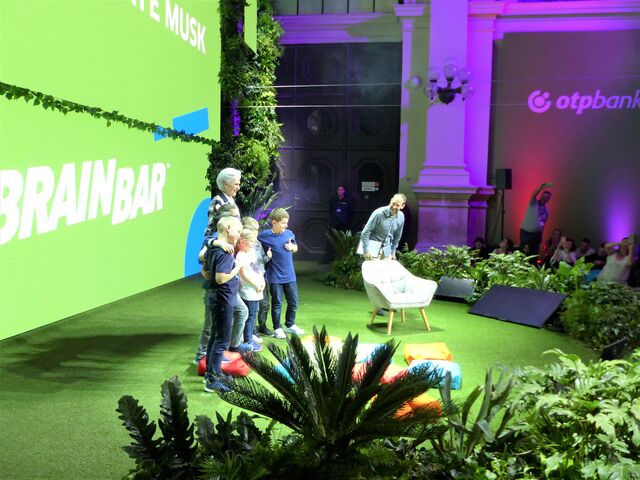
I found an old Palm Pilot in a drawer last month while cleaning out my desk, and I held it up like some kind of artifact. My partner asked what it was. I said it was basically the grandfather of your iPhone — and then I started tracing that line backward, from the iPhone to see where the idea of a pocket-sized computer actually originated. I kept running into a name that does not get nearly enough attention. Not Steve Jobs. Not Jeff Hawkins. Donna Dubinsky. She was the CEO who turned the Palm Pilot from an engineering prototype into a mass-market phenomenon, the co-founder who launched a competitor that took 30% of the handheld market within a year, and one of the people most responsible for proving that the computer in your pocket was not a fantasy. It was inevitable.
How does someone go from defending Apple’s dealer network to building the device that paved the way for every smartphone on the planet?
Yale, Harvard, and Apple
Donna Dubinsky’s path to Silicon Valley was anything but predictable. She earned a BA in History from Yale University — not computer science, not electrical engineering, but history. She then went to Harvard Business School, graduating with her MBA in 1981. These were not the credentials that typically produced technology executives in the early 1980s. But Dubinsky had something that mattered more than a technical degree: she understood how to get products into customers’ hands.
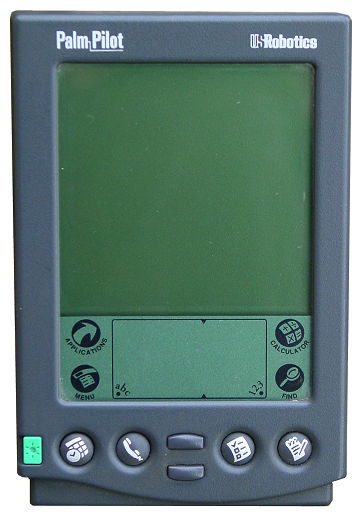 Photo: Wikimedia Commons. CC BY-SA 3.0. Before the iPhone, before Android, the Palm Pilot proved that people wanted a computer in their pocket.
After Harvard, Dubinsky joined Apple Computer in its early years — when the company was still a scrappy upstart fighting for market share against IBM. At Apple, she took on one of the most consequential internal battles in the company’s history. Apple’s leadership was considering eliminating its dealer distribution network in favor of a direct sales model. Dubinsky fought to save the dealer network, arguing that Apple needed the reach and relationships that independent dealers provided. She won.
That fight taught Dubinsky something important: technology companies do not succeed on engineering alone. They succeed when the product reaches the customer, and the path from factory to customer is a problem worth solving with the same intensity as the product itself.
Palm Computing: Eight People and an Idea
In 1992, Dubinsky became CEO of Palm Computing, which at the time was an eight-person startup with a big idea and very little else. The company had been founded by Jeff Hawkins, an engineer obsessed with the concept of handheld computing. Hawkins had a prototype and a vision. What he needed was someone who could build a company around it.
The handheld computing market in the early 1990s was littered with failures. Apple had launched the Newton MessagePad in 1993, a product that was ahead of its time but plagued by its infamously unreliable handwriting recognition. Other companies had tried and failed to convince consumers that they needed a small computing device. The conventional wisdom was that handhelds were a niche product for technologists, not a mass-market category.
Dubinsky and Hawkins disagreed. They believed the key was simplicity. Where the Newton tried to be a full computer in miniature, the Palm Pilot focused on doing a few things extremely well: calendar, contacts, to-do lists, and notes. It synced with your desktop computer using a cradle. It fit in a shirt pocket. And it cost $299 — a fraction of what competitors were charging.
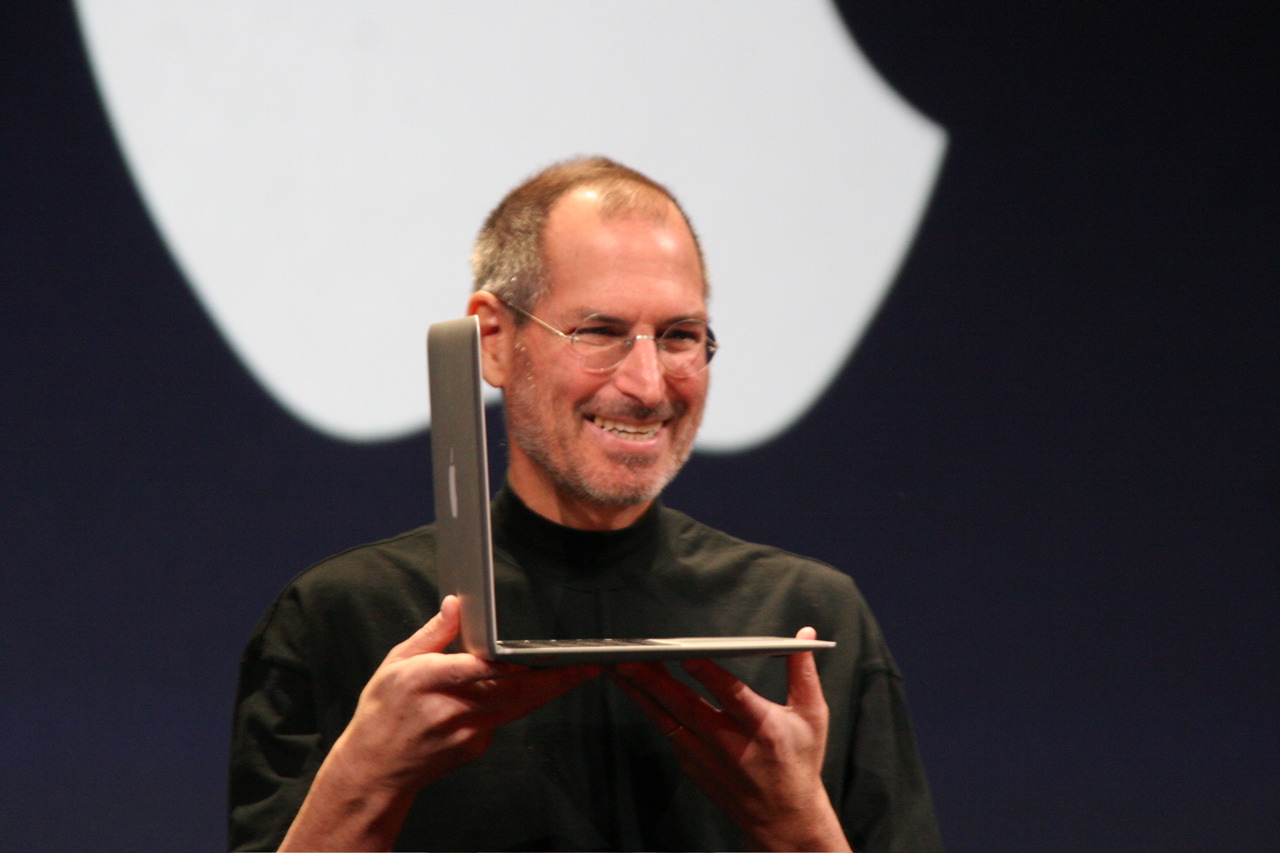 Photo: Wikimedia Commons. CC BY-SA 2.0. Jobs would later revolutionize handheld computing with the iPhone, but the Palm Pilot had already proven the market existed.
Under Dubinsky’s leadership, the Palm Pilot launched in 1996 and became one of the fastest-selling computing devices in history. Within eighteen months, Palm had sold over a million units. The device was everywhere — in the hands of executives, doctors, students, and anyone who needed to stay organized. The Palm Pilot did not just succeed. It dominated the personal digital assistant (PDA) market.
The 3Com Acquisition and a Bold Exit
Success, however, came with complications. 3Com acquired Palm Computing, and Dubinsky found herself caught up in the politics of a large corporation — exactly the kind of environment where innovation tends to slow down. By 1998, Dubinsky and Hawkins decided they had had enough. They left Palm to start something new.
My hosting company was the kind of business that runs on autopilot. The problem with autopilot is that it takes you wherever you were already going — which is why Dubinsky and Hawkins walked away from Palm’s corporate politics to start Handspring instead.
When I read about Dubinsky pivoting from Palm to Handspring, I think about my own company. I never pivoted. I never even considered it. The hosting business was what I knew, and I stayed in it long past the point where I should have asked: is this still the right business?
What they built next was even more ambitious.
Handspring: The Modular Revolution
In 1998, Dubinsky and Hawkins co-founded Handspring, a company that aimed to do what Palm had done — but better. The flagship product was the Visor, a handheld device that launched in 1999 and took an audacious approach to hardware design: modular expansion slots called Springboard modules.
The Springboard slot was a physical bay on the back of the Visor that could accept snap-in hardware modules. You could add a camera, a GPS receiver, a phone module, or a music player — turning your PDA into a completely different device depending on which module you inserted. This was modular computing years before the concept became fashionable.
The market responded. Within its first year, the Visor captured approximately 30% of the handheld computing market. Handspring was shipping devices as fast as it could make them, and the Springboard ecosystem attracted dozens of third-party module makers.
But Dubinsky and Hawkins were already thinking ahead. They could see that the future of handheld computing was not in PDAs and separate phones. The future was in combining them. That insight led to the Treo — one of the first true smartphones. The Treo combined a phone, a PDA, a web browser, and an email client into a single device with a full QWERTY keyboard. It was the direct ancestor of the devices we carry today.
 Photo: Wikimedia Commons. CC BY-SA 3.0. The garage tradition of Silicon Valley that produced HP and Apple also produced the scrappy companies that built handheld computing.
Handspring eventually merged back into Palm in 2003, and the Treo line continued under the Palm brand. But by then, the road map was clear. The smartphone revolution that Apple would accelerate with the iPhone in 2007 was already underway, and Dubinsky’s fingerprints were on its earliest chapters.
From Handhelds to Neuroscience
After Handspring, Dubinsky did not retire. She co-founded Numenta with Jeff Hawkins in 2005, a company focused on machine intelligence inspired by neuroscience. Numenta’s approach is rooted in Hawkins’s theory of how the neocortex works — the idea that understanding the brain’s architecture is the key to building truly intelligent machines. It is a long-term bet on a fundamentally different approach to artificial intelligence, and it reflects the same willingness to challenge conventional wisdom that characterized Dubinsky’s entire career.
The Through Line
When I look at Donna Dubinsky’s career — from Apple to Palm to Handspring to Numenta — I see a through line that is easy to miss if you focus only on the technology. Dubinsky’s superpower was not engineering. It was the ability to look at a technology that everyone else considered a toy or a niche and see a mass market waiting to be served.
At Apple, she saw that the dealer network was the bridge between a great product and a customer. At Palm, she saw that a handheld computer could be a mainstream device if you made it simple enough. At Handspring, she saw that modularity and convergence were the future of mobile computing. At every step, she was ahead of the curve — not because she was guessing, but because she understood customers better than most technologists do.
The PayPal team was building a way to beam money between Palm Pilots around the same time Dubinsky was shipping the devices those payments ran on. The entire ecosystem of handheld computing — hardware, software, payments, communication — was being built simultaneously by different teams who could all see the same future.
Donna Dubinsky proved that the handheld computer revolution was possible. Every smartphone in every pocket on the planet descends, in some meaningful way, from the work she did. That is a legacy worth remembering.
Sources
- “Piloting Palm” by Andrea Butter and David Pogue (2002, Wiley)
- Harvard Business School case study: “Donna Dubinsky and Apple Computer, Inc.” (HBS Case 486-083)
- Palm Computing corporate history, via Computer History Museum
- Handspring Visor product documentation and press releases, 1999-2003
- Numenta company information, Numenta.com
- “The Race for Perfect: Inside the Quest to Design the Ultimate Portable Computer” by Steve Hamm (2008, McGraw-Hill)
- Palm Pilot sales data from IDC and Dataquest, 1996-1998