A friend of mine at a dinner party last week was holding court about Bitcoin. He had predicted the 2022 crash, he told the table, months before it happened. He saw it coming, read the signals, knew the whole thing was overheated. Someone asked if he had shorted it. He had not. He shrugged and said, “Being right about a prediction you don’t act on is worth exactly zero.”
I told him I disagreed. I told him about Peter Thiel — a man who predicted the dot-com crash, was told by his own board that he could not act on it, but whose prediction still saved a billion-dollar company. Not because he was allowed to make the trade. Because his conviction about what was coming made him raise money faster than anyone else in Silicon Valley.
Being right about the problem, it turns out, can matter more than being right about the solution.
The $100 Million Race
In early 2000, the merger between X.com and Confinity was still fresh and full of internal tension. The combined company — which would eventually become PayPal — was burning cash at an alarming rate. Growth was real, but the economics were brutal. They were paying sign-up bonuses to new users, subsidizing transactions, and spending heavily on infrastructure. The burn rate was the kind of number that makes accountants lose sleep.
But Thiel was not thinking about the burn rate. He was thinking about the calendar.
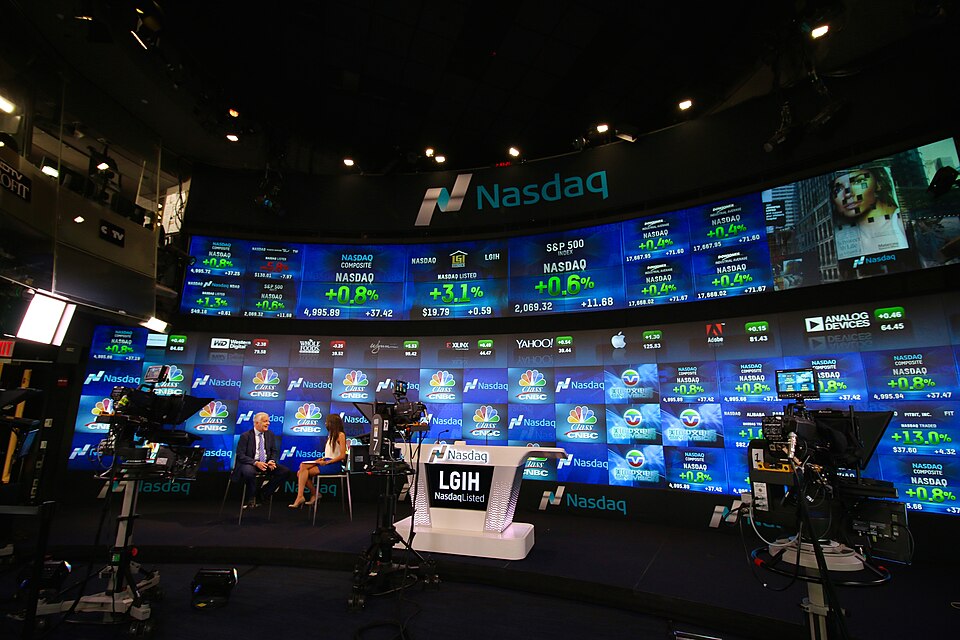
By March 2000, the NASDAQ had been climbing in a way that made no fundamental sense. Companies with no revenue were worth billions. Pets.com was running Super Bowl ads. Webvan was promising to deliver groceries to every doorstep in America. The entire market was running on optimism and momentum, and Thiel believed — with the kind of quiet certainty that either makes you a genius or gets you fired, that it was about to end.
As Jimmy Soni details in The Founders, Thiel pushed aggressively to close a $100 million Series C funding round before the market turned. This was not a casual fundraise. It was a sprint. Thiel wanted the money in the bank, committed, signed, and wired before whatever was coming actually arrived.
I have never been a contrarian. I have always played it safe. For fifteen years I ran a hosting company the conservative way — keep prices low, keep customers happy, do not take risks. Thiel would say that is why it never grew. And looking at what he did in March 2000, I think he might be right. He did not wait to see if his theory about the market was correct. He acted on the assumption that it was, and he moved with urgency that most founders reserve for moments when the building is already on fire.
The Proposal That Shocked the Boardroom
The $100 million came through. The round closed. And then Thiel did something that makes this story worth telling at dinner parties for the next century.
He proposed to the board that they take a portion of the freshly raised $100 million and short the stock market.
Let that settle for a moment. A company that had just raised venture capital — other people’s money, entrusted to build a payments platform — and its chairman wanted to use some of it to bet against the very market ecosystem that had just funded them. He wanted PayPal to become, in part, a hedge fund.
The logic, from Thiel’s perspective, was internally consistent. He believed the crash was imminent. If he was right, shorting the market would generate returns that could extend PayPal’s runway even further. The company would not just survive the downturn — it would profit from it.
Thiel’s conviction about the coming crash was not a hunch. He had been studying the market’s fundamentals, and he believed the correction would be severe.
The board’s reaction was swift and unambiguous. They said no. Not politely, not after careful deliberation. The opposition was strong and immediate. Board members understood that using venture capital to make speculative bets on the stock market was not just risky. It was a violation of trust. Investors had given PayPal $100 million to build a payments company, not to play the derivatives market.
I have had ideas that my partners shot down. Most of them deserved to be shot down. At my hosting company, I once proposed we pivot entirely into cloud consulting — abandon the existing customers, retrain the team, start over in a market we barely understood. My partners looked at me like I had suggested we set the servers on fire. They were right to say no. The skill is not in always being right — it is in knowing which battles to fight. Thiel lost this battle. But he had already won the one that mattered.
The Crash
On March 10, 2000, the NASDAQ Composite hit its all-time high of 5,048.62. Within days, the selling began. By April, the index had dropped over a thousand points. By the end of 2000, it had lost nearly half its value. By October 2002, it would bottom out at 1,114.11 — a decline of roughly 78 percent from peak to trough.
The carnage was total. Pets.com went from IPO to liquidation in 268 days. Webvan burned through over a billion dollars and shut down. Boo.com collapsed. eToys collapsed. Kozmo collapsed. Hundreds of companies that had been valued at hundreds of millions of dollars simply ceased to exist. Office parks in Silicon Valley emptied out. Engineers who had turned down six-figure salaries because their stock options were going to be worth millions found themselves unemployed.
And PayPal had $100 million in the bank.
At my hosting company, I always raised prices or sought partners a year too late. By the time I realized we needed more capital, the window had closed. By the time I realized a partnership could help us grow, the potential partner had moved on. Thiel raised money a month before the market died. Timing is not luck. It is paying attention. It is having a theory about the world and being willing to act on it before you have proof.
The $100 million that Thiel had pushed so urgently to close became PayPal’s lifeline. While thousands of startups were scrambling for bridge financing that no one would give them, while venture capitalists were pulling term sheets and telling founders to find their own way, PayPal had a war chest. They had the resources to keep building, keep acquiring users, keep iterating on the product. They had time — and in a downturn, time is the only currency that matters.
Why the Board Was Also Right
Most retellings skip this part: the board was right to say no to the short.
Yes, Thiel was correct about the crash. If PayPal had shorted the NASDAQ in March 2000, they would have made a fortune on paper. But that is not the point. The point is that it would have been reckless with other people’s money. The investors in the Series C did not sign up for market speculation. They signed up for a payments company. Using their capital to make directional bets on the stock market — even correct ones — would have been a breach of the implicit contract between a startup and its investors.
It also would have introduced a completely different kind of risk. Shorting the market requires precise timing. If the NASDAQ had rallied another 20 percent before crashing — which was entirely possible in the manic spring of 2000 — the short position could have generated margin calls that would have consumed cash PayPal needed for operations. Being right about the direction but wrong about the timing can be just as fatal as being wrong about everything.
The board understood something that Thiel, in his conviction, may have been too close to see: the most important thing about the $100 million was that it existed, not that it grew. Survival, not speculation, was the objective. And they were right.
The Lesson That Stays With Me
Thiel read the market better than almost anyone in Silicon Valley. But the real lesson is that you can be right and wrong at the same time.
Thiel was right about the crash. The board was right to reject his solution. And the company survived because of Thiel’s instinct, even though his most radical proposal was overruled. The contrarian impulse that said “the market is about to collapse and we need to act now” was the same impulse that drove the urgent fundraise. The prediction and the preparation were inseparable, even though the proposed trade never happened.
Sometimes being right about the problem matters more than being right about the solution.
I think about this often. At my hosting company, I spent fifteen years identifying problems correctly — we needed more marketing, we needed better talent, we needed to raise prices, we needed to expand our services. I was right about all of it. But I never matched the right diagnosis with decisive action the way Thiel matched his crash prediction with an urgent fundraise. I saw the problems. I just did not move fast enough or boldly enough to solve them before the windows closed.
The PayPal Mafia — Thiel, Elon Musk, Reid Hoffman, Max Levchin, and the rest — went on to build or invest in companies worth hundreds of billions of dollars. Part of that success traces back to this single moment in March 2000, when a contrarian thinker pushed hard enough to get $100 million in the door before the world fell apart. The money kept PayPal alive. Staying alive let them build the product. Building the product let them go public. Going public made everyone rich enough to start the next thing.
All because one person paid attention to what the market was actually doing, instead of what everyone wanted it to be doing.
If you are building something right now — a company, a product, a career — the lesson from Thiel and PayPal is not that you should short the stock market. It is that you should take your own analysis seriously. If you believe something is about to change, act on that belief in ways that protect you, even if the people around you think you are overreacting. You do not have to make the boldest possible bet. Sometimes the smartest contrarian move is not the flashy trade — it is the quiet preparation that no one notices until after the storm.
Thiel’s most important contribution to PayPal’s survival was not a trade he made. It was a phone call to investors, made with urgency, closed with speed, funded with conviction. That is a kind of contrarian thinking we do not celebrate enough.
Sources
- Soni, Jimmy. The Founders: The Story of PayPal and the Entrepreneurs Who Shaped Silicon Valley. Simon & Schuster, 2022. Chapter 10: “Crash.”
- NASDAQ historical data: NASDAQ Composite peak of 5,048.62 on March 10, 2000; trough of 1,114.11 on October 9, 2002.
- Pets.com timeline: IPO February 2000, liquidation November 2000 (268 days).